
Rural Revitalization

Search documents
补上农业农村“最大短板”
Si Chuan Ri Bao· 2025-11-09 05:45
Core Viewpoint - The modernization of agriculture and rural areas is crucial for the overall modernization of China, as highlighted by the 20th Central Committee's emphasis on accelerating agricultural modernization and promoting rural revitalization [1] Group 1: Agricultural Modernization - The "14th Five-Year Plan" period focuses on prioritizing agricultural and rural development, leading to significant historical achievements [1] - There remains a substantial gap between urban and rural development, particularly in infrastructure, public services, and living conditions, indicating that agricultural modernization is a relatively weak link in national modernization [1] - Accelerating agricultural modernization aims to break this imbalance and ensure that farmers can also enjoy the benefits of modernization [1] Group 2: Poverty Alleviation - Consolidating and expanding the achievements of poverty alleviation is fundamental to addressing agricultural and rural shortcomings [2] - Despite achieving comprehensive victory in poverty alleviation, measures must be taken to prevent the risk of returning to poverty, necessitating the establishment of long-term mechanisms for monitoring and support [2] - Upgrading industries in poverty-stricken areas is essential to enhance internal development momentum and ensure the sustainability of poverty alleviation results [2] Group 3: Agricultural Production Capacity - Enhancing agricultural comprehensive production capacity and quality efficiency is the fundamental way to address agricultural and rural shortcomings [2] - Current challenges include tightening resource constraints, increasing environmental pollution, and growing international competition, making it urgent to improve agricultural production capacity and quality [2] - The focus should shift from quantity to quality in agricultural development, promoting technological, green, quality, and brand agriculture to optimize and upgrade agricultural structures [2] Group 4: Rural Environment and Livelihood - Promoting the construction of livable and workable beautiful villages is a key aspect of addressing agricultural and rural shortcomings [2] - Although rural living conditions have improved, there is still significant room for enhancement compared to urban areas [2] - The goal is to create a more beautiful environment, convenient living conditions, thriving industries, and prosperous culture in rural areas, enabling farmers to achieve employment and income growth locally [2] Group 5: Policy Support - Policies are vital levers for promoting agricultural and rural development, and enhancing the effectiveness of strong agricultural support policies is a powerful guarantee [3] - The focus should be on improving the policy system for agricultural support, ensuring timely and precise implementation of policies to benefit farmers [3] - Increasing farmers' understanding and utilization of policies is essential to stimulate their participation in agricultural modernization efforts [3] Group 6: Overall Modernization - Without agricultural and rural modernization, national modernization cannot be achieved [3] - Addressing the "largest shortcoming" in agriculture and rural areas requires reforms, technological advancements, and improvements in living standards [3] - The goal is to facilitate the free flow of urban and rural factors, promote positive interactions, and make agricultural strength, beautiful rural areas, and prosperous farmers a common reality [3]
点赞|惠州移动攻坚环 “两山” 网络建设,绘乡村新景
Nan Fang Du Shi Bao· 2025-10-30 08:21
Core Viewpoint - The article highlights the significant improvements in the lives of rural residents in the Huizhou region, driven by the efforts of Huizhou Mobile to enhance communication infrastructure and services, thereby bridging the digital divide between urban and rural areas [2][11]. Group 1: Communication Infrastructure Development - Huizhou Mobile has invested a total of 65 million yuan in the "Two Mountains" area to improve communication services, focusing on signal coverage, broadband access, and line rectification [2]. - The company initiated a signal enhancement campaign, planning to build 153 new base stations, including 70 4G and 83 5G stations, resulting in a 19.3% year-on-year increase in base station scale [5]. - The region has achieved 100% 5G/4G signal coverage in administrative villages, with over 95% coverage in natural villages, raising the overall coverage rate to 98% [5]. Group 2: Broadband Access and Digital Life - Huizhou Mobile invested 30 million yuan to lay optical cables in 1,720 natural villages, enabling 85,000 households and 350,000 villagers to access stable broadband networks [7]. - The company has developed a special plan to ensure that the remaining 12 extremely remote natural villages achieve fiber optic coverage by the end of October, aiming for "broadband access in every village and network in every household" [7]. - The extension of fiber optic networks has supported the development of rural e-commerce, smart agriculture, and rural tourism, with a 30% year-on-year increase in orders for local agricultural products [8]. Group 3: Line Rectification and Safety - Huizhou Mobile has invested 35 million yuan in line rectification, completing 218 kilometers of main road and 289 villages, removing 129 kilometers of old poles and 418 kilometers of old cables [9]. - The company has implemented an innovative model for line rectification, allowing for shared resources and coordinated construction, which has reduced costs and avoided repeated construction [9]. - The improvements in line aesthetics and safety have enhanced the environment, attracting more tourists and supporting the development of the local tourism industry [9]. Group 4: Future Plans and Community Impact - Huizhou Mobile aims to continue its efforts in network construction and service optimization, guided by party building, to ensure that more urban and rural residents benefit from digital development [11]. - The initiatives undertaken by Huizhou Mobile are seen as a pathway to achieving common prosperity and enhancing the quality of life for rural residents [11].


Shanghe County: Geothermal Resources Fuel Revitalization of Diverse Industries
Globenewswire· 2025-10-29 16:21
Core Insights - Shanghe County in Jinan is leveraging its geothermal resources to promote integrated development across multiple industries, aiming to become the "Hot Spring Capital of China" [4][7] - The county has significant geothermal resources, with 25.6 billion cubic meters available and wellhead temperatures between 58 to 62°C, which are being utilized for tourism and agriculture [4][5] - The integration of hot spring culture with modern agriculture and manufacturing is creating a new economic growth model for the county [7] Tourism Development - Shanghe County is developing a new tourism model that includes hot springs, encapsulated by the phrase "Ascend Mount Tai, Tour Jinan, and Soak in Hot Springs in Shanghe" [4] - The Mengliyue Hot Spring Homestay features 11 private hot spring rooms and cultural-themed spaces, expected to increase the village's annual income by over one million yuan [4] Agricultural Innovation - Rural Oasis Agricultural Technology Co., Ltd. is utilizing geothermal resources to create 450,000 square meters of smart greenhouses, cultivating premium flowers and enhancing the local agricultural value chain [5] - The company has developed 18 new varieties of anthuriums, showcasing innovation in the floral industry [5] Manufacturing and E-commerce - Shandong Sporter Biological Technology Co., Ltd. has established itself as a leader in dietary nutritional products, with its brand "Nutrend" topping online sales charts for three consecutive years [6] - The company has the world's largest production capacity for nutritional tablet workshops and has created a complete industrial chain from R&D to e-commerce [6]
油茶香里说丰年!龙川县庆祝丰收节系列活动火热举行
Nan Fang Nong Cun Bao· 2025-10-24 15:31
Core Viewpoint - The article highlights the celebration of the harvest festival in Longchuan County, showcasing the achievements of the "Hundred Million Project" and promoting the oil tea industry as a key driver for rural revitalization and economic growth [2][6][7]. Group 1: Event Overview - The harvest festival activities took place at Dongjiang Wetland Park in Longchuan County [3]. - The event was organized by various local government bodies, including the Longchuan County Committee and the County Government [5]. - The activities included the launch of the "Hundred Million Project - Longchuan Oil Tea Harvest" and featured various promotional events for the oil tea industry [9][18]. Group 2: Oil Tea Industry Insights - Longchuan County has approximately 495,000 acres of oil tea cultivation, producing around 170,000 tons of fresh oil tea seeds annually, with a total industry output value of 1.9 billion [24][25]. - The oil tea harvest this year is expected to yield over 1,000 tons of fresh fruit, with daily harvesting reaching 20,000 pounds [20]. - The oil tea industry has become a leading source of income for local residents, with an average annual income increase of over 15,000 yuan per household through cooperative farming models [23][26]. Group 3: Agricultural Competitions and Collaborations - The event also featured the award ceremony for the second Spring Plowing Grain Competition, which attracted 49 production entities and nearly 6,000 acres of rice fields [33][34]. - Strategic cooperation agreements were signed between local agricultural authorities and various companies to enhance agricultural upgrades and increase farmers' income [38][41]. Group 4: Cultural and Technological Integration - The festival included a vibrant agricultural product market showcasing unique products from 24 towns, reflecting the integration of agriculture, culture, and tourism [44][48]. - The "Smart Agriculture" area displayed advanced agricultural technologies, such as unmanned tractors and drones, emphasizing the impact of technological innovation on agricultural production [49][50].

“土特产”变“金名片” 各地多元特色产业描绘乡村振兴好“丰”景
Yang Shi Wang· 2025-10-20 09:13
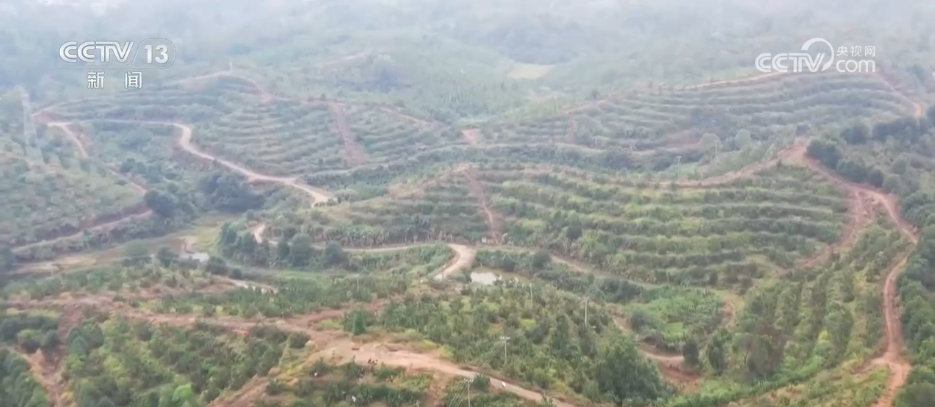
Group 1: Citrus Industry in Jiangxi - The honey pomelo has become a key driver for farmers' income and rural revitalization in Jiangxi, particularly in Jinan [1] - In Wanan County, the Fufeng Honey Pomelo Cooperative has over 6,000 acres of pomelo trees, experiencing a bumper harvest this year [3][4] - The cooperative has successfully addressed funding challenges by updating irrigation equipment and expanding planting areas [4] Group 2: Crab Farming in Hubei - In Hanchuan, Hubei, 320,000 acres of river crabs are being harvested, with an expected annual production of 45,000 tons [5] - Farmers have expanded their farming areas and installed new smart equipment to enhance production and income [7] - A specialized financial service team from the local postal savings bank has been established to alleviate the financing pressure on crab farmers [9] Group 3: Pearl Farming in Sichuan - In Kaijiang, Sichuan, 17,000 acres of pearl mussels are being harvested, marking the beginning of the harvest season [12] - Local villagers are actively involved in harvesting and transporting the mussels to a standardized processing facility for further processing [14] - The pearl mussel farming area has grown significantly over the past decade, producing 30 tons of pearls annually and exceeding a production value of 100 million yuan [16]
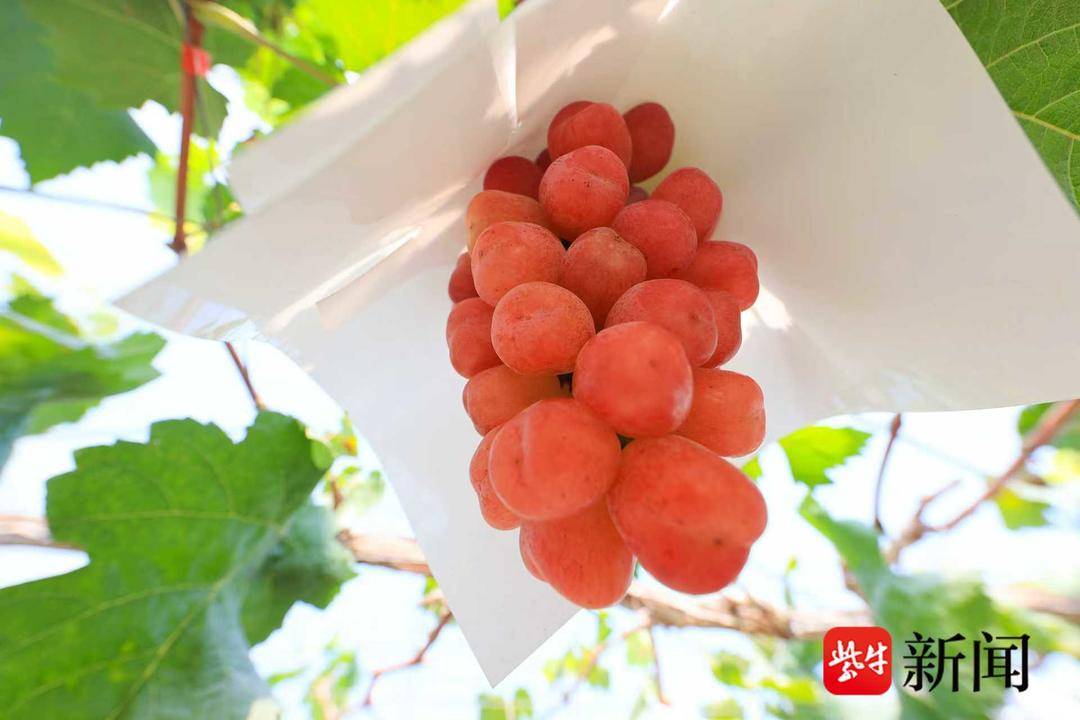
连云港赣榆:小葡萄“串”起富民链原
Yang Zi Wan Bao Wang· 2025-09-24 09:22
Core Viewpoint - The grape cultivation in Zhutun Village, Lianyungang City, Jiangsu Province, has become a significant source of income for local farmers, contributing to rural revitalization efforts [3][5]. Group 1 - The grape vineyards cover over 1,500 acres and are producing abundant, high-quality grapes, which are appealing to consumers [3]. - The local government has implemented a "cooperative + base + farmer" model to guide farmers in greenhouse grape cultivation, enhancing their income [5].

Local specialties fuel economic boom in China's mountainous Guizhou
Globenewswire· 2025-09-24 08:31
Core Insights - Guizhou Province has transformed its agricultural landscape by developing distinctive industries, particularly in beef, tea, and chili peppers, to promote rural revitalization and increase villagers' income [1] Agricultural Industry Development - Tongren City has focused on the matcha industry, establishing 61,600 mu (approximately 4,107 hectares) of high-standard tea gardens and one of the largest matcha manufacturing workshops globally, producing 4,000 tonnes annually [4] - Zunyi City has developed the chili pepper sector, creating a marketplace known as "China Chili City," with annual sales of dried chili peppers exceeding 1 billion yuan and total output value of the chili industrial chain reaching over 2 billion yuan [6][7] - Zhenning Bouyei-Miao Autonomous County has capitalized on its unique climate to cultivate honey plums, generating over 20,000 yuan per mu and increasing local villagers' per capita annual income from less than 2,000 yuan to 22,000 yuan over the past decade [9][10] Economic Impact - The chili industry in Zunyi has driven income growth for 500,000 rural households, including over 100,000 former poverty-stricken households [7] - Liuma Town in Zhenning has become the first town in the province with an annual output value exceeding 1 billion yuan, with honey plums recognized as a national geographical indication product [10] Future Opportunities - Guizhou Province is leveraging its rich cultural and tourism resources to explore new agricultural opportunities, including sour soup and buckwheat, ensuring broader benefits from development [11]

"Double the Sweetness" - A New Chapter for Guangxi's Sugar Industry
Globenewswire· 2025-08-28 06:40
Industry Overview - The Guangxi Zhuang Autonomous Region is recognized as a "kingdom of sugarcane" with a sugarcane planting area of 11.35 million mu (approximately 756,667 hectares) during the 2024/2025 crushing season, marking an increase of 110,000 mu year-on-year [1] - The sugar output in the region exceeded 6.4 million tons, maintaining a 60% share of China's total sugar output for 20 consecutive crushing seasons [1][3] Company Developments - Guangxi Sungain Sugar Industry Group Co., Ltd. has significantly increased its daily sugarcane processing capacity during the 2024/2025 crushing season by implementing the "Eucalyptus Out, Sugarcane In" strategy and full-process mechanized planting [2] - The company is accelerating the "Second Entrepreneurship and Second Development" strategy to establish a benchmark for green, efficient, and clustered diversified industrialization, contributing to local sustainable economic and social development [2] Transformation and Upgrading - Guangxi's sugar industry is undergoing transformation towards high-quality development characterized by "technology + scale + green development," shifting from traditional sugar refining to intelligent processing [3] - The industry has expanded its industrial chain with new formats such as bagasse power generation and deep processing of sugarcane by-products, ensuring supply, stabilizing the market, and enhancing exports [3]
New Chapter of "Sweet Industry" -- Chronicle of High-Quality Development of Guangxi's Sugar Industry
Globenewswire· 2025-08-27 09:48
Industry Overview - Guangxi Zhuang Autonomous Region is the largest base for sugarcane cultivation and sugar production in China, accounting for over 60% of the country's total sugar output [1][3] - The sugar industry in Guangxi has significantly improved agricultural benefits and provided stable income for farmers in sugarcane-growing areas [3] Company Profile - Guangxi Sungain Sugar Industry Group Co., Ltd. is one of the top 10 sugar enterprises in Guangxi, focusing on sugarcane sugar production and diversified industrial investments [2] - Sungain Group has established a large-scale sugarcane planting base and has successfully achieved a diversified development layout [2] Economic and Social Impact - The growth of the sugar industry has enhanced resource utilization efficiency through the comprehensive utilization of sugar by-products, promoting green and circular development [3] - Sugar enterprises have provided strong support for local finances, aiding in urban and rural infrastructure construction and regional economic integration [3] Future Development - Guangxi's sugar industry is focusing on technological innovation and brand building, aiming for high-end, intelligent, and green transformation [4] - The industry is integrating with emerging industries through new technologies like digital agriculture and smart manufacturing, contributing to economic prosperity and social progress in ethnic group areas [4]
脱贫产业兴,日子有奔头——来自三省七县脱贫村的调研之一
Ren Min Ri Bao· 2025-08-15 00:35
Core Insights - The article emphasizes the importance of consolidating poverty alleviation achievements and effectively connecting them with rural revitalization during the final year of the five-year transition period [1] Group 1: Industry Development - The bamboo shoot industry in Yunnan's Zhaotong City has seen significant growth, achieving a comprehensive output value of 19.16 billion yuan last year, benefiting local farmers and creating job opportunities for around 180 people, including 64 poverty alleviation households [2] - In Hebei Province, the "enterprise + cooperative + village collective + poverty alleviation household" model has been adopted to develop key industries such as facility agriculture and organic grains, leading to a net profit of over 12 million yuan for a cooperative in the pepper industry [3] - The total output value of the main industries cultivated in 832 poverty alleviation counties has exceeded 1.7 trillion yuan, with three-quarters of the poverty alleviation population establishing benefit-sharing mechanisms with new agricultural management entities [4] Group 2: High-Quality Development - The pig farming industry in Sichuan's Tongjiang County has adopted a collaborative model involving government, finance, insurance, enterprises, and farmers, leading to the establishment of 125 pig breeding farms and benefiting over 2,000 people [5][6] - The "Qingyu Pig" industry has transformed from traditional farming to a high-quality development model, with annual production of 156,000 quality piglets and a market value of the brand reaching 2.548 billion yuan [7][8] - The transition from "having nothing" to "having quality" in poverty alleviation industries is evident, with over 80 poverty alleviation counties achieving a production value of over 5 billion yuan [8] Group 3: Challenges and Solutions - Despite the progress, challenges such as market price fluctuations and supply chain issues remain, indicating the need for continued policy support for sustainable development [9] - In Hebei's Fengning County, the establishment of a tomato industry association has improved market negotiation capabilities, leading to an annual output value of 180 million yuan from 6,000 acres of tomato cultivation [10][11] - The establishment of processing facilities in various counties has enhanced the competitiveness of agricultural products, with significant investments made to improve processing capabilities and product quality [12][14]