
全球发展倡议

Search documents
(近观中国)全球治理倡议的提出为何正逢其时?
Zhong Guo Xin Wen Wang· 2025-09-16 08:27
Core Viewpoint - The global governance initiative proposed by Chinese President Xi Jinping addresses the ongoing global governance deficit and aims to promote a more just and reasonable international order, coinciding with the 80th anniversary of the United Nations [1][2]. Background and Context - The current international landscape is marked by political and economic turmoil, frequent military conflicts, and a global governance system that struggles to address new challenges, leading to an increasing governance deficit [1][2]. - The initiative is seen as a "Chinese solution" to structural contradictions within the existing global governance framework, focusing on innovative governance paths and the improvement of global governance mechanisms [1][2]. Key Components of the Initiative - The global governance initiative is part of a broader set of initiatives, including the global development, security, and civilization initiatives, forming an organic whole that addresses specific issues in development, security, and civilization while focusing on governance system reforms [2]. - The initiative emphasizes an "action-oriented" approach to combat the phenomenon of "discussions without decisions" and aims to translate ideas into tangible results through mechanism construction and rule implementation [2]. Principles and Values - The initiative advocates for adherence to international law and the equal application of international rules, rejecting the imposition of domestic rules by certain countries on others, and opposing double standards [2][3]. - It stresses that there is only one international system centered around the United Nations and one order based on international law, countering the trend of some countries replacing universally accepted rules with "small circle" rules [2][3]. China's Role and Intentions - China positions itself as a responsible builder of the international order rather than a disruptor, aiming to enhance the effectiveness of the current international system while promoting necessary reforms [3]. - The initiative is inclusive and invites participation from the international community, including Western countries, reflecting China's commitment to collaborative global governance [3][4]. Conclusion - The global governance initiative is timely and responds to the urgent need for effective governance in the international community, showcasing China's willingness to work with other nations to improve the global governance system [3][4].
甲骨文,联结世界——第二届国际民间社会共同落实全球发展倡议交流大会“品味中国·安阳时刻”主题交流活动侧记
He Nan Ri Bao· 2025-09-15 23:37
Core Insights - The event titled "Taste of China: Anyang Moment" emphasizes the importance of cultural dialogue and global development initiatives, showcasing the significance of Chinese civilization through oracle bone script [1][5] - The gathering highlighted the deep historical connections between cultures, with participants expressing admiration for the continuity of Chinese civilization and its relevance to contemporary global issues [2][3] Group 1: Cultural Significance - The oracle bone script is recognized as a vital carrier of Chinese civilization, essential for understanding contemporary China [1] - Participants from various countries acknowledged the historical depth of Anyang and its role in connecting trade routes and academic exchanges, emphasizing the importance of cultural heritage [2] - The event showcased how ancient wisdom can provide insights into modern challenges, promoting values of inclusivity, coexistence, and innovation [2] Group 2: Technological Integration - The integration of new technologies with traditional culture was a focal point, with AI being used to bring ancient elements like oracle bone script and bronze artifacts to life [3] - The event featured performances that creatively linked the "I Ching" with global development initiatives, illustrating the relevance of ancient texts to contemporary governance and security [3] Group 3: International Collaboration - The event served as a platform for fostering deeper international cooperation, with Anyang aiming to leverage its cultural heritage to enhance global dialogue and collaboration [5] - Participants expressed a desire for museums in Africa to adopt modern technologies similar to those used in Anyang's museums to showcase traditional culture [4]
“文字联通世界-品味中国·安阳时刻”主题交流活动在殷墟博物馆举办
Xin Lang Cai Jing· 2025-09-15 03:06
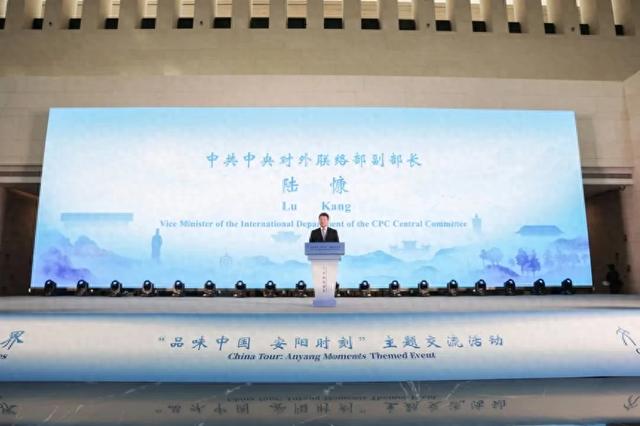
圆桌对话环节由中国互联网新闻中心总编辑王晓辉主持,围绕"文明跨越千年的密码及时代价值"和"全 球发展倡议框架下的国际文化交流"两大主题展开。中国国家版本馆馆长刘成勇等中外嘉宾,从历史到 未来、从理论到实践、从中国到世界,奉献了一场精彩的思想碰撞。 9月13日上午,"文字联通世界-品味中国·安阳时刻"主题交流活动在殷墟博物馆举办。活动由中国民间组 织国际交流促进会(中促会)和安阳市人民政府共同主办,中国华夏文化遗产基金会和西泠印社协办, 中促会人文交流专业委员会、安阳市人民政府外事办公室、安阳市文化广电体育旅游局承办。中联部副 部长陆慷,中共河南省委常委、河南省人民政府副省长张敏,非盟经社文化理事会主席路易斯·西索 科,格林纳达驻华大使马岩,中共安阳市委书记袁家健、英国驻华使馆驻武汉领事馆副总领事柯睿哲出 席。30余国专家学者、非政府组织、智库、企业、高校负责人及在华留学生等约150人参加活动。 陆慷在致辞中表示,面对百年变局加速演进和复杂多变国际形势,文明交流互鉴对于增进理解互信、消 除隔阂、化解冲突的作用愈发凸显。举办本次活动,旨在共同感悟中华文明的深厚底蕴与时代价值,积 极践行全球文明倡议。中联部和中促会 ...

命运与共开创未来
Xin Hua She· 2025-09-15 00:27
Core Points - The commemoration of the 80th anniversary of the victory in the Chinese People's Anti-Japanese War and the World Anti-Fascist War highlights China's significant contributions to global peace and civilization [1][9][24] - Xi Jinping emphasized the importance of historical memory and the need for nations to work together to uphold international justice and peace [1][12][23] Group 1: Historical Significance - The Chinese People's Anti-Japanese War is recognized as a crucial part of the World Anti-Fascist War, with over 35 million casualties, marking it as the earliest, longest, and most costly conflict in the fight against fascism [4][7] - The war effort by China significantly delayed Japanese advances in Southeast Asia and contributed to the overall success of the Allied forces [7][9] Group 2: International Cooperation - The event featured international representatives, including descendants of foreign fighters who aided China during the war, symbolizing the enduring friendships formed during that period [8][9] - Xi Jinping's remarks called for a collective effort among nations to promote peace and development, reflecting a shared commitment to global governance and cooperation [12][14][22] Group 3: Peaceful Development - The Chinese military's role in peacekeeping operations is highlighted, showcasing China's commitment to maintaining global stability and security [11][12] - The narrative emphasizes that China's path of peaceful development is rooted in its historical pursuit of harmony and cooperation with other nations [13][16][20]
习言道丨面对“沉思的雅典娜”,习近平提到一个中国成语
Zhong Guo Xin Wen Wang· 2025-09-13 12:29
Group 1 - The article discusses Xi Jinping's emphasis on peaceful development and the importance of cultural exchange in the context of global governance and civilization [6][8][9] - Xi Jinping references the Chinese idiom "止戈为武" (stop fighting to achieve peace) to highlight China's commitment to peaceful coexistence and mutual respect among civilizations [7][8] - The article outlines China's initiatives such as the Global Development Initiative and the Global Security Initiative, aimed at promoting stability and cooperation in a turbulent world [8][9] Group 2 - Xi Jinping's remarks at various international forums reflect China's stance against the "clash of civilizations" narrative and its dedication to building a community with a shared future [8][9] - The article mentions China's role as a major trading partner for over 150 countries and its efforts in establishing international mediation institutions, showcasing its influence in global affairs [8] - The call for a more just and reasonable global governance system is reiterated, emphasizing the need for equality and cooperation among nations to ensure lasting peace and development [9]

十四届全国人大常委会第十七次会议在京闭幕 赵乐际主持会议
Yang Guang Wang· 2025-09-13 08:32
Group 1 - The 17th meeting of the 14th National People's Congress Standing Committee concluded on September 12, with several laws passed, including the Atomic Energy Law and the Public Health Emergency Response Law [1][3] - The meeting approved treaties for judicial assistance and extradition between the People's Republic of China and the Republic of Serbia [1] - Key personnel changes were made, including the appointment of Chen Ruifeng as the Director of the National Ethnic Affairs Commission [1][2] Group 2 - Zhao Leji emphasized the importance of the draft law on promoting national unity and progress, aiming to enhance the sense of community among the Chinese nation [3] - The meeting highlighted the need to implement Xi Jinping's diplomatic thoughts and various global initiatives, integrating them into the legislative and supervisory responsibilities of the National People's Congress [3] - A constitutional oath ceremony was held following the meeting, reinforcing the commitment to the constitution [5]
破解全球治理赤字的中国方案——构建更加公正合理的全球治理体系①
Xin Hua Wang· 2025-09-13 01:48
Core Viewpoint - The article discusses China's proposal for a global governance initiative aimed at creating a more just and reasonable global governance system, emphasizing the need for reform in international mechanisms to address current global challenges [1][2]. Group 1: Global Governance Initiative - The initiative focuses on the principles of sovereign equality, adherence to international law, multilateralism, human-centered approaches, and action-oriented strategies [2]. - It aims to enhance the effectiveness and authority of existing international systems, particularly to better serve the interests of developing countries [2]. - The initiative is seen as a timely response to the inadequacies of current global governance, which includes a lack of representation for the Global South and challenges posed by hegemonic practices and protectionism [1][2]. Group 2: International Reception - Leaders from various countries and international organizations have positively evaluated the global governance initiative, recognizing the urgent need for a fairer governance framework [1][2]. - The initiative is part of a series of global proposals from China, including the Global Development Initiative, Global Security Initiative, and Global Civilization Initiative, each addressing different dimensions of global stability [2]. Group 3: Commitment to Multilateralism - China emphasizes its commitment to multilateralism and cooperation in addressing global challenges, advocating for a shared approach to governance [3]. - The country positions itself as a proponent of peace and progress, aiming to work collaboratively with other nations to reform and improve global governance [3].
新华时评丨破解全球治理赤字的中国方案——构建更加公正合理的全球治理体系①
Xin Hua She· 2025-09-12 14:01
Core Viewpoint - The global governance initiative proposed by President Xi Jinping aims to enhance and improve global governance by contributing Chinese wisdom and solutions, focusing on building a fair and reasonable global governance system and promoting a community with a shared future for mankind [1][2]. Group 1: Global Governance Initiative - The initiative emphasizes the need for a global governance system that adheres to the principles of equality among sovereign states, international rule of law, multilateralism, human-centered approaches, and action-oriented strategies [2]. - It addresses three major shortcomings of the current international mechanisms: insufficient representation of the Global South, erosion of authority, and the need for improved effectiveness [1][2]. - The initiative is seen as timely and crucial, aligning with the common aspirations of nations and the urgent needs of the contemporary world [1]. Group 2: Support from International Leaders - Leaders from various countries and international organizations have positively evaluated and supported the global governance initiative, recognizing the need for a more just and reasonable governance philosophy and system [1][2]. - Iranian President Raisi and Azerbaijani President Aliyev highlighted the initiative as a significant step towards improving international relations based on respect for sovereignty and international law [2]. Group 3: Relation to Other Initiatives - The global governance initiative is part of a series of important public goods offered by China, following the global development, security, and civilization initiatives, each focusing on different dimensions to stabilize the current turbulent world [2]. - The initiatives collectively reflect China's commitment to international affairs and aim to foster consensus towards the grand goal of building a community with a shared future for mankind [2].
赵乐际主持十四届全国人大常委会第十七次会议闭幕会并作讲话强调 深入学习贯彻习近平总书记重要讲话精神 履行好人大立法监督等职责
Xin Hua She· 2025-09-12 13:27
Group 1 - The National People's Congress (NPC) Standing Committee reviewed 18 legal drafts and passed 6, including the Atomic Energy Law and the Public Health Emergency Response Law, which are significant for sustainable development and public health safety [1][2] - The National Park Law was established to comprehensively regulate the construction, protection, and management of national parks, promoting high-quality development in this area [1] - The revised Arbitration Law aims to enhance the arbitration legal system in China, ensuring fair and timely resolution of economic disputes [1] Group 2 - The draft of the National Unity and Progress Promotion Law was initially reviewed, aiming to solidify the awareness of the Chinese national community and enhance national cohesion [2] - The meeting also reviewed the draft amendments to the Cybersecurity Law and the Bankruptcy Law, indicating ongoing legislative efforts in these areas [2] - The NPC Standing Committee received a report on the "14th Five-Year Plan" preparation, which will inform future legislative and governmental planning [2]
专访丨中国倡议为完善全球治理注入强大动力——访南非政治分析师索玛多达·菲克尼
Xin Hua She· 2025-09-12 10:07
Core Viewpoint - China's global governance initiative provides significant guidance for establishing a more just and reasonable international order, injecting strong momentum into the reform of the global governance system [1][2]. Group 1: Global Governance Initiative - The initiative addresses the urgent need for reform in the current international governance system, calling for a governance framework that respects national sovereignty and cultural diversity while enhancing the representation and voice of developing countries [1][3]. - It aims to lead collaborative efforts with the international community to tackle global challenges such as climate change and promote a more equitable international order [1][2]. Group 2: China's Role in Global Governance - China plays a crucial role in global governance, advocating for and promoting reforms in multilateral institutions to enhance fairness and inclusivity, especially in the context of the U.S. withdrawing from multilateral mechanisms [2][3]. - The country has made significant contributions in areas like climate change and infrastructure development, demonstrating a commitment to true multilateralism that reflects the common aspirations of developing countries rather than serving the interests of a few [2][3]. Group 3: High-Quality Development - High-quality development is seen as key to addressing global inequality, with China's success in lifting over 700 million people out of poverty highlighting the importance of ensuring basic livelihoods for social development [2]. - China leverages its advantages in resources, infrastructure, and technology to bridge the development gap between the Global North and South, promoting more inclusive and balanced global development [2]. Group 4: Shanghai Cooperation Organization (SCO) - The SCO demonstrates significant stability and continuity, promoting a new type of international order shaped by non-Western countries through deepening institutional reforms and expanding cooperation [3]. - The global governance initiative aligns with China's previous initiatives, such as the global development, security, and civilization initiatives, reflecting the country's vision and responsibility as a major power [3].