
Inflation

Search documents
A year in which the major central banks part ways
Yahoo Finance· 2026-02-05 15:20
By Stefano Rebaudo LONDON, Feb 5 (Reuters) - Central banks in big economies are parting ways, with Australia this week raising interest rates for the first time in two years, while others are taking a more cautious approach even if they are likely done with easing. The European Central Bank and Bank of England held rates on Thursday, although the UK decision was seen by markets as dovish. The U.S. Federal Reserve remains in the easing camp. Here's where central banks in 10 developed markets stand: ...
STERIS(STE) - 2026 Q3 - Earnings Call Transcript
2026-02-05 15:02
Financial Data and Key Metrics Changes - Total as-reported revenue grew 9% in the third quarter, with constant currency organic revenue increasing by 8% driven by volume and a 200 basis points price increase [4] - Gross margin declined by 70 basis points to 43.9%, primarily due to increased tariffs and inflation [4] - EBIT margin decreased by 40 basis points to 22.9% of revenue, mainly driven by the decline in gross margin [4] - Adjusted net income from continuing operations was $249.4 million, with earnings per diluted share increasing by 9% to $2.53 [5] - Free cash flow for the first nine months of fiscal 2026 was $736.6 million, showing year-over-year improvement [6] Business Line Data and Key Metrics Changes - Healthcare segment saw constant currency organic revenue growth of 8%, with service growing 11% and consumables growing 8% [7] - Healthcare capital equipment revenue increased by 7%, with backlog remaining over $400 million [7] - AST segment's constant currency organic revenue grew 8%, with services up 9% and capital equipment revenue up 103% [8] - Life sciences segment experienced a 5% increase in constant currency organic revenue, driven by 11% growth in consumables [8] Market Data and Key Metrics Changes - Orders in the healthcare segment were down 1% year-to-date against tough comparisons from the previous year [7] - The backlog in life sciences is showing strong growth, attributed to recovery in the pharma sector [16] Company Strategy and Development Direction - The company is maintaining its outlook for fiscal 2026, expecting 8%-9% as-reported revenue growth and constant currency organic revenue growth of 7%-8% [9] - The company is focused on mitigating tariff impacts through various strategies, including supplier negotiations and cost reductions [24] - There is a commitment to a more integrated commercial approach in the EMEA region, with structural changes being made to enhance market presence [34] Management's Comments on Operating Environment and Future Outlook - Management expressed caution regarding the fourth quarter, anticipating a slowdown compared to the previous year [12] - The macro environment appears positive, with no significant downside expected for fiscal 2027 [50] - The company is optimistic about its ability to absorb tariff-related costs moving forward [24] Other Important Information - Capital expenditures for the first nine months of fiscal 2026 totaled $278.8 million, with depreciation and amortization at $363.1 million [6] - The company ended the quarter with $1.9 billion in total debt, with a gross debt to EBITDA ratio of approximately 1.2 times [6] Q&A Session Summary Question: Insights on fourth quarter constant currency growth - Management noted a potential slowdown in the second half, maintaining a cautious outlook for the fourth quarter [12][14] Question: Capital equipment backlog activity - Management indicated stability in healthcare backlog and strong growth in life sciences backlog due to recovery in pharma spending [16] Question: Update on tariff mitigation efforts - Management discussed various mitigation strategies, including shifting product movement and supplier negotiations [24] Question: Impact of regulatory proposals on supply chain - Management stated that the ASC shift is generally positive, creating new capacity demands [31] Question: Future acquisition outlook - Management confirmed ongoing interest in smaller acquisitions but emphasized a disciplined approach to larger transformative deals [44] Question: Cash flow guidance and fluctuations - Management expressed confidence in cash flow guidance but noted potential timing issues in the fourth quarter [48] Question: AST Services growth and market conditions - Management acknowledged a weak start to the quarter but noted improvement by December [57]

STERIS(STE) - 2026 Q3 - Earnings Call Transcript
2026-02-05 15:00
Financial Data and Key Metrics Changes - Total as-reported revenue grew 9% in the third quarter, with constant currency organic revenue growth of 8% driven by volume and a 200 basis points price increase [4] - Gross margin declined 70 basis points to 43.9%, primarily due to increased tariffs and inflation [4] - EBIT margin decreased 40 basis points to 22.9% of revenue, mainly driven by the decline in gross margin [4] - Adjusted net income from continuing operations was $249.4 million, with earnings per diluted share increasing by 9% to $2.53 [5] - Free cash flow for the first nine months was $736.6 million, showing year-over-year improvement [6] Business Line Data and Key Metrics Changes - Healthcare segment saw constant currency organic revenue growth of 8%, with service growth at 11% and consumables at 8% [7] - Healthcare capital equipment revenue increased by 7%, with backlog remaining over $400 million [7] - AST segment experienced constant currency organic revenue growth of 8%, with services growing by 9% and capital equipment revenue increasing by 103% [8] - Life sciences segment had a 5% increase in constant currency organic revenue, driven by 11% growth in consumables [9] Market Data and Key Metrics Changes - Orders in the Healthcare segment were down 1% year-to-date against tough comparisons from the previous year [7] - EBIT margins for Healthcare decreased by 100 basis points to 24.3% due to increased tariffs and inflation [7] - AST EBIT margins improved by 30 basis points to 45.1%, benefiting from pricing and volume increases [9] Company Strategy and Development Direction - The company is maintaining its fiscal 2026 outlook, expecting 8%-9% as-reported revenue growth and constant currency organic revenue growth of 7%-8% [10] - The company is focused on mitigating tariff impacts through various strategies, including supplier negotiations and cost reductions [24] - There is a commitment to a more integrated model and aggressive competition in the EMEA region [34] Management's Comments on Operating Environment and Future Outlook - Management expressed caution regarding potential slowdowns in the fourth quarter, particularly in the AST segment due to tough comparisons [13] - The macroeconomic environment appears positive, with no significant downside anticipated for fiscal 2027 [50] - Management noted that the company is well-positioned to handle tariff-related challenges and is optimistic about future performance [24] Other Important Information - The adjusted effective tax rate for the quarter was 24.2%, a slight decline from the previous year [5] - Capital expenditures for the first nine months totaled $278.8 million, with depreciation and amortization at $363.1 million [5] Q&A Session Summary Question: Thoughts on fourth quarter constant currency growth - Management cautioned about a potential slowdown in the second half and maintained the 7%-8% growth outlook due to tough comparisons from the previous year [13][14] Question: Capital equipment backlog activity - Management noted stability in Healthcare backlog and strong growth in Life Sciences backlog, attributing it to recovery from previous spending cuts [17] Question: Update on tariff mitigation efforts - Management discussed various mitigation strategies and expressed optimism about absorbing tariff costs moving forward [24] Question: Impact of regulatory proposals on supply chain - Management indicated that the ASC shift is generally positive, creating new capacity demands, but has not seen material commitments for manufacturing shifts to the U.S. yet [31] Question: Incremental tariff exposure in 2027 - Management suggested that any incremental tariff impact in 2027 would likely be less than a quarter's worth based on current tariffs [38] Question: Acquisition strategy and pipeline - Management confirmed ongoing interest in smaller acquisitions but emphasized a disciplined approach to larger transformative deals [43] Question: Cash flow guidance and fluctuations - Management expressed confidence in cash flow guidance but noted that timing and seasonal factors could affect predictions [48] Question: AST Services growth and quarter performance - Management acknowledged a weak start to the quarter but noted improvement in subsequent months, attributing some fluctuations to customer inventory adjustments [57]
Lagarde Says Inflation, ECB Policy in 'Good Place'
Yahoo Finance· 2026-02-05 14:47
"We are in a good place and inflation is in a good place," European Central Bank President Christine Lagarde told reporters in Frankfurt. She made the comments after the central bank decided to hold interest rates. ...
Europe's central bank maintains interest rate with economic growth resilient
Yahoo Finance· 2026-02-05 13:17
Economic Overview - The European Central Bank (ECB) has maintained its benchmark deposit rate at 2% since June, following a series of cuts from a peak of 4% in mid-2024, indicating a stable monetary policy amidst modest economic growth in the eurozone [1][3] - The eurozone's economy has shown resilience, with a growth rate of 0.3% in the last quarter of 2025 and an expected annual growth of 1.3% for the current year, as per forecasts from Berenberg bank [3] Factors Influencing Growth - Low unemployment rates are driving consumer demand for goods, contributing to economic resilience without the need for further rate cuts [2] - Anticipation of increased infrastructure and defense spending in Germany, the largest economy in the eurozone, has improved growth prospects [4] - The resolution of budgetary challenges in France has also positively impacted the economic outlook for the eurozone's second-largest economy [4] Inflation and Monetary Policy - Inflation in the eurozone has decreased to 1.7% in January, below the ECB's target of 2%, leading economists to predict that the ECB will keep rates unchanged until mid-2027, when stronger growth may necessitate a rate hike [7] - The ECB's strategy of maintaining low rates aims to combat inflation by managing credit costs and demand for goods purchased on credit [7] External Economic Factors - Energy costs have stabilized following a significant spike due to geopolitical tensions, particularly the impact of Russia's invasion of Ukraine in 2022 [5] - The resolution of tariff uncertainties with the U.S. has allowed European businesses to plan more effectively, despite initial fears of increased tariffs that could have severely impacted trade [6]
Fed's Lisa Cook Says Inflation Is Still Too Hot — And A 'K-Shaped' Economy Is Leaving Low-Income Americans Behind - Invesco QQQ Trust, Series 1 (NASDAQ:QQQ), State Street SPDR S&P 500 ETF Trust (ARCA:
Benzinga· 2026-02-05 12:53
Core Insights - Federal Reserve Governor Lisa Cook advocates for a cautious "wait and see" approach to monetary policy, indicating current interest rates are "mildly restrictive" and expressing concern over a "K-shaped" economic divergence affecting low-income families [1][4]. Policy Pause And Inflation Hurdles - Cook supports the FOMC's decision to maintain the policy rate, noting significant disinflation from 2022 to 2024, but progress stalled in 2025, with PCE inflation estimated at 2.9%, above the Fed's 2% target [2]. - Recent price pressures are attributed to a "notable uptick" in core goods prices due to last year's tariff increases, emphasizing the need for stronger evidence of sustainable inflation reduction [3]. The 'Two-Speed' Economy - Despite a solid GDP growth of 4.4% in Q3 2025, Cook warns of a disconnect between macroeconomic data and the experiences of vulnerable households, highlighting a "two-speed" economy where higher-income spending is robust while low- and moderate-income families face rising delinquencies [4]. - The rising costs of housing, healthcare, and childcare have contributed to lower consumer sentiment than typical for a "solid" economy [5]. Looking Ahead - Cook acknowledges risks to the labor market, with unemployment at 4.4% in December, but remains optimistic about AI's potential to boost productivity and real wages, while currently viewing risks as tilted toward higher inflation [6]. Market Expectations - The CME Group's FedWatch tool indicates a 90.1% likelihood of the Federal Reserve keeping interest rates unchanged in March, with mixed performance in benchmark indices for 2026 [7].

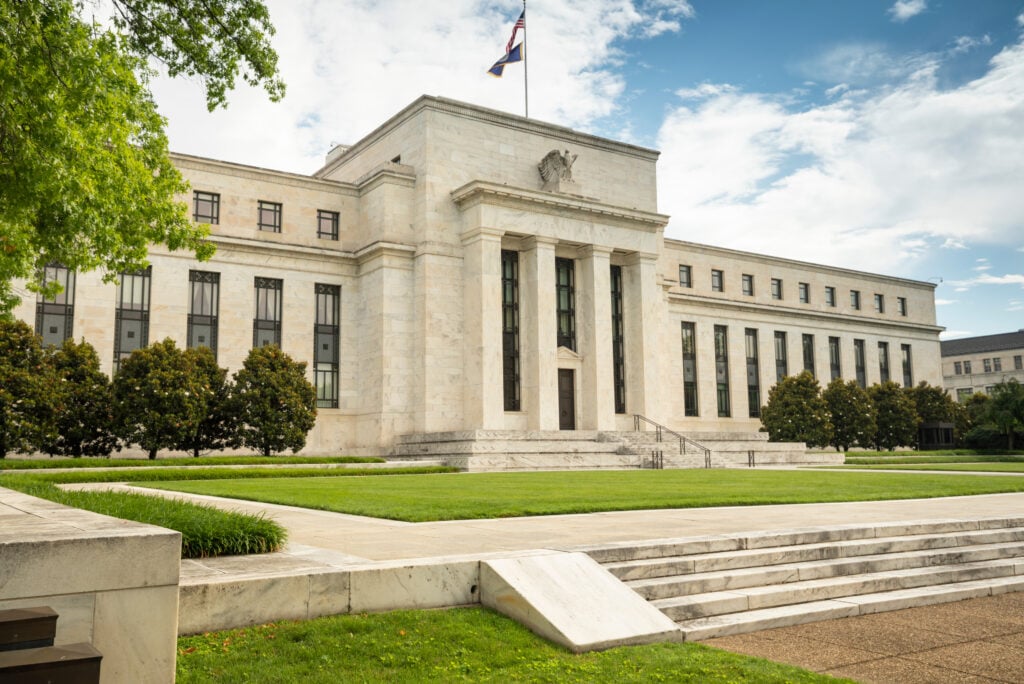
Bessent was ‘holding up a mirror' to lawmakers, economist argues
Youtube· 2026-02-05 11:00
Core Insights - The discussion centers around the need for the government to reduce spending rather than focusing on revenue generation, which is currently sufficient [3][4] - The narrative from the left regarding economic challenges is countered by highlighting that these issues stem from previous administrations' policies, particularly under Biden [6] - There is a perception gap among Americans regarding economic recovery, with statistics indicating that while some progress has been made, the country has not fully regained lost economic ground [12][13] Government Spending and Revenue - The government is bringing in adequate revenue, but the deficit is attributed to excessive spending [3][4] - A call for Congress to take responsibility for spending cuts is emphasized, as current revenues are deemed satisfactory [4] Economic Recovery and Public Perception - Despite positive indicators such as third-quarter growth and cooling inflation, public perception has not aligned with these realities, largely due to the lingering effects of previous policies [11] - The average American's purchasing power has decreased by approximately 4% from Biden's tenure to his departure, while it has seen a slight increase of about 1.5% under Trump [12] - Homeownership affordability has worsened, with median mortgage payments doubling under Biden, although there has been some improvement under Trump [13] Federal Reserve and Monetary Policy - Senate Democrats are attempting to delay the confirmation of Kevin Worsh, who is expected to align with President Trump's desire for lower interest rates [14][15] - There is confidence that Worsh will ultimately be confirmed, which is viewed as a necessary step to rectify the current monetary policy issues [15][16]

Nine Years Ago, Warren Buffett Predicted This Investment Would One Day Return 4,179%: Here's How It's Doing
Yahoo Finance· 2026-02-05 10:21
Core Viewpoint - Warren Buffett predicts that the Dow Jones Industrial Average will reach 1 million within 100 years, despite market uncertainties and historical challenges [1][2]. Group 1: Historical Performance - The Dow started the 20th century at 66.08 and closed at 11,497, representing a 17,299% increase despite significant historical events such as two World Wars and the Great Depression [3]. - From 1913 to 2000, the Consumer Price Index (CPI) rose by 1,582%, while the Dow returned 14,490%, outperforming inflation by nearly 10-to-1 [4]. Group 2: Recent Market Trends - Since Buffett's 2017 prediction, the Dow has risen to 48,407, reflecting a 107% gain and annualized returns of over 9%, surpassing the average annual return of 5.29% in the 20th century [5]. - Buffett expresses confidence that the Dow will increase over a shorter time frame, stating it will be significantly higher in 20 years [6]. Group 3: Investment Strategy - A recommended investment approach to capitalize on the market's long-term growth is through the Vanguard Total Stock Market ETF, which offers broad diversification across various company sizes [6].
RBI MPC Meet 2026: Date, Time, Expectations & Live details
BusinessLine· 2026-02-05 10:02
Core Insights - The Reserve Bank of India's Monetary Policy Committee (MPC) will announce decisions from its first meeting of 2026, focusing on interest rates, inflation targets, and growth projections [1] - The MPC is expected to maintain the current repo rate amid global economic uncertainty and domestic currency volatility [3] Meeting Schedule - The bi-monthly MPC meeting is set for February 4 to February 6, 2026, with the policy outcome announced at 10:00 a.m. IST on February 6, followed by a press conference at 12:00 noon IST [2] Economic Projections - The RBI has revised its GDP growth rate projection for FY26 to 7.3%, an increase of 50 basis points from previous estimates, while inflation is projected at 2% for FY26 [4] - The Economic Survey 2025-26 forecasts India's real GDP growth at 7.4% for FY26 and between 6.8% to 7.2% for FY27 [4] Recent Rate Changes - In 2025, the RBI implemented several rate cuts: 25 basis points in February, April, and December, and 50 basis points in June, maintaining a neutral stance throughout the year [5]
Can Lagarde Push the EUR/USD Higher? (Part 2)
Yahoo Finance· 2026-02-05 08:52
As the EUR/USD tests the 1.1850–1.2000 resistance zone, all eyes are on today’s ECB meeting. Traders are looking for clarity in a situation defined by cooling eurozone inflation and a surge in Euro strength. Read our previous article Can Lagarde Push the EUR/USD Higher? (Part 1) to get insights into the eurozone inflation and growth dynamics. The EUR/USD Dynamics: Geopolitics, Fed Uncertainty, and the Path to 1.20 The Dollar’s Turbulent January After having gained around 13.50% in 2025, the EUR/USD cu ...