
军事干预

Search documents
特朗普威胁哥伦比亚总统 称考虑重开美驻委使馆
Xin Hua She· 2026-01-05 03:17
特朗普还表示,美国正在考虑重新开放美国驻委内瑞拉大使馆。 特朗普还说,3日在美国对委内瑞拉的突袭行动中有"很多古巴人"在试图保护委内瑞拉总统马杜罗时被 打死,但他没有透露具体数字。 据《纽约时报》4日援引一名委内瑞拉高级官员的话报道,美军在突袭中造成的死亡人数已上升至80 人,其中包括平民和安全部队成员,而且这一数字可能会进一步上升。 新华社华盛顿1月4日电 据美国媒体4日报道,美国总统特朗普当天威胁哥伦比亚总统佩特罗,并称对 哥伦比亚发动行动"听起来不错"。 特朗普当天在总统专机"空军一号"上在媒体面前对佩特罗进行人身攻击。当被问及美国是否会对哥伦比 亚发动行动时,他说:"听起来不错。" 美军3日凌晨对委内瑞拉发动大规模军事打击,强行控制马杜罗夫妇并将他们带到美国。特朗普当天公 开宣称,美国将"管理"委内瑞拉,并宣布美国大型石油企业将进入委内瑞拉,投资数以十亿计美 元,"维修"石油基础设施并创造收益。 ...
今天委内瑞拉,明天任一国家
Mei Ri Shang Bao· 2026-01-04 22:18
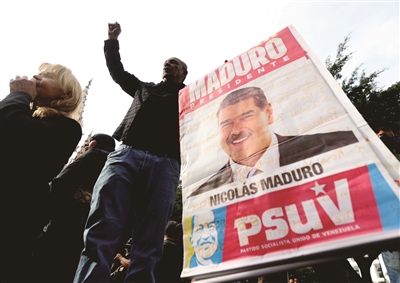
Core Viewpoint - The article discusses the recent military actions by the U.S. against Venezuela, including the arrest of President Maduro and the implications for U.S. oil companies regarding investments in Venezuela's oil infrastructure [2]. Group 1: U.S. Military Actions - On January 3, President Maduro was taken to the U.S. Drug Enforcement Administration in New York and subsequently detained in a Brooklyn facility [2]. - The U.S. government has accused Maduro and his wife of engaging in "deadly drug terrorism" against the U.S. [2]. - President Trump announced that the U.S. will "manage" Venezuela until a "safe" transition is implemented [2]. Group 2: Political Reactions - The Venezuelan Supreme Court appointed Vice President Delcy Rodriguez as acting president following Maduro's arrest [2]. - Chilean President Boric condemned the U.S. military actions, warning that it could set a precedent for intervention in other countries [2]. Group 3: Oil Industry Implications - The White House has requested major U.S. oil companies to invest in repairing Venezuela's oil extraction infrastructure [2].

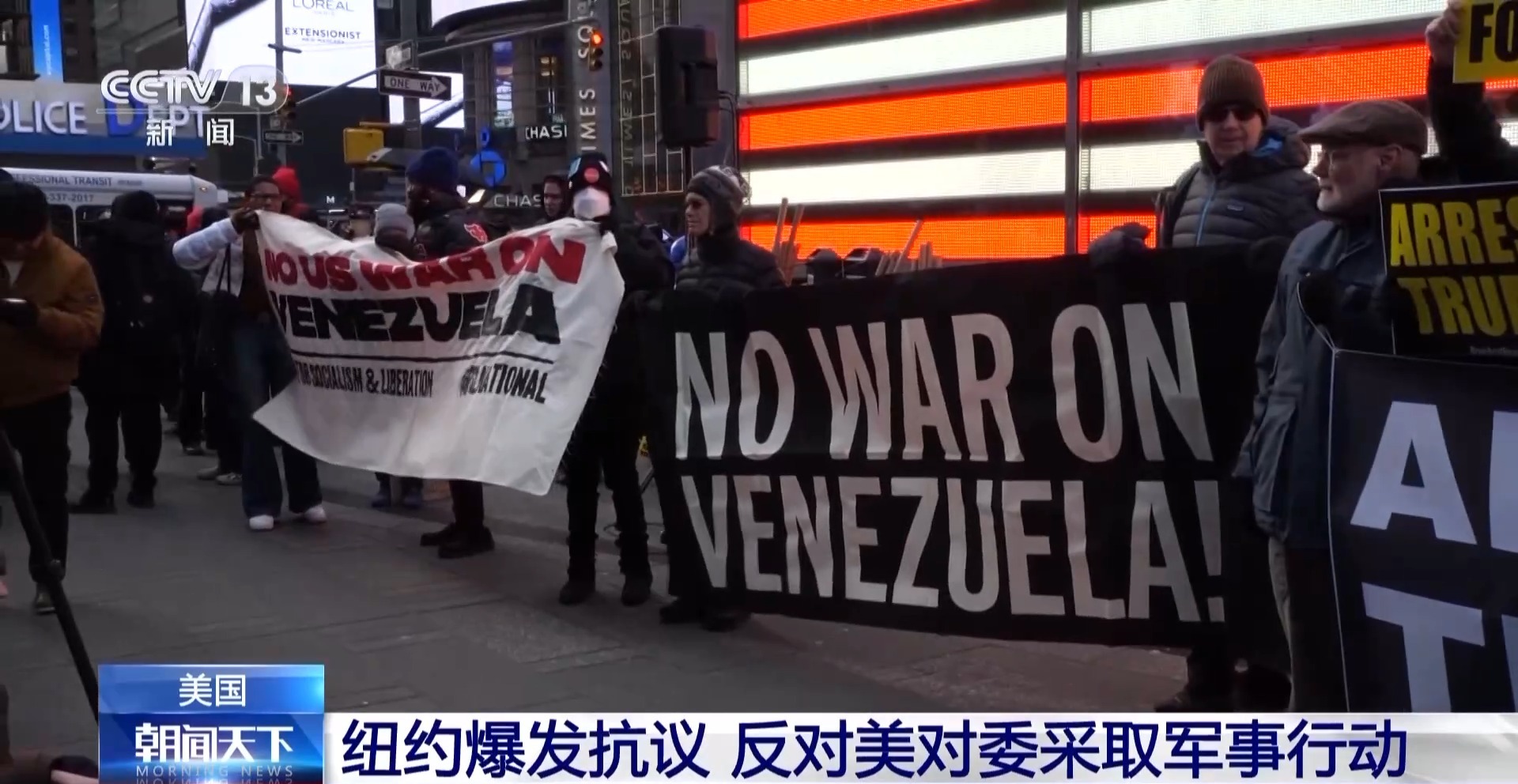
总台现场直击丨美国纽约爆发抗议 反对美对委采取军事行动
Yang Shi Xin Wen Ke Hu Duan· 2026-01-04 05:47
在美国对委内瑞拉采取军事行动后,当地时间1月3日,美国纽约时报广场爆发抗议活动。部分民众走上街头,反对美方对委内瑞拉采取军事行动。 0:00 央视记者 许弢:当地时间1月3日,在美国对委内瑞拉采取军事行动后,全美多地都爆发了抗议活动。在纽约时报广场,数百人聚集在这里,反对美国对委 内瑞拉采取军事干预。 抗议活动在纽约时报广场及周边区域持续进行。抗议人群高举标语,高喊口号,反对美国"接管"委内瑞拉的表态,呼吁美方停止军事行动、尊重国际法。 抗议者 萨特:我对美国发动政变,违反国际法的行为感到极度震惊,一开始美国轰炸船只,杀害平民,然后直接派去军舰,闯入他国,把一位总统带走, 美国没有任何权利这么做。 抗议者 艾玛:我在这里抗议,因为美国绑架马杜罗,轰炸委内瑞拉以及美国"接管"委内瑞拉都是非法的。 责编:张青津、卢思宇 ...
间谍、隐形无人机和喷灯:美军对马杜罗动手始末
Xin Lang Cai Jing· 2026-01-04 03:30
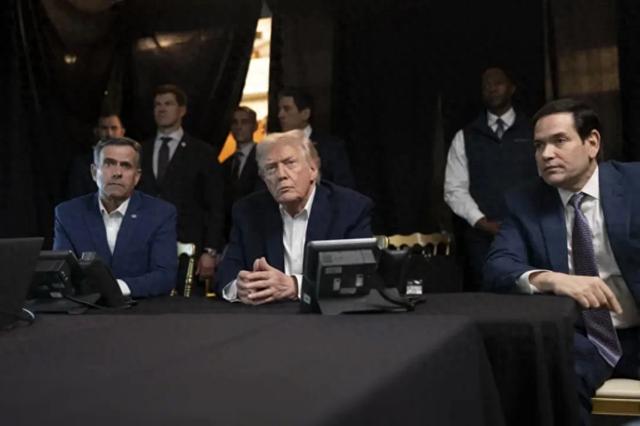
美国冬季的恶劣天气持续多日,直到跨年后才好转,这给一个月前就做好准备的美军提供了行动的"合 适时机"。 美东时间1月2日晚10时46分,美国总统特朗普下达最终行动命令,约150架飞机从20个不同的军事基地 和海军舰艇起飞,开始对委内瑞拉展开军事行动。 据央视新闻报道,当地时间1月3日,特朗普在佛罗里达州海湖庄园举行的记者会上表示,美军在行动中 使用了空中、陆地和海上力量。委内瑞拉"所有军事力量都已丧失战斗力",马杜罗及其妻子都将面临美 国司法审判。他还表示,美军舰队仍保持在既定位置,美国保留所有军事选项,直到美方的要求得到全 面满足。 "我真的就像在看一档电视节目。"特朗普当天在福克斯新闻节目上说,"那真是件了不起的事情。"在这 档电视节目的采访中,他披露了这次筹划数月的行动细节,包括建造了马杜罗安全屋的模型,以供特种 作战部队演练突袭。 从去年8月下旬开始,美军在加勒比海集结了一支由十余艘舰艇组成的舰队。11月,"杰拉尔德·R·福 特"号航空母舰以及3艘发射导弹的海军驱逐舰抵达,使驻该地区的部队人员在原有的1万人基础上又增 加了约5500人,其中约一半在波多黎各上岸,另一半在海上。 近期,美国向该地区增派了 ...
马杜罗身边的内鬼,详情曝光!特朗普:美国将掌管委内瑞拉直至“安全交接”,美石油公司将进入
第一财经· 2026-01-04 02:22
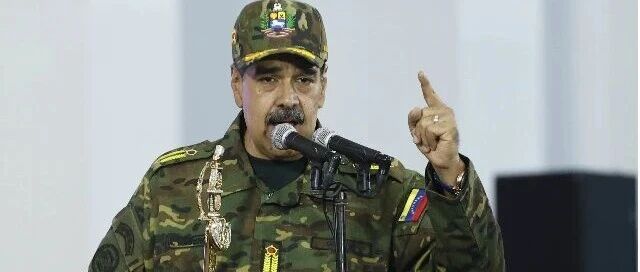
Core Viewpoint - The article discusses the recent military operation by the United States that led to the capture of Venezuelan President Nicolás Maduro and his wife, highlighting the involvement of the CIA and the strategic planning behind the operation [3][5][12]. Group 1: Military Operation Details - On January 3, 2026, explosions were reported in Caracas, Venezuela, followed by the announcement from U.S. President Trump that U.S. military successfully captured Maduro and his wife [3]. - The CIA had been monitoring Maduro's movements since August 2025, utilizing a team of operatives and drones for continuous surveillance [4][5]. - The operation was described as a result of deep cooperation between the CIA and U.S. military, involving months of planning [5]. Group 2: Aftermath and Implications - Following the capture, Maduro and his wife were transported to a U.S. military base in New York, where they are expected to face judicial proceedings [6][9]. - Trump stated that the U.S. would maintain control over Venezuela until a safe and proper power transition could occur, emphasizing the need for careful management of the situation [12]. - The U.S. plans to allow major oil companies to invest billions in Venezuela to repair its severely damaged infrastructure, particularly in the oil sector [12].
“让美大型石油公司进入 为委内瑞拉赚钱”!特朗普宣布将“管理”委内瑞拉 直至实施“安全”过渡 多国表态
Hua Xia Shi Bao· 2026-01-04 01:57
Core Viewpoint - The article discusses the recent military action by the United States against Venezuela, resulting in the capture of President Nicolás Maduro, which has been characterized by President Trump as a significant display of U.S. military power and a necessary intervention to restore order in Venezuela [4][5][10]. Group 1: Military Action and Its Implications - President Trump described the military action as unprecedented since World War II, claiming it demonstrated the effectiveness of U.S. military capabilities [4]. - Trump stated that all military capabilities of Venezuela have been "completely paralyzed," and he emphasized the U.S. intention to govern Venezuela until a safe power transition can occur [4][5]. - The U.S. military operation was portrayed as complex and highly effective, with Trump claiming no U.S. casualties or losses during the operation [8][9]. Group 2: Economic Interests - Trump indicated that the U.S. would allow major American oil companies to invest billions in Venezuela to repair its oil infrastructure, which he described as a long-standing failure [5]. - He reiterated the U.S. commitment to maintaining a complete oil embargo against Venezuela until U.S. demands are fully met [5]. Group 3: International Reactions - The Venezuelan government condemned the U.S. actions as a violation of international law and called for the immediate release of Maduro and his wife [10][14]. - Various countries, including Russia and France, expressed strong opposition to the U.S. military intervention, emphasizing the need to respect Venezuela's sovereignty and international law [14][17][22]. - Protests against the U.S. military action erupted in multiple U.S. cities, with demonstrators calling for an end to military intervention in Venezuela [11][13].
最新!特朗普披露马杜罗被抓细节,称美国将管理委内瑞拉!国际社会谴责美军事行动
Zheng Quan Shi Bao Wang· 2026-01-04 00:40
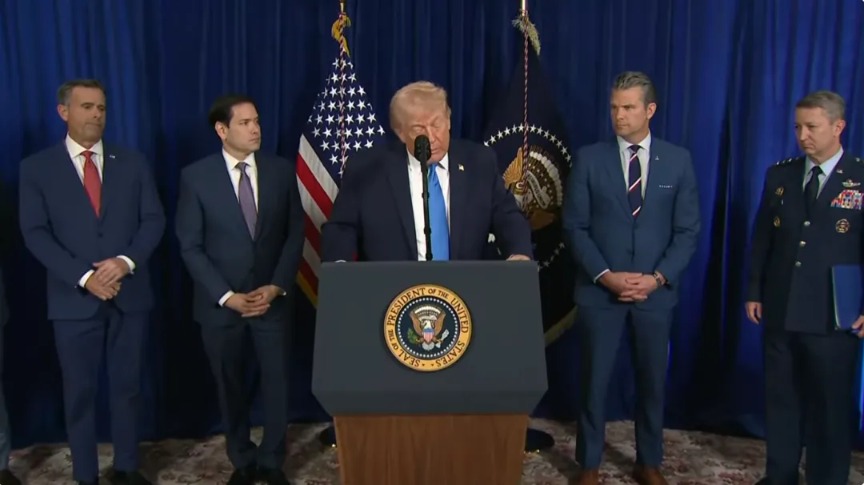
(原标题:最新!特朗普披露马杜罗被抓细节,称美国将管理委内瑞拉!国际社会谴责美军事行动) 最新消息。 当地时间1月3日,美国总统特朗普、国防部长赫格塞思等官员在佛罗里达州海湖庄园就美军对委内瑞拉 动武、将委内瑞拉总统马杜罗控制并移送出境举行记者会。 发布会前公布马杜罗被捕后照片 记者会上,特朗普表示,美军在行动中使用了空中、陆地和海上力量。特朗普称,"这是美国军事实力 和能力最令人震惊、最有效、最有力的展示之一。" 特朗普说,美军2日晚至3日凌晨动用包括"陆海空"三军在内的军事力量,出动直升机、飞机,突袭加拉 加斯市一座"戒备森严的军事堡垒",抓走马杜罗夫妇。行动中,美军没有一人死亡,也没有损失一件军 事装备。 美军将领:出动超150架飞机 特朗普称,委内瑞拉"所有军事力量都已丧失战斗力",马杜罗及其妻子都将面临美国司法审判,目前二 人在一艘即将前往纽约的船上。特朗普表示,执法部门在马杜罗夫妇高度戒备时将二人抓捕。 特朗普称将组建团队管理委内瑞拉 特朗普说,美国将继续掌管委内瑞拉,直到能够进行一次安全、妥当的权力交接,这种交接必须是审慎 的,因为这正是美国所坚持的原则。 特朗普没有为美国的占领设定时间限制。他 ...
最新消息速览!马杜罗已被送抵纽约!美国将掌管委内瑞拉!特朗普公布马杜罗蒙眼戴手铐照片……
Zheng Quan Shi Bao Wang· 2026-01-04 00:21
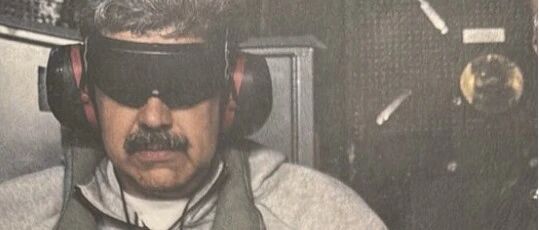
(原标题:最新消息速览!马杜罗已被送抵纽约!美国将掌管委内瑞拉!特朗普公布马杜罗蒙眼戴手铐 照片……) 当地时间1月3日上午,北京时间今天(1月4日)凌晨,美国总统特朗普、国防部长赫格塞思在佛罗里达 州海湖庄园就美军对委内瑞拉动武、将委内瑞拉总统马杜罗控制并移送出境举行记者会。 当地时间1月3日凌晨,委内瑞拉首都加拉加斯突然传出爆炸声,并响起防空警报。随后美国总统特朗普 宣布,美军成功对委内瑞拉实施打击,抓获委总统马杜罗及其夫人,并带离委内瑞拉。特朗普还说,马 杜罗夫妇已被带上美国海军"硫磺岛"号两栖攻击舰,正前往纽约,二人将面临美国司法审判。 载有马杜罗的飞机抵达美国纽约一处军事基地 当地时间1月3日,央视记者获悉,载有被美方抓捕的委内瑞拉总统马杜罗及其妻子弗洛雷斯的飞机已抵 达纽约斯图尔特空军国民警卫队基地。 美国司法部3日公布了针对马杜罗夫妇及其儿子的起诉书。预计马杜罗将于下周在纽约曼哈顿联邦法院 面临毒品和武器走私指控。 发布会前公布马杜罗被捕后照片,称其将在纽约受审 当地时间1月3日上午的记者会上,特朗普表示,美军在行动中使用了空中、陆地和海上力量。特朗普 称,"这是美国军事实力和能力最令人震惊、最 ...
最新消息速览!马杜罗已被送抵纽约!美国将掌管委内瑞拉!特朗普公布马杜罗蒙眼戴手铐照片……
券商中国· 2026-01-03 23:37
当地时间1月3日上午,北京时间今天(1月4日)凌晨,美国总统特朗普、 国防部长赫格塞思 在佛罗里达州海湖庄园就美军对委内瑞拉动武、将 委内瑞拉总统马杜罗控制并移送出境举行记者会。 当地时间1月3日凌晨,委内瑞拉首都加拉加斯突然传出爆炸声,并响起防空警报。随后美国总统特朗普宣布,美军成功对委内瑞拉实施打击,抓获委总 统马杜罗及其夫人,并带离委内瑞拉。特朗普还说,马杜罗夫妇已被带上美国海军"硫磺岛"号两栖攻击舰,正前往纽约,二人将面临美国司法审判。 载有马杜罗的飞机抵达美国纽约一处军事基地 当地时间1月3日,央视记者获悉,载有被美方抓捕的委内瑞拉总统马杜罗及其妻子弗洛雷斯的飞机已抵达纽约斯图尔特空军国民警卫队基地。 美国司法部3日公布了针对马杜罗夫妇及其儿子的起诉书。预计马杜罗将于下周在纽约曼哈顿联邦法院面临毒品和武器走私指控。 发布会前公布马杜罗被捕后照片,称其将在纽约受审 特朗普称,委内瑞拉"所有军事力量都已丧失战斗力",马杜罗及其妻子都将面临美国司法审判,目前二人在一艘即将前往纽约的船上。特朗普表示,执 法部门在马杜罗夫妇高度戒备时将二人抓捕。 美大型石油公司将进入委内瑞拉 当地时间1月3日上午的 记者会上 ...
特朗普称将让美国大型石油公司进入委内瑞拉,不排除二次打击
Xin Lang Cai Jing· 2026-01-03 17:11
特朗普表示,原本认为需要发动第二波行动,但现在看来可能不需要了。但是如果有必要,美国已准备 好发动第二轮攻击。(CCTV国际时讯) 当地时间1月3日上午,北京时间今天(1月4日)凌晨,美国总统特朗普、国防部长赫格塞思在佛罗里达 州海湖庄园就美军对委内瑞拉动武、将委内瑞拉总统马杜罗控制并移送出境举行记者会。特朗普称,没 有为美国的占领设定时间限制,"何时将委内瑞拉交还给委内瑞拉人将由美国决定"。他还谈到了石油, 声称将让美国大型石油公司进入委内瑞拉修复基础设施,"开始为委内瑞拉赚钱"。 ...