新门罗主义

Search documents
除了怒吼别无他法?美国强掳马杜罗背后的残酷现实丨深度
Xin Lang Cai Jing· 2026-01-04 15:54
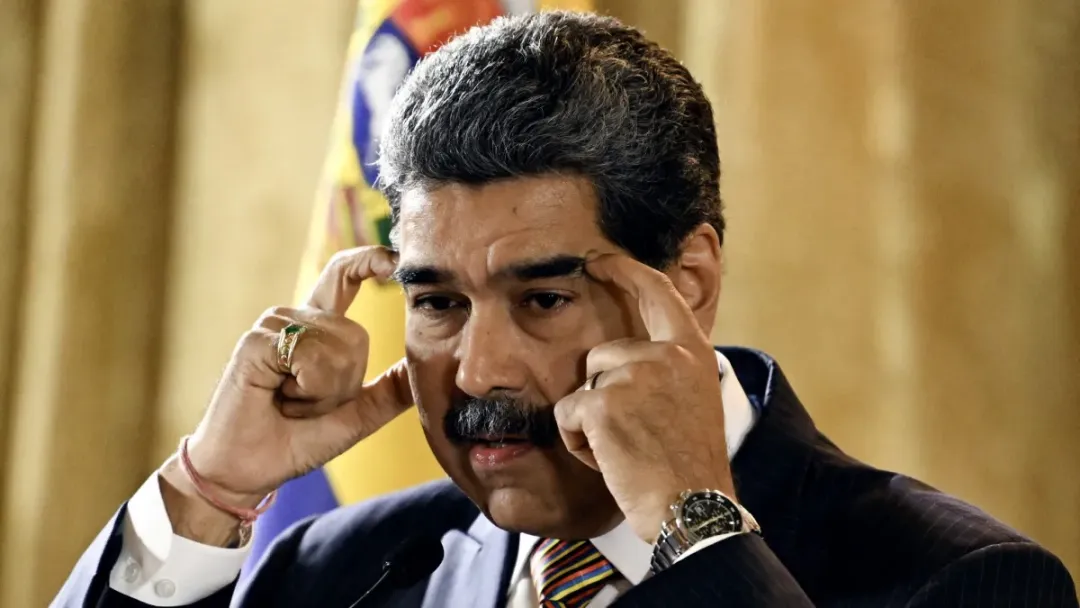
吕祥认为,国际社会对此的反应是明确且广泛的。从拉丁美洲的巴西、墨西哥、哥伦比亚,到欧洲乃至亚洲,全球形成了坚决反对这一侵略行为的强大共 识。他强调,无论美国如何为其行动寻找借口,这种公然违反国际法、践踏他国主权的行为都是不可接受的。然而,他也清醒地指出一个残酷现实:在当 前国际格局下,尤其是在西半球,尚无任何国家具备足够的政治或军事能力来有效抵制美国的此类霸权行径——这正是美国敢于如此肆无忌惮的根本原 因。 吕祥认为,美国此举的战略目标远不止于委内瑞拉一国。他指出,该行动带有强烈的威慑与恫吓色彩,意在向整个拉美地区、特别是左翼执政国家发出警 告,试图通过打击马杜罗政府影响未来各国选举走向,迫使它们的政策符合华盛顿的愿景。 (来源:直新闻) 当地时间1月3日,美国采取特别军事行动,公然进入委内瑞拉领土并强行控制其国家领导人,引发全球震惊。中国社会科学院美国问题研究专家吕祥在接 受直新闻采访时表示,这一行径不仅是对委内瑞拉主权赤裸裸的侵犯,更是对二战后国际法体系与多边秩序的沉重打击。他指出,此举标志着特朗普政府 正以前所未有的方式重启并强化其在西半球的"新门罗主义"。 "你要支持他的话,你就是丧失了你基本的道德人 ...

特朗普要如何“接管”委内瑞拉?
Xin Jing Bao· 2026-01-04 14:50
Core Viewpoint - The U.S. military conducted an operation in Venezuela, capturing President Maduro and his wife, which has sparked international condemnation and raised concerns about regional stability [1][2][12]. Group 1: U.S. Military Action - On January 3, the U.S. launched a military operation in Venezuela, resulting in the capture of President Maduro and his wife, who were taken to a U.S. detention center [1][7]. - President Trump announced that the U.S. would "manage" Venezuela until a safe and fair transition could be achieved [1][7]. - The operation has been described as a "large-scale attack," with reports indicating at least 40 casualties, including civilians and military personnel [7][12]. Group 2: International Reactions - The military action has drawn strong condemnation from multiple countries, with leaders asserting it violates Venezuela's sovereignty and threatens regional peace [2][14]. - The United Nations Secretary-General expressed shock at the escalation of tensions and warned of dangerous precedents [2][14]. - Various Latin American countries, including Cuba and Mexico, have denounced the U.S. actions as acts of aggression [14][17]. Group 3: Domestic Situation in Venezuela - Following the attack, the streets of Caracas were reported to be unusually quiet, with citizens queuing to stock up on supplies amid uncertainty [3][5][6]. - The Venezuelan Supreme Court appointed Vice President Delcy Rodríguez as acting president, ensuring continuity of governance [9][10]. - Reports indicate that while some areas experienced panic buying, overall public response remained orderly, with no significant unrest [5][6]. Group 4: Future Implications - Analysts suggest that the U.S. aims to control Venezuela's vast oil resources and may face challenges in managing the political landscape, given the strength of local leftist forces [8][13]. - The potential for further U.S. military actions remains uncertain, with Trump indicating readiness for additional strikes if necessary [7][12]. - The situation may lead to significant political and social upheaval in Venezuela, impacting the broader geopolitical landscape in Latin America [14][16].
2026开年第一炸,遇上第一劫
Xin Lang Cai Jing· 2026-01-04 07:40
Group 1: Venezuela's Economic Decline - Venezuela has transitioned from a prosperous nation to one of the most severe economic downturns globally, with 86% of its population living in poverty and a GDP contraction exceeding 70% since 1999 [1][3] - The country experienced hyperinflation, peaking at 10 million percent in 2019, leading to a situation where citizens used money as toilet paper rather than for purchases [3] Group 2: Geopolitical Implications - The U.S. has engaged in aggressive actions in Venezuela, viewing it as a strategic move in a broader geopolitical game, particularly concerning oil and resources [2][7] - The U.S. has signaled a new Monroe Doctrine, indicating that its interests in the Western Hemisphere will not be limited to Venezuela alone, suggesting a potential escalation in regional conflicts [8] Group 3: Commodity Market Reactions - The recent geopolitical tensions are expected to impact commodity markets, particularly gold and silver, with significant sell-offs anticipated due to rebalancing in the Bloomberg Commodity Index [10][12] - Analysts predict substantial sell-offs in precious metals, estimating around $3.8 billion in total for gold and silver due to market adjustments [11][12]
一文梳理 | 美国“闪击”委内瑞拉对大宗商品的影响
对冲研投· 2026-01-04 06:35
欢迎加入交易理想国知识星球 来源 | 财信期货研究 编辑 | 杨兰 审核 | 浦电路交易员 事件: 当地时间2026年1月3日凌晨,美军空袭委内瑞拉,抓获委内瑞拉总统。特朗普在随后的新闻发布会表示,将组建团队管理委内瑞拉,美国大 型石油公司将进入委内瑞拉。短期地缘风险爆发,市场波动将放大。 一、 美国、委内瑞拉两国关系历史回顾 19 世纪初,委内瑞拉独立后,美国通过 "门罗主义" 将其纳入势力范围,1902 年以债务纠纷对委实施海军封锁,强化了委的反美情绪。 20 世纪初,委内瑞拉发现石油,美国资本迅速涌入,美孚等公司控制其石油工业,形成 "资源控制 — 政治依附" 的模式,委成为美国重要 石油供应地。 二战后至冷战中期,美国长期扶持亲美政府,深度介入委石油业,将其视为拉美 "后院" 核心资产,双方保持合作但不平等的关系。 2、转向对抗时期 1998 年查韦斯当选总统,推行 "21 世纪社会主义",收回石油主权、反美反霸,美委关系彻底转向对抗。 2002 年 4 月,委发生短暂政变,查韦斯迅速复位,指责美国情报部门支持政变,成为双边关系恶化的关键节点。 2006 年,小布什政府以反恐不配合为由禁止向委出口武器 ...
兴业证券王涵 | 2026年潜在的六只地缘“黑天鹅”
王涵论宏观· 2025-12-30 05:30
Core Viewpoint - The report highlights the need for market participants to pay attention to potential geopolitical "black swan" events that could significantly impact global asset prices by 2026 [1][7]. Geopolitical Risks - The risk of escalation in the Russia-Ukraine conflict into a full-scale confrontation between Russia and Europe is increasing, driven by Russia's battlefield advantages and heightened concerns among Eastern European countries [9]. - The fragile peace in the Middle East and the Caucasus region poses a risk of renewed conflict, particularly with Israel potentially seeking decisive action to ensure its security amid a strategic U.S. withdrawal [14]. - The strategic balance in the South Asian subcontinent is under threat, as the U.S. shifts its focus away from the Indo-Pacific, potentially diminishing India's strategic value and increasing the likelihood of conflict with Pakistan [17]. - Domestic political risks in the U.S. are rising, particularly concerning Trump, as internal support fractures and external pressures mount, which could lead to increased political instability [22]. - Opportunistic strategic risks in the Asia-Pacific region may arise as the U.S. reduces its strategic presence, encouraging countries like Japan and the Philippines to take more adventurous actions [24]. - The rise of "new Monroe Doctrine" in South America could disrupt global trade and supply chains, as the U.S. seeks to assert its dominance in the region, increasing geopolitical risks [25]. Investment Recommendations - Despite the identified geopolitical risks, China's economic resilience and policy stability are viewed as crucial stabilizing factors for the global market [28]. - Investors are advised to establish a geopolitical risk monitoring framework, increase allocations to safe-haven assets like gold and the renminbi, and focus on regions that may benefit from uncertainty, particularly those closely linked to the Chinese economy [29].

美国对委内瑞拉施压的两个目的:石油与政权更迭
财富FORTUNE· 2025-12-22 13:29
Core Viewpoint - The article discusses the increasing U.S. military intervention in Venezuela, particularly in relation to its vast oil reserves, and how this aligns with Trump's national security strategy to exert greater influence in South America, which is becoming a key driver of global oil production [1][2]. Group 1: U.S. Intervention and Oil Politics - The U.S. has been actively intervening in Venezuela under the pretext of combating drug trafficking and illegal immigration, with military actions resulting in significant casualties [1][6]. - Venezuela possesses the largest proven oil reserves globally, yet its production has plummeted from nearly 4 million barrels per day in 2000 to approximately 960,000 barrels per day currently due to mismanagement and sanctions [5][6]. - Trump's administration aims to control oil supply to lower prices, reducing reliance on OPEC, and potentially increasing U.S. influence in the region [2][3]. Group 2: Corporate Involvement - Chevron is the only U.S. oil producer operating in Venezuela, producing about 25% of the country's oil, and has received a new restrictive license to continue operations despite sanctions [8]. - The geopolitical environment is challenging, but Chevron's CEO emphasizes the long-term potential of Venezuela's rich geological resources and the company's commitment to the local economy [8]. Group 3: Geopolitical Implications - The article highlights that U.S. actions in Venezuela are influenced by hawkish Republican politicians and local opposition to Maduro, advocating for greater military intervention [9]. - The potential for U.S. companies to profit from Venezuelan oil resources is a significant argument for intervention, with the expectation that a regime change could unlock this potential [9].

拉美拓展合作渠道消减对美依赖
Jing Ji Ri Bao· 2025-12-18 06:14
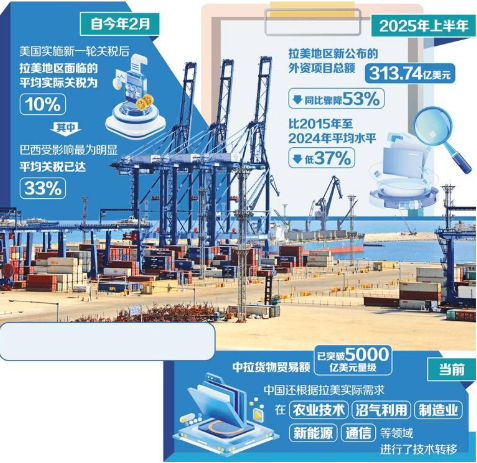
Core Viewpoint - The global tariff increase policy implemented by the U.S. government has significantly impacted the Latin American region, which is highly integrated with the U.S. economy. The UN Economic Commission for Latin America and the Caribbean (ECLAC) emphasizes the urgent need for these countries to reduce their trade dependence on the U.S. and pursue market diversification strategies [1][2]. Trade Dependency Challenges - Since the U.S. imposed a new round of tariffs in February, the average actual tariff faced by Latin America has reached 10%, with Brazil being the most affected at 33%. Despite a projected 5% growth in goods exports by 2025, structural risks remain [2]. - The current trade resilience is largely due to U.S. importers engaging in "front-loading" to avoid anticipated tariffs, indicating that this short-term prosperity is unsustainable. The negative impacts of tariffs are expected to become more pronounced by 2026 [2]. - Foreign investment attractiveness has been severely undermined, with new foreign investment projects in Latin America totaling only $31.374 billion in the first half of 2025, a 53% year-on-year decline and 37% below the average from 2015 to 2024. Investment in export-oriented industries targeting the U.S. market has contracted significantly, with declines exceeding 60% in sectors like automotive, consumer goods, and metal minerals [2]. Structural Transformation Setbacks - The deep dependence of Latin America on the U.S. market is rooted in over a century of "center-periphery" economic relations, with the Monroe Doctrine shaping U.S. policies towards the region. This has led to a dependency on primary product exports, resulting in weak industrial manufacturing and development capabilities [6]. - Despite efforts to promote industrial transformation, the region remains heavily reliant on primary product exports, particularly to the U.S. market, where a significant portion of imports in categories like bananas, sugar, and refined copper comes from Latin America [6]. - Internal structural challenges, such as high informal employment rates, tax system flaws, and inadequate infrastructure, complicate the path to reducing market dependency [7]. Diversified Cooperation for Solutions - To address tariff escalations and dependency issues, ECLAC recommends that regional countries deepen trade relations with diverse partners, including China, the EU, India, and ASEAN, while enhancing regional infrastructure connectivity and trade facilitation [8]. - The current U.S. administration's "America First" policy, characterized by exclusivity, poses challenges to Latin America's ability to collaborate with other major powers. However, the rise of the Global South offers new strategic opportunities for Latin America [8]. - Latin American countries are actively seeking diversified cooperation channels, focusing on practical collaboration with major economies and enhancing South-South cooperation through multilateral platforms [9]. Regional Integration Revitalization - Latin American regional integration is experiencing a resurgence, with leaders focusing on strengthening regional cooperation to collectively address external interventions and hegemonic actions. Countries like Brazil and Colombia are promoting regional integration processes in key areas such as security and energy connectivity [9].
特朗普称“全面关闭”委内瑞拉空域,美国真会对委动武吗?
Xin Jing Bao· 2025-12-05 06:03
Core Viewpoint - The escalating tensions between the United States and Venezuela are marked by military threats and diplomatic maneuvers, with the U.S. aiming to pressure the Maduro government for regime change under the guise of anti-drug operations [1][2][3]. Military Actions - The U.S. has deployed multiple warships in the Caribbean, claiming to target Venezuelan drug trafficking vessels, resulting in over 80 deaths since early September [1]. - The U.S. military has intensified its presence near Venezuela, with bombers and aircraft carriers operating close to its coast, indicating a significant military buildup [3][4]. - Military analysts suggest that the scale of U.S. military deployment exceeds what would be necessary for anti-drug operations, indicating a broader intention to challenge the Venezuelan government [4]. Diplomatic Communications - A phone call between President Trump and President Maduro on November 21 resulted in demands for Maduro's resignation by November 28, which Maduro rejected [2][4]. - Following the deadline, Trump declared that Venezuelan airspace should be considered "fully closed," signaling potential military action [5][6]. Strategic Intentions - The U.S. has labeled the Venezuelan drug organization "Sun Cartel" as a terrorist group, framing its military actions as counter-terrorism efforts [3]. - Analysts believe the U.S. aims to undermine the Maduro regime to establish a pro-American government, thereby gaining control over Venezuela's vast oil reserves [6][7]. Regional Implications - The U.S. strategy reflects a broader "right-wing" policy in Latin America, aiming to counter leftist governments in the region, with Venezuela being a key target [7]. - The potential for conflict has raised concerns among neighboring countries and international observers, with calls for restraint and dialogue [10]. Risk of Military Engagement - The risk of direct military confrontation is increasing, with Maduro emphasizing Venezuela's sovereignty and readiness to defend against foreign aggression [8][9]. - Experts suggest that any U.S. military action may involve targeted strikes rather than a full-scale invasion, which could have significant political repercussions domestically and internationally [9][10].
加勒比海,突发!
券商中国· 2025-11-16 02:00
Core Viewpoint - The article discusses the escalating military tensions in the Caribbean region, particularly focusing on the U.S. military exercises near Venezuela and the potential implications for regional stability and U.S.-Venezuela relations [2][3][4]. Group 1: Military Actions and Responses - The U.S. and Trinidad and Tobago are set to conduct military exercises near the coast of Venezuela, which Venezuelan President Maduro has condemned as irresponsible and a threat to regional peace [2][3]. - The U.S. has launched "Operation Southern Strike" to combat what it terms "drug terror" in the Western Hemisphere, marking the largest military deployment in the region in over 30 years [3][7]. - The U.S. military has reportedly sunk at least 20 vessels it claims were involved in drug trafficking since September, resulting in at least 80 deaths [6]. Group 2: Political Implications - Maduro has warned against U.S. military intervention, questioning whether the U.S. seeks to create another conflict similar to past invasions in Afghanistan, Vietnam, and Libya [5][4]. - The relationship between the U.S. and Venezuela has reached a critical point, with Maduro suspending natural gas cooperation with Trinidad and Tobago in response to U.S. actions [5][9]. Group 3: International Reactions - Iran has criticized the U.S. military activities in the Caribbean, urging respect for Venezuela's sovereignty and calling for United Nations action to maintain international peace [3]. - Legal experts have condemned the U.S. military actions as illegal, arguing that targeting civilians, even those suspected of crimes, violates international law [8].

美国要打委内瑞拉?西方智库称军事冒险或让西半球大乱
Zhong Guo Xin Wen Wang· 2025-10-01 19:50
Core Viewpoint - The article discusses the increasing military and economic pressure the Trump administration is exerting on Latin America, particularly Venezuela, marking a significant shift in U.S. foreign policy since the Cold War [1][5]. Group 1: Military Actions - The Pentagon is reportedly planning operations against "drug traffickers" in Venezuela, indicating a more aggressive stance compared to previous administrations [2]. - The U.S. has deployed multiple naval vessels and aircraft near Venezuela, including F-35s, and has conducted several maritime attacks resulting in the sinking of Venezuelan ships and loss of life [4]. - Venezuela's foreign minister has accused the U.S. of illegal military threats aimed at seizing the country's oil and gas resources [5]. Group 2: Regional Policy and Reactions - The U.S. has been vocal about its intentions in Latin America, threatening military action in various countries and increasing its military presence under the guise of a "war on drugs" [6][8]. - The Trump administration's approach has been characterized as "new Monroeism," with a focus on coercing Latin American countries to align with U.S. interests [10][11]. - Leaders from countries like Brazil, Venezuela, and Colombia have become targets of U.S. pressure, with some facing visa revocations and other punitive measures [11]. Group 3: Implications and Criticism - Analysts warn that the aggressive military strategy may lead to increased crime and instability in the region, countering the intended goals of the "war on drugs" [7][8]. - The article highlights that the majority of drug-related issues in Latin America are not directly linked to Venezuela, suggesting that U.S. actions may be misdirected [6][8]. - There is a growing call among Latin American leaders for diplomatic solutions to avoid conflict, contrasting with the U.S. military approach [11][13].