
法治政府建设

Search documents
司法部负责人就《行政执法监督条例》答记者问
Xin Lang Cai Jing· 2025-12-23 11:52
Core Viewpoint - The newly issued Administrative Law Enforcement Supervision Regulations aim to strengthen and standardize administrative law enforcement supervision, promote strict, standardized, fair, and civilized law enforcement, enhance the level of law-based administration, and reinforce the construction of a law-based government [1][2]. Group 1: Background of the Regulations - Administrative law enforcement supervision is a crucial part of the party and state supervision system, serving as a fundamental method for various levels of party committees and governments to coordinate administrative law enforcement work [2]. - Since the 18th National Congress of the Communist Party, the administrative law enforcement supervision system has been continuously improved, leading to significant progress in standardizing law enforcement behavior and enhancing the law enforcement system [2]. - Despite improvements, issues such as arbitrary charges, fines, inspections, and illegal enforcement still occur, indicating a need for legislative measures to further strengthen administrative law enforcement supervision [2]. Group 2: Scope of Administrative Law Enforcement Supervision - The regulations specify that supervision will cover the implementation of major decisions and deployments regarding administrative law enforcement by the central government, as well as various administrative law enforcement systems and practices [3]. - There will be enhanced qualification management and supervision of the qualifications of administrative law enforcement entities and personnel [4]. - Behavioral supervision will focus on issues such as failure to file cases, evasion of responsibility, improper enforcement practices, and arbitrary charges and fines [4]. Group 3: Methods of Administrative Law Enforcement Supervision - The regulations clarify supervision methods, allowing for comprehensive, all-process, and long-term supervision through daily, key, and special supervision [5]. - Key supervision will involve focused oversight on significant enforcement issues that have a major social impact, utilizing feedback mechanisms from enterprises and the public [5]. - Special supervision will be conducted by provincial-level administrative law enforcement supervision agencies on specific fields and issues that relate to economic and social development and public interests [5]. Group 4: Handling of Supervision Issues - The regulations standardize handling procedures for issues identified during supervision, including issuing supervision notices and requiring immediate corrections when possible [6]. - Results from administrative law enforcement supervision will be integrated into the evaluation of the effectiveness of law-based government construction [6]. - There will be enhanced collaboration between administrative law enforcement supervision and other oversight mechanisms, including government inspections and administrative reviews [6]. Group 5: Support for Administrative Law Enforcement Supervision - The regulations emphasize the need to strengthen the capacity building of the administrative law enforcement supervision team, enhancing both political and professional skills [7]. - There will be a push for standardized construction, with the establishment of standards for administrative law enforcement [7]. - Information technology will be leveraged to improve the integration of national administrative law enforcement supervision, utilizing big data, cloud computing, and artificial intelligence for rapid problem detection [7].
李强签署国务院令 公布《行政执法监督条例》
Xin Hua She· 2025-12-23 09:18
Core Viewpoint - The State Council of China has announced the implementation of the Administrative Law Enforcement Supervision Regulations, effective from February 1, 2026, aimed at enhancing and standardizing administrative law enforcement supervision to promote lawful governance and strengthen the rule of law in government [2]. Group 1: Overall Requirements - The regulations define administrative law enforcement supervision as a fundamental method for coordinating administrative law enforcement work and an essential part of the party and state supervision system [2]. - Emphasis is placed on balancing norms and guidance, prevention and correction, as well as supervision and assurance in administrative law enforcement supervision [2]. Group 2: Supervision Scope - The regulations specify the supervision of administrative law enforcement agencies in implementing major decisions and policies from the central government, as well as the lawful conduct of administrative enforcement [2]. - There is a focus on managing the qualifications of administrative enforcement entities and personnel, and on monitoring against illegal practices such as cross-regional enforcement and arbitrary fees [2]. Group 3: Supervision Methods - The regulations call for a comprehensive approach to supervision, utilizing daily, key, and special supervision methods [3]. - Specific measures include targeted supervision of significant administrative enforcement issues that have a major social impact, as well as special supervision in areas crucial to economic and social development [3]. Group 4: Supervision Handling - The regulations outline procedures for addressing issues identified during supervision, including issuing administrative supervision notices and opinions to prompt corrections [3]. - There is a focus on enhancing collaboration with oversight bodies and establishing communication and information-sharing mechanisms with government inspections and administrative reviews [3]. Group 5: Safeguard Measures - The regulations emphasize the need to strengthen the administrative law enforcement supervision workforce [3]. - They also call for the promotion of standardized administrative law enforcement practices and the improvement of integrated information systems for national administrative law enforcement supervision [3].
省政府召开常务会议 卢东亮主持
Xin Lang Cai Jing· 2025-12-21 01:12
Group 1 - The provincial government meeting, chaired by Governor Lu Dongliang, focused on energy technology innovation, innovation platform construction, food safety, natural forest protection and restoration, and the establishment of a rule-of-law government [1][2] - The meeting emphasized the importance of advancing energy transformation through new technologies, aiming to elevate the coal industry from low-end to high-end and transition coal products from primary fuels to high-value products [1] - A management approach for provincial laboratories was approved, highlighting the need for organized research based on national and provincial strategic demands, and promoting collaborative innovation between industry, academia, and research [1] Group 2 - The meeting approved a long-term plan for the protection and restoration of natural forests, recognizing them as valuable resources and emphasizing the need for coordinated management of natural and public forests [2] - There was a strong emphasis on advancing the construction of a rule-of-law government, enhancing legal awareness, and improving decision-making and administrative capabilities to support high-quality provincial development [2]
筑牢安全屏障 践行为民宗旨 服务经济发展
Xin Lang Cai Jing· 2025-12-19 18:23
Core Viewpoint - Beijing's legal and political system has made significant progress in enhancing public safety, legal services, and governance, contributing to a high-quality living environment and supporting the modernization of a mega-city [1][2][3][4][5] Group 1: Public Safety Achievements - Beijing has achieved a 20-year low in criminal cases, with a 100% resolution rate for homicide cases over the past 11 years and robbery cases over the past 7 years [2] - The city has implemented a comprehensive social security system, including the establishment of community safety initiatives like "Safe Campus" and "Safe Hospital," which have improved the overall security environment [2] - The community engagement in safety initiatives has been revitalized, with local groups actively participating in maintaining public safety [2] Group 2: Legal Services and Public Engagement - The proportion of civil, administrative, and public interest litigation handled by Beijing's procuratorial organs has increased to 39%, highlighting the effectiveness of public interest litigation in urban governance [3] - The Beijing courts have responded to public demand for legal services by establishing night courts and integrating various legal service platforms, providing over 12.86 million legal services in five years [3] - The administrative review process has been enhanced, with over 65,000 new applications received online, accounting for 43.6% of all cases, improving accessibility to legal recourse [3] Group 3: Business Environment and Legal Integration - The legal system in Beijing is actively supporting high-quality economic development by providing legal services tailored to business needs, including the resolution of commercial disputes [4][5] - Beijing courts have adjudicated 302,000 intellectual property cases over five years, ensuring comprehensive coverage for technology innovation platforms [5] - The establishment of the International Commercial Arbitration Center in Beijing and the creation of a provincial-level economic crime case acceptance center demonstrate the city's commitment to fostering a favorable business environment [5]
徐曙海主持召开市政府党组会议 持续提升法治政府建设水平 推动集中整治取得更大实效
Zhen Jiang Ri Bao· 2025-12-08 23:54
会议还研究了其他事项。 市政府党组成员张克、周凯、黄春年、尹卫民、贾敬远、戴卫东参加会议。副市长武鸣列席会议。 (记者 陈志奎) 会议指出,习近平总书记的重要指示为新征程上推进全面依法治国指明了前进方向。党中央时隔五 年再次召开中央全面依法治国工作会议,充分彰显了党中央对全面依法治国一以贯之的高度重视和厉行 法治的坚定决心。要深入践行习近平法治思想,坚定不移走中国特色社会主义法治道路,坚持党的领 导、人民当家作主、依法治国有机统一,推动现代化新镇江建设始终在法治轨道上行稳致远。要健全法 治体系,坚持协同推进,构建法治与改革、发展、稳定协调推进的长效机制;加强立法供给,主动推动 新兴领域立法探索;加强监督评估,推动形成闭环管理。要优化政府治理,健全依法决策机制,强化公 众参与、专家论证、风险评估、合法性审查、集体讨论决定刚性约束,坚持法治护航市场秩序、依法保 障群众权益,切实夯实改革发展保障。要强化组织保障,切实担负起推进法治政府建设的主体责任,定 期研究、部署、协调法治政府建设重大事项,督促政府职能部门树立法治观念、严格依法办事,提升基 层法治能力,加强法治文化建设,为建设更高水平法治镇江凝聚合力。 会议强调 ...
水利部举办“12·4”国家宪法日专题讲座
Shui Li Bu Wang Zhan· 2025-12-05 14:38
Core Viewpoint - The lecture organized by the Ministry of Water Resources emphasizes the importance of rule of law in government administration, particularly in the water sector, addressing challenges and requirements for effective governance in the new era [1] Group 1: Key Themes of the Lecture - The core essence and requirements of lawful administration in the new era were systematically explained, highlighting the need for a law-based government [1] - The lecture analyzed the key tasks and real challenges of lawful administration within the water sector, focusing on the importance of legal norms and governance [1] - Basic requirements and key tasks for higher-level lawful administration were discussed, including the scientific nature of the legal norm system and rational government-market relations [1] Group 2: Participants and Format - The lecture was attended by senior officials from the Ministry of Water Resources, including the Chief Planner and Chief Economist, as well as all civil servants in the ministry [1] - Various subordinate units participated in the lecture through online video format, indicating a broad engagement across the ministry [1]
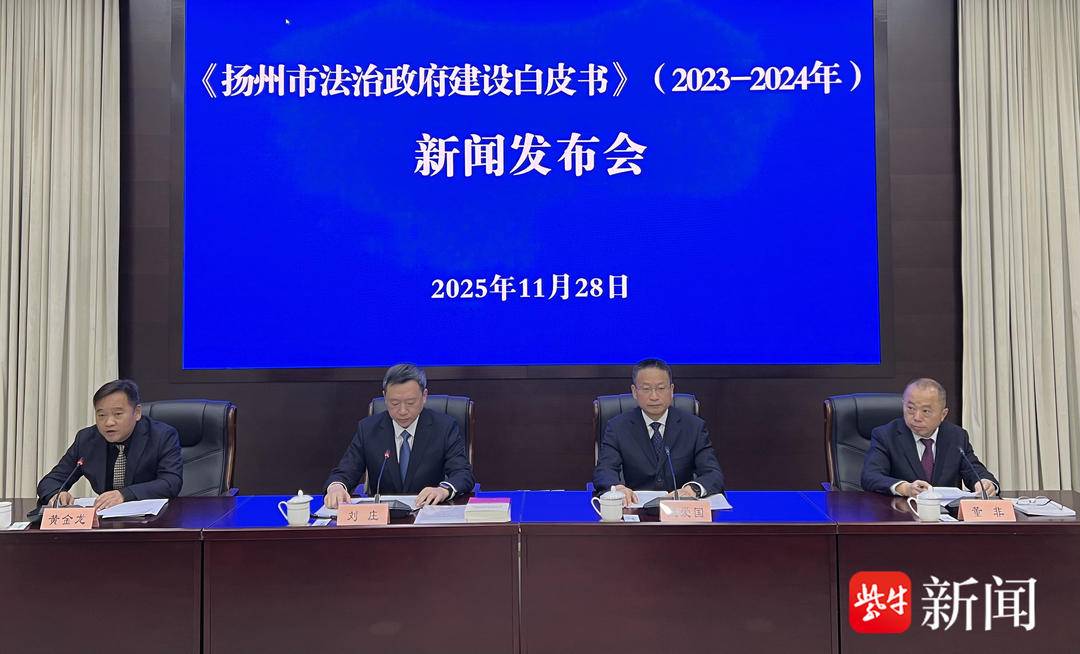
聚焦重点领域和关键环节客观展示建设成果,2023-2024年度《扬州市法治政府建设白皮书》发布
Yang Zi Wan Bao Wang· 2025-11-28 10:14
11月28日下午,扬州市政府召开新闻发布会,向社会发布《扬州市法治政府建设白皮书》(2023-2024年度)相关情况。市政府办公室副主任、市政府新闻发 言人刘庄主持新闻发布会。 记者了解到,白皮书共14.6万字,由总报告、法治政府建设典型案例、专题报告等三部分组成,展现各地、各相关部门和单位依法依规履行法定职责的工 作情况,全面、客观反映法治政府建设的全过程各方面。白皮书完善述法考核机制,完善依法行政工作体系,明确政府职责边界;扎实推进科学立法、民 主立法、依法立法,加强行政规范性文件监督管理;完善重大行政决策程序,规范重大行政决策行为,健全重大行政决策制度;深化行政执法体制改革, 推进重点领域监管和执法;构建平急一体化的应急指挥体制,加强行政复议应诉工作,推进行政争议实质性化解;完善行政权力制约和监督体系,突出人 大监督、政协民主监督,加大对重点领域和关键环节行政权力的监督,促进行政权力规范透明运行。 据悉,白皮书内容丰富、数据翔实、案例鲜活,聚焦法治政府建设的重点领域和关键环节,通过数据、案例等形式展示我市法治政府建设取得的成果,重 点介绍了优化营商环境、提升政务服务效能、强化行政执法监督、完善矛盾纠纷多 ...

市政府法律顾问工作会议召开 徐曙海出席并讲话
Zhen Jiang Ri Bao· 2025-11-22 00:00
Core Points - The city government held a meeting to summarize the work of legal advisors and appoint a new team of legal advisors, emphasizing the importance of legal counsel in promoting the rule of law and supporting economic and social development [1][2] Group 1 - The new legal advisors were selected through a rigorous process and are expected to contribute significantly to the government's legal decision-making and administration [1][2] - The meeting highlighted the role of legal advisors in providing legal support for economic policies, major contracts, and asset management, aligning with national policy directions [2] - Legal advisors are tasked with enhancing risk assessment for major decisions and projects, ensuring effective legal support during emergencies, and acting as guardians against legal risks [2] Group 2 - The city government aims to build a high-quality professional team of legal advisors who adhere to principles of independence, objectivity, and fairness [2] - There is a focus on improving the quality of legal services and enhancing the ability to address new challenges and conflicts [2] - The implementation of the legal advisor system is emphasized as a means to support the rule of law and regulate the exercise of administrative power [2][4]
业务丛谈丨护航企业安心经营健康成长
Zhong Yang Ji Wei Guo Jia Jian Wei Wang Zhan· 2025-11-20 00:30
Core Viewpoint - The article emphasizes the importance of addressing issues that severely impact market order, such as corruption and improper law enforcement, to promote a fair and just business environment [1] Group 1: Supervision and Accountability - The article outlines a comprehensive supervision mechanism involving various stakeholders, including party organizations and government departments, to ensure accountability in optimizing the business environment [2] - A special supervision initiative called "Business Environment Clean Wind" is established to enhance collaboration among different supervisory bodies and improve the handling of complaints and suggestions [2] Group 2: Case Handling and Enforcement - The article stresses a "zero tolerance" approach towards actions that harm the business environment, with a focus on facilitating major project implementation and ensuring fair administrative practices [3] - It highlights the need for a negative list of actions that undermine the business environment, with targeted governance measures based on industry and specific issues [3] Group 3: Legal Framework and Governance - The article discusses the integration of various supervisory roles, including legislative and judicial oversight, to strengthen the rule of law in government operations [4] - It advocates for the establishment of clear guidelines for government interactions with businesses, aiming to create a transparent and accountable relationship [4]
三亚获评全国法治政府建设示范市
Hai Nan Ri Bao· 2025-11-18 01:37
Core Viewpoint - Sanya has been recognized as a national model city for the construction of a law-based government, marking a significant achievement for Hainan Province in promoting legal governance and enhancing the business environment [2][4]. Group 1: Legal Governance and Business Environment - Sanya has implemented innovative online services through the Haiyi Ban platform, allowing businesses to submit applications across provinces easily [2]. - The city has achieved a 99.42% rate for "zero-run" services at the municipal level, with 2,254 items available for provincial processing and 831 items for cross-provincial processing [3]. - The introduction of the "Sanya City Optimization of Business Environment Regulations" provides a solid institutional guarantee for the market-oriented, law-based, and international construction of the business environment [4]. Group 2: Administrative Efficiency and Service Innovation - Sanya has launched the first government service e-commerce store in the country, allowing citizens to order services online, including the delivery of certificates directly to their homes [3]. - The city has implemented measures to streamline project approval processes, reducing approval times by over 30% through initiatives like the "no-fee zone" for enterprise establishment [3]. Group 3: Law Enforcement and Consumer Protection - Sanya has established a "first compensation" mechanism through the "Sanya Rest Assured Travel" platform, ensuring rapid processing of tourist complaints with a target of 3 minutes for acceptance and 30 minutes for compensation [6]. - The city has developed a comprehensive credit system for businesses, enhancing consumer confidence through transparent access to business credit ratings and records [5][6]. Group 4: Environmental and Social Governance - Sanya has introduced targeted regulations in ecological protection, such as the "Sanya River Ecological Protection Management Regulations," promoting high-quality development in environmental governance [7]. - The city has established a multi-faceted dispute resolution mechanism, exemplified by the successful resolution of an international divorce case through online mediation [7][8]. Group 5: International Legal Services - The establishment of the second international commercial court in Hainan Free Trade Port aims to provide high-level legal services for foreign-related cases, enhancing the region's openness [8]. - The court has implemented bilingual legal documents and training programs to support foreign litigants, facilitating better understanding and participation in legal processes [8].