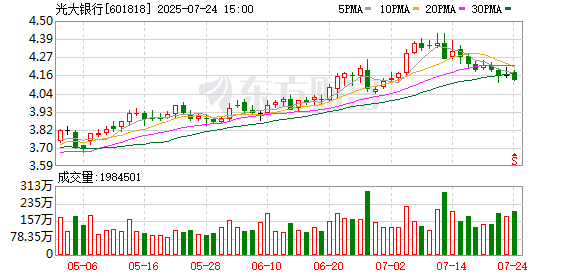
银行股增持

Search documents
大手笔!中信金融资产22.25亿元增持光大银行,银行股年内频获增持
Hua Xia Shi Bao· 2025-07-25 01:00
Core Insights - CITIC Financial Asset has significantly increased its stake in Everbright Bank, raising its shareholding from 7.08% to 8.00% through the acquisition of 0.92% of shares, amounting to approximately 2.225 billion RMB [2][4] - The investment plan announced in November aims to optimize investment strategies with a total investment scale not exceeding 50.3 billion RMB, including up to 26 billion RMB for Bank of China and 4 billion RMB for Everbright Bank [3] - The trend of asset management companies (AMCs) increasing their stakes in national banks while reducing their holdings in local banks reflects a strategic resource reallocation based on market conditions [2][6] CITIC Financial Asset's Investment Strategy - CITIC Financial Asset, established in 1999, aims to maximize shareholder value through a comprehensive investment strategy that includes increasing stakes in banks [3] - The company has been actively expanding its investment scale, with a new asset management plan of up to 60 billion RMB launched in February 2024, investing in various companies [5] - The growth in equity investment has been a major driver of profit, with a reported net profit of 9.618 billion RMB in 2024, a 5.4-fold increase from 2023 [5] Market Trends and AMC Activities - Several AMCs have been increasing their stakes in national banks, with notable examples including Changcheng Asset acquiring over 3% of Minsheng Bank and China Cinda converting its holdings in Pudong Development Bank [6][7] - The overall trend shows that while AMCs are increasing their investments in national banks, they are divesting from local banks, aligning with regulatory guidance to focus on core business areas [7][8] - The banking sector has seen a strong performance, with many listed banks achieving significant stock price increases, indicating a favorable market environment for investments in national banks [6][7]



一股份行高管暂未实施增持计划!
Zhong Guo Ji Jin Bao· 2025-07-11 00:25
Core Viewpoint - Huaxia Bank has not implemented its share buyback plan due to the information disclosure window period and fluctuations in the secondary market, despite the management's confidence in the bank's long-term investment value [2]. Group 1: Share Buyback Plan - Huaxia Bank announced that the implementation period for its share buyback plan has passed the halfway mark, but the plan has not been executed due to various factors [2]. - The bank's management expressed confidence in the bank's future development and plans to opportunistically increase their holdings during the remaining period of the buyback plan [2]. - The buyback plan was initially announced on April 10, with executives and key personnel planning to invest at least RMB 30 million over a six-month period starting from April 11, 2025 [2]. Group 2: Stock Performance - Huaxia Bank's stock price has shown an upward trend this year, rising from a low of RMB 7.17 per share on April 30 to RMB 8.58 per share as of July 10, representing an 18.06% increase [2]. - The bank's total market capitalization reached RMB 136.5 billion as of July 10 [3]. Group 3: Financial Performance - As of the end of the first quarter, Huaxia Bank reported total assets of RMB 45,211.99 billion, a year-on-year increase of 3.31% [3]. - The bank's operating income for the same period was RMB 18.194 billion, reflecting a year-on-year decline of 17.73% [3]. - The net profit attributable to shareholders was RMB 5.063 billion, down 14.04% year-on-year [3]. Group 4: Industry Context - Huaxia Bank is not the only bank to delay its share buyback plan this year; Chengdu Bank also announced a similar situation due to its stock price exceeding the buyback price limit [4]. - Chengdu Bank's major shareholders have not executed their buyback plan, which was initially set to acquire between 39.7944 million and 79.5887 million shares [4]. - The recent trend of banks postponing buyback plans may indicate a shift in market dynamics, as rising stock prices could diminish the attractiveness of such investments [5].



一股份行高管暂未实施增持计划!
中国基金报· 2025-07-11 00:08
Core Viewpoint - Huaxia Bank has not implemented its share buyback plan due to the information disclosure window period and fluctuations in the secondary market, despite the management's confidence in the bank's long-term investment value [2][4]. Group 1: Share Buyback Plan - On July 10, Huaxia Bank announced that its share buyback plan has not been executed as the implementation period has passed halfway, influenced by the information disclosure window and market volatility [2]. - The bank's management expressed confidence in the future development prospects and plans to opportunistically increase their holdings during the remaining period of the buyback plan [2]. - The buyback plan was initially announced on April 10, with executives and key personnel intending to invest at least RMB 30 million over a six-month period starting from April 11, 2025 [2]. Group 2: Stock Performance - Huaxia Bank's stock price has shown an upward trend this year, starting from a low of RMB 7.17 per share on April 30, leading to a significant increase [3]. - As of July 10, the stock price reached RMB 8.58 per share, resulting in a total market capitalization of RMB 136.5 billion, reflecting an 18.06% increase since April 10 [4]. Group 3: Financial Performance - Despite the positive stock performance, Huaxia Bank's financial results for the first quarter indicate some pressure, with total assets amounting to RMB 45,211.99 million, a 3.31% increase from the end of the previous year [4]. - The bank reported operating revenue of RMB 18.194 billion, a year-on-year decrease of 17.73%, and a net profit attributable to shareholders of RMB 5.063 billion, down 14.04% year-on-year [4]. Group 4: Industry Context - Huaxia Bank is not the only bank to delay its buyback plan this year; Chengdu Bank also announced a similar situation due to its stock price exceeding the buyback price limit [5]. - The recent trend of bank executives and shareholders postponing buyback plans may indicate a decrease in the attractiveness of the current valuations, raising concerns about potential market shifts [5].

银行股增持潮起
Jing Ji Guan Cha Wang· 2025-07-10 13:27
Core Viewpoint - The banking sector in China is experiencing a notable increase in internal capital increases, reflecting growing confidence in the long-term value of banks as both executives and major shareholders actively participate in stock buybacks [1][2][3]. Group 1: Executive and Shareholder Actions - Several banks, including Huaxia Bank and Jiangsu Bank, have initiated or completed stock buyback plans, indicating a trend where bank executives and major shareholders are taking proactive steps to invest in their own companies [1][2]. - Huaxia Bank announced a voluntary buyback plan of at least 30 million yuan, although its implementation has been delayed due to market conditions [1][2]. - Jiangsu Bank's executives completed their buyback plan ahead of schedule, investing 24.28 million yuan, which is 121.39% of the planned minimum amount [1][2]. Group 2: Broader Industry Trends - Over ten banks, including Suzhou Bank and Chengdu Bank, have disclosed similar buyback plans in 2023, suggesting a widespread trend within the banking industry [1][2]. - The actions of bank executives and shareholders are interpreted as a signal of confidence in the banks' future performance and stock prices, as they are willing to invest their own funds and bear market risks [2][3]. Group 3: Market Reactions and Valuation - The stock buyback announcements have provided short-term support for stock prices, with Jiangsu Bank's stock rising by 0.74% following its announcement [5]. - The average price-to-book (PB) ratio for A-share banks is currently at 0.6, with some city commercial banks below 0.5, indicating that the banking sector is undervalued [5]. - The average dividend yield for the banking sector is 3.86%, making it attractive for long-term investors, especially in light of regulatory measures encouraging long-term capital inflows [4]. Group 4: Long-term Challenges - Despite the positive signals from buybacks, the banking sector faces deeper challenges, including narrowing net interest margins and asset quality issues that have not been fundamentally resolved [5][6]. - The effectiveness of buybacks in stabilizing stock prices may be limited if they do not coincide with improvements in operational efficiency and fundamental performance [5][6].



一银行高管,超额完成增持计划
Zhong Guo Ji Jin Bao· 2025-07-09 13:10
Core Viewpoint - Jiangsu Bank's executives have exceeded their shareholding increase plan, accumulating a total of 2,427.82 million yuan in share purchases, reflecting strong confidence in the bank's future prospects and value [1][2]. Group 1: Shareholding Increase Details - As of July 9, Jiangsu Bank's senior management and other mid-level executives have cumulatively increased their holdings by 2.1648 million shares, amounting to approximately 2,427.82 million yuan, which is 121.39% of the lower limit of the planned increase [2]. - Prior to this increase, the total shares held by these executives were 3.7866 million, representing 0.02% of the total share capital; after the increase, the total shares rose to 5.9514 million, accounting for 0.03% of the total share capital [2]. - The shareholding increase plan was announced on April 9, with a commitment to invest at least 20 million yuan over six months, with no price range set for the purchases [2]. Group 2: Financial Performance - As of the end of the first quarter, Jiangsu Bank reported total assets of 4.46 trillion yuan, a year-on-year increase of 12.94% [3]. - The bank achieved operating income of 22.304 billion yuan, reflecting a year-on-year growth of 6.21%, and a net profit of 9.78 billion yuan, which is an 8.16% increase compared to the previous year [3]. Group 3: Market Context - Bank stocks have been favored in the market this year, with over ten banks, including Jiangsu Bank, experiencing shareholding increases from shareholders or executives [4]. - The trend of executives increasing their holdings is seen as a response to the positive market performance of bank stocks, indicating confidence in the sector's future [5].
一银行高管,超额完成增持计划!
中国基金报· 2025-07-09 12:54
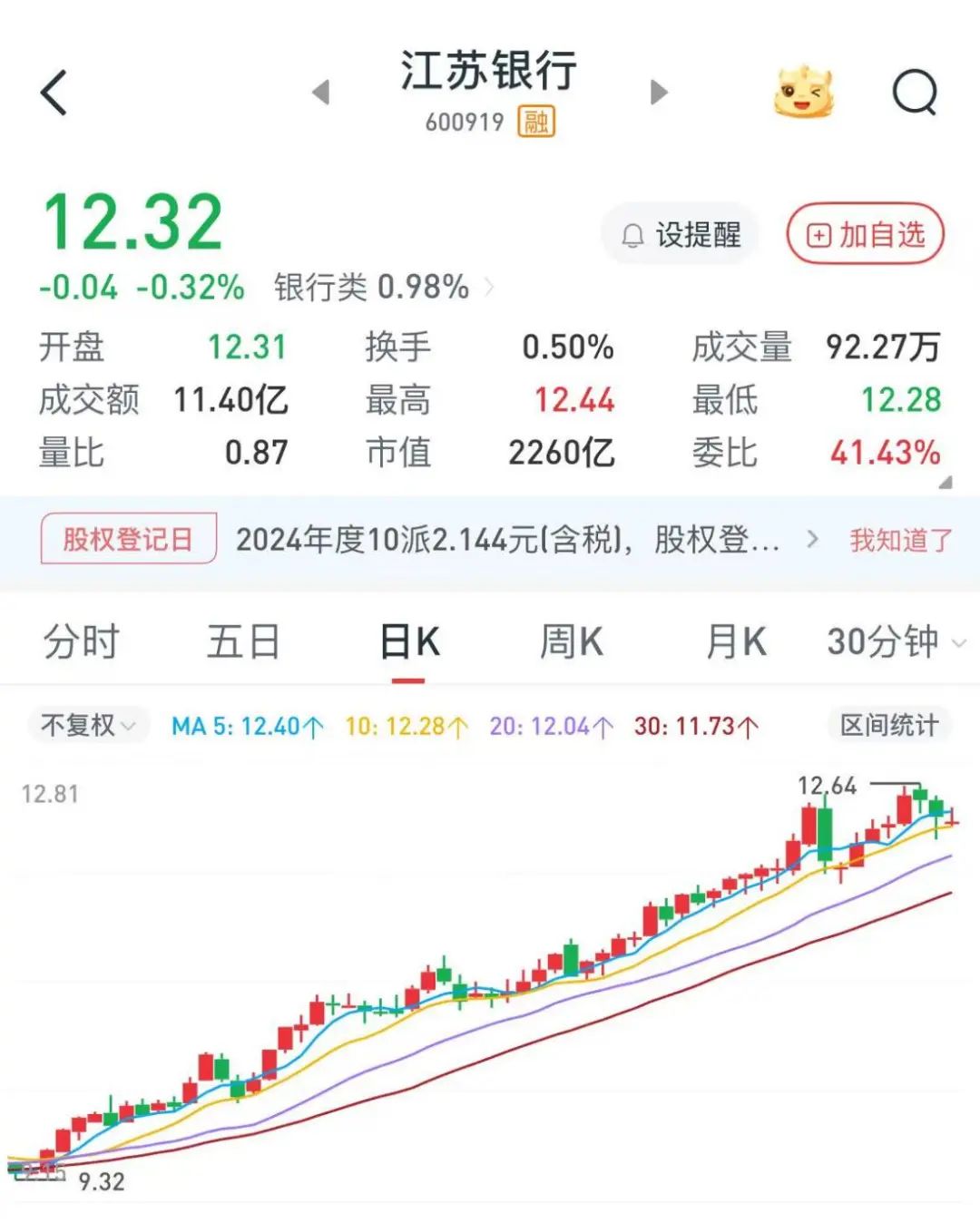
Core Viewpoint - Jiangsu Bank's executives have exceeded their shareholding increase plan, accumulating a total of 2,427.82 million yuan in share purchases, reflecting confidence in the bank's value and future prospects [2][4]. Summary by Sections Executive Shareholding Increase - As of July 9, Jiangsu Bank announced that senior management and other mid-level executives have cumulatively increased their holdings by 2,164,800 shares, amounting to approximately 2,427.82 million yuan, which is 121.39% of the planned minimum increase [4]. - Prior to this increase, these executives held a total of 3,786,600 shares, representing 0.02% of the bank's total equity. Post-increase, their holdings rose to 5,951,400 shares, accounting for 0.03% of total equity [4]. Performance and Market Response - Jiangsu Bank's stock has performed strongly this year, reaching a price of 12.32 yuan per share as of July 9, with a total market capitalization of 226 billion yuan and a year-to-date increase of 29.53% [4]. - The bank's total assets stood at 4.46 trillion yuan as of the end of the first quarter, reflecting a year-on-year growth of 12.94%. The bank reported operating income of 22.304 billion yuan, up 6.21% year-on-year, and a net profit of 9.78 billion yuan, an increase of 8.16% [5]. Broader Industry Trends - The banking sector has seen a trend of increased shareholding by executives and shareholders, with over ten banks, including Jiangsu Bank, experiencing such increases this year [7]. - Analysts suggest that the continuous increase in shareholding by bank executives indicates a positive outlook on the banking sector's future and a demand for asset appreciation in a low-interest-rate environment [7].

高管、股东齐聚增持45.7亿元 银行板块成今年“香饽饽”
2 1 Shi Ji Jing Ji Bao Dao· 2025-05-20 03:13
Group 1 - Lanzhou Bank announced that some supervisors and management personnel have cumulatively increased their holdings by 12.53 million shares, accounting for 0.22% of the total share capital, with an investment amount of 29.9 million yuan, exceeding the lower limit of the planned increase [1] - Since the beginning of the year, 11 banks have been subject to shareholder and executive increases, totaling 510 million shares and involving 4.57 billion yuan [1][5] - The banking sector's market value has reached new highs this year, surpassing 10 trillion yuan [1][6] Group 2 - Lanzhou Bank's major shareholders are required to increase their holdings by at least 15% of the cash dividends from the previous year, with a total increase amounting to no less than 26.94 million yuan [2] - As of now, the related parties have cumulatively increased their holdings by 12.36 million shares, accounting for 0.2170% of the total share capital, with a total investment of 29.49 million yuan [2] - Recent announcements from multiple banks indicate significant increases in shareholdings by executives, with total amounts exceeding 70 million yuan [3][4] Group 3 - Insurance funds have been actively acquiring bank stocks, with Ping An Life increasing its holdings in Agricultural Bank of China and Postal Savings Bank of China [6][7] - Ping An Life has made multiple acquisitions this year, including three banks, with significant increases in shareholding percentages [6] - The banking sector has shown defensive characteristics amid external uncertainties, supported by various financial policies aimed at stabilizing the market [7]
大股东高管齐出手 多家A股银行获“真金白银”增持
Zheng Quan Ri Bao· 2025-04-11 15:42
Core Viewpoint - Since 2025, A-share listed banks have seen significant increases in shareholding by executives and major shareholders, particularly accelerating since April 2023, driven by policy guidance, market confidence, and valuation recovery needs [1][4]. Group 1: Recent Actions and Announcements - On April 9, Huaxia Bank announced that its directors, supervisors, and senior management plan to voluntarily increase their shareholding by at least 30 million yuan within six months starting from April 11, 2025 [2]. - Jiangsu Bank also reported that its senior management and some directors plan to increase their A-share holdings by at least 20 million yuan through concentrated bidding [2]. - Postal Savings Bank and Chengdu Bank disclosed their major shareholders' ongoing shareholding increases, with Postal Savings Bank's major shareholder increasing 19.91 million shares, representing 0.02% of its total issued shares [2]. Group 2: Market Impact and Analyst Insights - The recent surge in shareholding among A-share listed banks reflects confidence from both local state-owned platforms and internal management teams regarding the banks' fundamentals [3]. - Analysts predict that this trend will boost market sentiment, attract long-term investors to the banking sector, and enhance governance structures by aligning management interests with shareholder returns [3][4]. - The scale of shareholder increases is expected to grow, particularly among state-owned banks due to their strong capital positions and lower valuations, while regional banks may also participate if supported by shareholders [4].


关税博弈下的银行股:华夏银行获3000万增持,青岛银行称涉美业务影响有限
Jin Rong Jie· 2025-04-10 17:55
Core Viewpoint - The banking sector shows resilience amid market volatility and concerns over the impact of new U.S. tariffs, with significant capital inflows and a wave of share buybacks from bank executives signaling confidence in asset quality [1][4]. Group 1: Market Performance and Capital Inflows - On April 9, the Shanghai Composite Index rose by 1.16%, with a net inflow of 9.58 billion yuan into the banking sector, making it one of the top five industries for capital inflow that day [1]. - Despite the positive market movement, concerns about bank stocks persist due to the new round of "reciprocal tariffs" in the U.S. [1]. Group 2: Regional Differentiation in Tariff Impact - The impact of U.S. tariffs on the banking industry exhibits significant regional differentiation, with banks like Qingdao Bank reporting limited exposure to U.S. trade, while coastal banks with high foreign trade dependence, such as Ningbo Bank, saw stock price declines exceeding 8% [2]. - Economic structure differences explain this regional disparity, as state-owned banks and those focused on domestic demand have a retail business share exceeding 40%, while some coastal city commercial banks have over 30% of loans to foreign trade enterprises [2]. Group 3: Policy Support and Loan Composition - Policy measures are providing a buffer against regional risks, with consumer loans accounting for 6.9% of new loans in 2024, allowing banks with a retail focus to offset declines in foreign trade lending [3]. - Qingdao Bank reported an 18% growth in consumer loans for 2024, significantly outpacing the growth of corporate loans, indicating a strategic shift to bolster resilience against external shocks [3]. Group 4: Share Buyback Trends - A recent wave of share buybacks in the banking sector includes announcements from Huaxia Bank and Jiangsu Bank, reflecting confidence in asset quality and a belief that the current price-to-book ratio of 0.57 offers a safety margin [4]. - Despite some institutions not recognizing long-term investment value in Huaxia Bank, its stock outperformed the industry index by 3.2 percentage points over ten trading days, indicating active market interest [4]. Group 5: Valuation and Dividend Strategies - Shanghai Bank's commitment to a minimum dividend payout ratio of 30% over the next three years, along with similar announcements from other banks, marks a shift from passive defense to proactive management of market valuation [5]. - This strategy aims to address the long-standing undervaluation of bank stocks, which have been trading below net asset value [5]. Group 6: Defensive Attributes and Interest Margin - The banking sector's defensive characteristics were reaffirmed during market volatility, with bank stocks experiencing a decline of only 4.67% compared to a 12.5% drop in the ChiNext Index [6]. - Qingdao Bank reported a net interest margin of 1.73%, ranking eighth among 23 A-share listed banks, while the six major banks saw a narrowing decline in interest margins to within 10 basis points [6][7]. Group 7: High Dividend Strategy - The current dividend yield of the banking sector, compared to the 10-year government bond yield, has created a rare investment opportunity, with the spread reaching 220 basis points [7]. - For instance, Industrial and Commercial Bank of China has a dividend yield of 5.68% with a price-to-book ratio of 0.59, suggesting a potential upside of 35% if valuations revert to historical averages [7].