Interest Rate Cuts

Search documents
Bank of England stands pat on interest rates, but cuts expected ahead
Yahoo Finance· 2026-02-05 07:41
LONDON (AP) — The Bank of England kept its main interest rate unchanged at 3.75% on Thursday with U.K. inflation remaining above target and economic growth is showing signs of picking up. The decision was widely anticipated in financial markets but the split on the nine-member rate-setting panel was much closer than expected. Five members of the Monetary Policy Committee opted to keep rates unchanged while four voted for a quarter-point cut. The central bank, which sets interest rates for the whole of t ...
3 ETFs to Buy ASAP Before Jerome Powell's Term Ends in May
247Wallst· 2026-02-04 19:40
Core Viewpoint - The nomination of Kevin Warsh as the next Federal Reserve Chair by Donald Trump could lead to significant benefits for certain ETFs, particularly in the financial and real estate sectors, as Warsh is expected to advocate for interest rate cuts while managing the Fed's balance sheet effectively [1][3]. Financial Sector - Warsh's background includes serving on the Fed's Board of Governors and negotiating survival plans for major financial institutions during the 2008 crisis, indicating his experience and influence in the financial sector [2]. - Lower interest rates are anticipated to boost loan demand and refinancing, which would drive revenue for banks, benefiting ETFs like the Financial Select Sector SPDR ETF (XLF) [5]. - The XLF ETF has a low expense ratio of 0.08% and is positioned for potential outperformance as the Fed eases supervisory intensity [6]. Small-Cap Stocks - Small-cap stocks, represented by the iShares Core S&P Small-Cap ETF (IJR), are highly sensitive to interest rate changes, with many relying on loans for expansion [8]. - Historical data shows that small-cap indices like the Russell 2000 have outperformed larger indices following Fed rate cuts, suggesting potential for significant gains if Warsh's policies are implemented [9]. - The IJR ETF has a low expense ratio of 0.06% and has already seen a 7.5% increase year-to-date, making it an attractive option for investors [9]. Real Estate Sector - The iShares US Real Estate ETF (IYR) is expected to benefit from lower interest rates, as real estate companies have shown resilience and can thrive in a lower rate environment [10][11]. - The IYR provides broad exposure to high-quality, large-cap REITs and has historically outperformed broader U.S. stocks following Fed easing cycles [11]. - Although the IYR has a higher expense ratio of 0.38%, its yield of 2.45% makes it a worthwhile investment for those looking to capitalize on the real estate sector [12].


Investors ramp up bets on steeper yield curve under Warsh-led Fed
Reuters· 2026-02-03 18:38
Core Viewpoint - Investors are increasing their investments in long-dated Treasury yields and anticipating a steeper yield curve due to expectations that incoming Federal Reserve Chair Kevin Warsh will advocate for interest rate cuts while also reducing the U.S. central bank's balance sheet [1] Group 1 - There is a growing sentiment among investors towards higher long-dated Treasury yields [1] - The expectation of a steeper yield curve is linked to the anticipated policy changes under Kevin Warsh's leadership [1] - The Federal Reserve's balance sheet is expected to shrink as part of the new monetary policy approach [1]
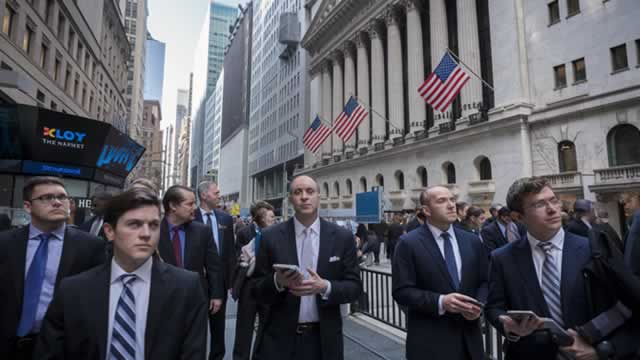
'SERIES OF MISTAKES': Trump's Fed pick rips apart Powell's 'poor track record'
Youtube· 2026-02-03 14:30
Market Reactions - The yield on the 10-year Treasury is up 1.5 basis points, currently at 4.28% [1] - Markets are responding to President Trump's nomination of Kevin Worsh for the Federal Reserve chairman position [1] Federal Reserve Insights - Kevin Worsh criticized the Fed's track record on economic growth and inflation forecasting, suggesting that until there is a regime change at the Fed, old mistakes will persist [1] - Federal Reserve Governor Steven Myer supports Worsh's nomination, highlighting his respect in the financial industry and among policymakers [1] Interest Rate Expectations - The market anticipates at least two rate cuts from the Fed in 2026, with some expecting three [1] - Myer believes that more than a point of interest rate cuts is necessary, arguing that current inflation data may be distorted [1][2] Deregulation and Economic Growth - Myer emphasizes that deregulation can enhance productivity and reduce inflation by easing supply chain constraints [2][3] - He quantifies that continued deregulation could lower inflation by about 0.5% annually, presenting a significant disinflationary force [5] Producer Price Index (PPI) Concerns - The December producer price index showed a monthly gain of 0.5%, with a year-over-year increase of 3% [6] - Myer notes that the Fed targets consumer prices rather than PPI, which can distort the perception of inflation [8][9] Balance Sheet Management - Myer advocates for further reduction of the Fed's balance sheet, contingent on regulatory reforms to reduce demand for reserves [22][23] - He expresses optimism about the potential for balance sheet reduction under Worsh's leadership, linking it to a deregulatory agenda [23] Employment and Technological Change - Myer acknowledges the impact of AI on job displacement but believes new job categories will emerge, similar to past technological advancements [19][20] - He asserts that the Fed has a role in accommodating the transition to new job opportunities created by innovation [19]

FTSE hits record high as gold and oil tumble
Yahoo Finance· 2026-02-02 19:20
Group 1: Market Performance - The FTSE 100 reached a record high of 10,342 points, closing up 1.15% despite declines in gold and oil prices [4][6][8] - The FTSE 250 also hit a four-year high of 23,426 points, indicating strong performance in the mid-cap sector [6][8] - European stocks rallied, with France's CAC rising 0.8% and Germany's DAX advancing 1.1%, while the continent-wide Stoxx 600 index climbed just over 1% [9] Group 2: Commodity Prices - Gold prices fell sharply, down 3.6% to $4,649 an ounce, compared to nearly $5,600 the previous week, marking a significant decline [5][53] - Silver experienced a dramatic drop, plunging 30% on Friday and an additional 7% to $78.47, far below its record high of $121 [5][53] - Brent crude oil prices decreased nearly 5% to $66 a barrel, influenced by geopolitical developments and market sentiment [5][62] Group 3: Natural Gas Market - US natural gas futures dropped 26% to $3.21 per million British thermal units, marking the largest decline in 29 years due to forecasts for warmer weather [2] - Europe's TTF benchmark gas price fell 16.5% to €33.32 per megawatt-hour, easing supply concerns amid milder temperature predictions [2] Group 4: Bitcoin and Cryptocurrency - Bitcoin hit a 10-month low, falling below $80,000, with significant losses attributed to a broader market sell-off [3][50] - The CEO of the UK's largest Bitcoin company reported a loss of nearly $100 million but expressed intentions to continue purchasing Bitcoin [11][12] Group 5: Federal Reserve and Economic Outlook - The nomination of Kevin Warsh as the next Federal Reserve chairman has led to market volatility, with expectations of tighter monetary policy impacting investor sentiment [20][43] - Analysts predict that Warsh may lower interest rates while simultaneously reducing the Fed's balance sheet, aiming to support economic growth without increasing inflation [35][38]

Wall Street waits for Fed interest rate cuts under Kevin Warsh
Yahoo Finance· 2026-02-02 15:34
If Kevin Warsh ultimately becomes the next Federal Reserve chair, Wall Street isn't expecting a shakeup on interest rate cuts. Both Barclays and Morgan Stanley are hanging onto their base case for two additional rate cuts this year after President Donald Trump named Warsh as his pick to lead the Fed. Barclays analyst Marc Giannoni said in a note that any attempt from Warsh to add rate cuts will face "resistance" in a Federal Open Market Committee that's been divided on how to handle a sturdy economy wit ...
Stock market today: Dow, S&P 500, Nasdaq whipsaw as markets weigh AI doubts, flood of earnings
Yahoo Finance· 2026-02-02 00:24
US stocks found a foothold on Monday after a dramatic sell-off in gold and silver unnerved investors, shaking off AI trade worries as earnings flooded in and Federal Reserve uncertainty swirled. The Dow Jones Industrial Average (^DJI) rose 0.6%, while the S&P 500 (^GSPC) added roughly 0.3%. Meanwhile, the tech-heavy Nasdaq Composite (^IXIC) moved up 0.2%, shaking off the premarket maiaise for techs. All three indexes suffered a sharp reversal on Friday as precious metals skidded. Wall Street is heading ...
U.S. Money Supply Just Made History in More Ways Than One -- and It's Sending an Ominous Warning to Wall Street
Yahoo Finance· 2026-01-31 09:26
Market Overview - The bulls have dominated Wall Street for nearly three years, with major indexes showing significant gains [1] - In 2025, the Dow Jones Industrial Average, S&P 500, and Nasdaq Composite increased by 13%, 16%, and 20% respectively, achieving multiple record-closing highs [2] Economic Indicators - The U.S. money supply, particularly M2, is reaching historical levels, with M2 hitting an all-time high of $22.411 trillion in December 2025 [8] - M2's growth is traditionally seen as a positive sign for a bull market, as it indicates a growing economy requiring more capital for transactions [8] Concerns and Warnings - Despite the positive outlook, the expansion of M2 money supply has not kept pace with the tech-driven rally on Wall Street, raising concerns about sustainability [9] - The overwhelming optimism in the market, driven by artificial intelligence advancements and anticipated interest rate cuts, may not be sustainable in the long term [3]
Fed's Miran Weighs In on Warsh, Rate Cuts and Balance Sheet
Youtube· 2026-01-30 20:53
Core Viewpoint - The discussion revolves around the Federal Reserve's monetary policy, particularly the potential nomination of Kevin Warsh as the next Fed Chair and the implications for interest rates and inflation management. Group 1: Federal Reserve Leadership Transition - The current Fed governor will remain in position until a replacement is confirmed, which is a common practice [1][2] - There is uncertainty regarding the timeline for the confirmation of Kevin Warsh, with previous confirmations taking around six weeks [3][4] - Warsh's nomination has sparked discussions about his potential influence on future monetary policy, particularly regarding interest rates [24][26] Group 2: Interest Rate Policy - The current Fed governor dissented for a smaller rate cut of 25 basis points instead of 50, indicating a belief that rates are still too restrictive [4][5] - There is a view that the labor market data has shown some improvement, which may allow for a slower pace of rate cuts moving forward [6][8] - Concerns remain about the labor market's stability, despite a 4.4% unemployment rate, suggesting that additional slack exists beyond the unemployment rate [10][12] Group 3: Inflation Measurement and Policy - The governor argues that much of the inflation exceeding targets is due to measurement quirks, particularly in portfolio management services and housing inflation [13][15] - Adjusting for these measurement issues suggests that core inflation is closer to the Fed's target, indicating no significant overheating in the economy [16][17] - The governor emphasizes that monetary policy should not be dictated by past inflation data but should focus on current economic conditions [16][17] Group 4: Economic Segments and Overall Policy - Discussions have occurred regarding the health of middle-market businesses, with some segments showing weakness [18][19] - The Fed's focus remains on the overall macro economy rather than targeting specific sectors, although understanding different segments can provide insights into economic trends [20][23] - The governor believes that understanding pockets of weakness can help predict overall economic direction [23][24] Group 5: Balance Sheet and Long-Term Rates - There is skepticism about expanding the Fed's balance sheet, with a preference for shrinking it, contingent on regulatory reforms [43][45] - The impact of balance sheet adjustments on long-term rates is uncertain, but the overall stance of policy is crucial for achieving monetary targets [46][48] - The governor suggests that if balance sheet reduction leads to higher long rates, adjustments in short rates could offset tightening financial conditions [49]
Fed's Musalem Rejects Further Rate Cuts
WSJ· 2026-01-30 18:59
Core Viewpoint - St. Louis Fed President Alberto Musalem expressed reluctance to support further interest rate cuts due to persistent inflation above the Federal Reserve's 2% target [1] Summary by Relevant Categories Interest Rates - Musalem's stance indicates a cautious approach towards monetary policy adjustments, particularly in the context of ongoing inflationary pressures [1]