SaaS

Search documents
What’s the Story? AI Stocks, Crypto Downturn, Metals Selloff, SaaSpocalypse | Jim Bianco
Bankless· 2026-02-12 15:35
📣KRAKEN | DEFI EARN https://bankless.cc/Kraken --- Last week felt like four different crashes happening at the same time: AI software stocks melting down, crypto capitulating, gold and silver whipping around, and markets suddenly panicking about AI CapEx. Jim Bianco returns to Bankless to explain what actually changed: why AI is collapsing the cost of building software (and threatening SaaS pricing models), how “synthetic Bitcoin” in TradFi can amplify volatility even when nothing breaks onchain, and why th ...


Anthropic's Super Bowl Ad: Who Won & Lost? | Sierra Hits $150M ARR: Is Customer Support Too Crowded?
20VC with Harry Stebbings· 2026-02-12 15:06
Mike Cannon-Brookes is the Co-Founder and Co-CEO of Atlassian, the software giant behind products like Jira, Confluence, and Trello. Under his leadership, Atlassian has become one of the world’s most successful enterprise software companies, serving over 250,000 customers globally. Jason Lemkin is one of the leading SaaS investors of the last decade with a portfolio including the likes of Algolia, Talkdesk, Owner, RevenueCat, Saleloft and more. Rory O’Driscoll is a General Partner @ Scale where he has led i ...


科大讯飞又一亿级产品:讯飞听见的SaaS突围,错身AI办公赛道的细分胜利
3 6 Ke· 2026-02-12 13:37
Core Insights - The article highlights the success of iFlytek's product "iFlytek Hearing," which has surpassed 100 million users, marking it as the second core product of iFlytek to reach this milestone after iFlytek Input Method [1] - Unlike many AI products that rely on subsidies for growth, iFlytek Hearing has adopted a SaaS model focused on technology payment, demonstrating the commercial viability of paid AI SaaS [1][2] Group 1: SaaS Model and Business Strategy - iFlytek Hearing adheres to a "three no" product strategy: no splash ads, no in-app ads, and no sharing ads, focusing on a subscription-based SaaS model that emphasizes long-term sustainability and profitability [2] - The product has shown impressive financial performance, with a gross profit growth exceeding 60% for three consecutive years and a user renewal rate above 50% [2] - The SaaS model allows for precise user targeting and retention through technology services, creating a positive cycle of "technology iteration - payment conversion - retention and repurchase" [2] Group 2: Competitive Landscape - The competitive landscape for voice transcription has intensified, with major players like Feishu, DingTalk, and Tencent Meeting integrating voice transcription features into their platforms, creating a dual competition of software and hardware [3][5] - iFlytek Hearing's strategy focuses on niche market needs, avoiding direct competition with large collaborative office platforms by honing in on voice transcription and AI meeting minutes [5] Group 3: Technological Advancements - In the era of large models, voice is becoming a primary input method for AI, offering a natural and efficient way to interact, which iFlytek Hearing capitalizes on by focusing on voice transcription and AI meeting minutes [6] - The product has evolved from a non-real-time transcription model to a subscription-based SaaS service, aligning with the global trend of large models and enhancing user experience with features like "one-click manuscript generation" [7][9] Group 4: Industry Implications - iFlytek Hearing's success serves as a significant milestone for iFlytek's SaaS business and offers insights for the AI industry, emphasizing the importance of respecting user value and adopting a long-term approach [10] - The shift in competition from broad-spectrum platforms to specialized SaaS products presents opportunities for growth, as businesses increasingly seek tailored solutions for efficiency [10]


An Interview with Ben Thompson by John Collison on the Cheeky Pint Podcast
Stratechery By Ben Thompson· 2026-02-12 13:00
Group 1: Life in Taiwan - Taiwan is characterized as a highly convenient place to live, with a mix of commercial and residential areas that enhance accessibility [7][8] - The food culture in Taiwan is highlighted, particularly the popularity of night markets and the convenience of food delivery services like Uber Eats [10][11] - Despite its rich culture and proximity to natural beauty, Taiwan is described as having an unattractive urban landscape, with many dilapidated buildings [9] Group 2: Ads and AI - The discussion emphasizes the importance of advertising as an efficient monetization strategy, contrasting it with skepticism prevalent in the tech industry [22][23] - The effectiveness of ads is noted, particularly in how they can enhance consumer experiences by introducing products that users may not have been aware of [30][31] - The conversation critiques the current ad models in AI applications, suggesting that they should focus on user profiling rather than context-based targeting to avoid user suspicion [35][36] Group 3: Meta's Platform Dynamics - Meta's struggle with its identity as a platform versus an advertising company is discussed, indicating that its focus on being a platform has hindered its advertising potential [51][58] - The conversation points out that Meta's success is largely due to its feed and targeted advertising, which has proven to be effective in engaging users [53][56] - The need for Meta to embrace its role as an entertainment company rather than solely a social media platform is emphasized, suggesting that this shift could improve its long-term viability [58][60] Group 4: TikTok and ByteDance - The complexities surrounding TikTok's ownership and the control of its algorithm by ByteDance are highlighted, indicating that the U.S. political process has failed to address this critical issue [66][68] - The discussion reflects on the implications of having a major information source controlled by a geopolitical adversary, raising concerns about national security and information integrity [67][68] - The conversation concludes that the outcome of the TikTok situation has resulted in a failure to secure control over the algorithm, which is seen as a significant oversight [68][70] Group 5: Agentic Commerce - The potential for AI to transform e-commerce through agentic commerce is explored, suggesting that AI could streamline the purchasing process and enhance user experience [90][91] - The conversation outlines a multi-level approach to improving e-commerce, starting with better user interfaces and progressing to personalized recommendations based on user preferences [92][93] - The discussion acknowledges the existing power of advertising in driving consumer behavior, suggesting that AI could further enhance this by anticipating user needs [96][97]


市场恐慌情绪蔓延,Shopify、Unity股价惨遭重挫
Xin Lang Cai Jing· 2026-02-12 10:03
Core Viewpoint - The market experienced a significant sell-off on Wednesday, affecting companies like Unity Software and Shopify despite their strong quarterly earnings reports for December. Group 1: Shopify - Shopify forecasted a year-over-year revenue growth of just over 30% for Q1, maintaining a similar growth rate to Q4, yet its stock price dropped by 12% immediately after the announcement [3][11]. - Analysts from William Blair noted the strong performance and steady growth of Shopify, questioning the rationale behind the stock's decline [3][11]. - Shopify is aggressively integrating AI into its operations, collaborating with OpenAI for instant checkout features and developing AI shopping products with Google [3][11]. - New Street Research highlighted that while Shopify's AI narrative is compelling, panic in the SaaS sector overshadowed these developments, leading to a final stock drop of 6.7% [3][11]. Group 2: Unity Software - Unity's stock plummeted by 26% despite reporting a 10% year-over-year revenue growth, marking its strongest quarter of the year, with a slight expected increase in growth for Q1 2026 [4][12]. - The market's reaction is attributed to concerns over AI impacts, particularly following Google's release of the Genie AI tool, which caused Unity's stock to fall by 27% shortly thereafter [4][12]. - Unity's primary business involves mobile in-app advertising technology, which has seen market share erosion to competitors like AppLovin, although Unity claims progress with its new AI advertising products [4][12]. - The overall sentiment in the market is characterized by a "sell first, think later" mentality, leading to significant stock declines without substantial new negative information [4][12]. Group 3: Lyft - Lyft's stock fell by 17% after its Q4 earnings report, which showed a revenue growth of only 3%, impacted by regulatory adjustments; however, adjusted growth was 13.5% [5][14]. - MoffettNathanson's report indicated that Lyft's U.S. ride-sharing business growth is expected to halve to 7% by 2025, primarily due to Lyft's price increases outpacing those of Uber [5][14]. - The report suggests that Lyft must take aggressive measures to regain market share from Uber, which could negatively affect its profit margins [5][14].



AI vs SaaS:先卖再问,市场只“卖对了一半”?
华尔街见闻· 2026-02-12 09:55
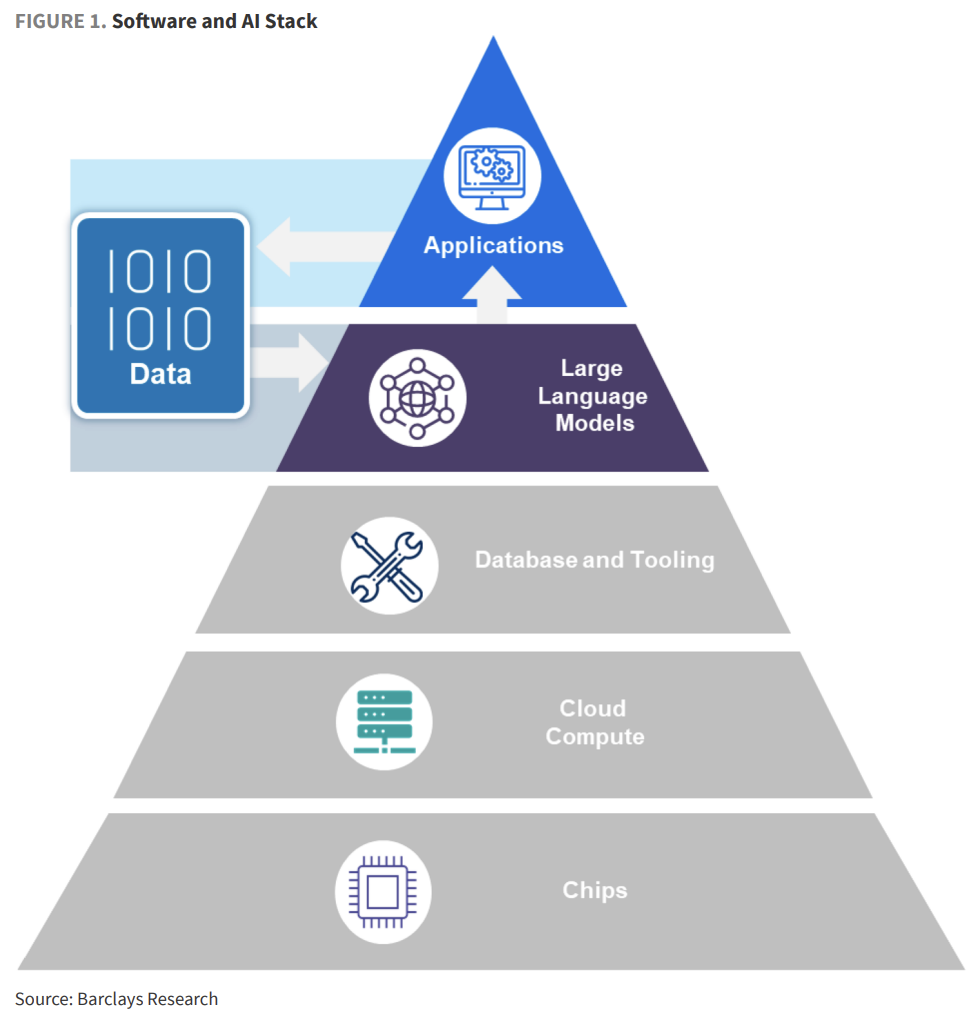
Core Viewpoint - Barclays highlights a critical technological distinction: AI tools are indeed encroaching on the application layer of SaaS companies, but they cannot shake the foundational "system of record" infrastructure, which is the core moat for companies like Salesforce and SAP [1][2]. Group 1: Impact of AI on SaaS Companies - The recent release of products like Claude Cowork by Anthropic has led to a significant decline in enterprise software stocks, with Salesforce and Workday dropping over 40% in the past 12 months [2]. - Investors are confused about the boundaries of AI capabilities, leading to a panic sell-off as they believe new AI tools will completely replace traditional SaaS software, resulting in a zero valuation for legacy companies [2][3]. - Barclays' report argues that a simplistic "one-size-fits-all" logic does not apply to most enterprise software companies [3]. Group 2: AI Capabilities and Limitations - Generative AI excels in pattern recognition and "draft generation," but its probabilistic nature poses fundamental limitations, particularly in scenarios requiring absolute accuracy [5]. - Traditional software operates on deterministic rules, ensuring consistent outputs, while AI software is probabilistic and cannot guarantee the same level of consistency [5][6]. - This indicates that AI operates at a higher level of abstraction and is not a direct replacement for traditional software [6]. Group 3: Mispriced Software Companies - Barclays identifies three categories of enterprise software companies that have been mispriced during the sell-off, starting with system of record companies like Salesforce, which provide critical data requiring certainty [9]. - SAP's position is even more secure, as it manages essential business data and workflows that cannot be handled by advanced generative AI models [9][10]. - The report suggests that AI will not replace these systems but will increase their importance, as AI agents will create more data touchpoints, raising the complexity that system records need to manage [10]. Group 4: Additional Misjudged Investment Opportunities - Besides system of record companies, Barclays points out two other categories that have been misjudged: beneficiaries of AI agents and AI computing providers [11]. - Companies like JFrog, Snowflake, and MongoDB may see increased usage due to the demand for more code and data driven by AI expansion [11]. - There is a logical contradiction in the market's reaction; if AI is powerful enough to disrupt the software industry, the demand for computing power should surge, yet companies like Oracle and CoreWeave have also faced significant sell-offs [11]. Group 5: Reevaluation of Software Sector Valuations - The market correction is deemed necessary for the application layer of enterprise software, which has long enjoyed inflated valuations due to controlling both infrastructure and interface [15]. - If AI technologies can overlay on system records, they may begin to erode the pricing power of SaaS companies [15]. - Barclays concludes that the era of easy high profits for bloated application layers may be over, but this does not signify the end of the entire industry [15][16]. Group 6: Market Sentiment and Future Outlook - The indiscriminate nature of the current sell-off indicates that investors with limited understanding of the software industry are making decisions based on extreme viewpoints [16]. - As understanding of AI capabilities and SaaS business models deepens, the market may reprice companies incorrectly categorized as "AI victims" [16].
AI vs SaaS:先卖再问,市场“卖对了一半”?
Hua Er Jie Jian Wen· 2026-02-12 08:24
Core Insights - The recent release of Anthropic's products has triggered a significant sell-off in enterprise software stocks, revealing an overreaction in the market regarding AI threats [1][3] - Barclays highlights that while AI tools are encroaching on the application layer of SaaS companies, they do not threaten the foundational "system of record" infrastructure, which is crucial for companies like Salesforce and SAP [1][3] Group 1: Market Reaction and Misunderstandings - The release of Claude Cowork by Anthropic has been described as the tipping point for the decline in enterprise software stocks, with Salesforce and Workday seeing over a 40% drop in the past year [3] - Investors are confused about the capabilities of AI, mistakenly believing that new AI tools will completely replace traditional SaaS software, leading to a devaluation of established companies [3][12] - Barclays' report argues that the simplistic view of AI as a total replacement for software does not apply to most enterprise software companies [3] Group 2: AI Capabilities and Limitations - Generative AI excels in pattern recognition and initial draft generation but has fundamental limitations due to its probabilistic nature, making it less effective in scenarios requiring absolute accuracy [4][5] - Traditional software operates on deterministic rules, ensuring consistent outputs, while AI software functions probabilistically, lacking guaranteed consistency [5][6] Group 3: System of Record Companies - Barclays identifies three categories of enterprise software companies that have been mispriced during the sell-off, starting with system of record companies like Salesforce and SAP, which provide critical data requiring certainty [7][8] - SAP's position is particularly strong, as it manages essential business data and workflows that generative AI cannot handle effectively [7][8] - The report suggests that AI will not replace these systems but will instead increase their importance as AI creates more data touchpoints [8] Group 4: Misjudged Investment Opportunities - Besides system of record companies, Barclays points out two other categories that are misjudged: beneficiaries of AI agents and AI computing providers, which may see increased demand due to AI expansion [9] - There is a contradiction in the market logic; if AI is powerful enough to disrupt the software industry, the demand for computing power should rise, yet companies like Oracle and CoreWeave have also faced sell-offs [9] Group 5: Application Layer Challenges - The market's panic is not entirely unfounded, as SaaS companies have struggled with poor user interfaces, high prices, and security vulnerabilities, leading to customer dissatisfaction [10] - Companies like Klarna are moving away from traditional SaaS products in favor of smaller firms, utilizing AI tools to build their own applications, which highlights a genuine threat to the SaaS model [10] Group 6: Future Market Dynamics - The current market correction is seen as necessary, as SaaS companies have enjoyed inflated valuations by controlling both infrastructure and interface [11] - The emergence of AI technologies that can operate above system records may erode the pricing power of SaaS companies, indicating a shift in the profitability landscape [11] - As understanding of AI capabilities and SaaS business models deepens, the market may begin to re-evaluate companies incorrectly labeled as "AI victims," while those relying on poor application layers may face continued valuation pressure [12]
X @Bloomberg
Bloomberg· 2026-02-12 04:20
Salesforce and other SaaS players have their strengths, but their clunky, expensive apps have left them open to AI disruption, says @parmy (via @opinion) https://t.co/Ubadr6lekN ...
Anthropic正取代OpenAI,成为中国AI界的白月光
创业邦· 2026-02-12 00:28
Core Viewpoint - The article discusses the rising prominence of Anthropic in the AGI landscape, highlighting its unique business model and market positioning compared to competitors like OpenAI. It emphasizes Anthropic's focus on enterprise-level applications and its growing market share in the LLM API and coding sectors, suggesting a shift in the competitive dynamics of the AI industry [6][41]. Group 1: Anthropic's Market Position - Anthropic has established a dominant position in the enterprise-level LLM API market, achieving a market share of 40% by the end of 2025, up from 27% in 2023 for OpenAI, which saw a decline from 50% [21][22]. - In the coding market, Anthropic's share reached 42% by mid-2025, which is double that of OpenAI [19]. - The article notes that Anthropic's success is attributed to its focused business strategy and the unique value it offers to enterprise users, contrasting with OpenAI's broader consumer-oriented approach [25][41]. Group 2: Investment and Ecosystem Development - Menlo Venture announced the establishment of a $100 million Anthology Fund to support AI startups, indicating strong investor confidence in Anthropic's ecosystem [14][15]. - The fund's inspiration comes from Apple's iFund, suggesting that Anthropic's ecosystem could surpass that of iOS in terms of growth and impact [15]. - The article highlights that Anthropic's approach to building a productivity ecosystem is distinct from its competitors, focusing on high safety narratives and long-context capabilities that resonate with enterprise needs [34][41]. Group 3: Competitive Dynamics and Future Outlook - The article suggests that as AI capabilities advance, the integration of AI into workflows will deepen, leading to a more competitive landscape where stability and model performance become critical [35][41]. - Analysts have referred to the release of Anthropic's latest model, Opus, as a potential "SaaSpocalypse," indicating its capacity to disrupt traditional SaaS markets [37]. - The narrative surrounding Anthropic is seen as a rebellion against the existing OpenAI-centric discourse, with many in the industry now looking to Anthropic as a model for future AI development [70][71].

Consolidated Water: Big Catalysts On Tap
Seeking Alpha· 2026-02-11 06:54
Core Insights - Water-related investments were previously popular, with significant focus on terms like "peak oil" and "water war," highlighting the importance of companies like SUEZ and Veolia in the market [1] - In recent years, investor interest has shifted towards sectors such as SaaS, Cloud, and business digitization, leading to a decline in focus on water as a slow-growing niche market [1] Company and Industry Summary - The water industry was once a focal point for investors, particularly in the early 2000s, but has since been overshadowed by technology-driven sectors [1] - Companies like SUEZ and Veolia were prominent in discussions around water scarcity and geopolitical conflicts related to water resources [1]