Turnaround strategy

Search documents
Corporate Shifts and Economic Indicators: Amgen’s Tariff Response, Starbucks’ Restructuring, China’s Profit Rebound, and JPMorgan’s Alibaba Bet
Stock Market News· 2025-09-27 04:38
Amgen - Amgen plans to invest $650 million to expand its U.S. manufacturing operations in Puerto Rico, creating approximately 750 jobs [2][9] - This investment is a direct response to President Trump's announcement of a 100% tariff on pharmaceutical products not manufactured domestically, effective October 1 [2][9] - Since late 2017, Amgen has invested over $40 billion in U.S. manufacturing and R&D, including a $900 million expansion in Ohio and a $1 billion investment in North Carolina earlier this year [3][9] Starbucks - Starbucks is closing 434 North American stores by the end of September, reducing its store count from 18,734 to 18,300 [4][9] - The closures are part of a restructuring plan aimed at improving financial stability and customer experience, with 900 non-retail employees being laid off [5][9] - Despite the closures, Starbucks plans to increase its North American store count in the next fiscal year and redesign over 1,000 locations [5][9] China's Industrial Sector - China's industrial profits surged by 20.4% year-over-year in August, a significant recovery from a -1.5% decline in July [6][9] - The cumulative industrial profit for January-August increased by 0.9% to ¥4.69 trillion, indicating potential stabilization in the manufacturing sector [6][7][9] JPMorgan and Alibaba - JPMorgan Chase increased its stake in Alibaba from 6.81% to 12.29% on September 22, signaling bullish sentiment towards the tech sector [8][10] - This move reflects growing confidence in Alibaba and the broader tech sector, driven by global AI developments and increasing domestic computing power demands [11]



Starbucks Is Closing Shops and Cutting Costs as Its Turnaround Effort Continues
Yahoo Finance· 2025-09-25 16:06
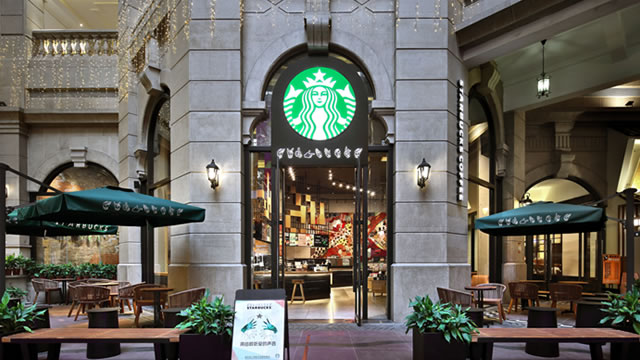
Core Insights - Starbucks is closing several locations in the U.S. and Canada as part of its turnaround strategy, indicating that the current approach is not viable in certain areas [2][3][8] - The company is also laying off 900 non-retail employees to reduce costs and focus resources on key growth areas [4][8] - Despite some positive signs, such as increased customer visits to revamped stores, same-store sales have been negative for the past six quarters, and store earnings have declined year-over-year [6] Company Strategy - CEO Brian Niccol stated that the closures are due to an inability to create the desired customer experience and financial viability in those locations [3] - The "Back to Starbucks" initiative aims to enhance the in-store experience, focusing on quick service and a more inviting atmosphere [4] - The company is attempting to shift customer behavior back to in-store visits, contrasting with competitors who have succeeded with drive-thru models [5] Financial Performance - Starbucks is expected to end the fiscal year with 18,300 locations, a 1% decrease from the previous year, but anticipates growth in the upcoming year [3] - Although there are signs of improvement in certain stores, overall same-store sales remain negative, and the company has faced challenges in international markets, particularly in China [6] Market Reaction - Investors initially reacted positively to Niccol's appointment as CEO, with shares rising 22% at the time [7] - However, shares have since fallen nearly 13% over the past year, indicating tempered expectations regarding the company's recovery [7]
Intel Could Kill This Business Unit Thanks to the Nvidia Deal
Yahoo Finance· 2025-09-23 09:25
Core Strategy - Intel is undergoing a turnaround strategy under CEO Lip-Bu Tan, focusing on exiting noncore businesses and refocusing on its core competencies [1] - The company has exited the memory chip business, wound down its Ethernet switch business, abandoned Bitcoin mining chips, and spun off its self-driving unit Mobileye [1][2] Operational Simplification - Significant layoffs have been initiated, and a new policy of "no more blank checks" will lead to more selective investments [2] - Anything outside of PC CPUs, server CPUs, and manufacturing could be cut, with even manufacturing at risk if it cannot secure external customers [2] Partnership with Nvidia - Intel signed a deal with Nvidia to produce custom PC and data center CPUs that include Nvidia technology, raising questions about its own graphics business [3][6] - This partnership means Intel CPUs with integrated Nvidia GPUs are forthcoming, but it does not cover discrete graphics cards [6][7] Graphics Market Position - Intel's discrete graphics card market entry with its Arc line faced challenges, with the first generation plagued by software issues, while the second generation received positive reviews [4] - Despite efforts, Intel has not gained meaningful share in the discrete graphics card market, with its GPU unit share rounding down to 0% in Q1 [5] Future Considerations - The partnership with Nvidia raises questions about Intel's commitment to the discrete graphics card market and whether it will continue investing in its own graphics technology [6][7]

Target doubles new merchandise, expands next-day delivery for the holidays
Yahoo Finance· 2025-09-16 11:38
Core Insights - Target is focusing on new merchandise as part of its turnaround strategy, emphasizing the importance of "newness and freshness" for customer engagement [3] - The retailer is launching thousands of seasonal gifts starting at $5 and will introduce weekly deals and a "Deal of the Day" with discounts up to 50% to attract value-seeking consumers [4] - Target's sales have recently declined, prompting the incoming CEO to implement changes to improve the business trajectory [5] Product and Service Expansion - Target is introducing 20,000 new products for the holiday season, which is double the amount offered in 2024, with over half being exclusive to the retailer [6] - The company is expanding its next-day delivery service to 35 major metro areas in the U.S. by the end of October, including cities like Orlando and St. Louis [6] - Seasonal hiring is being emphasized, with a flexible workforce of 43,000 employees available to take on additional shifts, and applications for seasonal roles are open [6]

Hain Celestial to “aggressively” cut portfolio as shares slide on $531m loss
Yahoo Finance· 2025-09-15 17:06
Core Insights - Hain Celestial is undergoing significant restructuring under interim president and CEO Alison Lewis, who aims to aggressively trim the company's portfolio following disappointing annual results, including a net loss of $531 million [1][2]. Financial Performance - The company's net loss has increased from $75 million in fiscal 2024 to $531 million in fiscal 2025, which includes a pre-tax non-cash impairment charge of $496 million [2][4]. - Revenue decreased by 10% to $1.56 billion, with a 7% decline in organic terms, and a volume/mix drop of five percentage points, despite negative pricing of two percentage points [2][5]. - Hain Celestial's diluted EPS reported a loss of $5.89, widening from a loss of $0.84 a year earlier [7]. Market Reaction - Following the release of the annual results, Hain Celestial's shares fell over 20%, trading at $1.64, with a calendar year decline exceeding 70% [3][4]. Strategic Initiatives - Lewis outlined a turnaround strategy focused on five key actions: streamlining the portfolio, accelerating innovation, implementing pricing and revenue growth management, enhancing productivity and working capital efficiency, and improving digital capabilities [6]. - The company aims to stabilize its business while delivering cash and repaying debt to strengthen financial health [6]. Operational Challenges - All product categories, except beverages, experienced sales declines in the fourth quarter, indicating widespread pressures on the company's performance [5][6]. - The gross margin decreased by 50 basis points to 21.4%, with adjusted terms showing a 90 basis point drop to 21.5% [7][8].
Hain Celestial Faces Steeper Losses As Impairment Charges Hit Weak Sales
Yahoo Finance· 2025-09-15 12:51
Core Insights - Hain Celestial Group reported weaker-than-expected results for fiscal Q4 and the year ended June 30, 2025, primarily due to impairment charges and soft demand [1][2] Financial Performance - Q4 net sales were $363.348 million, down 13% year-over-year, missing analyst estimates of $371.46 million; organic net sales decreased 11% due to volume and mix declines [1] - The company incurred $252 million in pre-tax non-cash impairment charges, resulting in an adjusted net loss of $2 million, or 2 cents per share, compared to adjusted earnings of $11 million, or 13 cents per share, in the same quarter last year [2] - Adjusted EBITDA fell to $20 million from $40 million year-over-year [2] Segment Analysis - North American sales dropped 21% to $206 million, with organic sales down 14% due to declines in snacks and meal prep; gross margin contracted to 19.2% from 22.6% [3] - International sales remained nearly flat at $158 million, but organic sales decreased 6% due to weakness in meal prep and beverages; gross margin slipped to 22.1% from 24.8% [4] - By category, snacks dropped 23%, baby and kids declined 7%, beverages were flat, meal prep fell 6%, and personal care plunged 49% [4] Annual Overview - For fiscal 2025, net sales fell 10% year-over-year to $1.56 billion, with organic sales down 7% due to lower volume/mix and pricing pressure; net loss widened to $531 million, or $5.89 per share, compared to a loss of $75 million, or $0.84 per share, in fiscal 2024 [5] - Adjusted net income totaled $8 million, or $0.09 per share, down from $30 million, or $0.33 per share, a year ago; adjusted EBITDA decreased to $114 million from $155 million [5] Cash Flow and Debt - Operations provided net cash of $22 million for the year, down from $116 million a year earlier; free cash flow was negative $9 million for the quarter and negative $3 million for the year [6] - Total debt ended the year at $705 million, down from $744 million, with net debt at $650 million [6] Strategic Response - The Interim President and CEO outlined a turnaround strategy focused on optimizing cash, deleveraging the balance sheet, stabilizing sales, and improving profitability through portfolio streamlining, innovation, pricing, revenue growth management, productivity improvements, and digital capability enhancements [7]

Southwest Airlines eyes long-haul flights, luxe lounges in strategic overhaul
New York Post· 2025-09-11 19:54
Core Viewpoint - Southwest Airlines is focusing on long-haul international flights and premium airport lounges as part of its turnaround strategy to enhance its business model and appeal to high-spending travelers [1][10]. Group 1: Business Strategy - The company is considering using narrow-body aircraft initially for long-haul international routes before transitioning to wide-body aircraft [1]. - Southwest Airlines has begun charging for checked bags and introduced a new basic-economy fare, along with plans to implement a new assigned seat policy in January [4]. - The airline aims to regain its competitive edge by serving long-haul international routes directly, rather than relying solely on partnerships with foreign carriers [6]. Group 2: Market Position and Challenges - The airline has struggled to regain profitability since the COVID-19 pandemic, with its margins significantly lower than competitors like Delta and United Airlines [8]. - Southwest's lack of long-haul international flights has limited its appeal and deprived it of high-margin revenue streams, prompting the need for a business model revamp [5][8]. - The company has launched partnerships with foreign carriers such as Icelandair, China Airlines, and EVA Air to expand its network [5][8]. Group 3: Customer Engagement and Revenue - The introduction of premium airport lounges is expected to enhance customer loyalty and make co-branded credit cards more attractive [11]. - The company recognizes the need to meet customer demands to maintain relevance as the largest domestic carrier, especially in light of competition from airlines that offer more international destinations [10][11].

Starbucks Stock: Store Sales Slump, but Is a Turnaround Near?
The Motley Fool· 2025-08-03 13:15
Core Viewpoint - Starbucks is undergoing a turnaround process, but it is incurring significant costs in the process, leading to declining operating margins and profitability [1][4][11]. Group 1: Sales Performance - Global same-store sales fell by 2%, marking the sixth consecutive quarter of decline [6]. - In North America, comparable-store sales also decreased by 2%, with traffic down by 3% [6]. - In China, the second-largest market, same-store sales increased by 2%, driven by a 6% rise in traffic, despite a 4% decline in average ticket [7]. Group 2: Strategic Initiatives - Starbucks is implementing a Green Apron Service model to standardize operations across stores, which has already shown improvements in transactions and customer service [2]. - The company is remodeling stores and upgrading its mobile app and ordering system to enhance customer experience [3]. - New product offerings, including protein cold foam add-ons and coconut-water-based beverages, are being introduced to encourage higher spending [3]. Group 3: Financial Impact - The remodeling program costs approximately $150,000 per store, while additional labor investments are expected to add $500 million in annual costs over the next year [4]. - Adjusted operating margins contracted by 660 basis points to 10.1%, with store operating expenses rising by 13.5% year over year [4]. - Overall sales increased by 4% to $9.5 billion, but adjusted earnings per share (EPS) fell by 46% to $0.50, missing analysts' expectations [8]. Group 4: Future Outlook - The company is focused on reducing costs to offset increased labor expenses and aims to restore operating margins to pre-pandemic levels [5][11]. - CEO Brian Niccol believes that the company was not over-earning previously and sees 2019 as a roadmap for future margins [5]. - Starbucks is trading at a forward price-to-earnings (P/E) ratio of about 32 based on fiscal 2026 estimates, indicating a potentially high valuation amidst ongoing turnaround efforts [12].
Intel's Turnaround Gains Credibility With Strong Q2 Report
MarketBeat· 2025-07-25 14:25
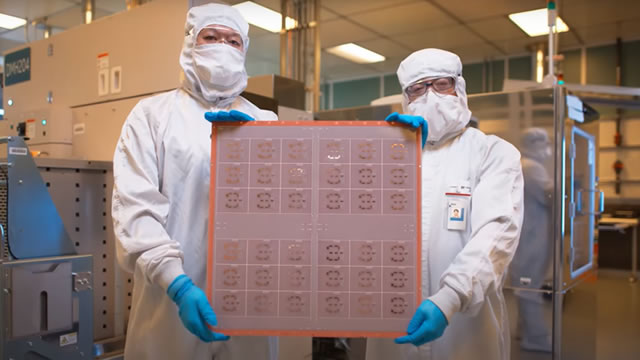
Core Viewpoint - Intel's second-quarter earnings report reflects a complex but ultimately positive narrative, indicating that the company's restructuring strategy is on track despite significant short-term costs [2][9]. Financial Performance - Q2 revenue reached $12.9 billion, flat year-over-year, but exceeded both Intel's guidance and Wall Street expectations [3]. - The Data Center and AI Group (DCAI) segment saw a 4% year-over-year revenue increase, while the Client Computing Group (CCG) experienced a slight 3% decline [4]. - The non-GAAP loss of $0.10 per share was primarily due to planned one-time charges, including $1.9 billion in restructuring costs and $800 million in asset impairments, viewed as investments for future efficiency [5]. Forward-Looking Guidance - The forecast for Q3 non-GAAP gross margin is approximately 36.0%, a significant improvement of over 600 basis points from Q2's 29.7% [6][7]. - This guidance indicates that cost-cutting measures are beginning to positively impact profitability, with gross margin serving as a key measure of manufacturing efficiency and pricing power [7]. Strategic Execution - The earnings report serves as a scorecard for management's execution, demonstrating that Intel is delivering on its strategic promises [8]. - The company has completed most of its planned 15% workforce reduction and is on track to meet long-term operating expense targets for 2025 and 2026 [11]. - Intel is halting planned factory projects in Germany and Poland and slowing construction in Ohio to align spending with market demand, part of its Smart Capital strategy [11]. Balance Sheet and Technology - In July, Intel strengthened its balance sheet by selling 57.5 million Mobileye shares, adding $922 million in cash [11]. - Key product milestones were achieved, including the start of production for the advanced Intel 18A process and confirmation of the first Panther Lake processors for shipment this year [11].
Carvana Pre-Q2 Earnings Analysis: Buy, Sell or Hold the Stock?
ZACKS· 2025-07-25 14:01
Core Insights - Carvana (CVNA) is expected to report second-quarter 2025 results with earnings estimated at $1.10 per share and revenues at $4.56 billion, reflecting a year-over-year earnings growth of 685.7% and a revenue increase of 33.6% [1][2] Financial Performance - The Zacks Consensus Estimate for Carvana's 2025 revenues is $18.1 billion, indicating a 32.3% year-over-year rise, while the EPS estimate is $5.04, suggesting a 217% increase year-over-year [2] - For Q2 2025, adjusted EBITDA is projected to grow nearly 48% year-over-year to $524.2 million, driven by strong sales and cost-efficiency improvements [6][10] Sales and Market Position - Carvana's retail sales have shown significant momentum, with a 46% year-over-year increase in retail unit sales in Q1 2025, and an expected 33.8% growth in Q2 2025, with approximately 135,750 vehicles anticipated to be sold [4][5] - The company has sold over 100,000 vehicles for four consecutive quarters, maintaining its position as the second-largest used car retailer in the U.S. [4][11] Cost Management and Efficiency - Carvana's turnaround strategy includes cutting expenses through improved technology, leaner staffing, reduced advertising, and better inventory management, which are enhancing efficiency and profitability [5][10] - The adjusted EBITDA margin has reached 11.5%, leading the public auto dealer sector due to effective cost management [10] Valuation and Market Performance - Year-to-date, Carvana's shares have surged 60%, outperforming competitors like CarMax and Sonic Automotive [7] - Carvana trades at a forward 12-month price-to-sales ratio of 3.38, significantly higher than CarMax (0.32) and Sonic Automotive (0.17), reflecting stronger growth expectations [8] Strategic Growth Opportunities - The acquisition of ADESA U.S. has bolstered Carvana's logistics and vehicle processing capabilities, providing room for growth despite holding only about 1% of the market share [11]