
Unemployment

Search documents
Fed rate cut chances shift ahead of FOMC this week
Yahoo Finance· 2026-01-26 19:24
The Federal Reserve has had a tough time lately. Sticky inflation and rising unemployment, driven by layoffs and less hiring, boxed it into a corner until September last year, prompting fierce pushback from the White House and likely costing Fed Chair Jerome Powell his job when his term as Chairman expires on May 15, 2026. Still, the Fed cut interest rates three times by year's end, prompting hope among would-be borrowers that the trend would continue at the first Federal Open Market Committee (FOMC) me ...
X @The Economist
The Economist· 2026-01-24 13:20
Over time many wealthy countries have turned from high-unemployment basket cases into job machines https://t.co/V21gmZeJMh ...
Mixed Performance by the Pound After Weaker Job Data
Yahoo Finance· 2026-01-23 16:04
Group 1: Job Market Overview - The British job report for November-December showed mostly negative numbers, with HMRC payroll change reaching its lowest monthly figure in over five years [2] - Payroll changes have been consistently negative for most of 2025, indicating a significant slowdown in the job market, although it may be premature to declare a clear acceleration in this trend [3] - The unemployment rate in Britain remained at its highest in over four years at 5.1%, driven significantly by longer-term unemployment [4][5] Group 2: Inflation Trends - Annual headline inflation in Britain rose slightly more than expected in December to 3.4%, influenced by increases in alcoholic drinks, tobacco, and transport [6] - The persistence of inflation above 3% for three quarters complicates the outlook for potential rate loosening by the Bank of England [7] Group 3: Currency Movements - The pound has gained against the dollar and yen while declining against most other major currencies, as traders price in potential cuts by the Bank of England in 2026 [1] - The euro has gained strength due to a pause in tensions between the USA and EU, while the pound faced pressure from a weaker job report despite higher inflation [9] Group 4: Technical Analysis - The downtrend on lower timeframes since November has paused, with a strong gain observed on 20 January and an upward crossover of the slow stochastic in oversold conditions [10] - The value area around 87.3p is testing potential dynamic resistance, with 88p identified as a potential static zone of resistance [10]
Dollar Retreats as Easing European Tensions Boost the Euro
Yahoo Finance· 2026-01-22 20:32
Economic Indicators - The dollar index (DXY00) fell by -0.42% due to a stock rally that reduced liquidity demand for the dollar and euro strength following eased European tensions [1] - US weekly initial unemployment claims rose by +1,000 to 200,000, indicating a stronger labor market than the expected 209,000 [2] - Q3 GDP was revised upward by 0.1 to 4.4% (quarter-over-quarter annualized), surpassing expectations of no change at 4.3% [3] - November personal spending increased by +0.5% month-over-month, aligning with expectations, while personal income rose by +0.3% month-over-month, below the expected +0.4% [3] - The November core PCE price index rose by +0.2% month-over-month and +2.8% year-over-year, meeting expectations [3] Market Reactions - The euro (EUR/USD) rose by +0.54% amid dollar weakness, supported by President Trump's decision to refrain from imposing tariffs on European nations opposing his Greenland acquisition efforts [7] - The Eurozone January consumer confidence index rose more than expected to an 11-month high, contributing to the euro's gains [7] Federal Reserve and Interest Rates - The Federal Open Market Committee (FOMC) is expected to cut interest rates by about -50 basis points in 2026, while the Bank of Japan (BOJ) is anticipated to raise rates by +25 basis points in the same year [5] - The dollar is under pressure as the Fed increases liquidity in the financial system, having started purchasing $40 billion a month in T-bills since mid-December [6] - Concerns exist regarding President Trump's potential appointment of a dovish Fed Chair, which could negatively impact the dollar [6]
Watch: Anthropic CEO Dario Amodei From World Economic Forum | WSJ
The Wall Street Journal· 2026-01-20 16:35
Very well. Um, welcome everybody. Welcome to Journal House and a big welcome to to our audiences that are joining us online.But above all, a big welcome to Dario Amade, the chief exec of Anthropic. >> And thank you for having me. >> Not at all.So Dario, um, we're at Davos. There's a lot going on, but I wanted to start with a a big picture question, which I'll characterize like this. It feels to me that this time last year, everybody was very excited about AI and everyone was talking about what AI can do, it ...


Fed official signals openness to more interest-rate cuts this year
Yahoo Finance· 2026-01-19 16:07
Core Viewpoint - The Federal Reserve is facing a divergence in opinions regarding interest rate cuts, with some officials advocating for cuts in response to labor market weaknesses, while others emphasize inflation concerns as a reason to maintain current rates [1][2]. Group 1: Federal Reserve's Stance - Federal Reserve Vice Chair Michelle Bowman suggests that the Fed should be ready to cut interest rates further if the labor market shows signs of weakening [1]. - The current Federal Funds Rate is set between 3.50% and 3.75%, with a total of 75 basis points cut in 2025 [4]. - The Fed's dual mandate requires balancing maximum employment with low inflation, indicating a complex decision-making environment [3][4]. Group 2: Economic Implications - Higher interest rates are associated with lower inflation but can lead to increased job losses, while lower rates can reduce unemployment but may raise inflation [6]. - Economists define the neutral rate, or r-star (r*), as the interest rate that maintains full employment and stable inflation around the Fed's 2% target [5]. - The neutral rate is not fixed and can fluctuate based on various economic factors, including productivity growth and demographic trends [9]. Group 3: Future Projections - The Fed's median projection indicates only one additional 25 basis points cut is expected in 2026 [8]. - The next Federal Open Market Committee (FOMC) meeting is scheduled for January 27-28, with a low probability of a quarter-percentage point cut estimated at 5% [9].
The first year of Trump 2.0
BusinessLine· 2026-01-17 16:12
Economy - The US economy experienced a contraction of 0.6% in Q1-2025, marking the first decline since Q1-2022, followed by growth of 3.8% in Q2 and 4.3% in Q3 [3] - Personal consumption expenditure (PCE) accounts for approximately 70% of GDP, with significant contributions from a decline in imports and growth in exports, particularly in services [4] - The trade deficit widened by $56 billion year on year, approximately 8%, from January to October 2025, with exports growing by 6.3% during the same period [5] - Imports grew by 6.7% year on year, with a notable 26% decline in imports from China, while imports from the EU and Mexico increased by 7% and 6%, respectively [6] - The ISM PMI indicated weak domestic manufacturing, with only 17% of the months exceeding the 50-mark, suggesting limited expansion [8] - Inflation, as measured by the PCE index, rose to 2.8% in September 2025, while the CPI showed a similar trend, indicating that tariffs did not dramatically increase prices [10][11] - The unemployment rate increased from 4.1% in December 2024 to 4.5% in November 2025, with an average addition of 49,000 jobs per month in 2025, significantly lower than the previous eight-year average [12][13] - Overall, consumption is stable but reflects a K-shaped economy, with declining imports, poor job conditions, and uncertain price trends [14] Markets - The S&P 500's performance in the first year of Trump's second term ranked eighth among the last 14 presidential terms, with a return of 16% since inauguration day [15][17] - The market capitalization of the "Mag7" stocks increased by 20%, with earnings growing by 26%, while stocks excluding the Mag7 delivered 14% returns with an 11% rise in earnings [19] - Global equity indices outperformed US indices, with notable returns from the Korean KOSPI and Japanese Nikkei 225 [21] - The dollar index (DXY) fell by 9.3%, contributing to strong returns in gold and silver, which rose by 70% and 197%, respectively [22] - Debt ETFs performed well, with bond yields remaining above 4%, indicating market uncertainty regarding inflation control [23] AI and Technology - Significant investments in AI projects were noted, including a $500 billion Stargate project and Nvidia's planned $100 billion investment in OpenAI [25] - The expected revenue growth from major tech companies' capital expenditures in AI is deemed overly optimistic, with projections suggesting a potential revenue growth of $2.2 trillion [26] - The combined market cap of top AI stocks represents over 42% of the S&P 500's total market cap, indicating a heavy reliance on AI for future growth [28] Outlook - The S&P 500 is trading at a P/E ratio of 28x, suggesting high expectations for earnings growth, which may not be sustainable [31] - Concerns about corporate profits being supported by household and government debt levels raise questions about the sustainability of current equity valuations [33] - The potential for significant market losses in the S&P 500 and technology sector is highlighted, with predictions of declines between 50% to 70% [34] - The upcoming year is expected to test the resilience of the market amid affordability crises, tariff impacts, and geopolitical tensions [35]

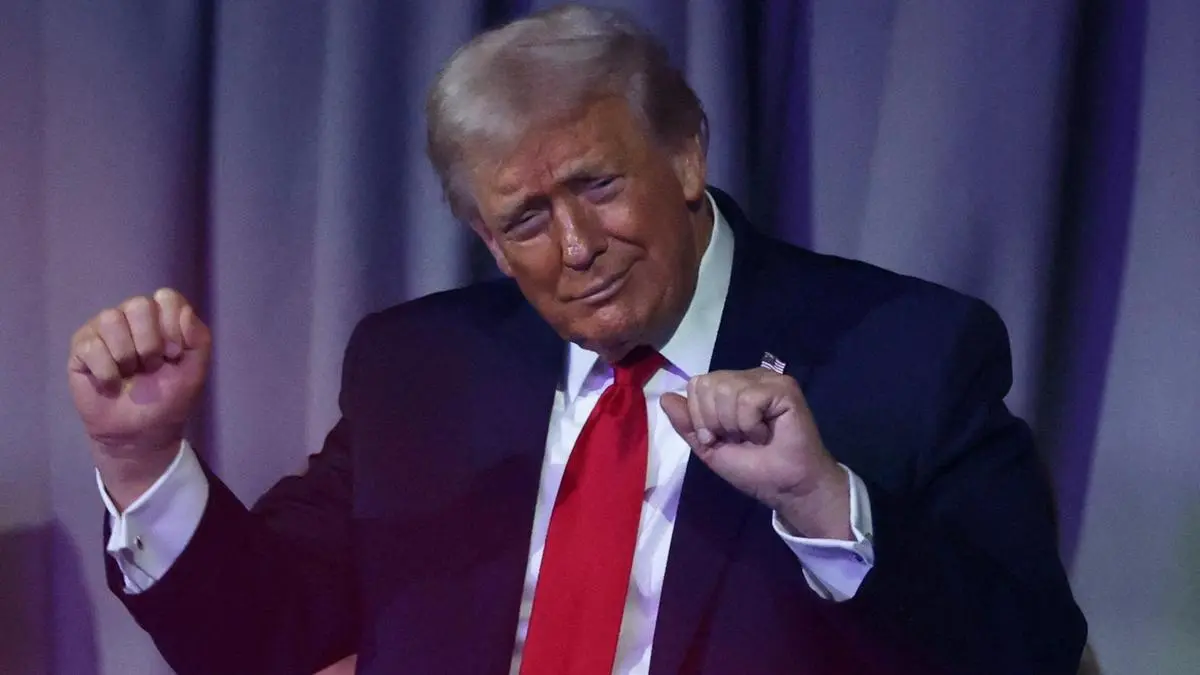
Fed rate cut odds shift as FOMC blackout begins
Yahoo Finance· 2026-01-17 03:13
Group 1 - The Federal Reserve's interest rate expectations are facing uncertainty as the blackout period begins, with the upcoming FOMC meeting on January 28 being crucial for market recalibration [1] - Recent labor reports indicate a surge in layoffs to 1.2 million in 2025, yet the unemployment rate has decreased, and unemployment claims have been surprisingly low [2] - Inflation remains above the Fed's 2% target, suggesting that Chairman Powell is unlikely to cut rates this month, impacting potential borrowers [3] Group 2 - The Federal Reserve operates under a dual mandate that often leads to conflicting goals, where raising rates can lower inflation but increase unemployment, and vice versa [5] - This dynamic was evident last year when Powell faced criticism for not lowering rates sooner to stimulate the economy amid external pressures [6] - Recent comments from Fed officials indicate a moderately restrictive policy stance, with inflation pressures easing and concerns about potential labor market weakening [8]
BofA pours cold water on what's next for rates under Powell
Yahoo Finance· 2026-01-12 14:37
Core Viewpoint - Bank of America indicates that the Federal Reserve is unlikely to continue cutting interest rates, with expectations of rates remaining unchanged during Jerome Powell's tenure until May 2026 [1][2][6] Interest Rate Outlook - Economists at Bank of America predict that the Fed will maintain interest rates at its January 28 meeting and potentially throughout Powell's term, aligning with the Fed's December dot plot which suggests only one rate cut in 2026 [2][4] - The CME's FedWatch tool reflects that traders have pushed the timeline for any significant rate relief to June at the earliest [2] Impact on Borrowers - The current situation poses challenges for homebuyers and families looking to refinance, as the anticipated relief from rate cuts may have already occurred, leaving borrowers in a "higher-for-longer" environment [3][4] - The December jobs report indicated a decrease in the unemployment rate to 4.4%, which is expected to keep the Fed on hold in January, reinforcing the view that no further cuts will occur under Powell [4][6] Economic Context - The Fed's dual mandate of low inflation and low unemployment faced significant challenges in 2025, with inflation rising from 2.3% in April to 2.7% in November, while unemployment peaked at 4.6% before a recent decline [4][5] - Powell's cautious approach to rate cuts, particularly in light of inflation concerns, may have contributed to his precarious position as his term nears its end [5][6]
美国经济- 增长加快 + 失业率下降意味着美联储降息会推迟-US Economics-Faster growth and a lower unemployment rate mean Fed cuts come later
2026-01-10 06:38
Summary of Key Points from the Conference Call Industry Overview - The report focuses on the US economic outlook, particularly regarding the Federal Reserve's monetary policy and employment trends. Core Insights and Arguments 1. **Federal Reserve Rate Cuts**: The expectation for additional rate cuts from the Federal Reserve has been pushed to June and September 2026, from earlier predictions of January and April. This change is based on the belief that rate cuts will occur only when tariff pass-through is complete and inflation is decreasing [1][8][30]. 2. **Economic Growth Forecast**: The growth outlook for 2026 has been revised upward to 2.4% from a previous estimate of 1.8%. This adjustment reflects stronger incoming economic data [8][23]. 3. **Unemployment Rate Trends**: The unemployment rate fell to 4.4% in December, with November's rate revised down to 4.5%. Despite soft labor demand, a stable or declining unemployment rate suggests that labor supply growth is slowing in line with labor demand [3][29]. 4. **Private Employment Growth**: Private employment growth remains weak, with only 29,000 jobs added on a three-month moving average. This indicates ongoing challenges in the labor market [3][29]. 5. **Consumer Spending**: Consumer spending on services has shown resilience, increasing by 3.5% in the third quarter. This trend is expected to continue, as spending on services tends to be more stable compared to durable goods [16][17]. 6. **Trade Deficit**: The trade deficit was reported at -$29.4 billion in October, with a notable decline in real imports, reflecting adjustments from earlier front-loading of imports [11][30]. 7. **Tariff Rates**: The effective tariff rate is expected to rise to approximately 16.0% due to ongoing trade negotiations and tariff implementations. This rate is projected to stabilize around 15-16% by the end of 2025 [34][35]. 8. **Shipping Volumes**: High-frequency container traffic has decreased significantly after a surge earlier in the year, indicating a reversal in import trends [39][40]. Additional Important Insights 1. **Productivity Growth**: There has been a notable increase in productivity growth, recorded at 4.9% quarter-over-quarter, although the reasons behind this acceleration remain unclear [18][24]. 2. **K-Shaped Recovery**: The report highlights a K-shaped recovery in consumer behavior, where higher-income households are driving new car purchases, accounting for 43% of sales, while lower-income households' share has decreased [17]. 3. **GDP Tracking**: The GDP tracking estimate for the fourth quarter of 2025 has been adjusted to 2.2%, indicating a more positive outlook than previously anticipated [22][50]. 4. **Federal Budget Balance**: The report notes a federal budget balance of -$173.3 billion for December, reflecting ongoing fiscal challenges [62]. This summary encapsulates the key points discussed in the conference call, providing a comprehensive overview of the current economic landscape and expectations for the future.