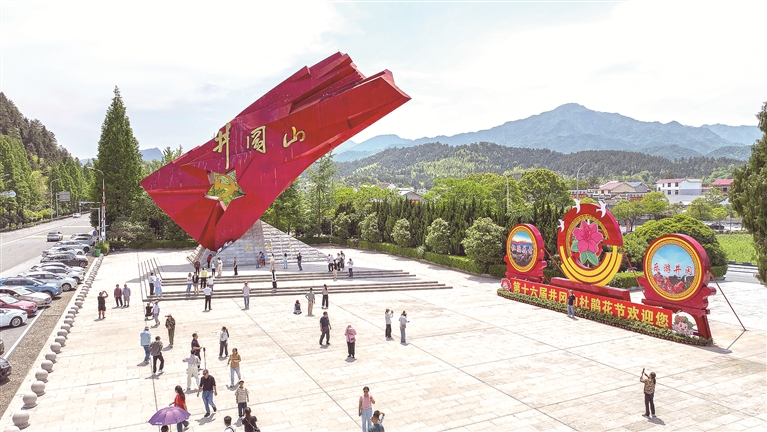
抗战精神

Search documents
铭记历史 缅怀先烈丨血战台儿庄 激战禹王山——徐州会战回眸
Xin Hua She· 2025-07-25 10:27
Core Points - The article highlights the significance of the Battle of Taierzhuang during the Second Sino-Japanese War, showcasing the bravery and sacrifices of Chinese soldiers against Japanese forces [1][2][3][4] - It emphasizes the unity and collective effort of the Chinese people, including the Communist Party's involvement in the war strategy and support for the military [2][3] - The article also discusses the ongoing remembrance and commemoration of these historical events through museums and exhibitions, aiming to educate future generations about the spirit of resistance [3][4] Summary by Sections Historical Context - The Battle of Taierzhuang was a major conflict in 1938, part of the larger Xuzhou Campaign, where Chinese forces, under the command of Li Zongren, engaged Japanese troops aiming to capture key transportation hubs [1][2] - The battle began on March 23, 1938, with Chinese forces employing various tactics, including the formation of "death squads" to counter the Japanese advance [1][2] Military Strategy and Outcomes - The Chinese military, despite being outnumbered, achieved a significant victory, with approximately 30,000 soldiers sacrificing their lives and inflicting over 10,000 casualties on the Japanese side [2] - The article notes the strategic withdrawal of Chinese forces from Xuzhou to preserve their strength for a prolonged conflict, highlighting the importance of the Yunnan troops in the battle [3] Commemoration and Legacy - The Taierzhuang Battle Memorial and Yuwangshan Anti-Japanese Memorial serve as sites of remembrance, attracting over 2 million visitors annually, with plans for international exhibitions to promote the spirit of resistance [3][4] - The article concludes with a reflection on the enduring legacy of the anti-Japanese spirit and its relevance in contemporary society [4]
铭记历史 缅怀先烈丨走进红色大悟 探寻抗战印记
Xin Hua Wang· 2025-07-23 13:49
Core Viewpoint - The article highlights the historical significance of Baiguoshu Bay Village in Dawu County, Hubei Province, as a key site for the New Fourth Army during the Anti-Japanese War, emphasizing its role in military strategy and community support for the troops [1][10]. Group 1: Historical Context - Baiguoshu Bay Village was the headquarters of the New Fourth Army's Fifth Division and served as an important command center for the Anti-Japanese War in Central China over 80 years ago [1]. - The New Fourth Army Fifth Division conducted over 1,200 major battles and successfully repelled 150,000 Japanese troops, establishing a democratic base for resistance across five provinces [10]. Group 2: Community Involvement - Local villagers provided significant support to the soldiers, including sharing their homes and providing warm clothing during harsh winter conditions, illustrating the strong bond between the military and the community [10][15]. - The stories of cooperation and sacrifice between the soldiers and the villagers have become a vital part of the local heritage and are used to promote red culture and education [15]. Group 3: Cultural Significance - The New Fourth Army Fifth Division Memorial Hall showcases historical photographs and wartime artifacts, serving as a testament to the revolutionary efforts and the spirit of resistance [5][15]. - Dawu County has been actively enhancing red cultural initiatives and integrating red education with tourism, aiming to keep the spirit of the Anti-Japanese War alive for future generations [15].

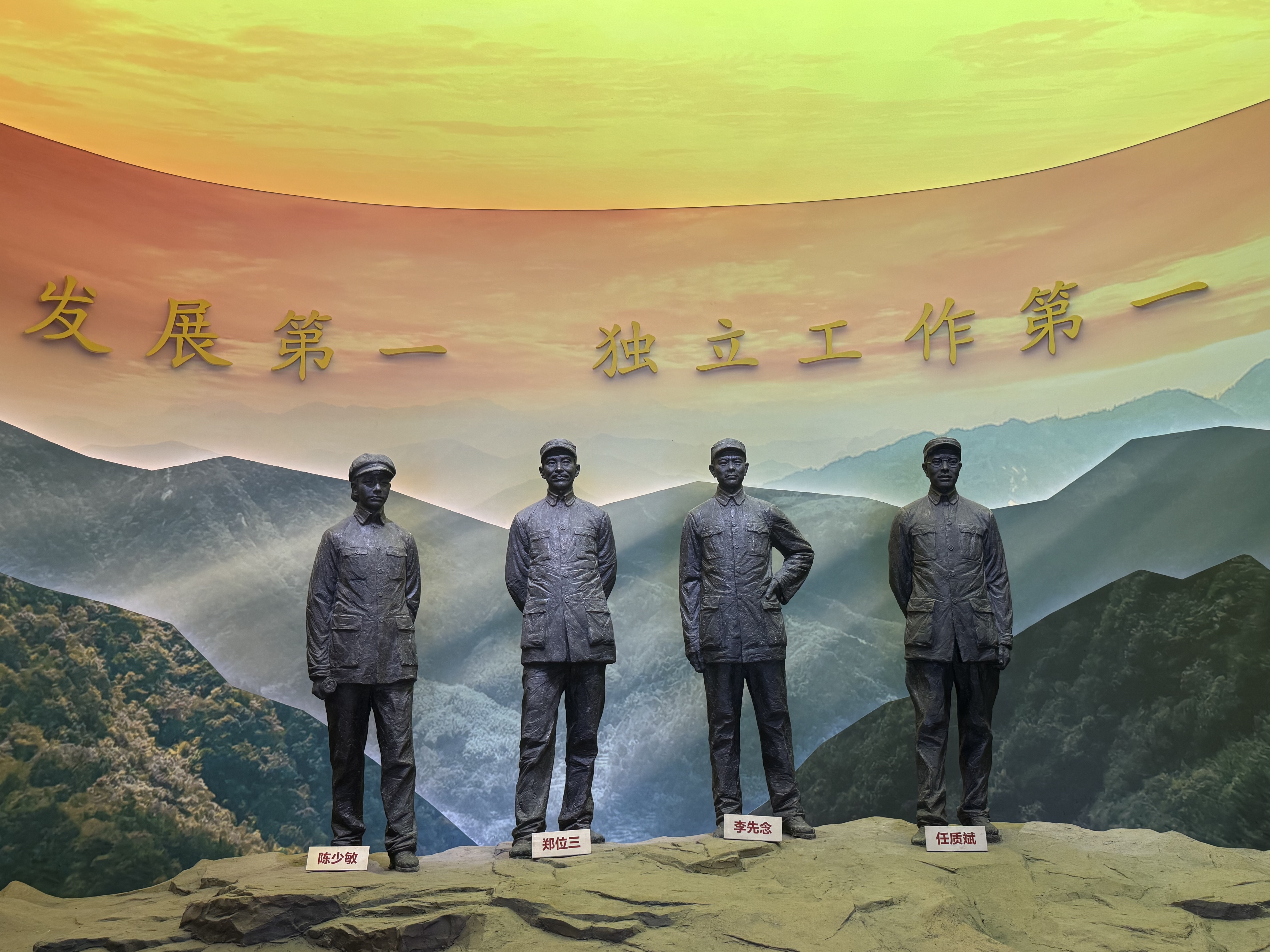
79年接力,守护一座烈士纪念塔(守望·追寻红色记忆)
Ren Min Ri Bao· 2025-07-21 22:12
Core Viewpoint - The article highlights the significance of preserving the memory of the heroes from the Anti-Japanese War and the efforts of local communities in maintaining memorials dedicated to these heroes, emphasizing the importance of historical remembrance and community involvement in honoring sacrifices made during the war. Group 1 - The establishment of the martyr memorial tower in Bohxing County was a community effort, with local residents contributing materials to honor the fallen soldiers from their villages [2][3]. - The memorial tower has evolved from a simple structure to a provincial-level cultural heritage site, reflecting the growing recognition of its historical importance [4]. - The personal connection of the Wang family to the memorial, spanning generations, illustrates the deep-rooted commitment to preserving the memory of the martyrs [3][4]. Group 2 - The daily responsibilities of maintaining the memorial have become a primary focus for the Wang family, indicating a shift in their life priorities towards honoring the legacy of the martyrs [3][4]. - The increasing number of visitors to the memorial has heightened the sense of responsibility for the Wang family, leading them to prioritize the upkeep of the site over other employment opportunities [4]. - The narrative emphasizes the hope that the next generation will continue the tradition of honoring the martyrs, as seen in the son's willingness to support his parents in their duties [4].
“山河永固——晋冀鲁豫抗日根据地革命文物展”河南开展
He Nan Ri Bao· 2025-07-20 23:34
Core Viewpoint - The exhibition "Mountains and Rivers Forever - Revolutionary Relics of the Anti-Japanese Base in Jin, Ji, Lu, and Yu" showcases the historical significance and contributions of the anti-Japanese base during the war, emphasizing the collaborative efforts of four provinces in presenting revolutionary relics [1][2]. Group 1: Exhibition Overview - The exhibition is held at the Henan Museum Zhengzhou Branch and is guided by the National Cultural Heritage Administration and provincial propaganda departments [1]. - It features over 1,000 revolutionary relics from four provinces, with more than 280 items displayed in the main venue in Henan [2]. - The exhibition runs from July 19 to October 20, with over 30 museums and memorials across the province participating in related thematic exhibitions [2]. Group 2: Historical Significance - The Jin, Ji, Lu, and Yu anti-Japanese base was a major battlefield led by the Communist Party of China, known for its extensive influence and significant military impact during the war [1]. - The exhibition is divided into five sections, illustrating the historical progression of the anti-Japanese base and embodying the spirit of patriotism, resilience, and determination [2].
乌斯浑河畔 奋进谱新篇
Ren Min Ri Bao· 2025-07-20 00:22
Core Viewpoint - The article commemorates the heroic sacrifice of the eight female soldiers known as "Eight Women Jumping into the River," highlighting their bravery during the anti-Japanese resistance in Northeast China and the ongoing efforts to preserve their legacy through education and cultural activities [3][4][5]. Group 1: Historical Significance - The "Eight Women Jumping into the River" memorial in Mudanjiang serves as a solemn tribute to the eight female soldiers who sacrificed their lives during the anti-Japanese war, emphasizing their commitment to protecting their comrades [1][3]. - The historical context of the Northeast Anti-Japanese United Army is illustrated through artifacts and personal accounts, showcasing the courage of these women, including the youngest, Wang Huimin, who was only 13 years old [3][4]. Group 2: Educational Initiatives - Local schools, such as the school near the memorial, have integrated patriotic education into their curriculum, fostering a sense of national pride among students through storytelling and commemorative activities [4][5]. - The performance of the epic dance drama "The Unyielding Faith" at Mudanjiang Normal University serves as a cultural vehicle to educate new generations about the sacrifices made by these female soldiers, with over 1,600 students participating in its creation [5]. Group 3: Economic Revitalization - The region around the Uskhun River is experiencing economic revitalization, particularly in the goose farming industry, which has seen significant advancements in technology and production methods, including the use of mobile apps for monitoring [6][7]. - Financial support for the goose farming sector has exceeded 300 million yuan over three years, demonstrating a commitment to modernizing agricultural practices and enhancing local livelihoods [7]. Group 4: Cultural Preservation - The renovation of the memorial museum aims to utilize modern technology to dynamically present the historical events surrounding the sacrifices of the eight women, ensuring their stories are not forgotten [8]. - The ongoing efforts to train new generations of young narrators to share the stories of these heroes reflect a broader commitment to preserving and promoting local history and culture [8].
铭记历史 缅怀先烈丨铁血绥远:烽火淬炼的抗战壮歌
Xin Hua She· 2025-07-18 07:09
Core Viewpoint - The article highlights the significance of the Suiyuan Anti-Japanese War, emphasizing its complete victory as a crucial part of China's resistance against Japanese invasion, praised by Mao Zedong as the "voice of national resistance" [1] Group 1: Historical Context - The Suiyuan region, now part of Inner Mongolia, faced imminent threats from Japanese forces in 1936, with the Red Gertu area being strategically important due to its location [1] - The Japanese military launched a fierce attack on Red Gertu with over 5,000 troops equipped with heavy weaponry, while the Chinese defenders numbered only around 300 with basic firearms [1] Group 2: Key Battles and Victories - Under the leadership of General Fu Zuoyi, the Chinese forces launched a surprise counterattack on November 19, resulting in a complete victory at the Red Gertu battle, with hundreds of enemy troops killed or captured [2] - Following the victory at Red Gertu, the Chinese forces aimed to recapture the nearby Bailing Temple, successfully launching an attack on November 24, inflicting significant casualties on the enemy and seizing substantial military supplies [2] Group 3: Legacy and Commemoration - The victories at the Red Gertu and Bailing Temple battles showcased the determination and strength of the Chinese military and civilians against Japanese aggression, symbolizing the spirit of national unity [3] - The newly established Red Gertu Anti-Japanese War Memorial Museum attracts over 10,000 visitors annually, serving as a reminder of the sacrifices made during the war and the enduring spirit of resistance [3]
记者手记丨火炬照亮新征程
Zhong Yang Ji Wei Guo Jia Jian Wei Wang Zhan· 2025-07-17 23:57
中央纪委国家监委网站 吕佳蓉 知所从来,思所将往。铭记,不是为了简单的复刻记忆,而是激励人们团结奋斗、继续前行。采访临近 尾声时,车河村党支部书记王春掰着手指头跟记者盘算村里的发展计划:"有机农业论坛、探索黑猪养 殖……"这位62岁的老支书依旧干劲十足。穷山沟蹚出致富路,背后自是困难重重。然而王春的一句"坚 定信心,敢于胜利"让人们看到抗战给予后人的精神力量。 历史铭刻记忆,浩气长存山河。回望1937年的9月25日,八路军第一一五师浴血奋战,在平型关取得了 全面抗战以来的第一场大胜利。从此,伟大的抗日战争攻克了一个又一个险关,渡过了一个又一个难 关。 "不管处于什么历史时期,我们都不能忘记苦难的历史、英雄的牺牲,都要把战斗传达出来的精神不断 传承下去。"平型关大捷纪念馆文史研究部主任毛春桃说。自2012年到纪念馆工作以来,毛春桃从讲解 员到文史研究人员,每走近这段历史一步,对八路军战士不畏强敌,敢于牺牲,敢于亮剑,保家卫国决 心的感受就多一分,对传承、弘扬英烈抗战精神的决心就坚定一分。毛春桃告诉记者,作为土生土长的 灵丘人,她是听着平型关大捷的故事长大的。如今,她的女儿在暑假时也会在馆里担任小小讲解 员,"要 ...
“不带枪出去,也要带情报回来”(时空对话)
Ren Min Ri Bao· 2025-07-17 22:02
孙洪秀敬礼。 本报记者 祝佳祺摄 孙洪秀向武警广西总队百色支队官兵分享战斗故事。 唐明洋摄 端起枪,孙洪秀仍然精气神十足。今年"七一"前夕,抗战老兵孙洪秀在武警广西总队百色支队营区官兵 们的祝福中,度过了自己的百岁生日。 "以前的枪能装5发子弹,现在能装30发。如果我们当时有这么精良的装备,一定能取得更好的战 绩。"尽管已在广西生活70多年,孙洪秀依旧乡音未改。1925年,孙洪秀出生于江苏一个农民家庭, 1943年参加新四军,与敌军作战。"脑袋别在裤腰带上",孙洪秀常以此形容自己的抗战经历。 "别人拿大枪,我们拿小枪,我觉得小枪没力,起初还有点失望。"第一次发枪时,孙洪秀领的是一把轻 量的驳壳枪。由于物资紧缺,部队并无多余弹药供新兵练习,每一发子弹都无比珍贵。孙洪秀很快学会 了用枪,但为了掩饰身份,他常常要不带枪执行任务。 参军念头为何如此坚定? "日军杀了我们的人,汉奸也欺负我们,一定要拿枪反抗" 20世纪40年代,孙洪秀的父亲离世后,家里连吃饭都成了问题。为了糊口,孙洪秀在当地送信谋生。 1943年,正值新四军扩军,孙洪秀和几个送信的小伙伴一起报名参了军。营长问他参军原因,孙洪秀毫 不犹豫地回答:"日军杀 ...

“参加游击队,就做好了随时牺牲的准备”(时空对话)
Ren Min Ri Bao· 2025-07-17 06:50
陈胜利近照。 本报记者 王昊男摄 青年时期的陈胜利。 受访者供图 抗战老兵陈胜利原名不叫"胜利",是因为抗战改的名。 在北京市石景山区老干部活动中心,记者见到了身经百战、已过百岁的陈胜利。参军日期、入党时间、 牺牲的战友、战斗细节……这些往事,他至今记忆犹新。 陈胜利,原名陈生粒,1922年8月生于河北望都县东高昌村,1938年1月参军,1944年2月加入中国共产 党,先后参加抗日战争、解放战争、抗美援朝战争,多次立功。在部队,他历任文化教员、政治指导员 等职。1982年12月,陈胜利从北京市石景山区百货公司离休。 为什么参加游击队? "战火烧到了家门口,誓死不当亡国奴" "小时候家里穷,两岁没了父亲,12岁给地主打长工。"陈胜利回忆,"那时候,天天吃糠咽菜,饿不死 就算好。" 1937年农历八月十四,这个日子像一根刺,扎在陈胜利的记忆里。15岁的他与表兄相约赶大集,突然轰 鸣声从天上传来。那天,陈胜利和乡亲们第一次见到了日本鬼子的轰炸机。 "炸弹一颗接一颗,到处是死尸和断肢,哭喊声一片。"集市成了人间地狱,侥幸逃生的陈胜利后来听人 说,"集上炸死了100多人。" 回到村里,陈胜利吓得一宿没睡。第二天,天刚蒙 ...
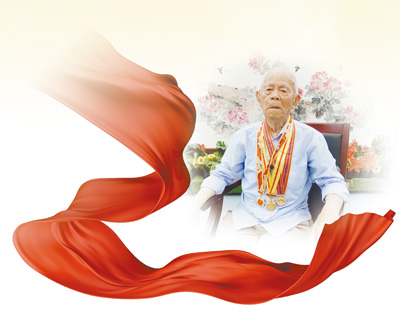
观点丨让井冈山精神放射出新的时代光芒
Zhong Yang Ji Wei Guo Jia Jian Wei Wang Zhan· 2025-07-17 00:35
Group 1 - The core viewpoint emphasizes the significance of the Jinggangshan Spirit as a vital part of the Chinese Communist Party's spiritual lineage, highlighting its role in the historical context of the Chinese revolution and its ongoing relevance in contemporary society [2][6][9] - The Jinggangshan Spirit is characterized by ideals such as unwavering faith, hard work, practical problem-solving, and reliance on the masses, which were crucial during the Jinggangshan struggle against overwhelming odds [4][5][11] - The spirit has influenced various other revolutionary spirits within the Chinese Communist Party, including the Su District Spirit, Long March Spirit, Yan'an Spirit, and Anti-Japanese War Spirit, showcasing its foundational role in shaping the party's ethos [7][8][12] Group 2 - The article discusses the importance of maintaining a people-centered development approach, emphasizing the need to listen to the people's voices and incorporate their needs into decision-making processes [11][12] - It highlights the necessity of adhering to the principles of seeking truth from facts and being innovative in addressing challenges, particularly in the context of the rapidly changing global landscape [10][11] - The text underscores the ongoing efforts to strengthen the party's work style and maintain its integrity, which are seen as essential for sustaining public support and ensuring the party's effectiveness [10][11]