Agentic AI

Search documents
SharpLink Gaming .(SBET) - 2025 Q3 - Earnings Call Transcript
2025-11-13 14:32
Financial Data and Key Metrics Changes - Total revenue for Q3 2025 reached approximately $10.8 million, a significant increase of over 10 times year-over-year from $0.9 million in Q3 2024 [11][22] - Net income for Q3 2025 was approximately $104.3 million, a substantial increase compared to a net loss of $0.9 million in the same quarter last year, primarily driven by unrealized gains on Ethereum holdings [23] - Cash on hand as of September 30, 2025, was $11.1 million, up from $1.4 million at the end of 2024 [23] Business Line Data and Key Metrics Changes - The affiliate marketing segment generated revenue of approximately $570,000 in Q3 2025, down from $882,000 in Q3 2024, indicating a reduced emphasis on this area as resources shifted towards the ETH treasury strategy [20] - The company staked nearly 100% of its ETH since the inception of its treasury strategy, contrasting with many peers and ETH ETFs [14] Market Data and Key Metrics Changes - As of September 30, 2025, the company held 580,841 ETH with a net fair value of $2.4 billion, and 236,906 LsETH (liquid staked ETH) valued at $622.7 million [21] - Combined ETH holdings increased to 637,752 ETH and 223,499 LsETH as of November 9, 2025 [22] Company Strategy and Development Direction - The company is focused on maximizing value creation through strategic partnerships and identifying the best ETH deployment opportunities, leveraging its relationship with ConsenSys [14][15] - The long-term vision includes Ethereum becoming the settlement layer for trillions of dollars in tokenized assets, with a focus on increasing ETH per share for investors [10][12] Management's Comments on Operating Environment and Future Outlook - Management highlighted a significant shift in institutional adoption of digital assets, supported by regulatory clarity from the U.S. government [12] - The company is well-positioned to capitalize on the ongoing institutional adoption supercycle within the Ethereum ecosystem [19] Other Important Information - The company announced a partnership with Superstate to issue its stock natively on Ethereum, aiming to enhance accessibility and utility for a digitally native investor base [16] - The company raised $76.5 million through a registered direct offering, reflecting strong institutional confidence in its strategy [18] Q&A Session Summary Question: Can you discuss the attributes driving demand for Ethereum and the pipeline for partnerships? - Management noted that financial institutions recognize digital assets as crucial technology, with Ethereum executing its scaling roadmap effectively [27][28] Question: How does the company view the percentage of ETH that should be staked versus used for other earnings? - The company emphasized a focus on risk-adjusted yield while staking nearly 100% of its ETH, without providing specific yield targets [31][32] Question: What initiatives are being considered besides share buybacks in light of the current NAV multiple? - Management indicated a focus on increasing ETH per share growth and capital efficiency, with various strategies available depending on market conditions [50][51] Question: How does Ethereum maintain its leading position against competitors like Solana? - Management highlighted Ethereum's significant stablecoin activity and tokenized asset dominance, asserting confidence in its institutional activity [56][57] Question: What is the expected impact of upcoming Ethereum upgrades? - Management expressed optimism about the upgrades enhancing scalability and transaction throughput, positioning Ethereum favorably against competitors [64][65]

SharpLink Gaming .(SBET) - 2025 Q3 - Earnings Call Transcript
2025-11-13 14:30
Financial Data and Key Metrics Changes - Total revenue for Q3 2025 reached approximately $10.8 million, a significant increase of over 10 times year-over-year from $0.9 million in Q3 2024 [11][24] - Net income for Q3 2025 was approximately $104.3 million, a substantial increase compared to a net loss of $0.9 million in the same quarter last year, primarily driven by a $107.3 million unrealized gain related to fair value accounting adjustments on ETH holdings [25][12] - As of September 30, 2025, the company held 580,841 ETH with a net fair value of $2.4 billion and 236,906 LsETH valued at $622.7 million [23] Business Line Data and Key Metrics Changes - The affiliate marketing segment generated approximately $570,000 in revenue for Q3 2025, down from $882,000 in Q3 2024, while the consolidated net loss from continuing operations improved to approximately $1,800 from a loss of $781,000 in the prior year [22] Market Data and Key Metrics Changes - The company has seen a significant increase in institutional adoption of Ethereum, with major financial institutions and governments recognizing the potential of digital assets and decentralized finance [5][12] - Ethereum continues to dominate the stablecoin market, with over 60% of stablecoin activity occurring on its platform, and it holds a significant share of tokenized real-world assets [58] Company Strategy and Development Direction - SharpLink is focused on maximizing value creation through its Ethereum treasury strategy, having staked nearly 100% of its ETH and planning to deploy $200 million of ETH onto the Linea Layer 2 platform [15][24] - The company aims to capitalize on the institutional adoption supercycle and is building a team with significant expertise to navigate the evolving landscape of digital assets [13][21] Management's Comments on Operating Environment and Future Outlook - Management highlighted a major inflection point for institutional adoption of digital assets, driven by regulatory clarity and the recognition of stablecoins' efficiency in value transfer [12][18] - The upcoming Fusaka upgrade in December 2025 is expected to enhance Ethereum's scalability and transaction throughput, further supporting institutional adoption [9][56] Other Important Information - SharpLink's share price has experienced volatility due to its exposure to ETH, but the company has doubled its ETH per share concentration from 2.0 to 4.0 since launching its treasury strategy [17][18] - The company raised $76.5 million through a registered direct offering, reflecting strong institutional confidence in its strategy [19][20] Q&A Session Summary Question: What attributes are driving demand for Ethereum partnerships? - Institutions recognize digital assets as crucial technology, and Ethereum's scalability and interoperability are key factors driving demand [30][31] Question: How does SharpLink view the percentage of ETH to be staked versus applied for yield? - The company has been staking nearly 100% of its ETH and focuses on risk-adjusted yield opportunities without providing specific yield guidance [34][35] Question: What is the current multiple to NAV and what initiatives are being considered? - The company is exploring various capital-raising strategies, including share buybacks and innovative fundraising opportunities, to enhance shareholder value [52][54] Question: How does Ethereum maintain its leading position against competitors like Solana? - Ethereum's long-standing reliability, significant stablecoin activity, and upcoming upgrades are expected to preserve its competitive edge [56][60] Question: What is the expected inflation rate of Ethereum's token issuance? - Ethereum's expected inflation rate is below 1% annually, with the potential to become deflationary as network activity increases [70][71]
HealthEquity to Enhance Member Experience with Agentic AI
Globenewswire· 2025-11-13 14:00
Core Insights - HealthEquity, Inc. is enhancing member experience by deploying advanced agentic AI technology in collaboration with Parloa, aiming to provide personalized and conversational support for its members [1][5][6] Group 1: AI Technology Implementation - The new agentic AI solution will allow members to interact naturally across various channels, including voice calls, mobile app chat, and web-based conversations, eliminating the need for complex phone menus [3][4] - The AI system is designed to understand member intent and maintain context throughout interactions, blending AI capabilities with human support for a more efficient service experience [4][5] Group 2: Commitment to Member Experience - HealthEquity's Chief Customer Officer emphasized the importance of empathy in customer interactions, recognizing that members often reach out during challenging moments [2] - The company is committed to ongoing technology investments to enhance member outcomes, with a phased rollout of the agentic AI technology starting in November and expanding throughout 2026 [6][8] Group 3: Existing AI Solutions - HealthEquity has already implemented several AI-powered solutions, including Expedited Claims AI, which saves members an average of 70% of the time spent on claims entry, and HSAnswers, which provides fast, personalized responses to HSA-related inquiries [7][8] - The HealthEquity Assist™ suite offers integrated solutions that drive engagement and cost savings through real-time data analytics and personalized rewards [7] Group 4: Company Overview - HealthEquity administers HSAs and other consumer-directed benefits for over 17 million accounts, partnering with employers and benefits advisors to empower healthcare consumers [9]


Nokia strengthens AI data center performance and AI-enabled automation with enhanced portfolio
Globenewswire· 2025-11-13 08:00
Core Insights - Nokia is enhancing its data center networking portfolio to meet the growing demands of AI workloads and improve operational efficiency through AI-driven automation [1][3][12] Product Innovations - The introduction of the 7220 Interconnect Router (IXR) high-performance data center switches and an enhanced suite of AIOps tools for the Event-Driven Automation (EDA) platform aims to support advanced AI training and inference workloads [2][10] - The 7220 IXR-H6 switches offer exceptional throughput of up to 102.4 Tb/s and interface speeds of 800 GE and 1.6 TE, effectively doubling throughput and interface speeds within the same footprint [6][10] - The switches are compliant with Ultra Ethernet Consortium (UEC) specifications, designed to optimize packet flows and enhance network efficiency in large-scale AI environments [6][10] Market Trends - The rise of agentic AI applications is reshaping data center requirements, necessitating rapid advancements in networking solutions [3][5] - There is a significant push for automation and modernization strategies among cloud service providers and enterprises to reduce downtime and ensure resilient performance [11] Operational Efficiency - Nokia's EDA platform, enhanced with AIOps capabilities, can lead to a 96% reduction in data center network downtime, facilitating faster issue identification and remediation [11][12] - The platform combines natural language interactions with agentic AI to improve operational environments, backed by extensive real-time telemetry and integrated digital twin capabilities [11][12] Future Availability - The Nokia 7220 IXR-H6 switches are expected to be available in the first quarter of 2026, with EDA AIOps features available for demonstration by the end of 2025 [13]


CXApp (CXAI) - 2025 Q3 - Earnings Call Transcript
2025-11-12 23:00
Financial Data and Key Metrics Changes - The company reported a subscription revenue mix of 99%, up from 88% in the same quarter last year, indicating a strong transition towards a pure SaaS model [47] - Gross margin improved to 89%, compared to 88% in Q3 of the previous year and 86% in the previous quarter, reflecting better cloud cost management and infrastructure scaling [48] - Earnings per share improved to negative $0.13, a significant gain from negative $0.34 in the same quarter last year, signaling effective cost controls and a recurring revenue model [50] Business Line Data and Key Metrics Changes - The company experienced a modest revenue decline to $1.1 million from $1.2 million in Q2, attributed to lower hardware-related sales as part of a strategy to phase out non-core components [50] - Operating expenses decreased to $4.8 million from $5.2 million in Q2, an 8% reduction, demonstrating operational efficiency while still investing in innovation [51] Market Data and Key Metrics Changes - The company operates in over 200 cities across 50 countries, serving over a million users, indicating a broad market presence [6] - Gartner recognized the company as a representative vendor in the 2025 market guide for workplace experience applications, highlighting its growing market influence [14] Company Strategy and Development Direction - The company aims to expand within its current customer base, particularly among Fortune 500 clients, by offering additional modules that can multiply ARR potential [62] - Strategic collaborations, such as with Noro and Google Cloud, are intended to extend the company's reach into immersive and agentic experiences [62] - The company is focused on maintaining cost discipline while investing in AI leadership, balancing growth with responsibility [63] Management's Comments on Operating Environment and Future Outlook - Management noted that AI in the workplace is now a board-level imperative, with a strong push for return-to-office mandates despite employee burnout [12][17] - The company is optimistic about the future, emphasizing that it is not just riding the AI wave but architecting it, aiming to define a new category in the enterprise platform space [63][64] Other Important Information - The company launched its Sky1.0 platform, which saw major performance gains, cutting space booking time by over 50% and enhancing colleague visibility [22] - A significant deployment at 30 Rock was highlighted, with 6,000 users on day one and a focus on dining features, which were particularly well-received [28][31] Q&A Session Summary Question: Update on kiosks, customer feedback, and deployment status - The company launched a kiosk product with a client in Silicon Valley, which is performing well and is set for global deployment across 14 campuses [67][68] - Three additional clients are in pilot phases, showing genuine interest in the kiosk's real-time engagement capabilities [70] - The deployment at 30 Rock was critical, with successful launches in multiple locations, and the client is eager to expand the kiosk trials [72][73]

CXApp Inc. ("CXAI") Reports Strong Q3 2025 Results; Expands Agentic AI Leadership and Strategic Ecosystem Partnerships
Accessnewswire· 2025-11-12 22:00
Core Insights - CXApp Inc. has been named a Representative Vendor in the Gartner Market Guide for Workplace Experience Applications 2025, highlighting its position in the industry [1] - The company announced a strategic collaboration with Noro aimed at transforming hybrid work through Agentic AI and immersive presence technology [1] - CXApp Inc. reported significant enterprise client expansion, including the launch of the iconic 30 Rock campus and various platform migration initiatives [1] - Financial results for Q3 2025 showed continued margin improvement, strong customer renewals, and growing industry recognition as the company expands its leadership in enterprise-scale agentic AI and spatial intelligence [1]

Tanium Recognized as a Winner of 2025 Microsoft Americas Partner of the Year Awards
Businesswire· 2025-11-12 20:00
Core Insights - Tanium has been awarded the 2025 Microsoft Americas Partner of the Year Software Development Company US Award, marking its third consecutive year of recognition [1][2][3] Company Achievements - The award reflects Tanium's continued innovation and successful delivery of joint solutions with Microsoft to address significant security challenges faced by customers [2][3] - Tanium's partnership with Microsoft has led to the development of real-time intelligence solutions that enhance the security and management of digital environments [3] Product Developments - Tanium has launched the Integrations Gallery to streamline connections between its platform and various Microsoft products, including Microsoft Security Copilot and Microsoft Sentinel [6] - The introduction of the Tanium Connector for Microsoft Intune allows for real-time telemetry streaming into Microsoft's security and AI platforms, facilitating seamless investigation and remediation processes [6] Strategic Partnership - The partnership between Tanium and Microsoft is characterized by deep executive alignment and a shared vision to redefine technology protection and operations for their joint customers [3] - Tanium is one of the initial partners featured in Microsoft's new Security Store, showcasing the Tanium Security Triage Agent, which enhances alert triage and decision-making for security teams [6]


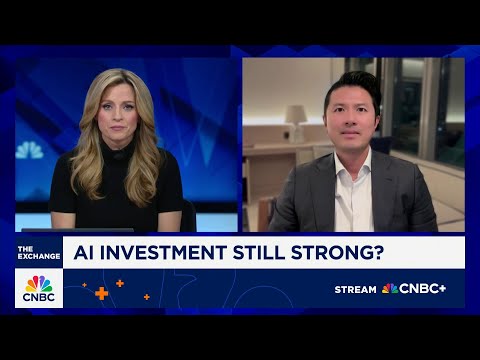
Compute platforms will be the building blocks for AI, says T. Rowe Price's Tony Wang
CNBC Television· 2025-11-12 19:12
AI Debt & Investment Thesis - AI 债务是值得关注的,但生成式 AI 的成果依然存在,Agentic AI 将推动生产力提升 [2] - 所有公司都在积极投资 AI,以保持竞争力 [2][3] - 行业正在寻找新的 AI 用例,这将推动未来的支出 [3] - 存在多种参与 AI 交易的方式 [3] - 计算平台将继续是 AI 技术的基石,Nvidia 是关键平台 [5] - NAND 和 DRAM 等内存领域存在机会,因为需要更多存储真实世界和合成数据 [5] - 行业整合,特别是在 NAND 领域,提供了投资机会 [5] - AI 投资仍处于 S 曲线的早期阶段 [5] - 人们从大型语言模型的使用中获得了巨大的价值 [5] - AI 具有巨大的颠覆潜力 [6] Company Specifics - Oracle 的 5 年期违约信用互换量在过去一周呈指数级增长,可能存在对其激进债务融资的担忧,但基数较低,值得关注 [6][7] - Oracle 的杠杆是可控的,GPU 的使用寿命可能比预期的更长,可以产生大量利润 [7] - Palantir 在为公司实施 AI 方面处于领先地位,并为客户带来巨大价值 [10] - AMD 在快速增长的市场中占据一席之地,与 OpenAI 的合作加强了这一点 [10][11]


Juniper Research Unveils the Top 10 Trends Set to Shape Fintech & Payments in 2026
Globenewswire· 2025-11-12 07:00
Core Insights - The article presents Juniper Research's Top 10 Fintech & Payments Trends for 2026, highlighting significant technological and market shifts that will transform financial services in the coming year [2][3] Group 1: Key Trends - Stablecoins are expected to compete with the existing interbank settlement layer, indicating a shift in how transactions are processed [4] - Agentic AI is set to reshape both B2B and consumer purchasing, enhancing the efficiency and personalization of commerce [4] - The EUDI Wallet will redefine digital identity in Europe, streamlining identity verification processes [4] - Tokenized assets are anticipated to enter the mainstream, broadening investment opportunities and asset management [4] - Generative AI (GenAI) is projected to transform banking operations, improving customer service and operational efficiency [4] - Flexible credentials are expected to drive a renaissance in payment cards, offering consumers more options and security [4] - Investment in AI fraud prevention is likely to rise due to increasing threats from deepfake technologies [4] - The "Pay by Bank" method is expected to scale in the UK through commercial Variable Recurring Payments (VRPs), enhancing payment convenience [4] - No-code Anti-Money Laundering (AML) solutions are anticipated to extend beyond traditional banks, democratizing compliance tools [4] - Virtual cards are predicted to gain traction within travel payments, providing travelers with enhanced security and convenience [4]


2026年全球生成式AI企业行业报告
Sou Hu Cai Jing· 2025-11-11 17:13
Core Insights - The report analyzes the current state of the global Generative AI (GenAI) industry in 2026, highlighting the transition from pilot projects to full-scale production in enterprises, focusing on measurable business value [1][16][28] Enterprise Market & Technology Landscape - By 2025, 71% of organizations are using GenAI in at least one business function, up from 65% in 2024, indicating a significant increase in adoption [7][27] - The global enterprise GenAI market is projected to grow from $4 billion in 2025 to $19.2 billion by 2030, with a compound annual growth rate (CAGR) of 36.8% [7][41][47] - The software segment is expected to dominate the market, accounting for 67% of the total share in 2025, driven by the rise of Agentic AI [45][58] AI Industry Trends - The adoption rate of GenAI is highest in technology, professional services, and advanced manufacturing, with over 79% adoption, while the energy and materials sector lags at 59% [7] - The North American market is expected to hold a 41% share by 2025, while the Asia Pacific region is projected to be the fastest-growing market due to government initiatives [58][59] Investment Trends - GenAI-related investments are expected to reach $56 billion in 2024, nearly doubling from $29 billion in 2023, with infrastructure investments increasing from $6.86 billion in 2023 to nearly $26 billion in 2024 [7][30] - Venture capital investments in GenAI have surged from $239 million in 2014 to $56.1 billion in 2024, indicating strong investor interest [7][19] GenAI Applications - The fastest-growing application areas include code assistants, support chatbots, and enterprise search solutions, with significant investments aimed at automating routine tasks and enhancing customer interactions [5][36][37] - ING Bank has successfully utilized chatbots to handle 45% of its 85,000 weekly customer interactions, showcasing the effectiveness of AI in customer service [5][36] GenAI Technology & Development - Leading models such as GPT-4 and Claude 3 are approaching human-level performance in natural language understanding and code generation, with ChatGPT holding a 60% market share in the U.S. [10][12][41] - The emergence of Agentic AI, which operates more autonomously than traditional GenAI, is expected to grow from $7.6 billion in 2025 to $48 billion by 2030, with a CAGR of 44.5% [10][12]