
Autonomous Driving

Search documents
Waymo's Global Expansion Strengthens the Case for GOOGL Stock
MarketBeat· 2025-10-20 12:43
Core Insights - Alphabet has experienced significant growth in the second half of the year, transitioning from headwinds to tailwinds, particularly in AI and cloud computing [1] - Concerns regarding AI competition and regulatory issues have diminished, allowing Alphabet's core business to strengthen [1] Google Services and Cloud - Profitability is improving across Google Services and Google Cloud, indicating a robust performance in these segments [2] Other Bets Segment - Alphabet's "Other Bets" segment includes innovative projects like Waymo, Verily, and Wing, which are aimed at long-term growth despite current losses [3][4] - In Q2 2025, Other Bets generated $373 million in revenue but incurred a loss of $1.25 billion, highlighting Alphabet's commitment to disruptive innovation [4] Waymo's Developments - Waymo operates fully driverless ride-hailing services in several U.S. cities and has logged millions of autonomous miles, providing over 10 million paid rides [5] - The company has announced its expansion into Europe, starting with testing in London, which is a significant milestone for its global credibility [6][8] - Waymo is also expanding in the U.S., with plans to launch services in Miami and Washington, D.C., and has secured permits for testing in New York City [9] Long-term Potential - While Waymo's current contribution to Alphabet's overall financial picture is minor, its long-term potential is significant if it can secure regulatory approvals and develop a scalable model [10][11] - Alphabet's core strengths remain in AI, cloud computing, and advertising, supported by a robust balance sheet [12]

Tesla stock set to start most bullish phase of 2025; TSLA to $500 next?
Finbold· 2025-10-18 21:24
Core Insights - Tesla stock has experienced a significant bullish trend, nearing the $500 mark, with a nearly 100% increase over the past six months [1] - Historical data indicates November is Tesla's most profitable month, with a win rate of 73% since its IPO [3][4] - The company has an average return of 11.68% during November, reinforcing its strong performance reputation [4] Seasonal Performance - Over the past 15 years, Tesla typically performs well in the final quarter, with a modest dip in October followed by rallies in November and December [6] - The stock has an average return of around 3% in October before the year-end surge [6] Factors Driving Growth - Continuous advancements in electric vehicle technology, production expansion, and potential new product launches position Tesla favorably within the tech and automotive sectors [7] - Elon Musk's $1 billion share purchase has bolstered investor confidence in Tesla's long-term growth, particularly in AI and autonomous driving [8] - The Shanghai Gigafactory's production ramp-up has led to a 2.8% increase in China-made EV sales after two months of declines [8] - Progress in Full Self-Driving (FSD) technology and plans for robotaxis and humanoid robots contribute to a positive outlook for Tesla [8]

Had You Invested $10,000 in the Vanguard S&P 500 Growth ETF 10 Years Ago, Here's How Much You'd Have Today
The Motley Fool· 2025-10-18 09:13
Core Insights - The Vanguard S&P 500 Growth ETF has consistently outperformed the S&P 500 over the long term, primarily due to its focus on high-growth technology stocks and a more concentrated selection of growth stocks [1][2] Group 1: ETF Performance - The Vanguard S&P 500 Growth ETF tracks the S&P 500 Growth Index, which includes around 216 of the best-performing growth stocks, leading to higher returns compared to the broader S&P 500 [2][3] - The ETF has delivered a compound annual return of 16.8% since its inception in 2010, outperforming the S&P 500's annual gain of 13.8% [7] - Over the past decade, the Vanguard ETF has generated an accelerated annual return of 17.5%, significantly influenced by stocks like Nvidia, Tesla, and Broadcom [8] Group 2: Sector and Stock Weightings - The information technology sector holds a substantial 42.6% weighting in the S&P 500 Growth Index, compared to 34.8% in the S&P 500, reflecting the dominance of tech companies in driving growth [3] - The top 10 holdings in the Vanguard S&P 500 Growth ETF include Nvidia, Microsoft, and Apple, which collectively have a market value of $11.9 trillion [4] - These top 10 stocks have delivered a median return of 870% over the last decade, far exceeding the S&P 500's gain of 235% [5] Group 3: Investment Potential - An initial investment of $10,000 in the Vanguard ETF a decade ago would be worth $50,100 today, representing a total return of 400% [8] - The ETF is expected to continue delivering above-average returns in the coming years, driven by powerful themes such as artificial intelligence, which is projected to create trillions of dollars in value [11][12]



自动驾驶论文速递!VLA、世界模型、强化学习、轨迹规划等......
自动驾驶之心· 2025-10-18 04:00
Core Insights - The article discusses advancements in autonomous driving technologies, highlighting various research contributions and their implications for the industry. Group 1: DriveVLA-W0 - The DriveVLA-W0 training paradigm enhances the generalization ability and data scalability of VLA models by using world modeling to predict future images, achieving 93.0 PDMS and 86.1 EPDMS on NAVSIM benchmarks [6][12] - A lightweight Mixture-of-Experts (MoE) architecture reduces inference latency to 63.1% of the baseline VLA, meeting real-time deployment needs [6][12] - The data scaling law amplification effect is validated, showing significant performance improvements as data volume increases, with a 28.8% reduction in ADE and a 15.9% decrease in collision rates when using 70M frames [6][12] Group 2: CoIRL-AD - The CoIRL-AD framework combines imitation learning and reinforcement learning within a latent world model, achieving an 18% reduction in collision rates on the nuScenes dataset and a PDMS score of 88.2 on the Navsim benchmark [13][16] - The framework integrates RL into an end-to-end autonomous driving model, addressing offline RL's scene expansion issues [13][16] - A decoupled dual-policy architecture facilitates structured interaction between imitation learning and reinforcement learning, enhancing knowledge transfer [13][16] Group 3: PAGS - The Priority-Adaptive Gaussian Splatting (PAGS) framework achieves high-quality real-time 3D reconstruction in dynamic driving scenarios, with a PSNR of 34.63 and SSIM of 0.933 on the Waymo dataset [23][29] - PAGS incorporates semantic-guided pruning and regularization to balance reconstruction fidelity and computational cost [23][29] - The framework demonstrates a rendering speed of 353 FPS with a training time of only 1 hour and 22 minutes, outperforming existing methods [23][29] Group 4: Flow Planner - The Flow Planner achieves a score of 90.43 on the nuPlan Val14 benchmark, marking the first learning-based method to surpass 90 without prior knowledge [34][40] - It introduces fine-grained trajectory tokenization to enhance local feature extraction while maintaining motion continuity [34][40] - The architecture employs adaptive layer normalization and scale-adaptive attention to filter redundant information and strengthen key interaction information extraction [34][40] Group 5: CymbaDiff - The CymbaDiff model defines a new task for sketch-based 3D outdoor semantic scene generation, achieving a FID of 40.74 on the Sketch-based SemanticKITTI dataset [44][47] - It introduces a large-scale benchmark dataset, SketchSem3D, for evaluating 3D semantic scene generation [44][47] - The model employs a Cylinder Mamba diffusion mechanism to enhance spatial coherence and local neighborhood relationships [44][47] Group 6: DriveCritic - The DriveCritic framework utilizes vision-language models for context-aware evaluation of autonomous driving, achieving a 76.0% accuracy in human preference alignment tasks [55][58] - It addresses limitations of existing evaluation metrics by focusing on context sensitivity and human alignment in nuanced driving scenarios [55][58] - The framework demonstrates superior performance compared to traditional metrics, providing a reliable solution for human-aligned evaluation in autonomous driving [55][58]

X @The Economist
The Economist· 2025-10-18 01:40
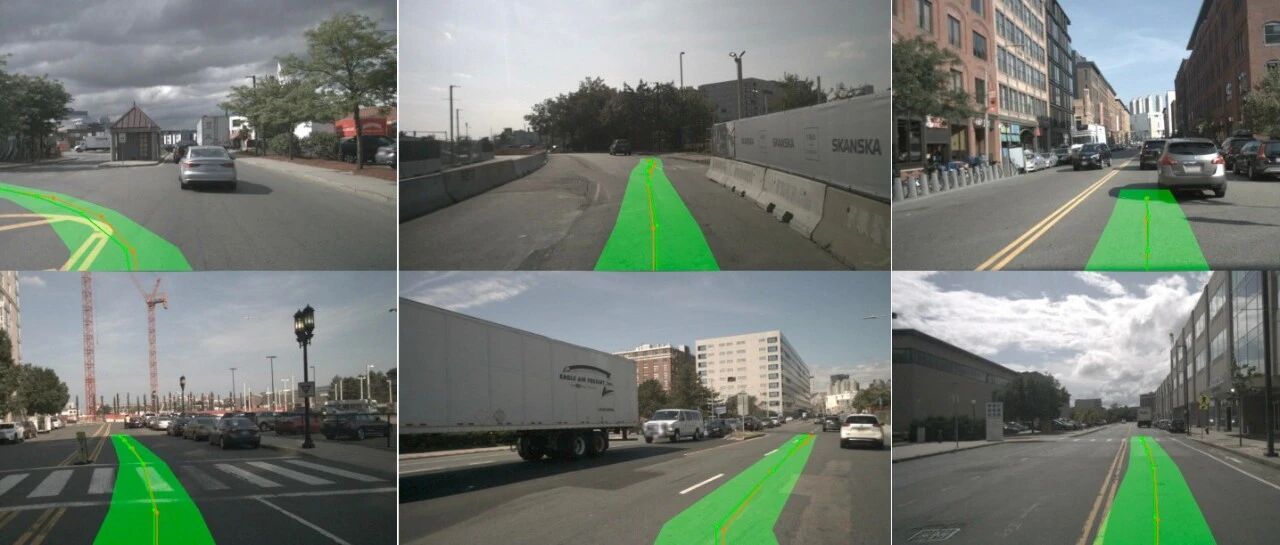
China’s approach to autonomous driving has been to give carmakers more than the usual space to innovate, but also to have regulators ready to hop into the driver’s seat if things look like they are veering off course https://t.co/J68Op3qlpL ...
X @The Economist
The Economist· 2025-10-17 19:40
Strong government backing, censorship of news related to accidents and an optimistic population have brought China’s autonomous driving dreams closer. But there is another crucial factor which tends to get less attention https://t.co/X6rKNDW0Jn ...
Cathie Wood Is Betting on This Little-Known AI Robotaxi Stock. Should You?
Yahoo Finance· 2025-10-17 16:22
Core Insights - Cathie Wood, CIO of ARK Invest, has shifted her investment focus from Tesla to Pony.ai, a company specializing in autonomous mobility solutions [1][2] - Pony.ai is co-headquartered in Silicon Valley and China, indicating its competitive positioning in the EV market [2] - The company is publicly listed and has been commercializing cost-efficient L4 robotaxis, expanding into global markets such as the Middle East and Europe [3] Company Overview - Pony.ai was founded in 2016 and is recognized as a leader in full-stack self-driving technologies for various vehicle types [3] - The company has a current market capitalization of $7.4 billion and has seen its stock price increase by 33.3% year-to-date, outperforming the Nasdaq's 16.8% rise [4] Financial Performance - Pony.ai's financials show stability and improvement, particularly in Q2 2025, where revenues increased by 75.9% year-over-year to $21.46 million [5][6] - The licensing and applications segment experienced significant growth, with sales rising to $10.41 million from $1.04 million in the previous year [6] - The robotaxi services segment also saw a notable revenue increase, jumping to $1.53 million from $592,000 in the same period last year [6]
Stellantis teams up with Pony.ai to develop robotaxis in Europe
TechCrunch· 2025-10-17 15:12
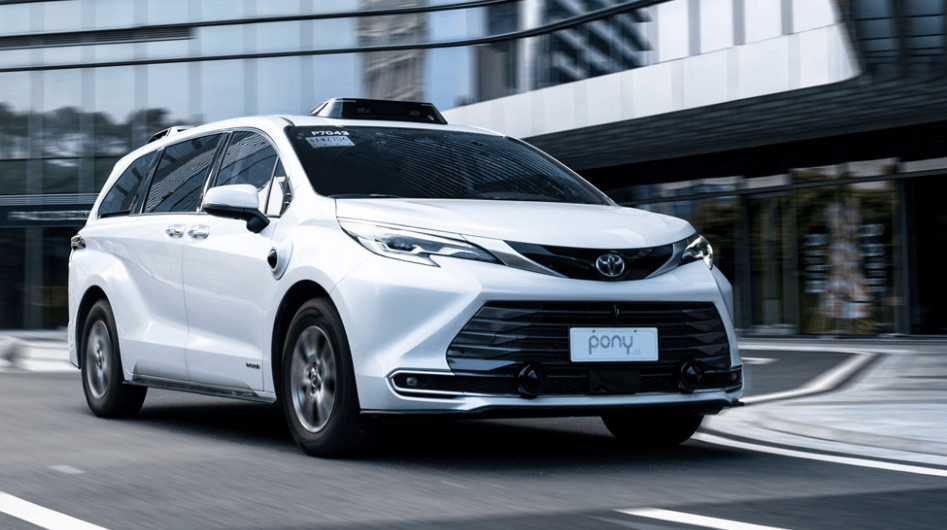
Core Insights - Stellantis and Pony.ai have signed a non-binding agreement to develop robotaxis for deployment in Europe [1] - The collaboration will utilize Pony's self-driving software integrated into Stellantis's electric medium-size van platform [1] Group 1: Deployment Plans - Initial testing will be conducted with vehicles based on the Peugeot e-Traveller model in Luxembourg, starting in the coming months [2] - Plans are in place to expand the rollout of vehicles across various European cities beginning in 2026 [2] Group 2: Strategic Partnerships and Market Expansion - The partnership follows Pony.ai's recent collaboration with Uber to enter international markets, including Europe and the Middle East [2] - Pony.ai has received an autonomous vehicle testing permit from Luxembourg in April, facilitating its expansion efforts [2] Group 3: Financial Strategies - Pony.ai is pursuing a second IPO, aiming for a secondary listing on the Stock Exchange of Hong Kong while already being listed on Nasdaq [3] - The company is focused on expanding its market share in Europe beyond its existing operations in China [3]


“全球Robotaxi第一股”小马智行通过港交所聆讯,启动港股上市冲刺
Sou Hu Cai Jing· 2025-10-17 11:09
Group 1 - The core viewpoint is that China's leading autonomous driving company, Pony.ai, has officially passed the Hong Kong Stock Exchange hearing and is set to enter the Hong Kong market [1] - Pony.ai's PHIP prospectus indicates that the company's revenue is expected to continue expanding from 2022 to 2024, with a notable growth rate of 43.3% in the first half of 2025, reaching $35.43 million (approximately RMB 254 million) [3] - The Robotaxi business is experiencing strong revenue growth, with earnings in the first half of 2025 reaching $3.256 million (approximately RMB 23.32 million), marking a significant year-on-year increase of 178.8% [3] Group 2 - Passenger fare revenue for the Robotaxi service saw extraordinary growth, with increases of approximately 800% and over 300% year-on-year in the first and second quarters of 2025, respectively [3] - Pony.ai completed its listing on NASDAQ in November 2024 under the ticker "PONY," becoming the world's first publicly traded Robotaxi company [3] - As of October 16, 2023, Pony.ai's closing price was $20.415, reflecting a more than 57% increase from its IPO price of $13 [3]
Chinese robotaxi company Pony.ai to work with Stellantis on Europe expansion
CNBC· 2025-10-17 08:38
Core Insights - Pony.ai has initiated testing of robotaxi rides with human staff in Beijing and plans to expand testing in Europe in collaboration with Stellantis [1][2] - The partnership aims to leverage Pony.ai's autonomous driving software and Stellantis's electric vehicles, starting with the Peugeot e-Traveller [1] - The companies are focusing on establishing a safety track record through local testing to gain regulatory approval for mass market deployment [2] Group 1 - Pony.ai is collaborating with Stellantis to test self-driving taxis in Luxembourg, with plans for a gradual rollout across European cities starting next year [1][3] - Stellantis recognizes Pony.ai for its technical expertise and collaborative approach in the autonomous driving sector [2] - Major cities in the U.S. and China have been early adopters of public-facing robotaxi operations, setting a precedent for regulatory approval [2] Group 2 - Pony.ai and WeRide have received regulatory approval in China for dual listings in Hong Kong, indicating a strategic move to expand their market presence [3] - The recent activities of U.S. robotaxi operator Waymo, including plans to test in London, highlight the competitive landscape in the autonomous vehicle sector [3]