
小核酸

Search documents
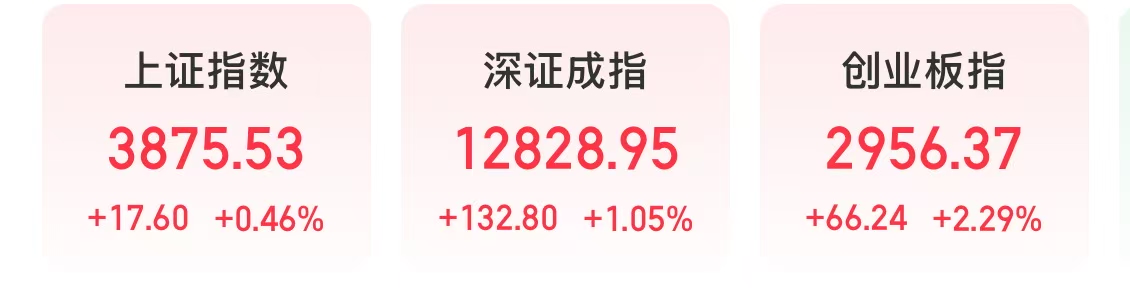
A股上涨 科技主线活跃 有色金属板块大涨
Zhong Zheng Wang· 2025-09-01 08:23
Group 1 - Technology stocks continue to rise, with significant gains in the non-ferrous metals sector, and increases in pharmaceuticals and consumer sectors [2] - In the technology sector, optical module stocks such as Tengjing Technology and Zhongji Xuchuang saw substantial increases, while the semiconductor industry chain, particularly storage chips, led the gains with companies like Huahong and Zhaoyi Innovation performing well [2] - The precious metals sector within non-ferrous metals led the gains, with stocks like Hunan Gold and Western Gold hitting the daily limit, while industrial and minor metals also saw increases with leading stocks like Zijin Mining and Luoyang Molybdenum rising [2] Group 2 - Analysts attribute the continued rise in spot gold prices to three main factors: increased expectations for a Federal Reserve rate cut in September, doubts about the Fed's independence, and structural support from global central bank gold purchases [2] - The pharmaceutical sector showed notable gains, with CRO, innovative drugs, and medical services experiencing increases, highlighted by leading stocks such as Baillie Tianheng, BeiGene, and WuXi AppTec [2] - Huafu Securities suggests focusing on three directions in the innovative drug and its industry chain: BioPharma and Pharma companies with revenue and commercialization capabilities, potential large business development targets based on technology and industry trends, and exploring cutting-edge technologies like gene therapy and small nucleic acids [3]

凯莱英(002821) - 2025年8月26日凯莱英特定对象调研演示材料
2025-08-26 10:36
Financial Overview - Revenue for H1 2025 reached 3,188 million RMB, an increase from 2,697 million RMB in H1 2024 [80] - Adjusted net profit for H1 2025 was 617 million RMB, up from 499 million RMB in H1 2024 [80] - Gross profit margin improved to 43.5%, up from 42.2% in H1 2024 [64] Performance Highlights - Gross margin increased by 1.3 percentage points to 43.5% [13] - Net profit growth outpaced revenue growth by 5.5 percentage points [14] - The company reported a backlog of orders worth 10.88 billion USD, with a year-on-year increase of over 40% [13] Segment Performance Small Molecule Business - Revenue for small molecule CDMO business was 24.29 billion RMB, a 10.6% increase year-on-year [20] - Gross margin for small molecule business reached 47.8%, up 0.6 percentage points [32] Emerging Business - Emerging business revenue surged by 51.2% to 7.56 billion RMB [19] - Gross margin for emerging business was 29.8%, an increase of 9.5 percentage points [20] Clinical CRO Business - Revenue for clinical CRO business was 1.39 billion RMB, reflecting a growth of 44.8% [42] - The company supported 13 projects to obtain clinical trial approvals in China [42] Market Expansion - The company added over 150 new CDMO business clients during the reporting period [22] - Revenue from the US market was 1.789 billion RMB, a slight increase of 0.5% year-on-year [25] - Revenue from the European market grew by over 200% to 548 million RMB [25] Future Outlook - The company anticipates a revenue growth of 13% to 15% for the full year of 2025 [77] - Plans to enhance operational efficiency and profitability, aiming for profit growth to exceed revenue growth [77] - Continued focus on expanding capabilities in peptide, oligonucleotide, and conjugated drug segments [77]

海外CXO暴涨对国内的影响?
2025-07-25 00:52
Summary of Conference Call Records Industry Overview - The conference call discusses the **clinical CRO (Contract Research Organization)** sector, particularly focusing on the impact of recent order improvements on companies like **Madpace** and **Charles River** [1][2][4]. Key Points and Arguments - **Madpace's Stock Performance**: Madpace's stock price increase reflects improved order conditions, with the net book to bill ratio rising from below 0.9 to above 1, indicating a potential acceleration in future revenue growth [1][2]. - **Global CRO Sector Recovery**: The global clinical CRO sector shows signs of recovery, with Charles River reporting better-than-expected order data and a net book to bill value exceeding 1 for the first time, suggesting a demand-side recovery that may continue [1][4]. - **Importance of CRO Services for Biotech**: Biotech companies, which often lack commercialized products, rely heavily on CRO services to accelerate clinical trials and attract investment. This reliance is crucial for their survival and competitiveness [5][6]. - **Domestic CDMO Landscape**: The domestic pharmaceutical industry is primarily led by export-oriented CDMO companies. After significant expansion from 2020 to 2022, the industry faced a downturn, but is expected to recover in 2024, with leading companies achieving full capacity first [1][8]. - **Geopolitical Impact**: Geopolitical relations affect domestic CXO companies' operations in the U.S. Companies like WuXi Biologics have stable orders due to their production capabilities, while WuXi AppTec's reliance on local raw materials makes it more vulnerable [1][9]. - **Innovation-Driven Market Cycles**: The pharmaceutical industry's development cycles depend on innovation in areas like ADCs, small nucleic acids, and peptides. Breakthroughs in these fields could lead to a new upward market cycle [3][10][11]. - **Market Sentiment and New Drug Categories**: Emerging drug categories, such as weight loss medications, are expected to influence market dynamics and sentiment, indicating a shift in consumer demand [3][10]. Additional Important Insights - **CRO Response to Order Fluctuations**: Companies in the clinical sector may face overcapacity during order declines, leading to potential layoffs. Conversely, when orders exceed a certain level, companies may consider expanding capacity [7]. - **CDMO Pricing Strategies**: In a low-capacity environment, CDMO companies may lower prices to secure orders, but as demand increases, they can achieve both volume and price growth [8]. - **Generational Changes in Pharma**: The pharmaceutical industry has undergone several generational changes, with each new major product category influencing market conditions. For instance, breakthroughs in small nucleic acids have significantly impacted market performance [11][12].
