
开源鸿蒙

Search documents
开源鸿蒙技术大会2025在长沙举办
Xin Hua Wang· 2025-09-29 07:50
Core Insights - The OpenHarmony Technology Conference 2025 was held in Changsha, showcasing the advancements in the OpenHarmony project and the release of version 6.0, emphasizing the future direction of intelligent terminal operating systems [1][2] Group 1: OpenHarmony Development - OpenHarmony has gathered over 9,200 community contributors, contributing more than 130 million lines of code, and has launched over 70 industry-specific distributions [1] - The project has seen significant adoption, with over 1,700 applications and services available, and more than 1.7 million devices running the HarmonyOS 5 by September 2025 [1][2] Group 2: Technological Innovations - The OpenHarmony project has maintained a rapid iteration pace, releasing a major version annually, with version 6.0 enhancing system capabilities and application development efficiency [2][3] - The integration of AI with operating systems is highlighted as a key area for future development, addressing challenges such as robustness, security, and efficiency [3] Group 3: Ecosystem Growth - The next five years are seen as a critical opportunity for the rapid growth of the OpenHarmony ecosystem, with expectations of exponential increases in device and application numbers [4] - OpenHarmony is actively enhancing cross-platform framework compatibility to improve application development efficiency and user experience [5] Group 4: Educational Initiatives - The establishment of the OpenHarmony Education Committee aims to explore new pathways for talent development in operating systems [5] - The project has published over 60 technical challenges to drive collaboration between academia and industry, fostering high-level research across various technical fields [5]
泉果基金调研软通动力,以AI工程化能力为基础,赋能行业智能和场景智能
Xin Lang Cai Jing· 2025-09-29 06:44
Core Insights - The company has been actively developing its AI capabilities, launching new products and solutions in the AI engineering and application space, including an AI engineering system and various AI-driven tools [3][4][5] - The company is a key contributor to the OpenHarmony ecosystem, having developed a full-stack solution that integrates its proprietary operating system with various industries, particularly in mining [4][5] - Recent financial performance shows significant growth, with a 25.99% increase in overall revenue year-on-year, driven by strong performance in computing products and intelligent electronics [11][12] Group 1: AI Development - The company has established an AI engineering research institute to enhance its AI capabilities and has launched a series of products and solutions under its AI engineering framework [3][4] - New AI products include AI+ toolchain solutions and enterprise intelligent agent platforms, aimed at supporting businesses in their digital transformation [3][5] Group 2: OpenHarmony Ecosystem - The company is a core builder of the OpenHarmony ecosystem, providing comprehensive technology and solutions across various sectors, including urban management and education [4] - It has adapted nearly 10 domestic chips for its self-developed Tianhong operating system, focusing on mining applications and achieving over 60 certification projects [4][5] Group 3: Financial Performance - In the first half of 2025, the company reported total revenue of 15.781 billion, a 25.99% increase from the previous year, with computing products and intelligent electronics contributing significantly [11] - The second quarter of 2025 saw a revenue of 8.770 billion, a year-on-year growth of 23.93%, and a net profit of 0.055 billion, marking a significant turnaround [11]
开源鸿蒙6.0 Release版本重磅发布,筑牢数字底座赋能万物智联新征程
Huan Qiu Wang Zi Xun· 2025-09-28 08:35
Core Insights - The release of OpenHarmony 6.0 marks a significant advancement in the open-source operating system, enhancing usability and development efficiency across various sectors [1][5] - The new version showcases multiple technical breakthroughs in application framework, media capabilities, and system security, supporting the digital transformation of industries [1][2] Technical Upgrades - OpenHarmony 6.0 introduces deep optimizations in ArkUI components, enhancing immersive development experiences and interaction fluidity [2] - The audio engine 2.0 improves operational efficiency and reduces playback latency, with new features for real-time audio transmission and high-definition recording capabilities [2] - The system's reliability and security have been strengthened with new user authorization interfaces and expanded encryption algorithms, ensuring robust protection [3] Ecosystem Development - The community has grown to over 9,200 contributors, with more than 130 million lines of code contributed and over 1,300 products passing compatibility tests across various industries [4] - Major enterprises like China Mobile and State Grid have developed customized operating system versions based on OpenHarmony, demonstrating its adaptability and advanced architecture [4] - The release signifies a new starting point for the community, aiming to leverage global developer collaboration to enhance technological innovation and ecosystem development [5]
开源鸿蒙技术大会2025在长沙举行,罗缵吉出席
Chang Sha Wan Bao· 2025-09-28 02:18
Core Insights - The Open Source Harmony Technology Conference 2025 was held in Changsha, showcasing advancements in open-source technology and its role in the digital economy [1][2] - The release of Open Source Harmony 6.0 marks a significant upgrade in technical capabilities, offering benefits such as reduced development cycles and improved user experience for application developers [2] Group 1: Event Overview - The conference gathered experts, practitioners, and scholars in the open-source field to discuss the core value of open-source operating systems in digital economic development [2] - Key activities included the establishment of the Open Source Harmony Education Committee and the launch of the Open Source Harmony Community Development Innovation Reward Program [2] Group 2: Technological Advancements - The new version of Open Source Harmony introduced breakthroughs in ArkUI components, window capabilities, and application frameworks [2] - These advancements are expected to provide practical value to application vendors by shortening development time and lowering costs [2] Group 3: Regional Economic Impact - Changsha has positioned itself as a "new first-tier city" in the digital economy with a total digital economy output of 500 billion yuan [2] - The city aims to leverage collaboration between universities and enterprises to build a robust ecosystem for Open Source Harmony, focusing on industry-specific distributions and chip adaptation [2]
重大发布!余承东发声
Zheng Quan Shi Bao· 2025-09-28 00:08
Core Insights - The open-source HarmonyOS 6.0 Release version was officially launched on September 27, 2025, supporting various terminal devices such as smartphones, tablets, and computers [1] - Huawei's Executive Director Yu Chengdong highlighted the collaborative efforts over the past five years in building open-source HarmonyOS, marking a significant milestone in China's software development history [1] - The technology committee chair Chen Haibo predicted that by 2030, terminal intelligence levels could reach L3 (collaborative autonomy) to L4 (professional guidance) [1] Challenges and Solutions - Terminal intelligence faces four core challenges: insufficient robustness, security and privacy risks, high costs, and low efficiency [2] - Chen Haibo emphasized the need for "deep integration" of AI and operating systems to unlock the potential of intelligent terminals, advocating for "native intelligence" innovations in resource scheduling, tool invocation, memory mechanisms, and security [2] - To systematically advance this integration, open-source HarmonyOS has established several technical special groups (TSGs) focusing on AI agent interaction, positioning perception, and secure computing capabilities [2] Future Directions - Open-source HarmonyOS has crossed a critical point in ecological development, entering a phase of rapid value release, as noted by Chen Haibo referencing "Metcalfe's Law" [2] - The community aims to enhance support for diverse terminal devices and deepen the unified sharing capabilities of applications and services to improve overall collaboration efficiency [2] - The initiative is actively promoting native adaptation of mainstream cross-platform development frameworks and enhancing developer experience through Huawei's open-source Cangjie programming language [2]
重大发布!余承东发声
证券时报· 2025-09-28 00:03
Core Viewpoint - The release of OpenHarmony 6.0 marks a significant milestone in the development of a cross-platform operating system that supports various devices, including smartphones, tablets, and computers, with a focus on intelligent evolution in the next five years [1][2]. Group 1: Release and Features - OpenHarmony 6.0 Release version was officially launched on September 27, 2025, at the OpenHarmony Technology Conference [1]. - The conference plans to incubate the OpenHarmony cross-platform framework PMC and an embodiment intelligence PMC, which will support the humanoid robot industry [1]. - Huawei's Executive Director, Yu Chengdong, highlighted the collaborative efforts over the past five years that have led to the success of OpenHarmony [1]. Group 2: Future Predictions and Challenges - Chen Haibo, the Chief Scientist at Huawei, predicts that terminal operating systems will evolve towards intelligent systems capable of understanding user intent and making autonomous decisions, potentially reaching L3 to L4 levels of intelligence by 2030 [1][2]. - Four core challenges facing terminal intelligence include insufficient robustness, security and privacy risks, high costs, and low efficiency [2]. - Chen emphasized the need for deep integration of AI with operating systems to unlock the full potential of intelligent terminals [2]. Group 3: Strategic Initiatives - OpenHarmony has established an AI Agent Technical Special Group (TSG) to focus on intelligent agent interaction, frameworks, protocols, and evaluation systems [2]. - Additional TSGs for positioning perception and secure computing have been set up to enhance capabilities in these areas [2]. - The community aims to strengthen support for diverse terminal devices and enhance the unified sharing capabilities of applications and services to improve overall collaboration efficiency [2].


开源鸿蒙,重大更新
中国基金报· 2025-09-27 16:14
Core Viewpoint - The release of OpenHarmony 6.0 marks a significant upgrade in technology capabilities, supporting various terminal devices and expanding its application across over 70 industry-specific versions [1][5]. Group 1: Event Overview - The OpenHarmony Technology Conference 2025 was held in Changsha, hosted by Huawei, where the OpenHarmony 6.0 Release version was officially launched [1]. - The conference highlighted the achievements of OpenHarmony over the past five years, emphasizing collaboration across academia, industry, and research [3]. Group 2: Technical Advancements - OpenHarmony 6.0 introduces enhancements in key technical areas, including improved ArkUI component capabilities, upgraded window functionalities, and a more efficient application framework [5]. - The system's ability to support complex terminal devices has been significantly enhanced, leading to improved application development efficiency and ecosystem adaptability [5]. Group 3: Future Outlook - The next five years are expected to see a shift towards intelligent terminal operating systems, with OpenHarmony aiming for L3 to L4 level autonomy and intelligent assistance [6]. - The vision for OpenHarmony includes a unified experience across different devices, with a focus on AI, embodied intelligence, and cross-platform frameworks [8]. Group 4: Community and Industry Impact - OpenHarmony has gathered over 9,200 community contributors, with more than 130 million lines of code and over 1,300 hardware and software products deployed in critical industries such as finance, transportation, and education [8]. - The initiative aims to replace existing systems in key industries while enhancing user experience in the era of intelligent connectivity [8].
开源鸿蒙,重要升级
Shang Hai Zheng Quan Bao· 2025-09-27 14:21
Core Viewpoint - The Open Source Harmony 6.0 version was officially released at the Open Source Harmony Technology Conference 2025, marking a significant upgrade in technical capabilities for the Harmony ecosystem [1][5]. Group 1: Open Source Harmony 6.0 Release - The Open Source Harmony 6.0 version was officially launched, showcasing advancements in system capabilities and application development efficiency [4][5]. - The new version supports complex terminal devices such as smartphones, tablets, and computers, enhancing overall system performance and user experience [5]. Group 2: Ecosystem Development - The Harmony ecosystem has rapidly expanded, with over 9,200 community contributors and more than 1300 software and hardware products passing compatibility tests across various industries [7]. - As of September 2025, over 60 models and 17 million terminal devices are equipped with Harmony 5, with more than 30,000 applications and services available [7]. Group 3: Cross-Platform Framework and Embodied Intelligence - The Cross-Platform Framework PMC was officially launched, aiming to break down platform barriers and improve development efficiency [8][10]. - The Embodied Intelligence PMC was also initiated, focusing on exploring new technologies and building a complete AI capability stack for robotics [12]. Group 4: Future Outlook - The next five years are expected to see a significant increase in the intelligence of terminal operating systems, moving towards autonomous and intelligent user interactions [14]. - The Open Source Harmony project will continue to focus on cutting-edge areas such as edge AI, embodied intelligence, and cross-platform frameworks, collaborating with academia and industry partners [14].
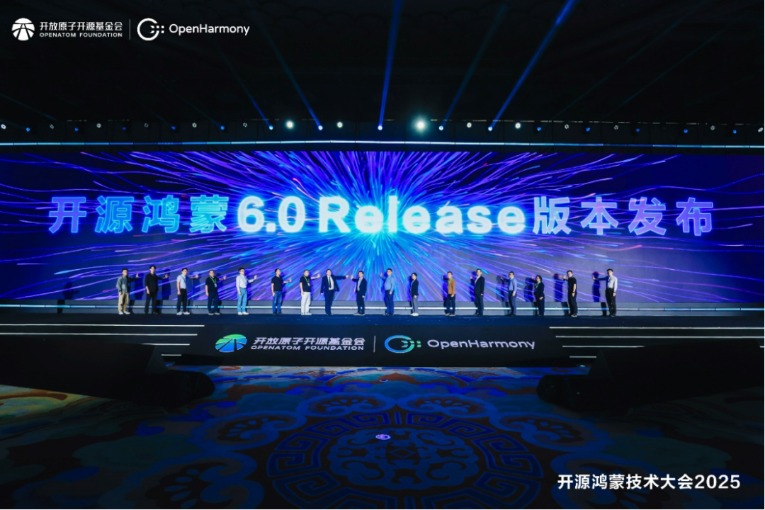
开源鸿蒙迎大版本更新,余承东发声
Guan Cha Zhe Wang· 2025-09-27 12:54
Core Insights - The Open Harmony Technology Conference 2025 was held in Changsha, showcasing the collaborative efforts of various organizations in advancing the Open Harmony project, with Huawei as the main organizer [1][2] - The conference highlighted the rapid growth of the Open Harmony operating system, which has surpassed 17 million terminals and over 30,000 applications as of September 20, 2023 [1] - The release of Open Harmony 6.0 marks a significant upgrade in technical capabilities, enhancing user experience and development efficiency across various devices [6] Group 1: Conference Highlights - The conference was supported by multiple organizations, including universities and tech companies, emphasizing the importance of industry-academia collaboration [1] - Keynote speeches underscored the achievements of Open Harmony over the past five years, with a focus on future technological innovations [2][3] - The Open Harmony community has grown to over 9,200 contributors, with more than 1300 hardware and software products developed [3] Group 2: Technical Innovations - Open Harmony 6.0 introduces enhancements in ArkUI component capabilities, window handling, and application framework services, improving overall system performance [6] - The new version aims to support a wide range of devices, including smartphones, tablets, and computers, while significantly boosting application development efficiency [6] Group 3: Industry Applications - Various companies shared their experiences in leveraging Open Harmony for enhancing productivity and user experience in sectors like education, finance, and transportation [7] - Notable examples include DingTalk's transformation of smart office experiences and WPS's optimization of document handling through Open Harmony [7]
开源鸿蒙披露最新进展:未来可支持全尺寸类人型机器人
Di Yi Cai Jing· 2025-09-27 11:01
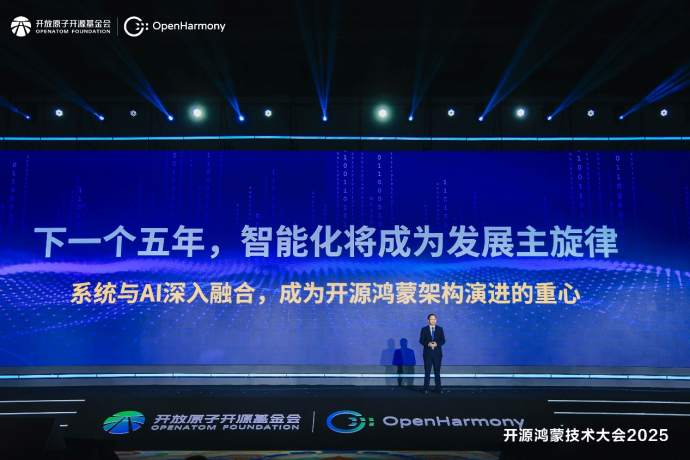
Core Insights - The Open Source Harmony 6.0 Release version was officially launched at the Open Source Harmony Technology Conference 2025, supporting various terminal devices such as smartphones, tablets, and computers [1] - The conference plans to incubate the Open Source Harmony Cross-Platform Framework PMC (Project Management Committee) and the Embodied Intelligence PMC, which utilizes a model-native operating system design approach to support the development of full-size humanoid robot industries [1] Group 1 - The Open Source Harmony 6.0 Release version is designed to be compatible with multiple device types [1] - The conference aims to foster the development of cross-platform frameworks and embodied intelligence initiatives [1] - The embodied intelligence PMC focuses on humanoid robot industry advancements through innovative operating system design [1]
