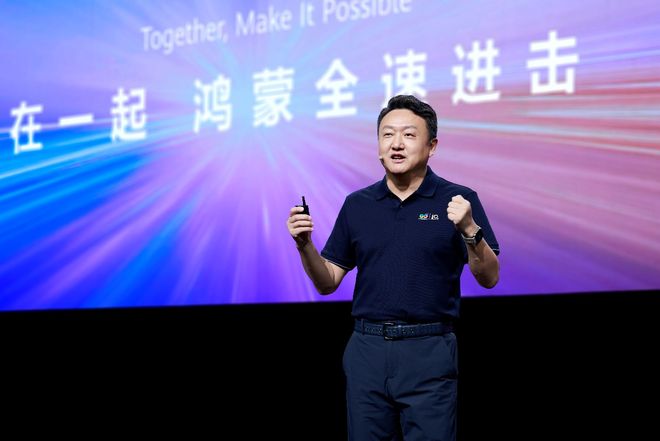
鸿蒙5操作系统

Search documents
史上发展最快!余承东宣布鸿蒙5终端设备数量突破2300万
Xin Lang Cai Jing· 2025-10-22 09:17
Group 1 - The core point of the article is the launch of HarmonyOS 5 by Huawei, marking it as the fastest-growing operating system in the history of smart terminals with over 23 million devices [1][3] - HarmonyOS 5 is recognized as China's first domestic mobile operating system and the third-largest mobile operating system globally, competing with iOS and Android [3] - The operating system has achieved significant growth in terminal devices, surpassing 10 million on July 30, 12 million on August 25, and 20 million on September 29 [4] Group 2 - Huawei's Executive Director and Chairman of the Terminal BG, Yu Chengdong, expressed gratitude for user feedback and the 2 million wish lists submitted [1] - HarmonyOS 5 features comprehensive breakthroughs in core technologies, including self-developed innovations in kernel, database, programming languages, and AI models, ensuring the autonomy and controllability of the domestic operating system [3]

攻克“卡脖子”,无惧打压勇攀登(评论员观察) ——“十四五”创新突破启示录①
Ren Min Ri Bao· 2025-10-12 22:14
Core Insights - The emphasis on technological modernization as a foundation for national strength and high-quality development is highlighted, with a focus on breakthroughs in "bottleneck" technologies during the 14th Five-Year Plan period [1][2] - The transformation of external pressures into opportunities for innovation and self-reliance is underscored, showcasing advancements in domestic technologies such as operating systems and high-end bearings [2][3] - The importance of a coordinated effort in tackling key technological challenges is emphasized, with a call for reforms to enhance the innovation ecosystem and empower enterprises [3][4] Group 1 - The breakthroughs in "bottleneck" technologies enhance national confidence and collective spirit, reflecting a resilient attitude towards external challenges [1][3] - The development of domestic operating systems and high-end bearings strengthens strategic autonomy in key industries, contributing to a more robust digital economy [2][3] - The shift from dependency to self-sufficiency in technology is evident, with significant advancements in lithium battery production and laser radar technology [2][3] Group 2 - The coordinated national effort in addressing technological challenges is crucial, leveraging the advantages of the new type of national system to focus on critical areas like integrated circuits and basic software [3][4] - The resilience of the Chinese industrial and supply chain is demonstrated through examples such as Huawei's recovery in chip development and Zhejiang Yiwu's export growth despite external pressures [3][4] - The recognition of China's innovation capabilities is reflected in its ranking in the Global Innovation Index, marking a significant milestone in the country's modernization journey [4]
攻克“卡脖子”,无惧打压勇攀登(评论员观察)
Ren Min Ri Bao· 2025-10-12 22:10
Core Viewpoint - The article emphasizes the importance of technological innovation as a foundation for China's modernization and high-quality development, highlighting significant achievements during the "14th Five-Year Plan" period [1]. Group 1: Technological Breakthroughs - Breakthroughs in "bottleneck" technologies have enhanced national confidence and resilience, showcasing a collective spirit of perseverance and determination [2][4]. - The "Zuchongzhi No. 3" supercomputer is reported to be 15 orders of magnitude faster than the current fastest supercomputer, marking a significant advancement in computing power [2]. - The development of domestic operating systems and high-end bearings has strengthened key industries such as digital economy and aerospace [3]. Group 2: Strategic Autonomy - Addressing "bottleneck" issues has allowed China to gain strategic autonomy in development, reducing reliance on foreign technologies [3][4]. - The domestic lithium battery industry has seen a resurgence due to breakthroughs in manufacturing techniques, enabling a shift from dependence to self-sufficiency [3]. - The successful development of laser radar technology lays a foundation for intelligent driving, further enhancing China's technological capabilities [3]. Group 3: Systematic Innovation Efforts - A coordinated effort from top to bottom is necessary to tackle key technological challenges, emphasizing the importance of a national strategic approach [4]. - Reforms in the technology system, including the removal of barriers and the promotion of innovation, are crucial for unleashing the potential of technological advancements [4]. - The resilience of China's industrial and supply chains is highlighted by the ability to adapt and thrive despite external pressures, as seen in the case of Zhejiang Yiwu's export growth [4]. Group 4: Global Innovation Standing - According to the World Intellectual Property Organization, China has entered the top ten of the Global Innovation Index for the first time, reflecting its growing influence in global development and civilization [6].
开源鸿蒙技术大会2025在长沙举办
Xin Hua Wang· 2025-09-29 07:50
Core Insights - The OpenHarmony Technology Conference 2025 was held in Changsha, showcasing the advancements in the OpenHarmony project and the release of version 6.0, emphasizing the future direction of intelligent terminal operating systems [1][2] Group 1: OpenHarmony Development - OpenHarmony has gathered over 9,200 community contributors, contributing more than 130 million lines of code, and has launched over 70 industry-specific distributions [1] - The project has seen significant adoption, with over 1,700 applications and services available, and more than 1.7 million devices running the HarmonyOS 5 by September 2025 [1][2] Group 2: Technological Innovations - The OpenHarmony project has maintained a rapid iteration pace, releasing a major version annually, with version 6.0 enhancing system capabilities and application development efficiency [2][3] - The integration of AI with operating systems is highlighted as a key area for future development, addressing challenges such as robustness, security, and efficiency [3] Group 3: Ecosystem Growth - The next five years are seen as a critical opportunity for the rapid growth of the OpenHarmony ecosystem, with expectations of exponential increases in device and application numbers [4] - OpenHarmony is actively enhancing cross-platform framework compatibility to improve application development efficiency and user experience [5] Group 4: Educational Initiatives - The establishment of the OpenHarmony Education Committee aims to explore new pathways for talent development in operating systems [5] - The project has published over 60 technical challenges to drive collaboration between academia and industry, fostering high-level research across various technical fields [5]
开源鸿蒙,重大更新
Zhong Guo Ji Jin Bao· 2025-09-27 16:23
Group 1 - The OpenHarmony 6.0 Release version was officially launched at the OpenHarmony Technology Conference 2025, which supports various terminal devices such as smartphones, tablets, and computers [1][4] - OpenHarmony has released over 70 industry-specific versions and is applied in multiple key sectors [1][8] - As of September 20, 2023, the number of terminals running the OpenHarmony 5 operating system has exceeded 17 million, with over 30,000 applications and services available [3] Group 2 - The new version 6.0 features significant upgrades in key technology areas, including enhanced ArkUI component capabilities, upgraded window capabilities, and improved application framework services [5] - The rapid iteration of OpenHarmony, maintaining an annual major version release, has led to significant advancements in technical capabilities [5][6] - The future of terminal operating systems is expected to focus on intelligence, evolving towards autonomous and collaborative functionalities [6] Group 3 - OpenHarmony has gathered over 9,200 community contributors, with more than 130 million lines of code and over 1,300 hardware and software products [8] - The initiative aims to create a unified experience across different terminals, emphasizing the importance of technological breakthroughs in shaping industry dynamics [9] - The project plans to incubate cross-platform frameworks and embodied intelligence, including the development of full-sized humanoid robots powered by OpenHarmony and Ascend computing [8]
华为Fellow陈海波:开源鸿蒙迈入新五年,以智能化开启操作系统新篇章
Huan Qiu Wang· 2025-09-27 14:32
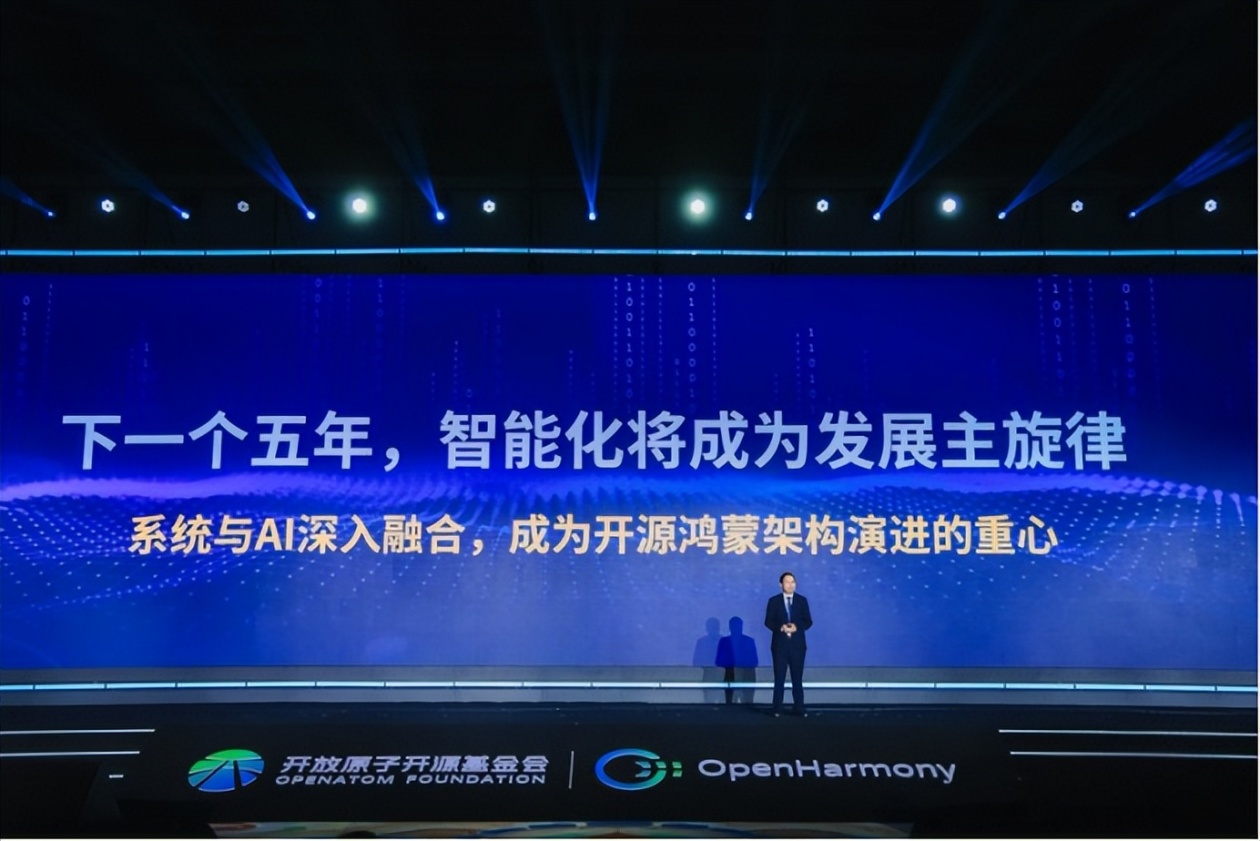
Core Insights - The integration of AI with operating systems is essential for the future of intelligent terminal systems, moving away from simple auxiliary intelligence to a more autonomous decision-making capability [5][6] - OpenHarmony has rapidly developed into one of the fastest-growing open-source communities for intelligent terminal operating systems, with significant contributions and a wide range of applications across various industries [3][6] Group 1: OpenHarmony Development - Since its inception in 2020, OpenHarmony has gathered over 9,200 contributors, contributing more than 130 million lines of code and launching over 70 industry-specific distributions [3] - As of September 2025, over 60 terminal devices are running HarmonyOS 5, with more than 17 million activated devices and over 30,000 applications and services available [3] - The release of HarmonyOS 6.0 marks a significant upgrade in system capabilities, development efficiency, and ecosystem adaptability, supporting high-performance devices and enhancing multi-device collaboration [3] Group 2: Future of Intelligent Operating Systems - The next five years will see terminal operating systems evolve towards higher levels of intelligence, potentially reaching L3 (collaborative autonomy) to L4 (professional guidance) by 2030 [5] - Key challenges for terminal intelligence include robustness, security and privacy risks, high costs, and low efficiency, which can be addressed through deep integration of AI with operating systems [5] - OpenHarmony has established several technical special groups (TSGs) to focus on AI agent interaction, positioning awareness, and secure computing capabilities to facilitate this integration [5] Group 3: Community and Educational Initiatives - OpenHarmony is actively promoting native adaptation of mainstream cross-platform development frameworks and enhancing the development experience through the open-source Cangjie programming language [6] - The establishment of an education committee aims to strengthen talent cultivation in the operating system field, with over 60 key technical topics released and collaboration with 22 universities [6] - The community is focused on building a prosperous ecosystem driven by intelligence, technology, and collaboration across various sectors [6]
开源鸿蒙开放共建 与产业融合赋能千行万业
Zhong Guo Xin Wen Wang· 2025-09-27 13:54
Core Insights - The Open Source Harmony Technology Conference was held in Changsha, showcasing the achievements in technology innovation, ecosystem development, and talent cultivation related to the open-source Harmony operating system [1][2] - Changsha aims to leverage its digital economy, projected to reach a total of 500 billion yuan, to enhance collaboration between universities and enterprises, thereby fostering the open-source Harmony industry [1] - Huawei's Executive Director highlighted that the Harmony 5 operating system has surpassed 17 million terminals and over 30,000 applications and services have been launched as of September 20 this year [1] Group 1 - The Open Atom Open Source Foundation has been instrumental in the development of the open-source Harmony ecosystem, emphasizing the importance of collaboration among academia, industry, and research [1][2] - The release of Harmony 6.0 marks a significant upgrade in technical capabilities, indicating the rapid evolution of the open-source Harmony operating system [2] - The conference introduced the "Open Source Harmony Community Development Innovation Award Program," aimed at integrating community development tasks with a code review incentive mechanism [2] Group 2 - The open-source Harmony operating system is recognized as one of the fastest-growing smart terminal operating systems, with a focus on intelligence as the main trend for future development [2] - The conference called for more collaboration between industry and academia to strengthen the open-source Harmony community [2] - The open-source Harmony initiative aims to empower industrial transformation through technological breakthroughs and to build a solid digital foundation for a connected world [2]
开源鸿蒙迎大版本更新,余承东发声
Guan Cha Zhe Wang· 2025-09-27 12:54
Core Insights - The Open Harmony Technology Conference 2025 was held in Changsha, showcasing the collaborative efforts of various organizations in advancing the Open Harmony project, with Huawei as the main organizer [1][2] - The conference highlighted the rapid growth of the Open Harmony operating system, which has surpassed 17 million terminals and over 30,000 applications as of September 20, 2023 [1] - The release of Open Harmony 6.0 marks a significant upgrade in technical capabilities, enhancing user experience and development efficiency across various devices [6] Group 1: Conference Highlights - The conference was supported by multiple organizations, including universities and tech companies, emphasizing the importance of industry-academia collaboration [1] - Keynote speeches underscored the achievements of Open Harmony over the past five years, with a focus on future technological innovations [2][3] - The Open Harmony community has grown to over 9,200 contributors, with more than 1300 hardware and software products developed [3] Group 2: Technical Innovations - Open Harmony 6.0 introduces enhancements in ArkUI component capabilities, window handling, and application framework services, improving overall system performance [6] - The new version aims to support a wide range of devices, including smartphones, tablets, and computers, while significantly boosting application development efficiency [6] Group 3: Industry Applications - Various companies shared their experiences in leveraging Open Harmony for enhancing productivity and user experience in sectors like education, finance, and transportation [7] - Notable examples include DingTalk's transformation of smart office experiences and WPS's optimization of document handling through Open Harmony [7]
OpenHarmony(开源鸿蒙)五年,已成为千行万业数字底座
Sou Hu Cai Jing· 2025-09-24 06:53
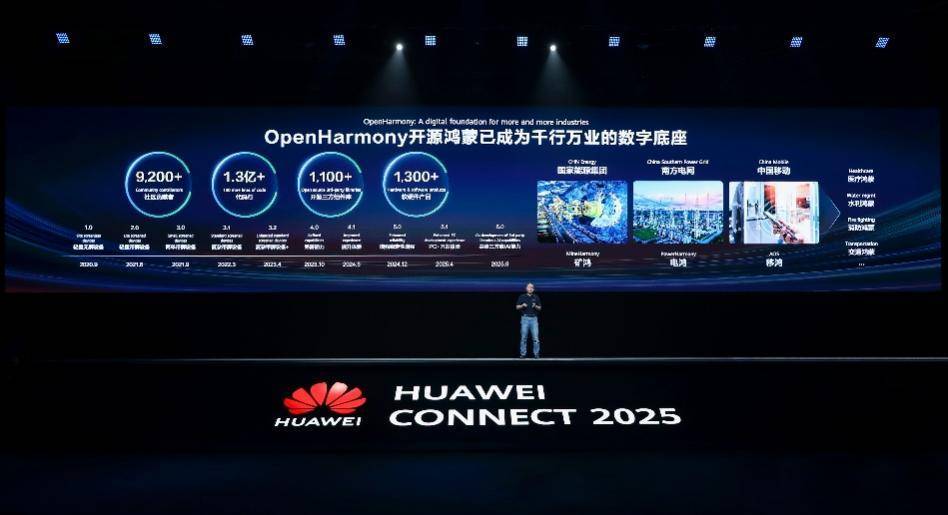
Core Insights - OpenHarmony has achieved significant milestones in its five-year development, including contributions from over 9,200 community contributors and the creation of 130 million lines of code [3][4] - The platform supports a wide range of applications across various industries, including finance, transportation, aerospace, energy, and consumer electronics, establishing itself as a digital foundation for numerous sectors [4][5] Community Development - The OpenHarmony community has rapidly grown, with over 1,100 third-party component libraries developed to support application development for complex devices such as smartphones, tablets, and PCs [3][4] - The community's growth is attributed to collaboration with various developers and organizations, enhancing the ecosystem and driving the advancement of intelligent terminal operating systems [3][4] Industry Applications - More than 1,300 hardware and software products have passed compatibility assessments, demonstrating the platform's versatility in critical fields [4] - Specific applications include smart tunnel systems in transportation, social security terminals in government services, and power grid adaptations in the energy sector [4] Consumer Ecosystem - The HarmonyOS 5, built on OpenHarmony, has been integrated into over 60 models and 17 million Huawei devices, showcasing its multi-terminal and all-scenario capabilities [5] - Over 9,000 applications have been developed using Huawei's innovative system capabilities, resulting in more than 70 unique user experiences [5] Future Outlook - Huawei aims to maintain an "open-source" philosophy, collaborating with partners and developers to expand OpenHarmony's applications across various industries and consumer sectors [6] - The focus will be on enhancing system extensibility, compatibility of development tools, and collaborative AI capabilities to accelerate the digital transformation of industries [6]
鸿蒙5终端数超1700万,投入10亿支持AI生态创新
Guan Cha Zhe Wang· 2025-09-20 08:22
Group 1 - Huawei announced that the number of HarmonyOS 5 terminal devices has exceeded 17 million and launched the "Tian Gong Plan," committing 1 billion RMB to support the Harmony AI ecosystem innovation [1] - HarmonyOS integrates native AI support at the system level and aims for full-scene interconnectivity through distributed capabilities [1][2] - Huawei's terminal products have fully adopted HarmonyOS 5 this year, covering various categories such as smartphones, computers, tablets, smartwatches, and smart screens [2] Group 2 - The OpenHarmony ecosystem has seen over 130 million lines of code contributed by more than 9,200 community contributors, resulting in over 1,300 hardware and software products across various industries [2] - The AI agent is becoming a crucial direction for the evolution of the Harmony ecosystem, with the "Tian Gong Plan" supporting developers in building more AI meta-services and intelligent frameworks [2] - The Xiaoyi task space feature is currently in testing, capable of autonomously scheduling over 120 integrated tools and third-party intelligent agents for complex task automation [4]