无核三原则

Search documents
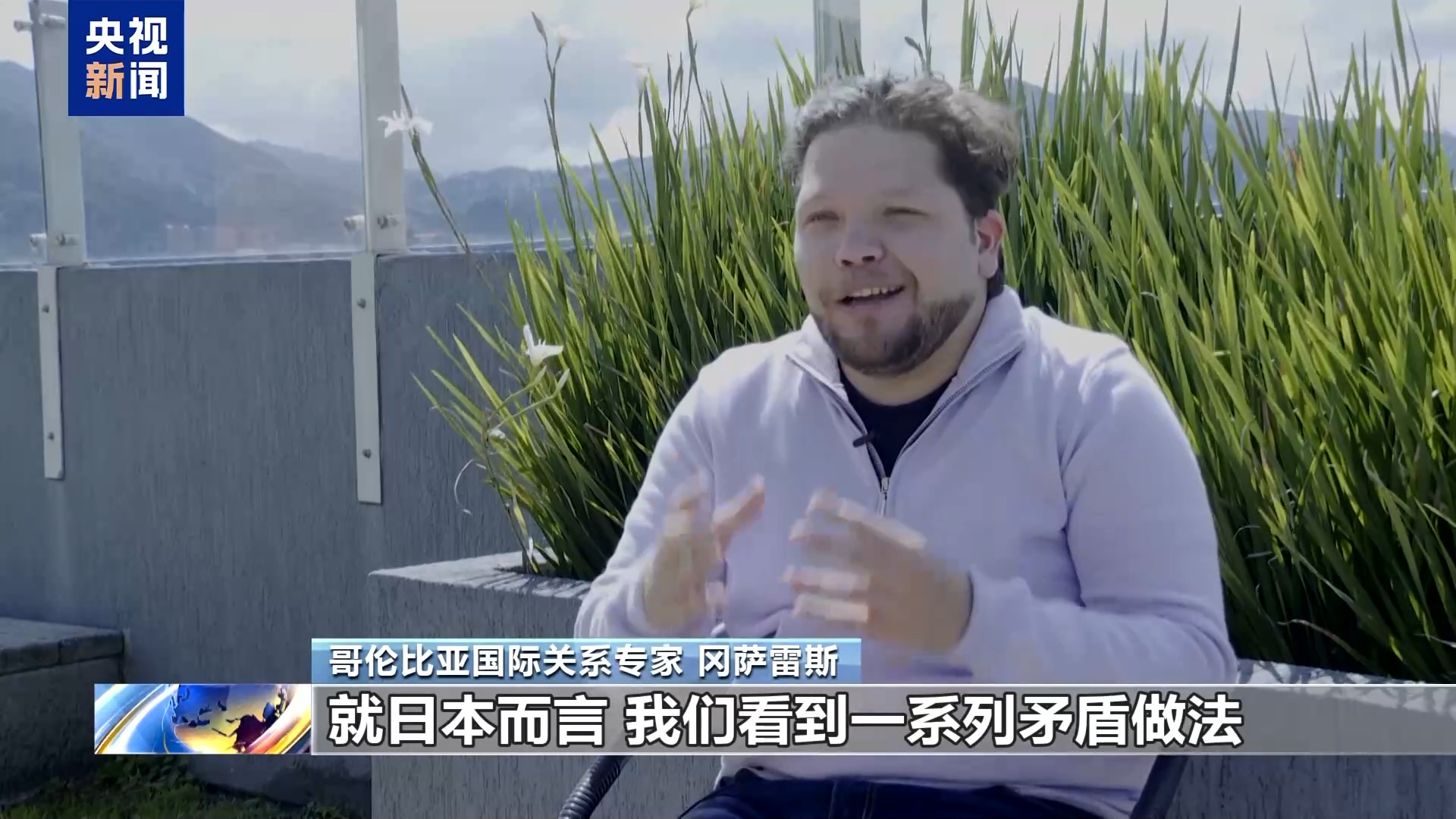
视频丨日本学者:应坚持无核原则 维护中日友好关系
Yang Shi Xin Wen Ke Hu Duan· 2026-01-08 08:58
Group 1 - The adjustment of Japan's "Three Non-Nuclear Principles" and the significant increase in defense spending require high vigilance, as these policy changes could impact Japan-China relations, which should be cherished [1][3] - The "Three Non-Nuclear Principles" have been regarded as a national policy, and Japan is legally bound by the Non-Proliferation Treaty, which restricts the possession or development of nuclear weapons [3] - The ongoing economic challenges faced by the Japanese populace, including rising prices without wage increases, necessitate that the government prioritize budget allocation towards improving citizens' living conditions [3] Group 2 - Japan is experiencing a declining population of college-age individuals due to low birth rates and aging demographics, which poses a survival threat to some universities, particularly if the number of Chinese international students decreases [5] - The long-standing economic and cultural exchanges between Japan and China are vital, and maintaining dialogue and communication aligns with the long-term interests of both nations [5][7] - Since the issuance of the 1972 Japan-China Joint Communiqué, Japan has respected China's "One China" principle, and it is crucial to preserve and maintain this friendly relationship, which has historical significance [7]

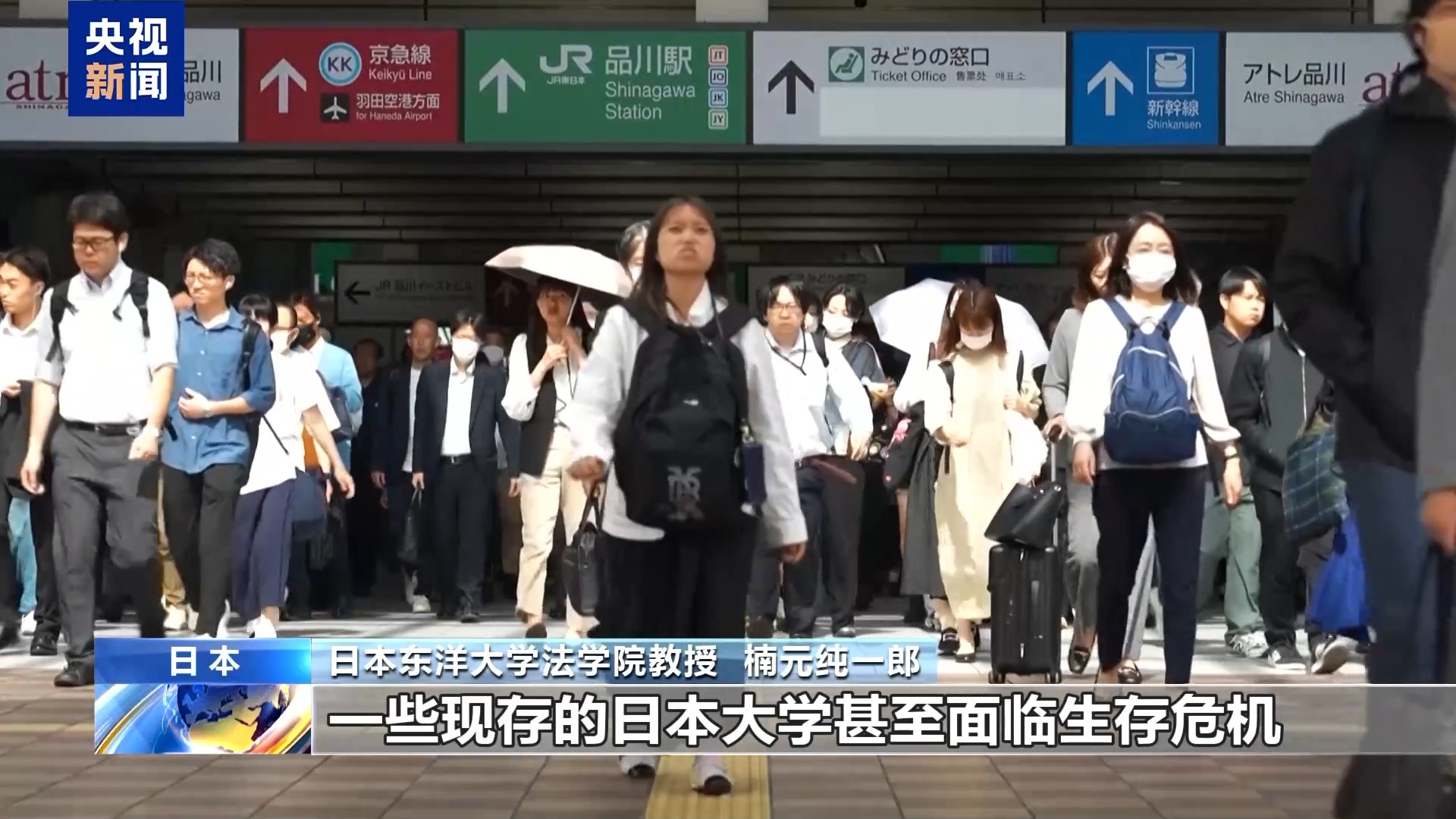
日本学者:应坚持无核原则 维护中日友好关系
Yang Shi Xin Wen Ke Hu Duan· 2026-01-08 08:20
Group 1 - The adjustment of Japan's "Three Non-Nuclear Principles" and the significant increase in defense spending require high vigilance, as these policies could strain Japan-China relations, which should be cherished [1] - The ongoing economic challenges in Japan, including rising prices without wage increases, necessitate that the government prioritize budget allocation towards improving citizens' living conditions [1] - The tightening of Japan-China relations, influenced by political statements, may lead to increased domestic prices and negatively impact the development of Japanese universities [1] Group 2 - Japan is experiencing a declining population of college-age individuals due to low birth rates and aging demographics, which poses a survival threat to some universities [3] - A decrease in the number of Chinese students studying in Japan could significantly impact the country's higher education institutions [3] - Maintaining dialogue and cultural exchange between Japan and China is essential for long-term mutual benefits, given their historical ties and economic interactions [3][5] Group 3 - Since the issuance of the 1972 Japan-China Joint Communiqué, Japan has respected China's "One China" principle, emphasizing the importance of preserving the friendly relationship established through the 1978 Treaty of Peace and Friendship [5] - Japan and China share a long history of cultural exchange, and the use of kanji in Japan provides a natural advantage in communication, highlighting the need for continuous dialogue [5] - The government should prioritize the maintenance of economic and cultural exchanges between Japan and China, ensuring that communication channels remain open [5]
日本国会议员:日本必须走和平外交之路
Yang Shi Xin Wen Ke Hu Duan· 2026-01-07 08:05
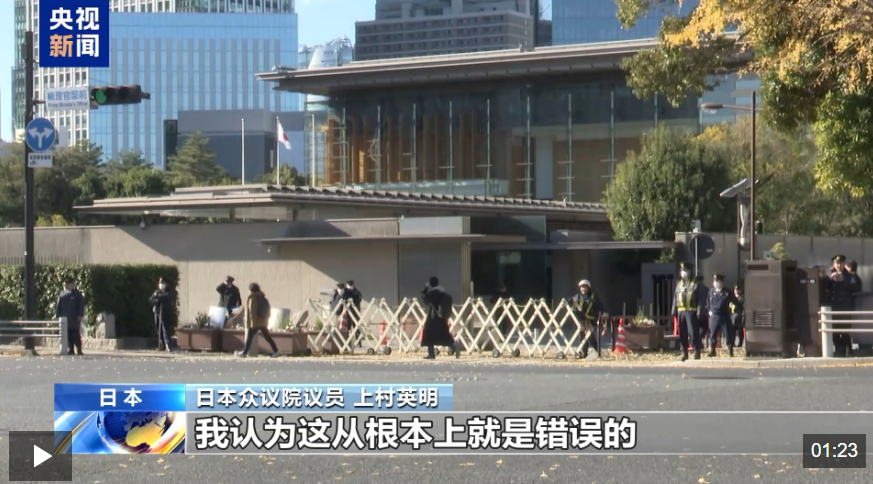
Core Viewpoint - The article discusses the shift in Japan's political landscape under Prime Minister Sanna Takichi, emphasizing a move towards militarization and increased defense spending, which has raised concerns among political figures like House of Representatives member Hideaki Uemura [1][3]. Group 1: Defense Policy Changes - The Japanese government plans to increase defense spending to 2% of GDP, with a timeline accelerated from 2027 to 2025, raising questions about the source of this substantial budget increase [3]. - Uemura expresses concern over the government's approach to defense policy, stating that it fundamentally misrepresents the security crisis and could lead to dangerous political outcomes [1][3]. Group 2: Peace Principles - Uemura highlights the importance of Japan's "Three Non-Nuclear Principles" as a crucial aspect of its peace policy, opposing the current administration's intentions to undermine these principles [4]. - He advocates for a focus on peaceful diplomacy, criticizing the current political climate for failing to promote such initiatives [4].
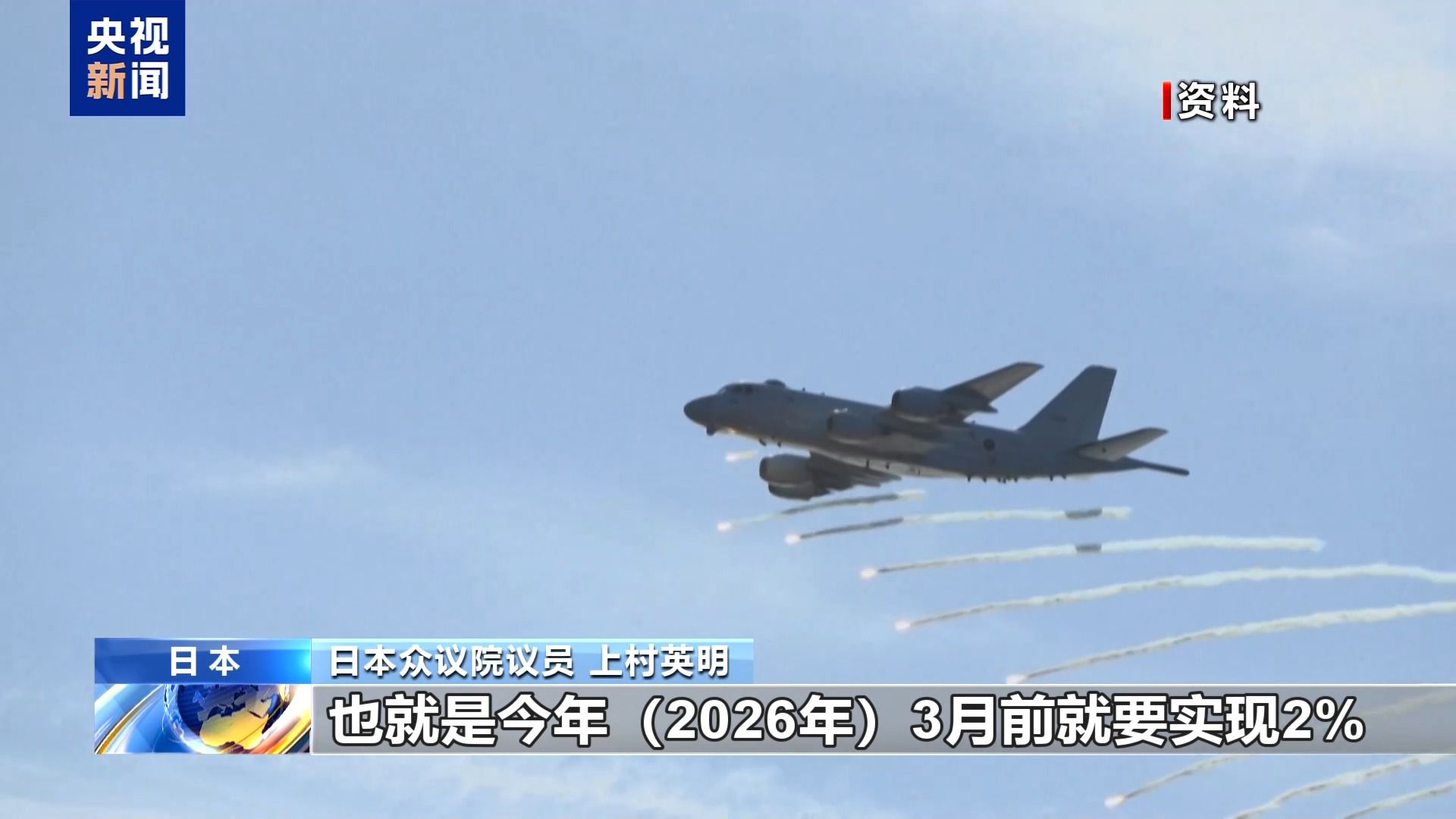
视频丨日本立宪民主党称考虑对高市内阁提出不信任案
Yang Shi Xin Wen Ke Hu Duan· 2026-01-07 02:01
高市早苗的错误言论及其危险动向引发日本在野党人士的持续批评。 日本社民党全国联合常任干事 山城博治:既然承认台湾是中国的一部分,那就是中国的内政问题。在中国的内政问题上进行武力介入,就是侵略行为、彻 底的侵略行为,所以是绝对不能做的。一旦进行侵略,日本就会遭到反击。 日本在野党立宪民主党党首野田佳彦当地时间1月5日再次批评日本首相高市早苗的错误言论,并称会考虑在本月23日开始的通常国会上,对高市内阁提出不 信任案。 日本立宪民主党党首 野田佳彦:高市政权关于"台湾有事"和"拥核"的言论缺乏考虑,让人感到危险。作为最大的在野党,提出反对案是职责所在。 野田佳彦就创历史新高的2026年度预算案批评称:"嘴上说是负责任的财政,对于最重要的食品价格高涨却未采取任何措施,是极其不负责任的放任财 政。"他说,将切实与高市政府对峙。 日本前首相野田佳彦、岸田文雄公开对现任首相高市早苗拟修改"无核三原则"的动向表示担忧,强调"无核三原则"作为日本国策不可改变。 在野党参议员在国会质询过程中,批评日本政府加速军备扩张,要求高市早苗承诺绝不让日本的孩子卷入战争。 日本令和新选组参议员 奥田文代:母亲们生下孩子,不是为了把他们送上 ...
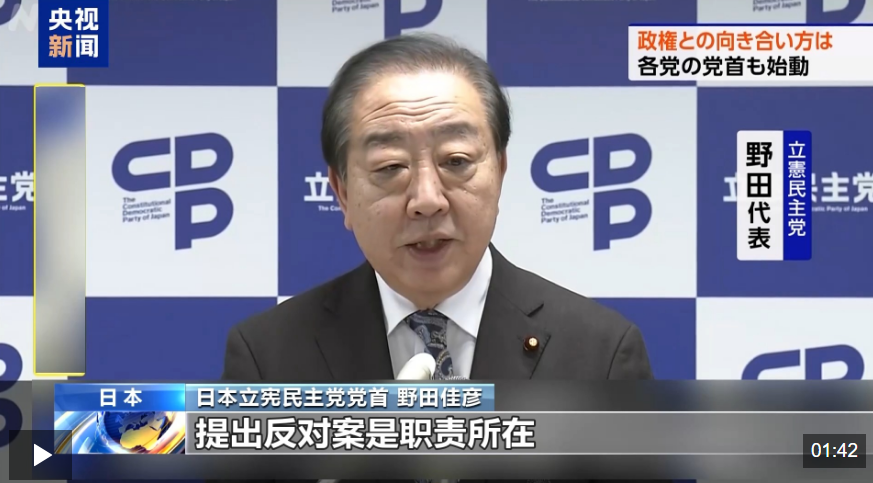
视频丨日本国会议员:日本必须走和平外交之路
Yang Shi Xin Wen Ke Hu Duan· 2026-01-07 02:01
Group 1 - The core viewpoint of the articles highlights the concerns regarding Japanese Prime Minister Suga Yoshihide's push for a rightward political shift through military expansion policies, which is criticized as fundamentally erroneous by lawmakers [1][3] - Lawmaker Uemura Hideaki expresses regret over Suga's statements and emphasizes that the government's approach to escalating military spending and involving the military is alarming and incorrect [3] - Uemura points out that the government plans to increase defense spending to 2% of GDP, with an accelerated timeline to achieve this by the fiscal year 2025, raising questions about the source of such a large budget [5] Group 2 - Uemura stresses the importance of Japan's "Three Non-Nuclear Principles" as a key peace policy, opposing the current administration's intentions to undermine it, advocating for peaceful diplomacy instead [6]
日本引进核潜艇?高市再声称“不排除任何选项”
Xin Lang Cai Jing· 2026-01-03 20:20
Core Viewpoint - Japanese Prime Minister Fumio Kishida has reiterated the possibility of introducing nuclear-powered submarines, indicating a shift in Japan's defense policy amidst domestic concerns and opposition [1] Group 1: Government Statements - Kishida stated that the ruling Liberal Democratic Party and the Japan Innovation Party have reached a coalition agreement to advance discussions on next-generation submarines, although the specific type of propulsion remains undecided [1] - Kishida emphasized that no options would be ruled out in enhancing deterrence and response capabilities [1] - Defense Minister Nobuo Kishi also hinted that no decision has been made regarding the propulsion source for the next-generation submarines, but the possibility of nuclear-powered submarines is not excluded [1] Group 2: Public Concerns - Japanese civic groups and media have raised alarms that introducing nuclear submarines would violate Japan's "Three Non-Nuclear Principles" and contradict the Atomic Energy Basic Law, which restricts nuclear energy use to peaceful purposes [1] - The proposed shift in policy is seen as conflicting with Japan's "defensive posture" [1]
高市政府又要搞核潜艇?日本网友称“拥核之时即国家毁灭之日”
Xin Lang Cai Jing· 2025-12-31 14:50
中青报·中青网记者 蒋继璇 2025年9月,日本防卫省专家会议报告中关于潜艇动力源的建议、首次提及"不能排除核动力选项,应进 行技术开发",为政策调整提供铺垫,引发舆论对日本核政策方向的担忧与警惕。到10月份,自民党与 日本维新会在建立执政联盟的同时,也就研发核潜艇达成协议。这一系列言论和动态表明,核潜艇研发 可能正在进入日本政府政策议程。 "拥有核潜艇难道不违反宪法吗?"日本社民党成员石井拉萨尔上个月参加日本国会集会时质问道,"政 策总是在不知不觉、稀里糊涂之间悄然生变,这可真是十足的日本风格。"事实上,对于高市政府意图 踏上拥有核潜艇的道路,日本部分政界人士一直持有反对意见,民间反对之声则更甚。 "核潜艇的攻击性显而易见,绝不允许核能用于军事目的。"在12月9日日本国会内举行的集会上,非政 府组织"和平之船"共同代表川崎哲这样强调。会上,日本各政党国会议员、核能专家、市民等约50人讨 论了该问题。集会方批评说,"(政府的)这一行为将偏离'专守防卫'原则,引发与周边国家的军备竞 赛",他们同时还提及核潜艇可能产生放射性泄漏的风险。 除了法律禁区,日本发展核潜艇还面临着更加实际的财政压力。核潜艇的研发和建造成 ...
日本拟明年底前修订“安保三文件” 专家:只会让其面临更严峻困境
Yang Shi Xin Wen Ke Hu Duan· 2025-12-31 02:18
Core Viewpoint - The Japanese government, under Prime Minister Fumio Kishida, is planning to revise its "Three Security Documents" by the summer of 2026, aiming to accelerate military expansion and potentially modify the "Three Non-Nuclear Principles" [1][3][9] Group 1: Military Expansion Plans - The government intends to create a summary plan that will include concepts for Pacific defense and new combat methods utilizing drones, along with possible increases in defense spending targets [1] - The "Three Security Documents," which include the National Security Strategy, National Defense Strategy, and Defense Force Build-Up Plan, were established in 2022 and emphasize Japan's need for "counterstrike capabilities" [1] - The revision aims to significantly increase Japan's defense budget, establish missile units outside its defense zones, and strengthen military presence in the southwestern islands [1] Group 2: Changes to Nuclear Policy - There are discussions about potentially modifying the "Three Non-Nuclear Principles," which traditionally prohibit the introduction of nuclear weapons into Japan [3][6] - The revision of the "Three Security Documents" is seen as a fundamental shift in Japan's security strategy, moving away from post-war self-defense principles [9] Group 3: Domestic Reactions - The acceleration of military expansion under the Kishida administration has sparked strong discontent among various sectors in Japan [6] - Concerns have been raised regarding the lack of a clear stance from the Prime Minister on maintaining the "Three Non-Nuclear Principles," which has shocked some lawmakers [8]

视频丨国际人士:国际社会应警惕日本军国主义抬头
Yang Shi Xin Wen Ke Hu Duan· 2025-12-31 02:09
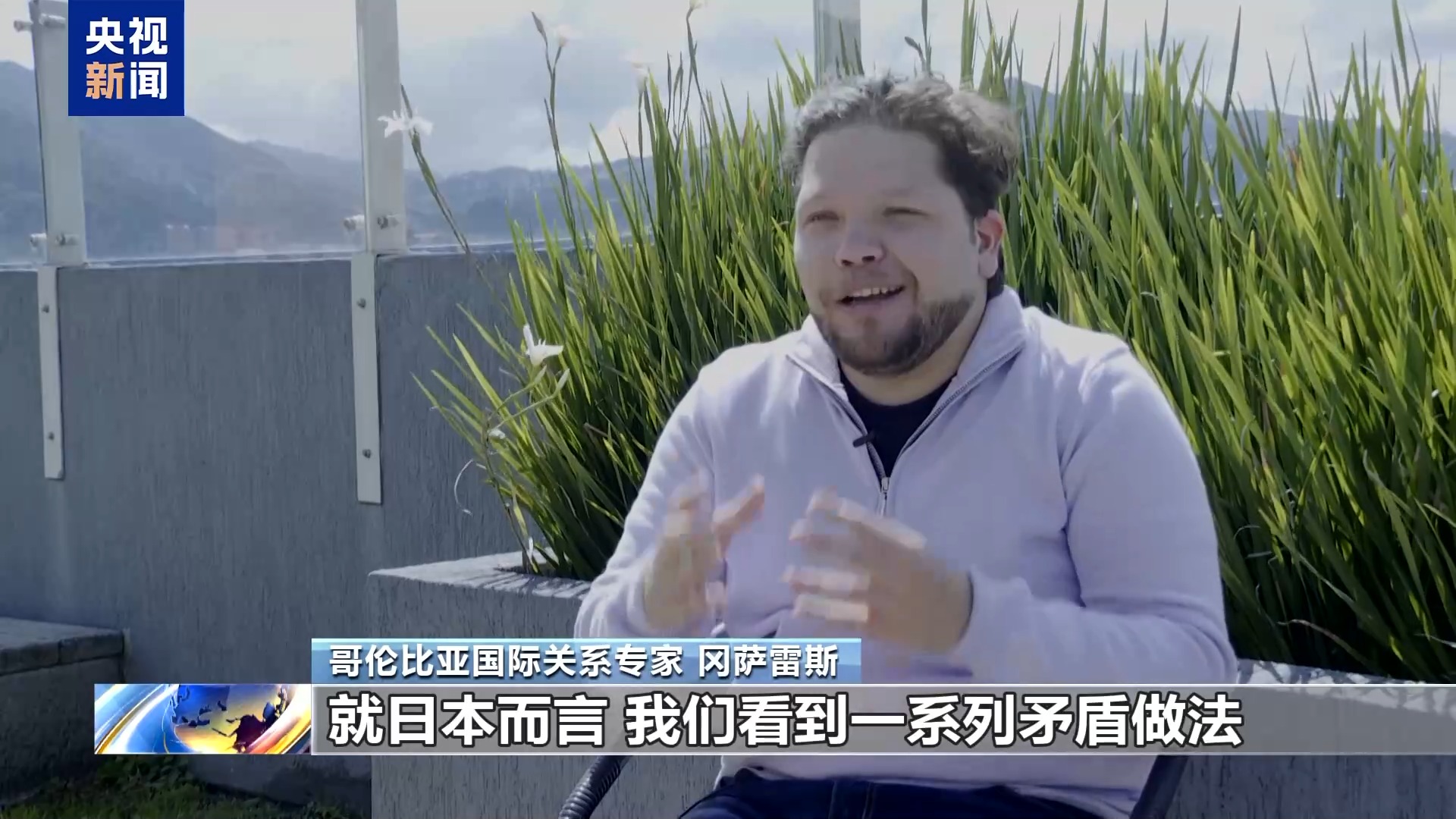
Core Viewpoint - The recent actions and statements by Japanese Prime Minister Fumio Kishida are seen as a threat to regional and global stability, raising concerns about the resurgence of militarism in Japan [1][3][5] Group 1: Militarization and Foreign Policy - Japan appears to be utilizing militarization as a tool under the guise of "legitimate self-defense," integrating it into its foreign policy framework [1] - Recent statements from Japan contradict its "Three Non-Nuclear Principles," which advocate for not possessing, producing, or introducing nuclear weapons, potentially worsening regional security [3] Group 2: Populism and Militarism - The Japanese government is perceived as attempting to revive dormant populism and militarism, which could be detrimental to global stability and reflects a high level of irresponsibility in the current geopolitical climate [5] - The shift towards a confrontational stance may lead to dangerous regional imbalances, increasing the risk of violent conflicts that are undesirable for all parties involved [5]
国际人士:国际社会应警惕日本军国主义抬头
Yang Shi Xin Wen· 2025-12-31 00:19
Group 1 - The core viewpoint is that Japanese Prime Minister Fumio Kishida's recent actions and statements are undermining regional and global stability, raising concerns about the resurgence of Japanese militarism [1] - International experts warn that Japan is increasingly militarizing its foreign policy under the guise of "legitimate self-defense," which could disrupt international order, particularly in the region [3] - There are contradictions in Japan's approach, especially regarding its "Three Non-Nuclear Principles," as recent statements contradict the policy of not possessing, producing, or introducing nuclear weapons, potentially worsening regional security [5] Group 2 - The Japanese government's attempts to revive populism and militarism are seen as extremely irresponsible and harmful to global stability, with the potential to create dangerous regional imbalances that could lead to violent conflicts [7]