一个中国

Search documents
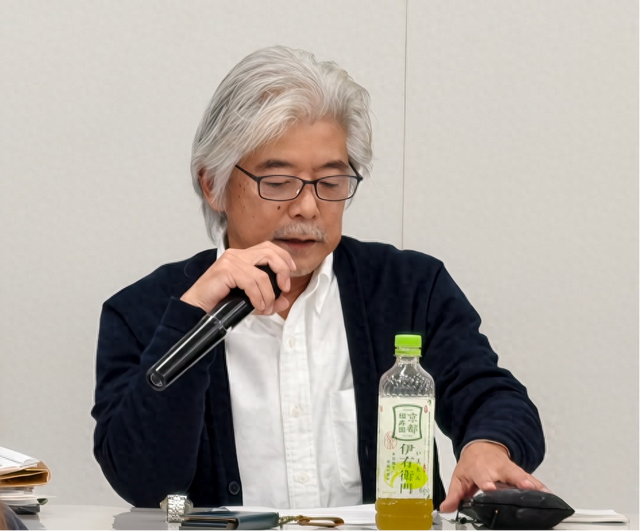
谷山博史:走访多个美国战场后,我意识到日本“终将被美军抛弃”
Xin Lang Cai Jing· 2026-02-09 00:45
Core Viewpoint - The article discusses the implications of Japan's recent elections, particularly the rise of the ruling coalition led by the Liberal Democratic Party and the Japan Innovation Party, and the potential for increased tensions in East Asia due to provocative statements from politicians like Sanae Takaichi [1]. Group 1: Political Context - The ruling coalition in Japan has secured a majority in the House of Representatives, raising concerns about Japan's role in regional security dynamics [1]. - Sanae Takaichi has made controversial statements regarding Taiwan, which are seen as provocative and diverging from established Japan-China political agreements [1]. Group 2: Okinawa and Military Presence - The issue of Okinawa has resurfaced, focusing on the heavy burden of U.S. military bases and local concerns about the risks of war [1]. - A recent forum in Okinawa aimed to promote peace and development, highlighting the need for dialogue among citizens to address military presence and regional security [1]. Group 3: Historical Perspective on War - The speaker, Hiroshi Taniguchi, reflects on his experiences in various conflict zones, emphasizing that many wars, including those involving the U.S., are "manufactured" and could have been avoided [5][6]. - The narrative of "just wars" is critiqued, suggesting that historical events are often framed to justify military actions, which obscures the reality of conflict [7]. Group 4: Dialogue Initiatives - The "Okinawa Dialogue" project was initiated to counter the narrative of "Taiwan's situation" and promote discussions among diverse stakeholders, including those from different political backgrounds [10]. - The project has successfully highlighted the importance of dialogue and reaffirmed the commitment to the "One China" principle, which is often overlooked in mainstream Japanese media [10]. Group 5: Public Sentiment and Concerns - Recent interactions with the public reveal a troubling trend where many young people express fear of China and a willingness to prepare for war, indicating a shift in public sentiment towards militarization [12]. - Takaichi's statements regarding Taiwan have led to increased tensions with China, yet her popularity appears to be rising, raising concerns about Japan's future military posture [12].

在反“独”促统的民族大义面前并肩而行
Xin Lang Cai Jing· 2026-01-10 09:09
Group 1 - The core viewpoint of the articles revolves around the political implications of the recent judicial decisions in Taiwan, particularly the sentencing of former legislator Tsai Cheng-yuan and the acquittal of former KMT chairman Ma Ying-jeou, highlighting perceived selective justice and political repression by the ruling DPP [1][2]. - The articles emphasize the notion that the DPP's actions, including the imprisonment of Tsai Cheng-yuan, are seen as attempts to silence dissent and create a chilling effect on opposition voices, which they believe will ultimately fail [2]. - The narrative suggests that the DPP's focus on political persecution and military preparations detracts from addressing pressing social issues, such as rising electricity prices and public welfare, indicating a disconnect between the government and the people's needs [2]. Group 2 - The articles reflect a sentiment of unity among individuals from both sides of the Taiwan Strait who oppose "Taiwan independence," suggesting a growing consensus against perceived threats to peace and stability in the region [2]. - The call for a return to justice and reconciliation between Taiwan and the mainland is framed as a pathway to a brighter future for Taiwan, with an emphasis on the importance of collective action against divisive politics [3].
视频丨日本学者:应坚持无核原则 维护中日友好关系
Yang Shi Xin Wen Ke Hu Duan· 2026-01-08 08:58
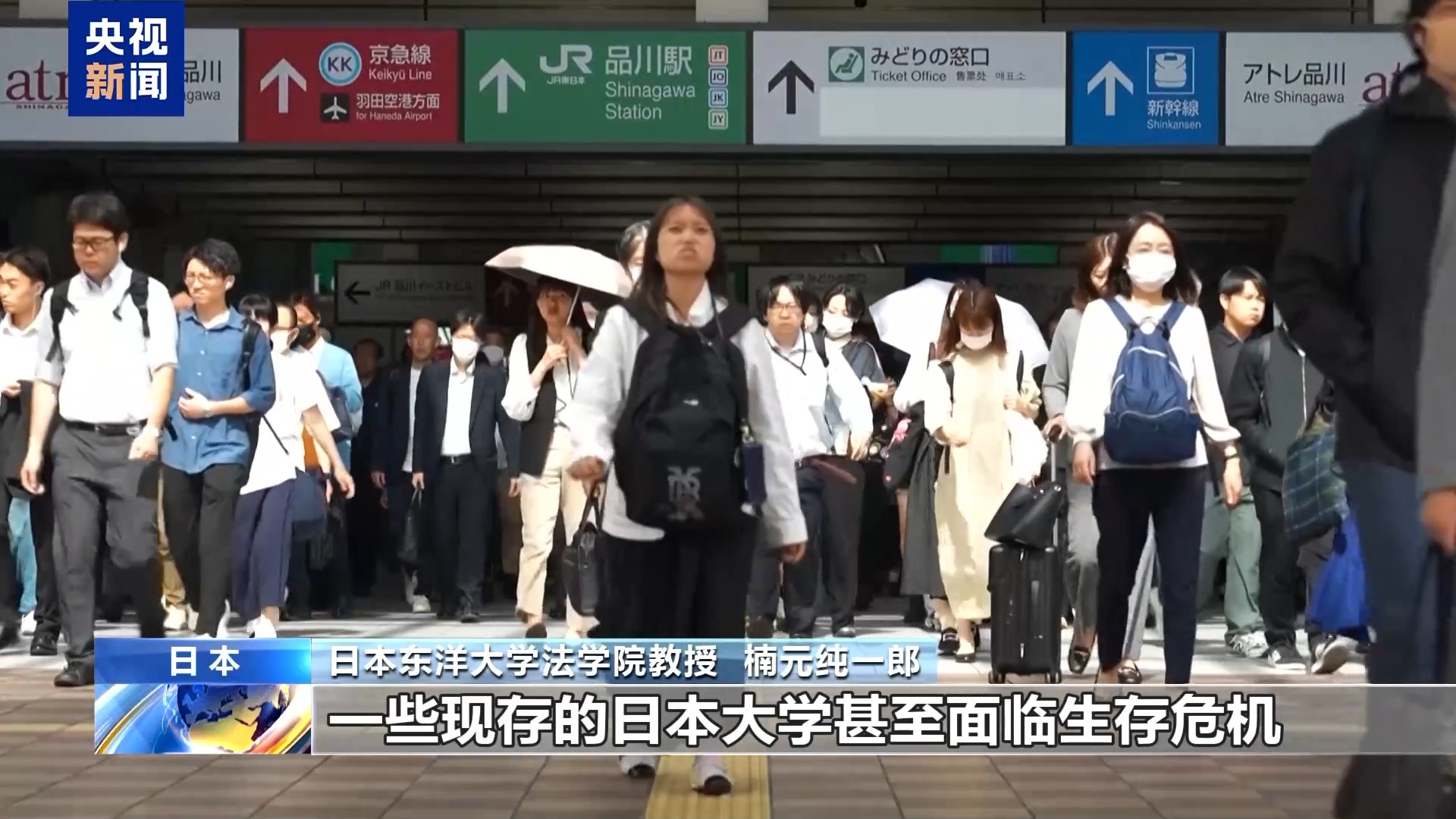
Group 1 - The adjustment of Japan's "Three Non-Nuclear Principles" and the significant increase in defense spending require high vigilance, as these policy changes could impact Japan-China relations, which should be cherished [1][3] - The "Three Non-Nuclear Principles" have been regarded as a national policy, and Japan is legally bound by the Non-Proliferation Treaty, which restricts the possession or development of nuclear weapons [3] - The ongoing economic challenges faced by the Japanese populace, including rising prices without wage increases, necessitate that the government prioritize budget allocation towards improving citizens' living conditions [3] Group 2 - Japan is experiencing a declining population of college-age individuals due to low birth rates and aging demographics, which poses a survival threat to some universities, particularly if the number of Chinese international students decreases [5] - The long-standing economic and cultural exchanges between Japan and China are vital, and maintaining dialogue and communication aligns with the long-term interests of both nations [5][7] - Since the issuance of the 1972 Japan-China Joint Communiqué, Japan has respected China's "One China" principle, and it is crucial to preserve and maintain this friendly relationship, which has historical significance [7]
日本学者:应坚持无核原则 维护中日友好关系
Yang Shi Xin Wen Ke Hu Duan· 2026-01-08 08:20
Group 1 - The adjustment of Japan's "Three Non-Nuclear Principles" and the significant increase in defense spending require high vigilance, as these policies could strain Japan-China relations, which should be cherished [1] - The ongoing economic challenges in Japan, including rising prices without wage increases, necessitate that the government prioritize budget allocation towards improving citizens' living conditions [1] - The tightening of Japan-China relations, influenced by political statements, may lead to increased domestic prices and negatively impact the development of Japanese universities [1] Group 2 - Japan is experiencing a declining population of college-age individuals due to low birth rates and aging demographics, which poses a survival threat to some universities [3] - A decrease in the number of Chinese students studying in Japan could significantly impact the country's higher education institutions [3] - Maintaining dialogue and cultural exchange between Japan and China is essential for long-term mutual benefits, given their historical ties and economic interactions [3][5] Group 3 - Since the issuance of the 1972 Japan-China Joint Communiqué, Japan has respected China's "One China" principle, emphasizing the importance of preserving the friendly relationship established through the 1978 Treaty of Peace and Friendship [5] - Japan and China share a long history of cultural exchange, and the use of kanji in Japan provides a natural advantage in communication, highlighting the need for continuous dialogue [5] - The government should prioritize the maintenance of economic and cultural exchanges between Japan and China, ensuring that communication channels remain open [5]
中国呼吁韩国对日“共斗”
日经中文网· 2026-01-06 02:50
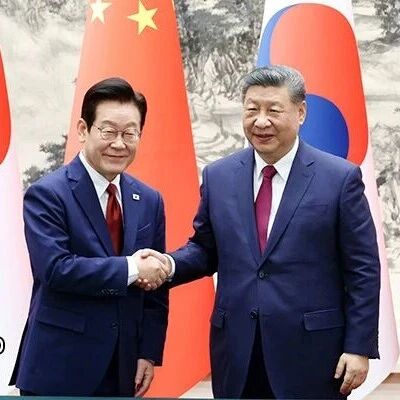
Group 1 - The core viewpoint of the article emphasizes the historical cooperation between China and South Korea in resisting Japanese militarism, with both leaders calling for strengthened collaboration in current geopolitical contexts [2][4]. - Xi Jinping highlighted the importance of safeguarding the outcomes of World War II and maintaining peace and stability in Northeast Asia, urging South Korea to enhance cooperation in its policies towards Japan [4]. - Lee Jae-myung expressed gratitude for China's protection of historical sites related to Korea's independence movement, indicating a willingness to repair relations with China while balancing ties with Japan [5]. Group 2 - The meeting between Xi Jinping and Lee Jae-myung marks Lee's first visit to China since taking office in June 2025, and it is the first visit by a South Korean president to China in nearly six years [5]. - The article notes that the relationship between China and South Korea had cooled due to South Korea's agreement to deploy the THAAD missile defense system in 2016, but there is now a renewed interest in improving bilateral relations [4][5]. - Lee Jae-myung's approach to foreign policy is characterized as "pragmatic diplomacy," aiming to build good relations with various countries while maintaining balance [5].
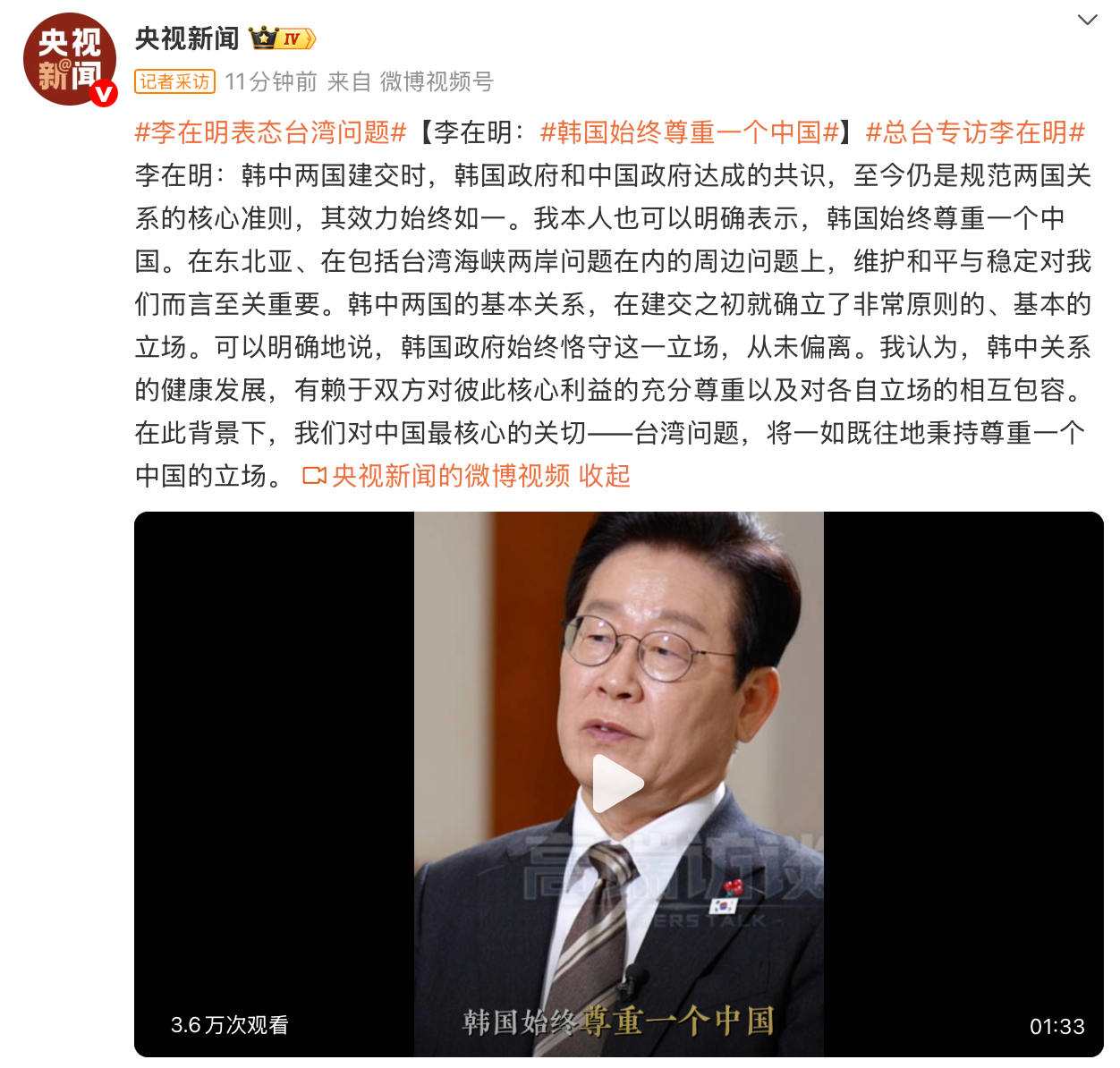
李在明:韩国始终尊重一个中国
Xin Lang Cai Jing· 2026-01-02 15:24
Core Viewpoint - The article emphasizes the importance of the consensus reached between South Korea and China at the time of diplomatic relations establishment, which continues to guide the core principles of their bilateral relationship [1] Group 1 - The South Korean government maintains a consistent respect for the "One China" principle, which is crucial for peace and stability in Northeast Asia, including issues related to the Taiwan Strait [1] - Healthy development of South Korea-China relations relies on mutual respect for each other's core interests and tolerance of respective positions [1] - The South Korean government has adhered to its foundational stance since the establishment of diplomatic relations and has never deviated from it [1]
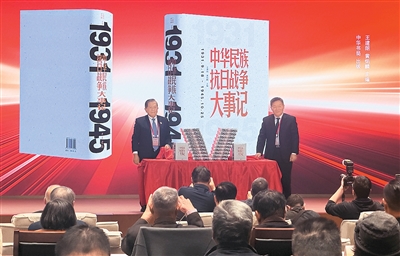
两岸人士在京共话赓续抗战精神
Ren Min Ri Bao Hai Wai Ban· 2025-12-24 03:11
Core Viewpoint - The seventh seminar on the history of the Chinese people's War of Resistance Against Japanese Aggression and the inheritance of the spirit of the Anti-Japanese War was held in Beijing, emphasizing the importance of remembering history and promoting the great spirit of resistance [1][2]. Group 1: Event Overview - The seminar was attended by approximately 120 representatives from various organizations, including retired generals, descendants of anti-Japanese fighters from Taiwan, experts, scholars, and young students [1]. - The event included the release of the book "Chronicle of Major Events in the Chinese People's War of Resistance Against Japanese Aggression," which documents significant events over the 14-year period of the war [1]. Group 2: Key Statements - Wang Jianlang, president of the Chinese Anti-Japanese War History Society, stated that the victory in the Anti-Japanese War was a crucial turning point for the rejuvenation of the Chinese nation, highlighting Taiwan's recovery as one of the war's most significant achievements [1]. - Chen Tingchong, chairman of the Taiwan Restoration Memorial Association, emphasized that the victory in the Anti-Japanese War directly benefited all Taiwanese people and called for unity among Taiwanese compatriots to support the "1992 Consensus" and oppose "Taiwan independence" [1]. Group 3: Collaborative Efforts - The event was co-hosted by the Chinese Anti-Japanese War History Society and the Taiwan Restoration Memorial Association, which have previously collaborated on six seminars since 2017, resulting in substantial research outcomes [2]. - Zhao Shitong, deputy director of the Taiwan Affairs Office of the State Council, expressed hope for both sides to work together to inherit and promote the great spirit of the Anti-Japanese War, emphasizing the importance of defending the achievements of the war and the post-war international order [2].
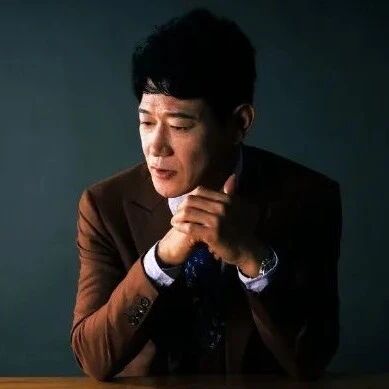
矢野浩二:永远支持一个中国,是我的肺腑之言
Xin Jing Bao· 2025-11-25 03:36
Core Viewpoint - Japanese actor Yano Koji expresses his heartfelt support for "One China," emphasizing his deep connection to China after living and working there for 25 years [1][2]. Group 1 - Yano Koji's statement of support for "One China" is a genuine expression of his feelings, not a political stance [2]. - He has lived in China for 25 years, where he has established strong personal ties, including family and friends [2]. - The actor acknowledges the potential for backlash in Japan but remains steadfast in his beliefs, stating that his words reflect his true sentiments [2]. Group 2 - Yano Koji feels compelled to speak out against misunderstandings and attacks on China, as he wishes to protect the land and people he loves [2].
日本演员矢野浩二接受《环球时报》专访:“永远支持一个中国”,是我的肺腑之言
Huan Qiu Shi Bao· 2025-11-24 22:44
Core Viewpoint - The article highlights the sentiments of Japanese actor Yano Koji (Hao Ge) regarding his support for China amidst rising tensions between Japan and China, emphasizing his deep connection to China after living there for 25 years [1][2]. Group 1: Personal Connection to China - Yano Koji expresses that China is not just his second hometown but has become a place that has redefined his understanding of "home" and warmth [2][3]. - He emphasizes that his support for "One China" is a genuine expression of his feelings, stemming from his experiences and relationships built over 25 years in China [1][4]. Group 2: Response to Criticism - The actor acknowledges facing online criticism, particularly from right-wing elements in Japan, but asserts that such negativity does not significantly affect him [2][3]. - He states that he feels compelled to speak out against attacks on China, viewing it as his responsibility to defend a place he loves [4][5]. Group 3: Cultural Bridge - Yano Koji sees himself as a cultural bridge between Japan and China, aiming to foster understanding through his work in film and television [7]. - He believes that good storytelling can help dispel misunderstandings and build trust between the two nations [7]. Group 4: Future Plans - The actor is currently involved in post-production for a television series and has completed filming for several movies, indicating a continued focus on his acting career [8]. - He plans to engage with audiences online, sharing his thoughts and experiences in a sincere manner [8].
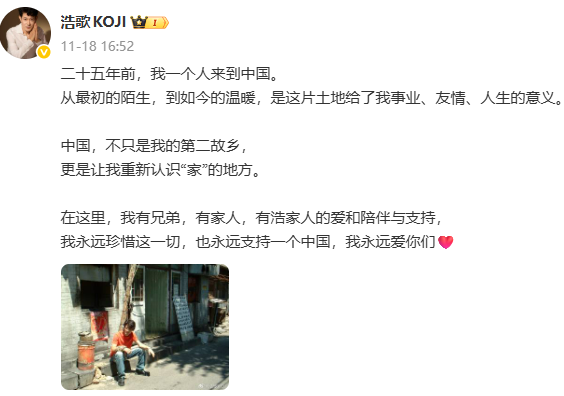
日本演员矢野浩二发文
券商中国· 2025-11-18 13:25
Core Viewpoints - Japanese actor Yano Koji expressed his deep appreciation for China, referring to it as his second hometown and a place that has redefined his understanding of "home" [1][3] - Yano Koji has been in China for 25 years, where he has built a career and formed meaningful relationships, emphasizing gratitude towards Chinese audiences for their support [3] - Japanese singer Maria also shared her sentiments on social media, stating that China is her second hometown and that her friends in China are like family to her [4] Summary by Sections - **Yano Koji's Experience in China** - Yano Koji arrived in China 25 years ago and has transitioned from feeling unfamiliar to experiencing warmth and support [3] - He has played various roles in Chinese dramas, often portraying Japanese military officers, which has contributed to his recognition in the country [3] - He expressed gratitude for the support he has received from Chinese audiences, which has been pivotal for his career development [3] - **Maria's Affection for China** - Maria, a Japanese singer, also expressed her love for China, calling it her second hometown and valuing her friendships there as family [4] - She is known for her work in the music industry and has participated in Chinese entertainment programs, showcasing her appreciation for Chinese culture [4]