金融反腐

Search documents
涉嫌严重违纪违法!吴飚,被查!
Zhong Guo Ji Jin Bao· 2025-12-11 12:45
Group 1 - The former director of the Policy Research Office of the Agricultural Development Bank of China, Wu Biao, is under disciplinary review and investigation for serious violations of discipline and law [1] - Wu Biao has held various significant positions within the Agricultural Development Bank, including deputy director of the Guangdong Provincial Committee of the Chinese People's Political Consultative Conference and president of the Qinghai Provincial Branch [1] - The ongoing anti-corruption efforts in the financial sector are highlighted by the case of Wan Rongxin, a former senior business deputy manager at the Zhuhai Branch, who was sentenced to imprisonment for bribery [1] Group 2 - The Agricultural Development Bank of China operates under a four-level vertical management structure, with over 48,000 employees, where more than 95% of management authority is held at the provincial branch level and below [2] - There is a noted risk of corruption among grassroots employees, particularly in areas such as grain purchasing and credit business, due to the long supervisory chain [2] - Since the reform of the stationed institutions, the disciplinary inspection and supervision team has actively explored collaborative methods to address violations, resulting in the investigation of multiple high-profile cases [2]
涉嫌严重违纪违法!吴飚,被查!
中国基金报· 2025-12-11 12:15
Core Viewpoint - The ongoing anti-corruption efforts in China's financial sector are highlighted by the investigation of Wu Biao, the former director of the Policy Research Office of the Agricultural Development Bank of China, for serious violations of discipline and law [1][2]. Group 1: Investigation and Background - Wu Biao has held various significant positions within the Agricultural Development Bank, including deputy director of the Guangdong Provincial Committee of the Chinese People's Political Consultative Conference and president of the Qinghai Provincial Branch [2]. - As of December 2023, Wu was still active in his role, leading a team to conduct research at the Shandong Provincial Branch to understand challenges faced at the grassroots level [2]. Group 2: Corruption Cases and Management Structure - Wan Rongxin, a former senior business deputy manager at the Zhuhai Branch, was sentenced to prison for bribery, indicating ongoing issues of corruption within the bank [4]. - The Agricultural Development Bank operates under a four-tier vertical management structure, with over 48,000 employees, where more than 95% of management authority resides at the provincial branch level and below, leading to potential oversight challenges [4]. - Recent disciplinary actions have revealed that some grassroots employees exploit their positions, particularly in areas like grain purchasing and credit, which have become hotspots for violations [4]. Group 3: Anti-Corruption Measures - As of May 25, the disciplinary inspection team has handled 47 cases of occupational crimes, with 34 cases processed using a collaborative "group-local-bank" model [5]. - The inspection team aims to enhance the quality and effectiveness of case handling by focusing on problem-oriented strategies and improving the assessment of case quality throughout the entire process [5].


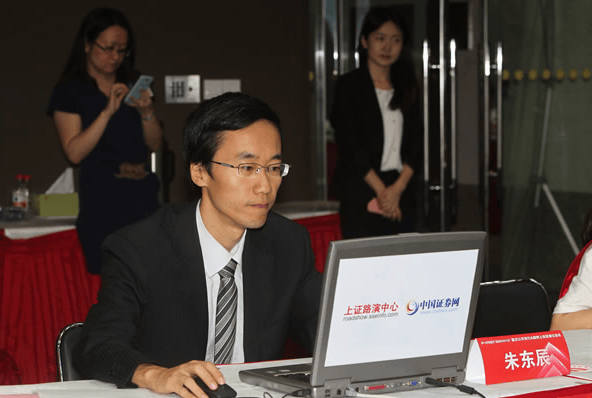
“浙江投行一哥”朱东辰被传失联,或与郭旭东案有关
Sou Hu Cai Jing· 2025-12-10 08:19
Core Viewpoint - The investigation involving Zhu Dongchen, a prominent figure in the capital market, is linked to the ongoing corruption case of Guo Xudong, raising concerns about systemic issues within the IPO review process [1][5][7]. Group 1: Zhu Dongchen's Background and Career - Zhu Dongchen, known as the "King of Zhejiang Investment Banking," has a significant career history, having worked at Guangfa Securities for 16 years before joining Guotai Junan in 2021, which altered the competitive landscape of the investment banking market in Zhejiang [2][4]. - His transition from Guangfa to Guotai Junan resulted in a dramatic shift in market share, with Guotai Junan's IPO underwriting in Zhejiang increasing from 9 cases (2.16% market share) before 2021 to 17 cases (7.52% market share) after his arrival, while Guangfa's market share declined significantly [4]. Group 2: Investigation and Implications - The investigation into Zhu Dongchen follows the case of Guo Xudong, who is under investigation for serious violations of duty, highlighting a potential network of corruption within the IPO review process [6][7]. - The ongoing investigations have already led to multiple individuals in the securities industry being taken in for questioning, indicating a broader crackdown on corruption in the IPO review sector [7]. - The implications of Zhu Dongchen's case for Guotai Haitong Securities, formed from the merger of Guotai Junan and Haitong Securities, remain to be seen, but it is expected that more corrupt practices within the IPO review process may be uncovered [8].



解读:为什么“重大立功”救不了白天辉?
Xin Lang Cai Jing· 2025-12-10 06:18
Core Viewpoint - The execution of Bai Tianhui is not only a legal judgment but also a political cleansing, emphasizing the severity of financial corruption and the need for strict enforcement of anti-corruption measures [1][16]. Group 1: The "Four Specials" Standard - The "Four Specials" serve as a stringent standard in anti-corruption logic, defining extreme cases that warrant severe punishment [2][17]. - Bai Tianhui's actions met all four criteria: - Particularly large amount: He amassed 1.108 billion over four years, averaging 750,000 per day in bribes [3][18]. - Particularly severe circumstances: He exploited his position as a financial executive for power rent-seeking, using covert methods [3][18]. - Particularly detrimental social impact: As a senior official in a state-owned financial institution, he severely damaged the image of state-owned enterprises [3][19]. - Particularly significant losses: His greed led to massive state asset losses, with over 800 million in illicit funds still unrecovered [4][20]. - The combination of these four factors transforms the nature of his crimes from simple embezzlement to a serious threat to national financial security [5][21]. Group 2: The Role of "Meritorious Service" - Despite Bai Tianhui's significant contributions in exposing others and providing investigative leads, the court deemed that his merits could not outweigh his crimes [6][22]. - The severity of his offenses far exceeded any benefits gained from his cooperation, necessitating a strong deterrent message in the ongoing fight against financial corruption [8][24]. - The Supreme Court's ruling clearly stated that his meritorious actions were insufficient for leniency, reflecting the extreme nature of his crimes [8][24]. Group 3: Connection to Larger Corruption Cases - Bai Tianhui is identified as a key figure in the corruption chain linked to Lai Xiaomin, the former chairman of Huarong, who has also been executed [9][25]. - The dismantling of the interest groups surrounding such high-profile figures is essential for eradicating the corruption epidemic [11][27]. - Allowing Bai to live would not satisfy public outrage or provide solace to countless investors harmed by risky projects [12][28].
吉林银行董事长秦季章,被带走调查
Sou Hu Cai Jing· 2025-12-05 18:01
Core Viewpoint - The recent detention of Qin Jizhang, the chairman of Jilin Bank, highlights ongoing governance issues within the bank and raises questions about the effectiveness of external leadership in local banking institutions [2][5]. Group 1: Leadership and Background - Qin Jizhang, born in 1968 and holding a PhD from Wuhan University, has a significant background in the financial sector, having held key positions in institutions like China Exim Bank and China Merchants Bank [2]. - He joined Jilin Bank in March 2020 with a dual role as vice president and a senior executive at China Merchants Jinhe Life Insurance, a rare combination in the financial system [2][4]. Group 2: Performance and Challenges - Upon Qin's arrival, Jilin Bank's non-performing loan (NPL) ratio was at a historical high of 4.31% at the end of 2019, but it dropped to 1.89% in 2020 due to his reform initiatives [3]. - However, by the end of 2024, the NPL ratio slightly increased to 1.85%, and net profit fell by 25.09% year-on-year, indicating that the improvements were not sustained [3]. Group 3: Governance Issues - Jilin Bank has experienced a series of leadership scandals, with three chairmen involved in legal issues over six years, revealing deep-rooted governance and internal control problems [3][4]. - The overlapping tenures of Qin and his predecessor, Chen Yulong, who also faced investigation, raise concerns about the adaptability and compliance of externally appointed executives in local banks [4]. Group 4: Structural Concerns - The "secondment" mechanism used to bring in leaders like Qin has been questioned regarding its effectiveness in integrating into the local financial ecosystem [4]. - Jilin Bank, established in 2007, has a heavy historical burden despite its asset scale exceeding 800 billion yuan, with fluctuating profitability and reputational damage due to executive misconduct [4]. Group 5: Future Outlook - The ongoing anti-corruption efforts in the financial sector, particularly in Jilin Province, emphasize the need for a comprehensive restructuring of governance frameworks, including ownership structure and incentive mechanisms [5]. - The new leadership at Jilin Bank will face critical challenges in balancing business expansion with risk control and breaking the cycle of executive misconduct [5].
程志明,被“双开”!
Zhong Guo Ji Jin Bao· 2025-11-27 10:26
Core Viewpoint - The former chief professional of China Three Gorges Financial Co., Cheng Zhiming, has been expelled from the Party and public office due to serious violations of discipline and law [1][2]. Group 1: Violations and Investigations - Cheng Zhiming was found to have lost his ideals and beliefs, acted disloyally to the Party, colluded with others, and resisted organizational investigations [2]. - He violated the spirit of the Central Eight Regulations and integrity discipline by accepting gifts, consumption cards, and attending banquets that could influence his official duties [2]. - Cheng was involved in providing assistance in employee recruitment in exchange for financial benefits, organized gambling activities among subordinates, and engaged in power-for-money transactions, leading to significant losses of state assets [2]. Group 2: Disciplinary Actions - The Central Commission for Discipline Inspection and the National Supervisory Commission decided to expel Cheng from the Party and public office, and confiscate his illegal gains [2]. - His case has been transferred to the prosecutorial authorities for legal review and prosecution [2]. Group 3: Background Information - Cheng Zhiming, born in March 1968, held a graduate degree and was a senior economist with extensive experience in various leadership roles within China Three Gorges Corporation [3]. - He served as the chairman of China Three Gorges Financial Co. and was previously a board member of Funiu Co., which he resigned from due to job changes [3]. - The company, established in 1997, aims to enhance the centralized management of funds and improve the efficiency of fund usage for the Three Gorges Group, with a registered capital of 7.5 billion yuan [3][4].
程志明,被“双开”!
中国基金报· 2025-11-27 09:40
【导读】三峡财务有限责任公司原首席专业师程志明被开除党籍和公职 中国基金报记者 晨曦 金融反腐新消息来了! 11月27日,中央纪委国家监委官网通报:三峡财务有限责任公司原首席专业师程志明被开除 党籍和公职。 日前,经中央纪委国家监委批准,中央纪委国家监委驻中国三峡集团纪检监察组、湖北省监 委对三峡财务有限责任公司原首席专业师程志明严重违纪违法问题进行了立案审查调查。 经查,程志明 存在以下问题: ● 丧失理想信念,背弃初心使命,对党不忠诚不老实,与他人串供,对抗组织审查; ● 违反中央八项规定精神和廉洁纪律,违规收受礼品、消费卡,接受可能影响公正执行公务 的宴请; ● 违背组织原则,在职工录用等工作中为他人提供帮助并收受财物; ● 追求低级趣味,多次组织下属进行带有财物输赢性质的打麻将活动; 通报指出, 程志明严重违反党的政治纪律、中央八项规定精神、组织纪律、廉洁纪律和生活 纪律,构成严重职务违法并涉嫌受贿、国有公司人员滥用职权犯罪,且在党的十八大后不收 敛、不收手,性质严重、影响恶劣,应予严肃处理。 依据《中国共产党纪律处分条例》《中华人民共和国监察法》《中华人民共和国公职人员政 务处分法》等有关规定,经中 ...

金融圈又有瓜,投行老将被带走调查,竟与打高尔夫有关?
Xin Lang Cai Jing· 2025-11-25 07:03
在 中信证券 收购万通证券(原 青岛 证券)的关键节点陈军担任核心负责人,2003-2006年出任 中信万 通证券 总经理。 金融反腐风暴持续向头部 券商 纵深延伸。 近期,据多家媒体援引知情人消息报道称 中信证券 原投资银行业务负责人、执行委员会委员陈军被有 关部门带走调查,其在 中信证券 企业融资部的多名旧部亦牵涉其中。 而这已是这位深耕中信投行近三十年的老将十年内第二次卷入调查风波。 公开信息显示,出生于1969年的陈军是金融圈典型的"券商老将",1991年从 山东大学 计算数学专业毕 业后他曾短暂任职于 山东大学 数学学院、人民日报事业发展局山东办事处,1997年加入 中信证券 后凭 借着在山东区域市场的深耕站稳脚跟。 离开 中信证券 的陈军并未远离资本市场,他与一众旧部共同创立了 宁波君度私募基金管理有限公司 , 将业务重心转向拟上市公司的Pre-IPO投资。 数据显示,宁波君度对外投资版图颇为庞大,直接投资的存续/在业企业达38家,间接投资企业更是多 达72家,其中不少企业完成了B轮、D轮等后期融资。 此次陈军被调查的时间节点就在证监会原发行部副主任郭旭东主动投案不久,而媒体报道的更多知情信 息指 ...

大搞利益交换、大肆收钱敛财,证监会原党委委员王会民被开除党籍
Di Yi Cai Jing· 2025-11-24 05:58
王会民曾执掌证监会纪委工作5年,退休6年后被查。 退休6年仍被查,曾执掌反腐工作的证监会纪检监察组原组长王会民被开除党籍。 经查,王会民丧失理想信念,背弃初心使命,背离党中央关于精准扶贫精准脱贫的基本方略,擅权妄 为、盲目决策,造成严重后果;违反中央八项规定精神,违规接受宴请;组织原则缺失,不按规定报告 个人有关事项,在职工录用等工作中为他人谋取利益并收受财物;廉洁底线失守,纵容默许亲属、特定 关系人利用其职权或者职务影响谋取私利;家风不正,对家人失管失教;执纪违纪,执法犯法,大搞利 益交换,大肆收钱敛财,利用职务便利为他人在企业上市、定增融资、职务晋升等方面谋利,并非法收 受巨额财物。 据中央纪委国家监委网站11月24日通报,中国证监会原党委委员、中央纪委国家监委驻中国证监会纪检 监察组原组长王会民严重违纪违法被开除党籍。 王会民曾执掌证监会纪委工作5年,于2019年4月卸任退休。今年3月21日,因涉嫌严重违纪违法,王会 民被查。 公开资料显示,王会民,1959年2月生,现年66岁,甘肃宁县人,早年曾长期在新疆维吾尔自治区任 职,1998年4月开始担任中国建设银行新疆分行党组书记、行长;2002年2月起任新 ...
两名金融干部,被“双开”
中国基金报· 2025-11-11 11:41
Core Viewpoint - The article reports on the recent disciplinary actions taken against two financial officials in China, highlighting the ongoing anti-corruption efforts within the financial sector [1]. Group 1: Disciplinary Actions - Zhang Wei, former Deputy Director of the Jilin Provincial Financial Committee, was expelled from the Party and public office due to severe violations of discipline and law, including accepting gifts and engaging in power-for-money transactions [5][6]. - Liu Jie, former Party Committee Member and Vice President of Sichuan Rural Commercial Bank, was also expelled for serious misconduct, including long-term acceptance of bribes and illegal loan issuance [9][10]. Group 2: Violations and Misconduct - Zhang Wei's misconduct included using public power for personal gain, engaging in business activities while in office, and causing significant losses to national interests [5][6]. - Liu Jie was found to have violated multiple regulations, including engaging in illegal financial activities and misusing public resources for personal profit [9][10].