预制菜概念

Search documents
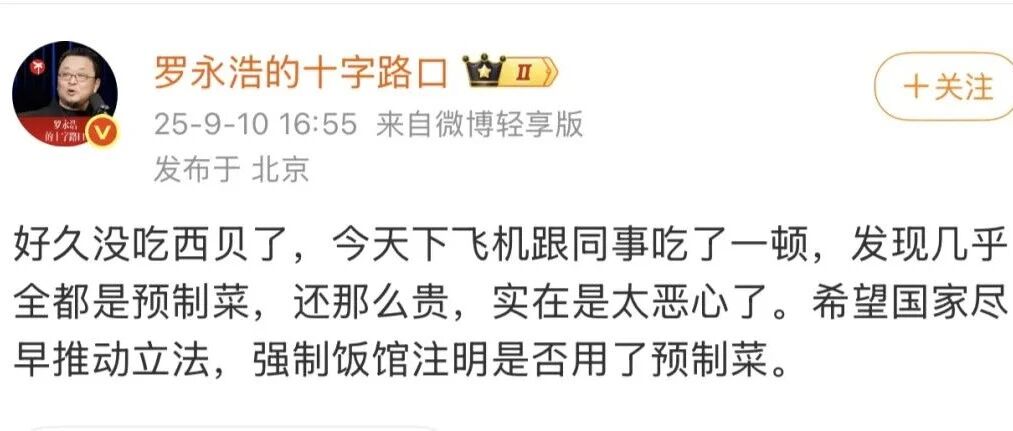
罗永浩说预制菜是另一种形式的罐头
Xin Lang Cai Jing· 2025-09-12 22:28
Core Insights - The article discusses the recent developments in the investment banking sector, highlighting key trends and shifts in market dynamics [1] Group 1: Market Trends - Investment banks are experiencing increased competition due to the rise of fintech companies, which are offering innovative financial solutions [1] - There has been a notable shift towards digital transformation within traditional investment banks, aiming to enhance operational efficiency and customer engagement [1] Group 2: Financial Performance - Recent quarterly earnings reports indicate a mixed performance among major investment banks, with some reporting significant revenue growth while others face declining profits [1] - The overall market for mergers and acquisitions (M&A) has seen a resurgence, with a reported increase of 15% in deal volume compared to the previous year [1] Group 3: Regulatory Environment - Regulatory changes are impacting the investment banking landscape, with new compliance requirements being introduced that could affect profitability [1] - The article emphasizes the importance of adapting to these regulatory changes to maintain competitive advantage in the market [1]
罗永浩谈预制菜概念:餐饮企业耍流氓,说预制菜定义很复杂,其实并不复杂
Xin Lang Ke Ji· 2025-09-12 13:31
Core Viewpoint - Luo Yonghao criticized the lack of transparency in the pre-prepared food industry, emphasizing the need for clear definitions and standards for pre-prepared dishes [1] Group 1: Industry Insights - Luo Yonghao highlighted that the common understanding of pre-prepared food is often misrepresented, stating that while some ingredients may be pre-prepared, it does not equate to the entire dish being pre-made [1] - He called for national standards to be established for pre-prepared food, arguing that the complexity of definitions is overstated by restaurant businesses [1] Group 2: Company Actions - In response to Luo Yonghao's comments, the restaurant chain Xibei launched a menu that directly addresses the controversy surrounding pre-prepared dishes [1]
没人吵得过罗永浩
虎嗅APP· 2025-09-12 10:28
Core Viewpoint - The core issue in the conflict between Luo Yonghao and Jia Guolong is the differing interpretations of the term "pre-made dishes," which reflects broader consumer expectations and pricing perceptions in the restaurant industry [5][12][30]. Group 1: Pricing and Consumer Perception - The price point of West B is perceived as high, leading to consumer confusion regarding its value proposition [13][15]. - Consumers are willing to pay for quality but expect a corresponding taste experience, especially when spending significant amounts on dining [11][30]. - The restaurant's pricing strategy does not align with consumer expectations, resulting in a perception of poor value for money [17][30]. Group 2: Brand Positioning and Strategy - West B's brand positioning has been inconsistent, shifting from a focus on becoming a mass-market brand akin to McDonald's to a family-oriented dining experience [19][23]. - The restaurant's attempts to cater to various market segments have led to a muddled brand identity, causing consumer confusion [24][26]. - The strategic shifts over the years have not effectively established a strong brand presence, which is crucial in the culturally driven restaurant industry [25][32]. Group 3: Market Dynamics and Competition - Successful restaurant brands in China typically maintain a price point around 20 RMB, appealing to the disposable income of consumers in lower-tier cities [22][23]. - The competitive landscape includes brands that have successfully penetrated the market with clear positioning and pricing strategies, contrasting with West B's fluctuating approach [22][23]. - The ongoing debate about pre-made dishes highlights the need for clarity in product offerings and consumer communication within the industry [8][30].


罗永浩大战西贝,聊聊预制菜行业
佩妮Penny的世界· 2025-09-12 09:41
Core Viewpoint - The article discusses the recent conflict between Luo Yonghao and Xibei regarding the pre-prepared food industry, highlighting the challenges and perceptions surrounding pre-prepared meals in China [1][2]. Industry Overview - The pre-prepared food industry gained popularity during the pandemic, with Xibei's attempt to enter the market through "Jia Guolong Kungfu Cuisine," which ultimately did not succeed [2][4]. - Pre-prepared food is an important part of food industrial development, with penetration rates in countries like the US and Japan reaching 60%, while China's penetration is only 10-15% but growing rapidly [5][6]. Market Trends - The growth of the pre-prepared food sector in China is driven by several trends: 1. Increased penetration of food delivery services, which require high efficiency and safety standards [6][8]. 2. The trend of restaurant chain development, which enhances food industrial and logistics capabilities [8][11]. Regulatory Changes - New regulations in 2024 will redefine pre-prepared food, excluding certain types of food processing from the category, which may impact market dynamics [13][16]. Consumer Perception - There is a significant consumer skepticism towards pre-prepared meals, especially when they perceive they are paying for freshly made food but receiving pre-prepared options instead [4][16]. - The article suggests that the current economic environment makes it difficult for the pre-prepared food industry to thrive, as consumers are not seeing price reductions despite lower costs for restaurants [16]. Investment Outlook - The article expresses a cautious outlook on investing in the pre-prepared food sector, suggesting that upstream companies focusing on standardized products may have a competitive advantage [16].
强势贾国龙,“放大”西贝的舆论漩涡丨消费快评
2 1 Shi Ji Jing Ji Bao Dao· 2025-09-12 07:37
Core Viewpoint - The controversy surrounding Xibei's use of pre-prepared dishes has intensified, particularly following comments made by entrepreneur Luo Yonghao, which have led to legal threats from Xibei's CEO, Jia Guolong [1][3][4]. Company Summary - Xibei's CEO, Jia Guolong, asserts that the company does not serve any pre-prepared dishes, despite claims to the contrary [4][5]. - Jia Guolong has expressed that Luo Yonghao's statements have significantly impacted Xibei's reputation, prompting the company to consider legal action [3][5]. - The average consumer spending at Xibei is reported to be 85.03 yuan, which is notably higher than competitors such as Zhen Gongfu (26.57 yuan) and Yoshinoya (31.06 yuan), indicating limited consumer tolerance for pre-prepared dishes [5][7]. - Xibei has introduced a "Luo Yonghao Menu" across all locations, allowing customers to order dishes previously selected by Luo, although this has raised questions about consumer privacy [7][8]. Industry Summary - The restaurant industry is facing significant challenges, with Xibei's revenue reportedly in a declining trend as of May 2025 [16]. - Major competitors in the industry, such as Haidilao and Jiamaojiu, have also reported revenue declines, indicating a broader industry trend [16]. - The overall restaurant market is under pressure, with major cities like Beijing and Shanghai experiencing declines in dining revenue [17]. - The current economic environment has made it difficult for brands to withstand negative publicity, as seen in the case of other brands like Zhongxuegao [18]. - The management style of Xibei, centered around its founder, has been highlighted as both a strength and a potential weakness, suggesting a need for more professional governance [19][20].
9月5日A股分析:三大指数集体上涨,两市合计成交23046.59亿元,资金流入最多的行业板块为电池、电子元件
Sou Hu Cai Jing· 2025-09-05 08:04
Market Overview - The Shanghai Composite Index rose by 1.24% to close at 3812.51 points, while the Shenzhen Component Index increased by 3.89% to 12590.56 points, and the ChiNext Index surged by 6.55% to 2958.18 points, with total trading volume decreasing by 239.599 billion to 2304.659 billion [2] Fund Flow Analysis - The net inflow of major funds was 42.7832 billion, with a net ratio of 1.86% [2] - The net inflow from super large orders was 41.59953 billion, with a net ratio of 1.81% [2] - The net inflow from large orders was 1.18367 billion, with a net ratio of 0.05% [2] - The net outflow from medium orders was -28.63237 billion, with a net ratio of -1.24% [2] - The net outflow from small orders was -14.15083 billion, with a net ratio of -0.61% [2] Sector Performance - The sectors with the highest fund inflow included battery, electronic components, photovoltaic equipment, energy metals, and consumer electronics, with inflows of 9.609 billion, 5.528 billion, 5.219 billion, 3.94 billion, and 2.179 billion respectively [3] - The sectors with the highest fund outflow were commercial retail, securities, banking, internet services, and food and beverage, with outflows of -1.885 billion, -1.428 billion, -1.362 billion, -1.334 billion, and -0.409 billion respectively [3] Concept Stock Trends - The concept stock with the highest fund inflow was margin financing and securities lending, followed by FTSE Russell, Shenzhen Stock Connect, MSCI China, and Shenzhen 500, with inflows of 44.079 billion, 30.631 billion, 26.54 billion, 25.66 billion, and 22.569 billion respectively [2] - The concept stocks with the highest fund outflow included yesterday's limit-up stocks, pre-made dishes, domestic trade circulation, and e-commerce concepts, with outflows of -3.277 billion, -3.156 billion, -1.577 billion, and -1.55 billion respectively [3] Industry Performance - The industries with the highest growth included battery, energy metals, photovoltaic equipment, wind power equipment, and power supply equipment, with growth rates of 9.29%, 7.62%, 6.1%, 5.64%, and 5.15% respectively [3] - The industries with the largest decline were banking, insurance, commercial retail, brewing industry, and food and beverage, with declines of -0.88%, -0.05%, -0.06%, -0.2%, and -0.29% respectively [4]
A股回调下两股逆势受宠,机构外资齐抢筹,光模块龙头在列!
Sou Hu Cai Jing· 2025-09-05 01:37
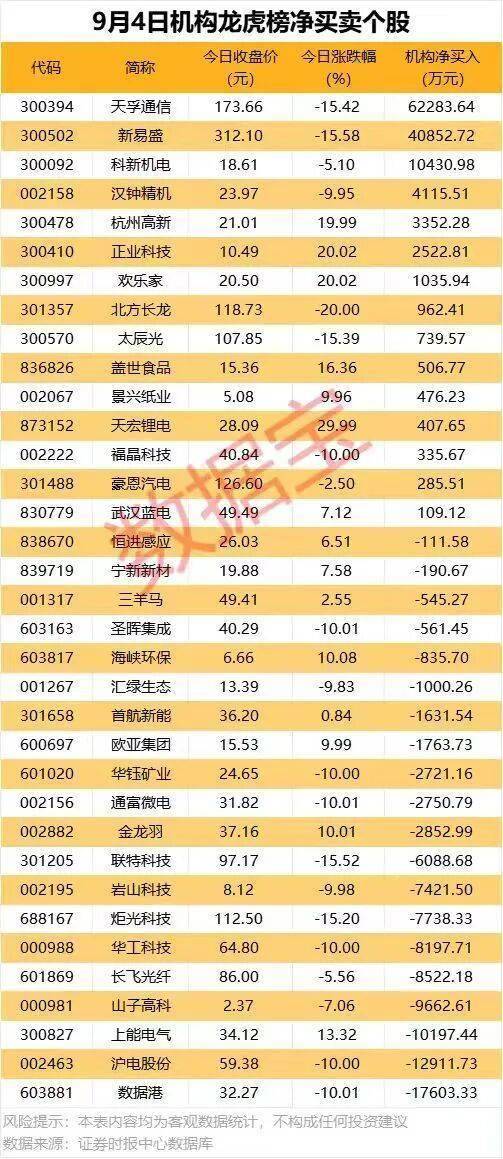
Market Overview - On September 4, the A-share market experienced a pullback, with total trading volume rising to 2.58 trillion yuan, an increase of over 180 billion yuan compared to the previous trading day [1] - Despite market fluctuations, more than 2,200 stocks closed higher, with 44 stocks hitting the daily limit up [1] Sector Performance - Leading sectors included dairy, duty-free shops, and prepared dishes, while sectors like national big fund holdings and optical packaging performed poorly [1] - The power equipment industry received significant attention from institutions, with 15 stocks including EVE Energy and Tianci Materials receiving buy ratings [1] Stock Ratings - A total of 174 buy ratings were issued, covering 160 stocks, with Great Wall Motors being a focal point, receiving three buy ratings [1] - Among the 64 target price predictions, 43 stocks had an upside potential exceeding 20% [1] - ZTE Corporation showed the most significant upside potential, with a target price of 67.37 yuan per share, indicating a potential increase of 64.96% [1] Institutional Trading - In the institutional trading board, 15 stocks had net purchases, while 20 stocks had net sales [2] - The top three stocks by net purchase amount were Tianfu Communication (622.83 million yuan), New Yisheng (408.52 million yuan), and Kexin Machinery (104.31 million yuan) [2][3] Northbound Capital - Northbound capital played a significant role, with New Yisheng and Tianfu Communication receiving net purchases of 401.02 million yuan and 282.00 million yuan, respectively [5] - New Yisheng announced that its 1.6T related products are progressing well and are expected to ramp up production in the second half of the year [4] Company Announcements - BYD announced its presence in over 112 countries and regions, aiming to lead in electric vehicle sales by the first half of 2025 [7] - Shiyun Circuit revealed that its AI glasses have entered mass production for major overseas clients [7] - Dongfang Yuhong signed a strategic procurement agreement with China Construction Third Engineering Bureau for gypsum board [7] - Jiantou Energy announced that its stock issuance plan has been approved by its controlling shareholder [7]



圣农发展股价微跌0.58%,2025年中报预增引关注
Jin Rong Jie· 2025-08-25 20:20
Group 1 - The stock of Shengnong Development closed at 17.26 yuan on August 25, down 0.10 yuan, a decrease of 0.58% from the previous trading day [1] - The company operates in the full industry chain of meat chicken breeding, slaughtering, processing, and sales, with main products including fresh chicken and deep-processed meat products [1] - Shengnong Development has been included in the 2025 mid-term report pre-increase concept stocks, indicating potential growth [1] Group 2 - The stock opened at 17.36 yuan, with an intraday high of 17.38 yuan and a low of 17.03 yuan, resulting in a fluctuation of 2.02% [1] - On August 25, the net outflow of main funds was 23.93 million yuan, accounting for 0.11% of the circulating market value [1] - Over the past five trading days, the cumulative net outflow reached 50.87 million yuan, representing 0.24% of the circulating market value [1]

预制菜概念涨1.15%,主力资金净流入56股
Zheng Quan Shi Bao Wang· 2025-07-30 08:40
Market Performance - The prepared food concept index rose by 1.15%, ranking 8th among concept sectors, with 84 stocks increasing in value [1] - Notable gainers included Juran Smart Home and Zhongshui Fishery, which hit the daily limit, while Kachuang International, Bright Meat, and Huangshanghuang saw increases of 5.69%, 5.50%, and 5.39% respectively [1] - The leading decliners were Jinjiang Online, *ST Jiawo, and Meiyingsen, which fell by 3.36%, 1.33%, and 1.06% respectively [1] Capital Inflow - The prepared food sector experienced a net capital inflow of 890 million yuan, with 56 stocks receiving net inflows [1] - Juran Smart Home led the inflow with 316 million yuan, followed by Tongwei Co., Yonghui Supermarket, and Zhongshui Fishery with net inflows of 224 million yuan, 191 million yuan, and 72.94 million yuan respectively [1] - The top three stocks by net inflow ratio were Zhongshui Fishery at 43.91%, Juran Smart Home at 36.03%, and Yonghui Supermarket at 15.33% [2] Stock Turnover and Performance - Juran Smart Home had a daily increase of 10.07% with a turnover rate of 4.77% and a capital flow of 316.21 million yuan [2] - Zhongshui Fishery also performed well with a 9.98% increase and a turnover rate of 5.27% [2] - Other notable performers included Kachuang International with a 5.69% increase and a turnover rate of 7.67% [4]


惠发食品一季度产品线全线下滑,上半年加大投入难遏亏损势头
Zheng Quan Zhi Xing· 2025-07-22 03:07
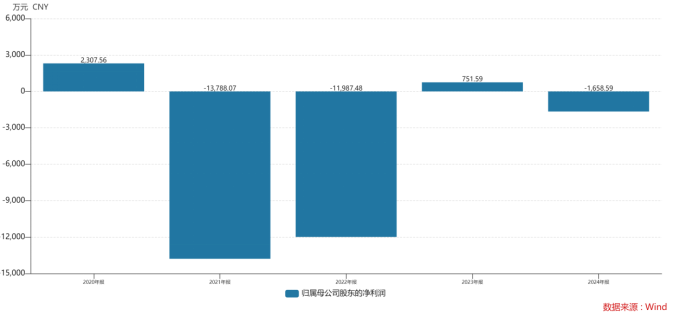
Core Viewpoint - The traditional frozen food company, Huihua Foods, is facing significant financial challenges, with a projected net loss for the first half of 2024 and a history of cumulative losses exceeding 2.6 billion yuan over the past four years [1][2][4]. Financial Performance - In 2023, Huihua Foods reported a revenue of 1.997 billion yuan, a year-on-year increase of 26.36%, and achieved a net profit of 7.5159 million yuan, recovering from a loss of nearly 120 million yuan in the previous year [2]. - However, for 2024, the company anticipates a revenue decline of 3.61% to 1.925 billion yuan and a net loss of 16.5859 million yuan, continuing a trend of cumulative losses of approximately 2.67 billion yuan from 2021 to 2024 [2][4]. Market Trends and Challenges - The shift in consumer demand from emergency frozen foods to quality and convenience has not been matched by Huihua Foods, which continues to focus on traditional frozen products [1]. - The company has struggled to adapt to the competitive landscape, with significant declines in revenue from its core product lines, including a 16.46% drop in revenue from round products and a 15.96% drop from fried products in 2024 [6][7]. Operational Issues - Huihua Foods faced a major setback when a project partnership fell through, leading to a significant downward revision of its profit forecast for 2024, which prompted regulatory scrutiny and potential investor claims [4][5]. - The company's reliance on a distribution model has resulted in a 14.09% decline in revenue from this channel, contrasting with competitors like Anjiyuan Foods, which saw growth in similar conditions [6][7]. Product Line Performance - The company has attempted to diversify into prepared dishes, but revenue from these products has also declined, with a 17.94% drop in 2024 compared to the previous year [7]. - Overall, Huihua Foods' various product lines have experienced significant revenue declines, with the supply chain business becoming the largest revenue source at 584 million yuan, despite low profit margins [8].