场景化营销

Search documents
京东美团下场“出口转内销”:将品牌价值与国运链接
Sou Hu Cai Jing· 2025-04-14 05:34
Core Viewpoint - In response to challenges faced by Chinese foreign trade enterprises due to global trade fluctuations and U.S. tariff policy adjustments, companies like JD.com, Meituan, Douyin, Baidu, Yonghui, Hema, and Dongfang Zhenxuan have collectively launched "export to domestic sales" support plans, reflecting a strategic upgrade in brand marketing and a response to the national strategy of expanding domestic demand [1] Group 1: Supply Chain Integration and Channel Empowerment - JD.com plans to procure 200 billion yuan worth of foreign trade goods over the next year, establishing a foreign trade premium section and providing marketing support through a self-operated model [3] - Hema shortens the shelf life of foreign trade products through its cloud sharing channel and green entry passage, enhancing its brand image as a hub for quality goods [5] - The integration of supply chains and traffic support positions platforms as bridges between domestic and foreign trade, addressing channel pain points for foreign trade enterprises while enriching their product matrix [6] Group 2: Scenario-Based Reach and Localized Operations - Meituan and Yonghui focus on local consumption scenarios, with Meituan utilizing its front warehouse network and community group buying to penetrate first and second-tier cities and lower-tier markets [9] - Meituan's "next-day delivery" network covers over 2,000 cities and counties, facilitating quick access to foreign trade products for household users [9] - Localized operations and scenario adaptation are key to brand penetration, helping foreign trade products transition from export standards to local demand [12] Group 3: Content-Driven and Traffic Explosion - Douyin and Dongfang Zhenxuan leverage content ecosystems and live e-commerce to provide foreign trade brands with a "traffic + content" dual engine [13] - Douyin's initiatives include direct order procurement and a foreign trade section, creating a closed loop from "interest generation to conversion" through short videos and live broadcasts [13] - Content marketing serves as a crucial narrative tool, enabling foreign trade products to shift from low-price competition to high-value brand pathways [14] Group 4: Data-Driven and Precise Matching - Baidu employs AI technology and digital live streaming plans to offer low-threshold live streaming solutions for foreign trade enterprises, facilitating cold starts with a billion-level traffic pool [18] - This technological empowerment reduces operational costs for foreign trade enterprises and aids in quickly identifying target users through data analysis [18] - The application of digital tools shifts brand marketing from extensive investment to precise operations, creating a new avenue for brand differentiation [18] Group 5: Social Responsibility and Brand Image Co-Building - Platforms emphasize their support for the integration of domestic and foreign trade in response to the Ministry of Commerce's call, showcasing their commitment to social responsibility [19] - Initiatives like green channels and special subsidies enhance public goodwill towards platforms and shape their brand image as strategic partners in national initiatives [19] - The combination of social responsibility and commercial interests fosters long-term brand value, binding platform development to social needs [19] Group 6: Conclusion - The initiatives by these companies appear to be short-term relief measures but imply a long-term brand strategy focused on platform brand upgrades and ecosystem construction [20] - Differentiated competition arises from JD.com's supply chain, Meituan's down-market network, and Douyin's content ecosystem, each forming competitive barriers [21] - The success of foreign trade enterprises in domestic sales will depend not only on product strength but also on their collaborative capabilities with platforms [21]


“蔬”香山东, “齐鲁农超”交出品质新答卷
Qi Lu Wan Bao Wang· 2025-04-13 03:39
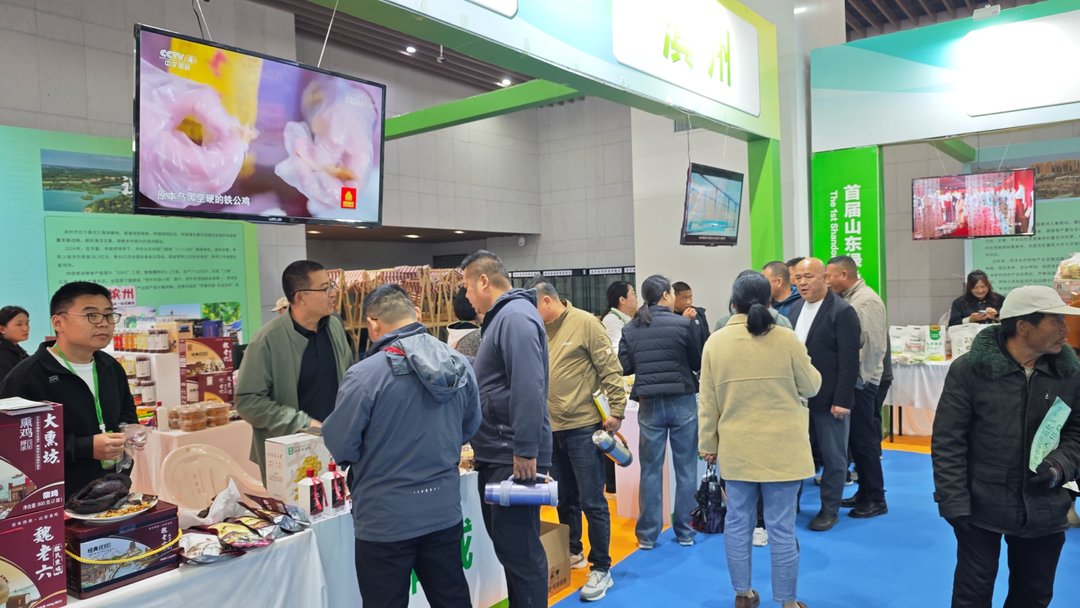
Group 1 - The first Shandong Green Vegetable Industry Expo was held in Lanling, showcasing over a hundred companies and thousands of products from sixteen cities in Shandong [1][3] - The expo featured a variety of local specialties, including sweet cherries, organic vegetables, and unique snacks, attracting significant consumer interest [1][3] - The event aimed to promote the green development of agriculture in Shandong and enhance traditional agricultural products through experiential marketing [6][8] Group 2 - The expo served as a platform for exhibitors to expand their market reach, with participants expressing surprise at the positive reception of their products [8] - Innovative products, such as a combination of tea and beer, were highlighted as examples of diversification in the agricultural sector [8] - The event emphasized the potential for high-quality agricultural development in Shandong, aiming to make "Good Products from Shandong" a staple on dining tables nationwide [8]
QuestMobile2024年中国营销市场年度报告·市场篇:三大特征催生两大变革,情感共鸣成了终极之争
QuestMobile· 2025-04-01 01:59
各位童鞋搭嘎猴啊,上周 "APP流量洞察报"看的怎么样?有童鞋在后台留言:"本来还在愤 怒冷一天热一天,突然,缅甸来了个大地震,顿时无颜抱怨了……"今年一个季度没过完,大 事已经接连不断,虽然经历了过去几年的不断突变,大家都有点不安了,还是愿平安、都保 重…… 言归正传,今天就给大家分享一下营销市场洞察报告。Qu e s tMobi l e数据显示,在消费品国 补、以旧换新等政策刺激下,2024年国内消费韧劲十足。具体来说,一方面,刚需品类理性 增长,另一方面,家电、汽车等耐用消费品出现阶段性爆发。此外,体验式消费更是成为了 消费风向标。 由此带来了三大营销市场变化:营销触点多元分化;IP及热点营销持续抢占用户流量;唯有 体验消费能打破营销"圈层板块"。 营销触点方面,内容消费场景 APP 持续血海厮杀,抢夺用户零碎的注意力;消费类APP使 用量增长,意味着用户倾向多平台比价达到最优决策。两大要素交织,导致"易走难 留"、"一去不回",成了营销通病。 同时,IP化和热点事件营销挟裹着平台头部达人流量,让营销陷入"圈层化"的尴尬境地:流 量和曝光增加反而进一步强化了低价和比价的死亡螺旋。 唯一的突破出现在体验消 ...
QuestMobile2024年中国营销市场年度报告·市场篇:三大特征催生两大变革,情感共鸣成了终极之争
QuestMobile· 2025-04-01 01:59
Core Insights - The article emphasizes the resilience of domestic consumption in 2024, driven by government policies and the emergence of experience-based consumption as a key trend [2][9][12]. Group 1: Market Changes - The marketing landscape is witnessing three significant changes: diversification of marketing touchpoints, continued dominance of IP and event marketing in capturing user traffic, and the rise of experiential consumption as a means to break through marketing barriers [2][3][4]. - Government policies, such as subsidies and trade-in programs, are significantly activating the market, particularly in durable goods like automobiles and home appliances [12][9]. - The 2024 consumption growth is characterized by a reliance on promotions, with notable growth disparities between high-elasticity and essential goods [11][12]. Group 2: Consumer Characteristics - The mobile internet user base continues to grow, leading to a shift from traffic competition to stock operation and value reconstruction in marketing [15][19]. - There is an increase in the usage of decision-making apps, indicating a trend towards multi-platform price comparison for optimal decision-making [17][19]. - Female consumers dominate high-value purchases, while male consumers are increasingly focused on self-satisfaction, particularly in technology-related categories [21][23]. Group 3: Marketing Strategies - AI is being widely adopted in content creation, enhancing efficiency and quality, while also raising concerns about copyright and content details [25][27]. - Brands are focusing on integrating marketing resources at key points to enhance conversion rates and improve return on investment (ROI) [56][61]. - The marketing approach is evolving towards a multi-faceted strategy that balances brand exposure with asset accumulation, leveraging both hard advertising and content marketing [49][51]. Group 4: Media Ecosystem - The media landscape is entering a phase of value deepening, with short videos, social media, and e-commerce leading marketing growth [5][37]. - The content and scene value of media are crucial for capturing user attention, with significant growth in advertising capacity for video and social media platforms [37][40]. - Marketing resources are increasingly concentrating on top-tier and e-commerce media, indicating a trend towards commercializing high-traffic platforms [44][46]. Group 5: Future Trends - The marketing core is shifting from traffic to user engagement, with a focus on multi-touchpoint coverage and deep content to enhance user loyalty [48][86]. - Brands are expected to continue leveraging experiential marketing and cultural IPs to create deeper emotional connections with consumers [76][81].