情绪营销

Search documents
小红书:2026小红书商业快消行业节点营销情绪洞察图鉴—CNY专题
Sou Hu Cai Jing· 2026-02-06 12:47
Core Insights - The report highlights a shift in fast-moving consumer goods (FMCG) marketing from "rational persuasion" to "emotional resonance," emphasizing the importance of emotions in capturing consumer attention and influencing decisions [1][9][10] - The emotional marketing framework developed by Xiaohongshu includes three layers of emotional sources, 35 emotional categories, and 95 specific emotions, providing a systematic approach to understanding consumer sentiment during the Chinese New Year (CNY) [1][10][38] - The study identifies seven representative emotions during CNY: surprise, anticipation, appreciation, humor, enjoyment, comfort, and helplessness, which reflect the core meanings of the holiday [1][44][47] Emotional Trends - Five new emotional trends for CNY marketing have emerged: 1. Trendy toys as a bonding element for family reunions 2. Deep local experiences replacing traditional celebrations 3. Humor and memes as new forms of emotional release 4. Customized gifting highlighting the value of thoughtfulness 5. Increased attention to the needs of infants and pets during the holiday [2][62][66][67] Three-Dimensional Perspective - The report analyzes CNY emotions through three dimensions: 1. Geographic variations, where high-tier cities seek diverse experiences while lower-tier cities focus on familiar gatherings 2. Demographic differences, with younger consumers prioritizing social expression and older consumers balancing family responsibilities 3. Industry-specific emotional responses, particularly in food and beverage, retail, maternal and infant care, health, and pet sectors [2][24][72] Emotional Marketing Framework - The emotional marketing approach follows a "anchor-interpret-integrate" loop, which involves understanding public emotional tones, exploring underlying emotional drivers, and constructing narratives that strengthen brand-consumer emotional connections [2][10][24] - The report emphasizes that emotions are now identifiable, trackable, and applicable marketing variables, with CNY serving as a high-emotion concentration period for brands to effectively reach consumers [2][10][24]


2026小红书商业快消行业节点营销情绪洞察图鉴—CNY专题
Sou Hu Cai Jing· 2026-02-05 13:47
Group 1 - The core viewpoint of the report is that fast-moving consumer goods (FMCG) marketing is shifting from "rational persuasion" to "emotional resonance," particularly during high-emotion periods like the Chinese New Year (CNY) [1][8] - The report identifies seven core emotions associated with CNY, including surprise and anticipation, and highlights five major trends such as the emphasis on family reunions and local flavors [1][11] - Emotional marketing strategies should be tailored to different demographics and product categories, as emotional responses vary across urban and rural areas, life stages, and FMCG sectors [1][11] Group 2 - The report emphasizes that traditional marketing assumptions about consumer behavior are being challenged, as emotional triggers often drive purchasing decisions more than rational evaluations [8][19] - It introduces a systematic methodology for capturing and analyzing emotions in the FMCG sector, aiming to make emotions visible and applicable for brand growth [9][27] - The report outlines the importance of understanding emotional dynamics during key marketing nodes, such as CNY, to effectively engage consumers and enhance brand resonance [23][24] Group 3 - CNY is characterized as a peak emotional period, where collective emotions are amplified, providing brands with a unique opportunity to connect with consumers [23][24] - The emotional landscape during CNY is complex, with varying expressions of emotions based on social relationships and individual experiences, making it essential for brands to navigate these nuances [42][58] - The report identifies seven representative emotions during CNY, including surprise, anticipation, and appreciation, which reflect deeper cultural meanings and consumer expectations [45][46] Group 4 - The report discusses emerging trends in CNY celebrations, such as the rise of playful and interactive experiences, local cultural expressions, and personalized gifting, indicating a shift in consumer preferences [62][65] - It highlights the significance of emotional connections in marketing, suggesting that brands should focus on creating meaningful interactions that resonate with consumers' emotional states [19][21] - The analysis of emotional data from social media platforms like Xiaohongshu provides insights into consumer sentiment and behavior, enabling brands to tailor their marketing strategies effectively [34][35]

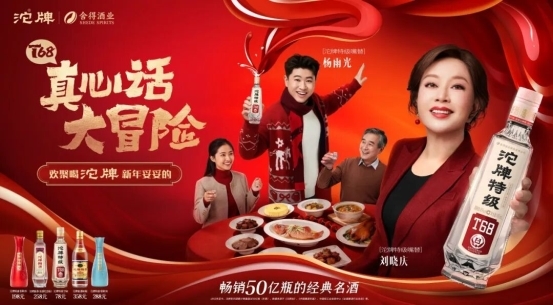
携手刘晓庆、杨雨光以“真心”破局,沱牌春节营销引爆社交共鸣与市场势能
Sou Hu Wang· 2026-02-03 02:48
Core Insights - The core message of the article emphasizes how the company, through its innovative marketing strategy, successfully connects with consumers' emotions during the critical Chinese New Year sales period, leveraging the theme of "true feelings" to resonate with the younger generation [2][21]. Marketing Strategy - The marketing campaign for the Spring Festival focuses on addressing the "invisible pressure" faced by young people during family gatherings, such as questions about marriage and career, positioning the product T68 as a catalyst for expressing "true feelings" [3][20]. - The campaign features a creative film titled "T68 True Feelings Adventure," which uses absurd comedy to engage viewers and break away from traditional alcohol advertising [3][5]. Celebrity Endorsement - The campaign features well-known personalities Liu Xiaoqing and Yang Yuguang, whose images align with the campaign's theme, enhancing relatability and appeal to the target audience [5][10]. - Liu Xiaoqing's role as a "scripted" spokesperson and Yang Yuguang's portrayal of a young person facing family inquiries create a strong connection with the audience [5][10]. Interactive Engagement - The launch of an interactive H5 platform allows users to generate quotes from the celebrities, enhancing user participation and encouraging social sharing, which helps the "true feelings" theme to spread virally [12][20]. - A live-streaming event titled "Celebration of Wine" features engaging interactions between the brand's chairman and Liu Xiaoqing, further bridging the gap between the brand and consumers [13][16]. Comprehensive Marketing Approach - The campaign integrates online and offline experiences, including a "Wine Table God" challenge on Douyin and events at over 500 dining venues, creating a cohesive brand experience [16][18]. - The marketing strategy encompasses a full-spectrum media interception network, targeting key consumer touchpoints during the Spring Festival, ensuring extensive brand visibility [18][20]. Emotional Connection - The campaign successfully transitions from product marketing to emotional and experiential marketing, establishing a deeper emotional connection with consumers [20][21]. - By understanding and supporting consumer sentiments, the company sets a benchmark for the industry on how to engage with the new generation of consumers [21].

数码家电行业周度市场观察-20260125
Ai Rui Zi Xun· 2026-01-25 03:02
Investment Rating - The report does not explicitly provide an investment rating for the digital home appliance industry. Core Insights - The digital home appliance industry is experiencing significant transformations driven by AI technologies, particularly in consumer engagement and product innovation. Brands must adapt to the evolving landscape shaped by AI tools and consumer preferences. Industry Trends - In 2026, brands need to take AI GEO seriously as AI chat assistants become essential tools for consumers, with 96.8% of the youth viewing them as indispensable. The shift from "search" to "dialogue" is changing consumer decision-making processes, making AI the primary advisor for consumers [4] - The current AI companion market faces challenges due to high competition and low user retention, with many applications suffering from homogenization and low monetization potential. Successful models may include subscription services and advertising [4] - The healthcare sector is being transformed by AI, with the global AI healthcare market expected to reach $504.17 billion by 2032, growing at a CAGR of 44%. Companies like OpenAI and Ant Group are leading innovations in personalized health advice [6] - The CES 2026 showcased a focus on consumer-grade AI hardware, with major companies like Samsung and ByteDance competing in the smart home and AI glasses markets. The industry anticipates a multi-billion market driven by consumer adoption [6][9] - The emergence of coffee robots at CES 2026 highlights the commercialization of embodied intelligence, with products like the XBOT coffee robot demonstrating significant market potential and consumer engagement [7] - The electric vehicle market in China is evolving, with new players like Li Auto and Xpeng focusing on smart features and profitability, while traditional brands face challenges in brand positioning and market competition [8] - AI glasses did not achieve expected market success at CES 2026, facing issues like technical limitations and fragmented ecosystems, but long-term potential remains as technology improves [9] - The advertising industry is seeing a shift towards AI-driven strategies, with major tech companies dominating the digital ad market, leading to a concentration of power and resources [14] Top Brand News - NVIDIA's CEO Huang Renxun announced a new phase of AI development focused on "physical AI," emphasizing the need for AI to interact with the physical world, which could lead to the emergence of human-level robots [17] - Fuhua Co. plans to raise 700 million yuan for projects in energy storage and robotics, aiming to enhance its competitive edge in the smart appliance sector [18] - DeepSeek is set to release a new model that aims to outperform existing AI models in code generation, potentially revolutionizing programming [19] - OpenAI launched ChatGPT Health, a feature aimed at providing personalized health advice, reflecting a growing trend in AI healthcare applications [19] - Zhiyuan Huazhang Technology became the first AI model company to go public, highlighting the growing importance of AI in the capital market [20] - Midea's Weiling Robotics received recognition for its advancements in core components, showcasing China's progress in robotics technology [20]
脱口秀“炸”场,美好食品以情绪营销抢赢“春节档”
Zhong Guo Shi Pin Wang· 2026-01-17 05:52
Group 1 - The core idea of the articles revolves around the innovative marketing strategy of Meihao Foods, which focuses on addressing the "New Year anxiety" among young consumers through a unique comedy show, rather than traditional reunion themes [5][17][34] - Meihao Foods collaborated with local comedy group "Yizhi Mai" to create a performance titled "Mindset Not Exploding the Scene," which serves as both an emotional outlet and a culinary experience, effectively transforming brand communication from merely appealing to taste buds to also soothing the soul [1][11][29] - The event featured interactive elements designed to engage participants, such as a "mindset defusing" board and food tasting experiences, creating an immersive atmosphere that allowed for emotional release and connection with the brand [11][28] Group 2 - The marketing approach taken by Meihao Foods is a departure from traditional narratives centered on family reunion, instead tapping into the emotional burdens associated with the holiday season, thus creating new opportunities and challenges in brand marketing [4][5] - The comedy show format was chosen for its ability to resonate with younger audiences, providing a platform for humor that addresses social pressures and personal expectations during the festive season [5][34] - Meihao Foods' strategy includes leveraging user-generated content (UGC) through an online "open mic" event to gather real emotional needs from consumers, establishing a complete emotional feedback loop from online engagement to offline experience [29][34] Group 3 - The company aims to deepen the emotional connection with consumers by embedding product values into relatable narratives presented during the comedy performances, thus enhancing brand image and product recall [17][24][28] - The marketing campaign aligns with a broader trend where consumers are increasingly willing to invest in emotional experiences, as evidenced by a report indicating that 56.3% of the population is willing to pay for emotional value, a significant increase from the previous year [32][34] - Meihao Foods' emotional marketing strategy emphasizes the importance of empathy and connection, aiming to transform laughter into purchasing decisions and storytelling, thereby creating a new paradigm for brand-consumer interaction [34]

分众传媒江南春:AI技术+情绪价值成为品牌传播核心力量
Shang Hai Zheng Quan Bao· 2026-01-15 18:01
Core Viewpoint - AI technology is reshaping various industries, and companies like Focus Media are adapting to retain user attention in the face of challenges posed by AI-generated content and changing consumer behavior [2][5]. Group 1: Industry Challenges and Strategies - Focus Media is addressing the challenge of audience attention diversion in elevator advertising, where many users are distracted by their phones [3]. - The company emphasizes the need for repeated exposure to advertisements to effectively engage consumers, as mere coverage is insufficient without capturing attention [3]. - To combat these challenges, Focus Media has introduced interactive features like the "tap" function on elevator screens, achieving an average daily interaction of 1.4 million times, primarily among younger users [3]. Group 2: Emotional Marketing and Consumer Engagement - The shift in consumer demand from functional attributes to emotional and value-driven connections is influencing marketing strategies [4]. - Focus Media is leveraging "emotional marketing" to create advertisements that resonate with consumers on a deeper level, such as linking product durability to family safety [4]. Group 3: AI Empowerment and Operational Efficiency - The company is utilizing AI technology to enhance its advertising capabilities, enabling precise targeting, attribution, interactivity, and optimization [5][6]. - Focus Media's "thousand buildings, thousand faces" operational model allows advertisers to select target demographics based on various criteria, improving ad targeting efficiency [5]. - A data-driven evaluation system has been established to quantify advertising effectiveness, allowing clients to track consumer behavior changes resulting from ad exposure [6]. Group 4: Brand Development and Market Expansion - Focus Media's strategy includes creating significant value without competing solely on price, addressing consumer pain points to maintain pricing power [7]. - The company is focusing on international expansion, particularly in emerging markets like the Middle East and South America, to capitalize on the global competitiveness of top domestic brands [7].


一张被融掉的黄金海报,展开了物码营销的下一阶段
Sou Hu Cai Jing· 2026-01-08 08:35
Core Insights - The "Golden Poster" incident highlights a shift in brand marketing dynamics, where traditional promotional strategies are challenged by new consumer behaviors and value perceptions [5][15] - The event illustrates the dual value systems applied to the same product, reflecting a broader discussion on emotional value versus material value in consumer goods [6][12] Group 1: Marketing Dynamics - The traditional logic of product code marketing is becoming insufficient to explain recent events, as it has evolved into a highly predictable and efficient strategy [5][6] - The incident demonstrates that high efficiency in marketing mechanisms reduces the likelihood of unexpected outcomes, necessitating new variables to drive innovation [6][7] - The "Golden Poster" serves as a new variable in the marketing system, where the treatment of the prize post-win sparked significant public discourse [6][7] Group 2: Brand Positioning - During the rising public discourse, the brand Amu Xi adopted a passive approach, allowing user-generated content to shape the narrative rather than imposing its own [8][11] - This strategy reflects a shift towards a decentralized communication model, where consumer discussions enhance brand visibility without direct brand intervention [11] - The brand's choice to engage in a less authoritative manner demonstrates a sophisticated understanding of contemporary consumer dynamics [8][11] Group 3: Emotional Value - The incident reveals the uncontrollable nature of consumer emotions, emphasizing that emotional value must be contextualized within specific frameworks [12][13] - Emotional value is not inherently valuable; it is a manifestation of value within a social structure, which can change and affect consumer perceptions [12][13] - Brands must critically assess their reliance on emotional marketing, ensuring they understand the underlying consensus structures that support emotional value [13] Group 4: Applicability of Open Discussions - The "Golden Poster" event's open discussion model is not universally applicable, particularly for brands focused on short-term sales and price-sensitive consumers [14] - Brands with unstable trust foundations or low risk tolerance should avoid open discussions that could shift focus from the event to the brand itself [14] - Brands that rely heavily on a single emotional narrative may struggle with value reassessment if that emotional connection falters [14] Conclusion - The "Golden Poster" incident provides a critical opportunity for brands to rethink their marketing strategies in an evolving landscape, where consumer-generated narratives play a significant role [15] - Amu Xi's approach of allowing consumer discussions to flourish without heavy-handed brand intervention offers a new perspective for future marketing explorations [15]

2026年3大营销洞察:当品牌离开舞台中央
3 6 Ke· 2026-01-07 02:55
Core Insights - In 2025, brand marketing is experiencing a significant transformation, characterized by diverse expressions and increased engagement, largely driven by the widespread adoption of AI technology in marketing strategies [1][2] - The rise of nostalgia-driven campaigns is notable, with brands like McDonald's and Gap successfully launching retro-themed marketing initiatives that resonate well on social media [1] - Brands are shifting towards decentralized narratives, as seen in Nike's "So Win" series, which emphasizes individual athlete stories rather than a singular competitive focus [1] Group 1: AI in Brand Marketing - AI has become a default element in brand marketing strategies, enhancing efficiency in content creation, user insights, and ad optimization [2][3] - However, this reliance on AI has sparked a trust crisis among consumers, who are increasingly questioning the authenticity of brand messages and whether they are generated by real individuals [3][5] - The shift towards AI-generated content has led to a perception that brands are merely content publishers rather than authoritative voices [5][6] Group 2: Emotional Marketing - The proliferation of AI in content production has transformed emotional marketing, making it easier for brands to generate content but also diluting the authenticity of emotional expressions [7][10] - Brands are now faced with the challenge of maintaining genuine emotional connections with consumers in an environment where emotional expressions can quickly become superficial [10][11] - Successful emotional marketing hinges on the authenticity of the emotions conveyed and their relevance to the consumer's real-life experiences [11] Group 3: Endorsement Marketing - The role of celebrity endorsements is evolving, with brands increasingly distancing themselves from traditional celebrity-driven narratives [12][13] - Celebrities are now positioned more as facilitators of brand expression rather than central figures, allowing brands to maintain a clearer identity [13][15] - This shift reflects a broader trend of brands recalibrating their authority and narrative control in response to the unpredictable nature of public figures [16][17] Conclusion - In a landscape where expression is abundant, the focus for brands is shifting towards exercising judgment and restraint rather than merely amplifying their voices [17][18] - The challenge lies in ensuring that brands remain relevant and credible, even as the dynamics of communication and consumer engagement evolve [18]

QuestMobile 2025年营销热点事件盘点:“情绪”成为核心生产力,IP营销频出爆点,AI营销革命大幕拉开
3 6 Ke· 2026-01-06 05:13
Group 1 - The core theme of 2025 marketing is the integration of "emotion" as a driving force, influencing various industries and product trends, creating a closed-loop system that combines brand mental occupation, frequent marketing highlights, and blockbuster product sales [1] - The year 2025 is characterized by three major marketing peaks: popular IP marketing from New Year's to Spring Festival, new product marketing from Labor Day to 618, and diversified marketing from Mid-Autumn Festival and National Day to Double 11 [1][2] - Emotional marketing is driving traditional industries like food service and apparel, with co-branding marketing accounting for 18.5% and 12.1% respectively in these sectors [2] Group 2 - AI marketing is becoming a core topic in 2025, with advancements in AI technology enabling brands to capture user emotions more effectively and optimize marketing strategies [2][33] - The rise of virtual idols and AI-driven user operations is changing marketing paradigms, moving from traditional user segmentation to generative user management systems [2][38] - Content platforms are crucial for brand communication, triggering chain reactions that enhance brand visibility and engagement [9][2] Group 3 - Brands are increasingly focusing on emotional connections with users, utilizing co-branding strategies that resonate with consumer psychology and social emotions [18][20] - The marketing landscape is shifting towards a more diversified approach, with brands reducing conventional holiday marketing in favor of emotional and AI-driven strategies [13][3] - The importance of key marketing nodes, such as new product launches and public sentiment management, is emphasized as critical for brand success [7][2] Group 4 - The marketing rhythm aligns with holiday events, allowing brands to leverage these moments to convey their values effectively [11][3] - The focus on user-centric marketing is evident, with brands engaging in deeper interactions with segmented audiences to enhance marketing effectiveness [41][4] - The pet-related market is expanding, reflecting the growing diversity in consumer needs and the emotional connections brands are fostering with pet owners [43][4] Group 5 - Online channels are experiencing steady growth, with brands concentrating their marketing resources in these areas [50][5] - The beauty industry is shifting its marketing focus from flagship stores to experiential concepts like "scene laboratories" and "art experience pods" in high-tier cities [58][5] - E-commerce platforms are enhancing their offline retail strategies to optimize efficiency and expand data entry points [56][5]
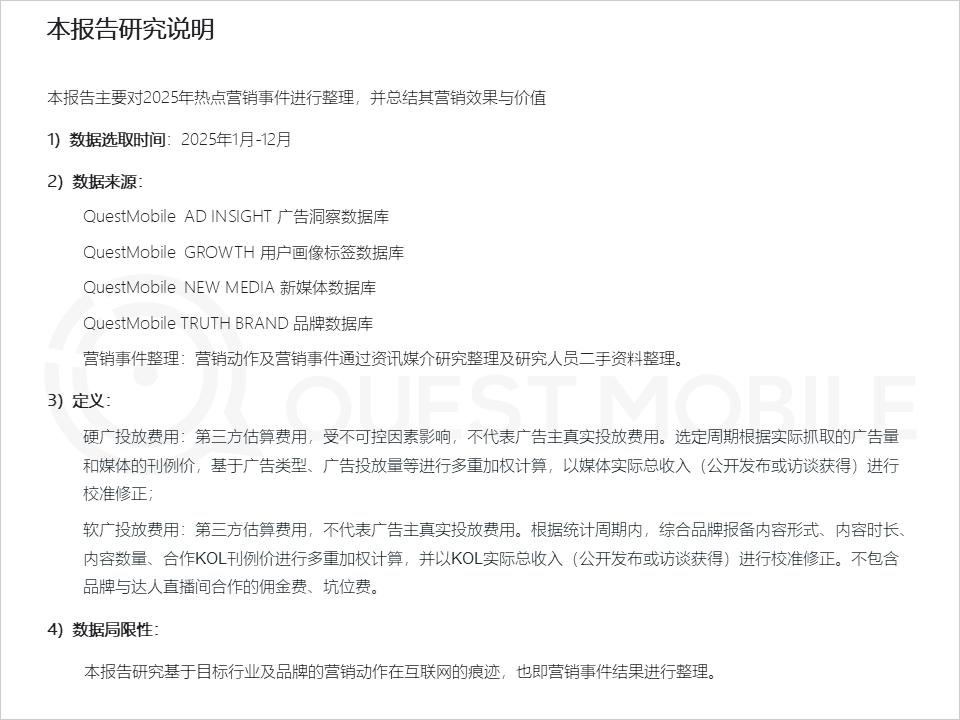
QuestMobile 2025年营销热点事件盘点:“情绪”成为核心生产力,IP营销频出爆点,AI营销革命大幕拉开……
QuestMobile· 2026-01-06 02:05
Core Insights - The article emphasizes the significant changes expected in the AI industry by 2026, driven by increased capital investment, systematic competition among models, and intensified competition in foundational applications [3] Group 1: Marketing Trends in 2025 - 2025 is projected to be a "harvest year" for marketing, with "emotion" becoming a core productivity driver influencing various industries and products [4] - The marketing landscape will see three major peaks: popular IP marketing from New Year's to Spring Festival, new product marketing from Labor Day to 618, and diverse marketing from Mid-Autumn Festival and National Day to Double 11 [4] - Emotional marketing will enhance brand connections by deeply exploring consumer emotional tags, leading to innovative collaborations like "Luckin Coffee X Line Dog" and "Morning Glory Stationery X 'Wang Wang Mountain Little Monster'" [4] Group 2: Industry Opportunities - Traditional industries such as food services and apparel will benefit from emotional marketing, with their respective co-branding marketing shares at 18.5% and 12.1% in 2025 [5] - AI marketing will gain momentum as AI technology matures, supported by government policies like the AI labeling system, making it a "new prominent field" [5] - Virtual idols will dominate content interaction, while intelligent marketing will evolve from single-point to cross-platform strategies, enhancing user engagement [5] Group 3: Brand Marketing Strategies - Brands will focus on diverse marketing strategies in 2025, balancing traditional methods with deeper AI marketing applications [9] - Key marketing nodes will include new product launches and public sentiment management, with content platforms playing a crucial role in brand communication [12][14] - Brands will increasingly align marketing efforts with holiday events, using emotional and AI marketing to convey brand values [19] Group 4: Co-branding and Emotional Marketing - Co-branding will thrive under the consumer logic of "buying for emotions," with brands leveraging deep understanding of consumer psychology and social emotions [24][26] - Brands will focus on aligning IP cultural cores with their value genes, creating fresh experiences that resonate with both IP and brand characteristics [28] - The overlap between mainstream IP users and core brand users will be emphasized to strengthen emotional connections [30] Group 5: AI Marketing Evolution - AI marketing will become a central topic in 2025, driving continuous optimization of marketing models [39] - The rise of AI virtual digital humans will shift from traditional models to AI-native entities, expanding their application across industries [43] - User operations will transition from segmented approaches to generative user management, enhancing marketing content across various scenarios [45] Group 6: Channel Marketing Dynamics - Online channels will see steady growth in traffic, with brands concentrating marketing resources on these channels [58] - Hard advertising will focus on e-commerce and live-streaming channels to shorten conversion paths [60] - The beauty industry will expand its offline channels, shifting marketing highlights from "flagship stores" to diverse concepts like "experience labs" [66]