家国情怀

Search documents
排依克来信(人民家书)
Ren Min Ri Bao Hai Wai Ban· 2026-01-15 22:44
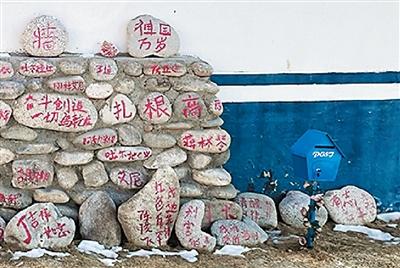
Core Viewpoint - The article highlights the dedication and emotional connection of border patrol officers stationed at the Paekik Border Police Station in Xinjiang, showcasing their commitment to safeguarding the border and their heartfelt letters to the future, which symbolize their unwavering spirit and sense of duty [2][3][5]. Group 1: Overview of the Border Patrol Station - The Paekik Border Police Station, established in 1950, is located at the strategic junction of China, Tajikistan, Afghanistan, and Pakistan, covering an area of 2,500 square kilometers and a border line of 197.4 kilometers [3]. - The station is recognized for its challenging environment, with an average altitude of over 4,600 meters, and was awarded the title of "National Model Police Station" by the Ministry of Public Security in September 2025 [3][4]. Group 2: The Time Capsule Concept - A unique "Time Capsule" at the station serves as a repository for letters written by officers to their future selves, comrades, and the land they protect, symbolizing their promises and dedication [2][4]. - These letters reflect the harsh realities faced by the officers, including extreme weather conditions and the psychological challenges of their duties, creating a vivid portrayal of their experiences [4][5]. Group 3: Personal Reflections from Officers - Officer Liu Zuoyu expresses his struggles with altitude sickness and emphasizes the importance of remembering the reasons for choosing this challenging role, highlighting the sense of responsibility and commitment to national dignity [25][26]. - Officer Jiang Xuhui shares his journey of adapting to the high-altitude environment and the lessons learned from his predecessors, reinforcing the values of dedication and perseverance [19][20]. - Officer Yang Tengfei recounts his initial experiences at the station, emphasizing the camaraderie among officers and their collective determination to protect the border despite the harsh conditions [21][24].

年度弹幕“致敬”:年轻人的温情告白与时代力量
Xin Lang Cai Jing· 2026-01-12 20:05
Core Viewpoint - The term "tribute" has become a significant expression among the younger generation, particularly the post-2000s, reflecting their emotional engagement and appreciation for both extraordinary and ordinary moments in life [1][2]. Group 1: User Engagement and Participation - The term "tribute" was sent 22.82 million times, with 4.59 million users participating, showcasing a vibrant interaction among the youth [1]. - 80% of the users sending "tributes" are from the post-2000 generation, indicating a strong connection to meaningful moments [1]. Group 2: Emotional Significance - The "tribute" phenomenon transcends mere admiration, highlighting a deep respect for creativity and resilience, as seen in various contexts such as honoring veterans and celebrating innovative content [1][2]. - The act of paying tribute serves as a bridge of emotional connection, fostering a sense of community and shared values among individuals [2]. Group 3: Cultural and National Sentiment - The tributes reflect a broader cultural sentiment, acknowledging both national pride and everyday heroism, from military parades to the dedication of ordinary citizens [2]. - This collective expression of respect and recognition contributes to a healing and unifying force within society, emphasizing the importance of both great and small acts of courage and dedication [2].
让家国情怀落地生根
Xin Lang Cai Jing· 2026-01-11 18:13
Core Viewpoint - The article highlights the integration of patriotic education and national unity through various activities centered around the children's play "Three Thousand Orphans Enter Inner Mongolia," aiming to instill a sense of national pride and responsibility among students [1][2]. Group 1: Educational Activities - The First Middle School of Xinghe County organized nearly 1,000 teachers and students to watch the children's play, which depicts the story of over 3,000 orphans from Shanghai in the 1960s being raised by Inner Mongolian herders [1]. - Classes conducted themed essay activities where students expressed their feelings and pledges of patriotism through writing [1]. - The school's art group held a painting and calligraphy exhibition titled "Painting National Unity, Expressing Patriotism," showcasing nearly 100 heartfelt works [1]. Group 2: Community Engagement - The school's Youth League Committee organized a practical activity called "Visiting Local Patriotic Role Models," where students interviewed retired teachers to learn about their dedication and experiences in serving the country [1]. - The school broadcast station regularly aired outstanding essays and stories of the "children of the nation," further promoting patriotic sentiments [1].
两岸脉动|跨越海峡的家书
Xin Lang Cai Jing· 2026-01-11 05:54
Core Viewpoint - The letters exchanged between families across the Taiwan Strait illustrate the deep emotional connections and shared heritage of the people on both sides, emphasizing that they are one family despite the physical separation [1]. Group 1: Family Connections - The letters span over 80 years, connecting generations and reflecting the historical changes from war to reconciliation [1]. - The correspondence highlights the enduring familial bonds and the sentiment that the Taiwan Strait cannot sever the ties of kinship [1]. Group 2: Personal Stories - Chen Wencheng, a teacher from Taiwan, expresses his joy in reconnecting with his ancestral roots in Fujian, showcasing the theme of familial unity [2][3]. - Yan Minggong, a Taiwanese veteran, wrote a poignant letter to his daughter expressing his hope for reunification and the pain of separation after nearly 40 years [5][6]. - Tian Fachun, another veteran, wrote to his family during a time of personal hardship, reflecting on the longing for connection with his loved ones [7][8]. Group 3: Historical Context - Lin Zhengheng, a soldier, wrote to his mother after the victory in the war, expressing pride in the recovery of Taiwan and his personal sacrifices [13][14]. - The letters serve as a testament to the intertwining of personal sacrifices with national history, illustrating how individual stories contribute to the broader narrative of identity and belonging [15].
5封两岸家书,承载着他们用血脉写就的深情
Xin Lang Cai Jing· 2026-01-11 04:50
Core Viewpoint - The letters exchanged between families across the Taiwan Strait illustrate the deep emotional connections and shared history between the people of Taiwan and mainland China, emphasizing the idea that they are one family despite physical separation [1]. Group 1: Family Letters - The letters span over 80 years, from 1945 to 2026, showcasing the evolution of relationships and sentiments between families on both sides of the Taiwan Strait [1]. - The letters serve as a testament to the enduring bonds of kinship, highlighting that regardless of historical conflicts, familial ties remain unbroken [1]. - The narratives within these letters reflect a collective longing for reunion and the importance of heritage, as seen in the experiences of individuals like Chen Wencheng and Yan Minggong [2][4][7]. Group 2: Personal Stories - Chen Wencheng, who moved to Beijing from Taiwan, expresses his desire to reconnect with his roots and family in Taiwan, emphasizing the warmth of familial love despite geographical distance [5][6]. - Yan Minggong's letter reveals the pain of separation from his daughter for nearly 40 years, expressing a hope for reunification that was ultimately unfulfilled due to his passing [7][8]. - The story of Tian Fachun illustrates the emotional weight of a grandfather's wishes for his grandchild, showcasing the deep familial connections that transcend time and space [9][12][14]. Group 3: Historical Context - The letters reflect significant historical events, such as the impact of the Chinese Civil War and the subsequent separation of families, which have shaped the identities and experiences of individuals on both sides of the Strait [1][19]. - Lin Zhengheng's letter from 1945 highlights the sacrifices made during wartime and the intertwining of personal and national narratives, emphasizing the collective memory of struggle and resilience [20][21].
东西问丨薛仁明:面朝“家”的方向,才能“春暖花开”
Zhong Guo Xin Wen Wang· 2026-01-11 01:58
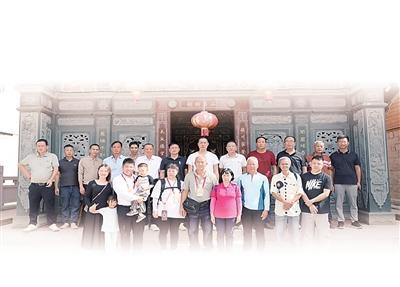
Core Viewpoint - The concept of "home" in Chinese culture is multifaceted, encompassing not only physical shelter but also education, rituals, beliefs, and heritage, which collectively foster a sense of identity and responsibility towards family and nation [3][4]. Group 1: Importance of "Home" in Chinese Culture - "Home" serves as a space that integrates both secular and sacred elements, supporting generations in their quest for identity and continuity [3]. - The significance of "home" is particularly pronounced in today's globalized and fragmented world, where individuals seek connections to their roots through ancestral visits and family traditions [4]. Group 2: Personal Connection to Ancestry - The interviewee, a Taiwanese scholar, shares a personal narrative of returning to his ancestral home in Fujian, highlighting the emotional ties and sense of belonging that such connections foster [6]. - The experience of a second-generation Taiwanese student illustrates the profound impact of reconnecting with family heritage, leading to a deeper understanding of identity and belonging [7]. Group 3: Role of Rituals and Cultural Practices - The concept of "Li" (ritual) and "Yue" (music) in Chinese civilization is foundational to the family structure, promoting order and emotional connections within the family unit [9]. - The integration of "Li" and "Yue" fosters a sense of community and shared responsibility, reinforcing the bond between individual and nation [10]. Group 4: Cultural Identity and National Unity - The notion of "home" is intertwined with national identity, where the emotional connection to family enhances the collective consciousness of the nation, leading to a unique sense of "home and country" [10]. - The interviewee suggests that the revitalization of traditional cultural values can strengthen ties between Taiwan and the mainland, fostering a shared cultural identity among younger generations [12].
跨越海峡的家书(两岸脉动)
Ren Min Ri Bao· 2026-01-11 00:45
Core Viewpoint - The letters illustrate the deep emotional connections between families across the Taiwan Strait, emphasizing that despite physical separation, the bond remains strong and unbroken over generations [1]. Group 1: Family Connections - The letters span over 80 years, connecting generations of families and reflecting their joys and sorrows [1]. - The correspondence highlights the theme of familial ties, showcasing that both sides of the Taiwan Strait are connected as one family [1][2]. - The letters serve as a testament to the enduring love and longing for home, transcending time and distance [1]. Group 2: Personal Stories - Chen Wencheng, a teacher from Taiwan, expresses warmth and connection in his letter to his parents, reflecting on his life in Beijing after 14 years [2][3]. - Yan Minggong, a Taiwanese veteran, writes a poignant letter to his daughter, expressing his hope for family reunification and the pain of separation [5][6]. - Tian Fachun, another veteran, shares his longing for his family and the emotional weight of naming his grandchild in a letter written after 35 years of separation [7][8]. Group 3: Historical Context - The letters reflect the historical context of separation due to political circumstances, with veterans expressing their experiences and hopes for reunification [5][14]. - Lin Zhengheng's letter from 1945 highlights the sacrifices made during wartime and the emotional toll on families, connecting personal sacrifice to national pride [15][16].
“学生视野开阔,整体水平令人惊喜”
Qi Lu Wan Bao· 2026-01-09 09:54
Group 1 - The "Youth Aspiration · National Sentiment" patriotic essay competition has officially launched, with a judging panel composed of experts from the Yantai Writers Association, education departments, and experienced teachers from primary and secondary schools [1] - The competition is divided into two categories: primary school (grades three and above) and junior high school, encouraging students to express their feelings about national changes and cultural heritage through various themes [1][2] - All entries will undergo a "blind review" process to ensure fairness, with evaluation criteria including thematic relevance, depth of thought, authenticity of content, and language expression [1] Group 2 - During the evaluation, judges noted that many students used the competition title directly as their essay topic, lacking unique perspectives, while some essays missed real-life details that could enhance emotional impact [2] - Notable essays included "Three Nine-Year-Olds, One China," which effectively illustrated the growth of three generations, showcasing the country's development [2] - The competition aims to provide a platform for students to showcase their talents while fostering a sense of national sentiment and cultural confidence through writing [2][3]
魂归故土 音传两岸
Xin Lang Cai Jing· 2026-01-07 22:24
Core Viewpoint - The article commemorates the life and contributions of musician Chen Peter, highlighting his role in bridging cultural gaps between Taiwan and mainland China through music and poetry [1][4]. Group 1: Musical Career - Chen Peter, born in 1943 in Chengdu, began his musical journey in Taiwan, where he introduced Western elements into Chinese music, creating iconic songs like "A剪梅" and "迟到" [2][3]. - He is recognized as the "Father of Taiwanese Pop Music," with his works significantly impacting the music scene and elevating the careers of various artists [1][2]. Group 2: Cultural Impact - His music often reflects deep sentiments of nostalgia and patriotism, as seen in songs like "吾爱吾国," which express longing for his homeland [2][3]. - Chen's return to mainland China in 1988 marked a significant moment in cross-strait relations, as he became one of the first Taiwanese musicians to perform in mainland cities, fostering emotional connections through music [2][3]. Group 3: Legacy and Influence - Even in his later years, Chen continued to compose music that resonated with traditional Chinese poetry, blending it with modern styles, exemplified by his performance of "青玉案·元夕" [3][4]. - His passing on June 14, 2025, is seen as a loss not only for the music industry but also for the cultural ties he helped strengthen between Taiwan and mainland China [4].
天安门藏着中国人独有的浪漫
Xin Lang Cai Jing· 2026-01-07 12:05
Core Viewpoint - The article highlights a mural of Tiananmen created by a young artist in a rural village, which resonates deeply with the local community, especially the elderly who have never visited Beijing. This artwork symbolizes a unique romantic sentiment and deep national pride among Chinese people [1]. Group 1 - The mural measures 18 meters in length and 8 meters in height, serving as a significant cultural landmark for the local residents [1]. - The mural has evoked strong emotional responses from the elderly, many of whom have shed tears while viewing it, as it fulfills a lifelong dream of seeing Tiananmen [1]. - The artwork reflects a broader sentiment among Chinese people, where visiting Tiananmen and participating in its rituals are seen as important cultural milestones [1]. Group 2 - The article emphasizes that understanding China requires an understanding of the Chinese people's emotions and connections to their homeland [1]. - The mural serves as a comforting reminder of national identity and pride, encapsulating the essence of love for the country [1]. - The piece illustrates how art can bridge the gap between rural and urban experiences, allowing those who have never visited significant national sites to connect with their cultural heritage [1].