
科技助残

Search documents
100天冲刺!粤港澳三地联动,共绘体育盛会的文明长卷
Hua Xia Shi Bao· 2025-08-03 01:36
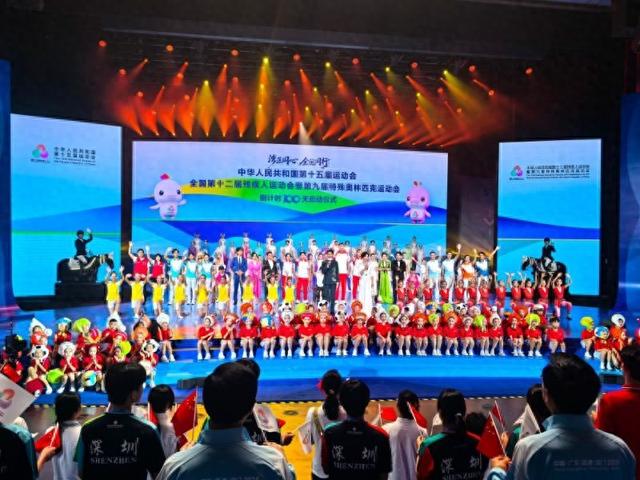
Core Viewpoint - The upcoming National Special Olympics and the 15th National Games, set to begin on December 8, 2023, in the Guangdong-Hong Kong-Macao Greater Bay Area, highlight the region's commitment to inclusivity and the development of sports for people with disabilities, showcasing advancements in accessibility and social integration [2][10][13]. Group 1: Event Preparation and Significance - The event will feature over 9,700 athletes and coaches from 34 delegations, including those from Hong Kong and Macau, marking a significant milestone in promoting sports for individuals with disabilities [2][3]. - The organization of the event reflects the Chinese government's emphasis on the development of disability sports, with President Xi Jinping's support underscoring the importance of inclusivity and equal opportunities [2][10]. Group 2: Accessibility and Infrastructure - The Guangdong region has optimized 36 venues for the event, ensuring all meet national accessibility standards, with specific adaptations for various disabilities [3][4]. - A total of 2,398 accessible seating options and 305 accessible restrooms have been established, along with advanced features like sign language translation systems and braille menus to enhance the experience for attendees with disabilities [4][6]. Group 3: Technological Innovations and Services - The event will showcase cutting-edge assistive technologies, including smart wheelchairs capable of autonomous navigation and brain-controlled devices, highlighting the integration of technology in enhancing the lives of individuals with disabilities [9][10]. - A comprehensive support system for assistive devices has been established, including a three-tier service network to ensure immediate assistance and repairs during the event [7][9]. Group 4: Collaborative Efforts and Regional Integration - The collaboration among Guangdong, Hong Kong, and Macau aims to break down regional barriers, facilitating resource sharing and enhancing the development of disability services and infrastructure [10][12]. - The event serves as a platform for deeper cooperation in disability sports and urban governance, with various activities planned to promote inclusivity across the Greater Bay Area [10][12].

全国残特奥会将于12月8日开幕 粤港澳共谱残疾人事业华章
Shen Zhen Shang Bao· 2025-08-03 00:20
Group 1: Event Overview - The 15th National Games and the National Paralympic Games will commence on December 8, with over 9,700 athletes and coaches from 34 delegations participating [1] - The event aims to showcase the achievements in the development of disability rights and services in China, emphasizing respect and protection for the rights of disabled individuals [1] Group 2: Accessibility Improvements - A total of 36 venues will host the Paralympic Games, with all venues meeting competition standards and enhanced accessibility requirements [2] - The organizing committee has published the first large-scale accessibility construction guide in the country, ensuring all venues meet national accessibility standards [2] - Shenzhen has completed 152 urban quality improvement projects and plans to advance 80 more by 2025, focusing on creating a friendly urban environment for the event [2] Group 3: Competition Organization - Approximately 9,735 disabled athletes and coaches will participate, including 1,323 wheelchair athletes and 416 visually impaired athletes [3] - A grading system will be implemented for 1,600 athletes, with a grading center and 17 grading points established across various locations [3] Group 4: Assistive Device Services - The event will feature a comprehensive assistive device service system, including 19 specialized service vehicles and 84 technical support personnel [4] - A service platform will be launched, providing various assistance options such as navigation for the visually impaired and sign language translation [4] Group 5: Technological Innovations - The event will serve as a platform to showcase advancements in assistive technology, with Guangdong province leading in the rehabilitation industry [5][6] - Guangdong's market share for wheelchairs and walking aids is between 50% and 60%, with a 70% export share of similar products nationwide [6] - Innovative products such as smart wheelchairs and all-terrain wheelchairs will be featured, demonstrating the integration of cutting-edge technology in assistive devices [6]
重大利好!《国务院办公厅关于加强重度残疾人托养照护服务的意见》发布|快讯
Hua Xia Shi Bao· 2025-07-31 17:29
Core Viewpoint - The State Council has issued guidelines to enhance care services for severely disabled individuals, focusing on meeting the diverse needs of this vulnerable group and their families [1][2]. Group 1: Policy Framework - The guidelines emphasize a balanced approach to care services, prioritizing basic needs, accessibility, and sustainable development [1]. - There is a specific focus on providing support for economically disadvantaged severely disabled individuals, with an emphasis on resource coordination and policy alignment [1]. Group 2: Financial Support - The guidelines encourage local governments to utilize lottery public welfare funds to support care services for economically disadvantaged severely disabled individuals [1]. - It is suggested that regions may include severely disabled individuals from families with elderly parents in minimum living security programs to access central financial support for care services [1]. Group 3: Talent Development - The guidelines highlight the importance of strengthening the workforce in care services, including long-term care, rehabilitation, and social work [2]. - There is a call for collaboration between universities and vocational schools to enhance training and research in the field of care services for disabled individuals [2]. - The guidelines advocate for the development of assistive technologies, such as care robots and AI, to improve care services [2].
国务院办公厅:深入推进科技助残,推动照护机器人、人工智能等康复辅助器具产品研发应用
Zheng Quan Shi Bao Wang· 2025-07-31 09:22
Core Viewpoint - The State Council has issued opinions to enhance care services for severely disabled individuals, focusing on improving training, professional standards, and technological integration in the caregiving sector [1] Group 1: Talent Development and Training - The opinions emphasize the need to improve long-term care, rehabilitation services, employment guidance, psychological counseling, and social work by establishing professional talent positions and qualification requirements [1] - Support is provided for universities and vocational schools to develop talent in the caregiving field through collaboration with relevant disciplines such as rehabilitation therapy, nursing, and social work [1] - There is a push for joint training and school-enterprise cooperation to strengthen the workforce in disability care services [1] Group 2: Technological Integration - The initiative promotes the advancement of assistive technologies, including care robots and artificial intelligence, to enhance rehabilitation and caregiving services [1] - The focus is on the research and application of rehabilitation assistive devices to improve the quality of care for disabled individuals [1] Group 3: Professional Development and Incentives - The opinions call for enhanced vocational skills training and evaluation to facilitate career development for caregiving personnel [1] - Encouragement is given for care service institutions to implement incentive-based salary distribution systems that reflect job responsibilities, performance, and contributions [1]

【晶采观察·解码“十四五”】科技助残 “点亮”他们的新生活
Yang Guang Wang· 2025-07-24 14:30
Core Insights - The article highlights the significant role of technology in improving the quality of life for people with disabilities in China, emphasizing innovations such as electronic guide dogs and brain-computer interfaces [2][3] - The increasing societal acceptance and inclusivity for people with disabilities is driving the development of assistive technologies, enabling greater participation in social activities like tourism and performances [2][3] Group 1: Technological Innovations - Assistive technologies like smart phones and voice conversion are enabling visually impaired individuals to access online content, enhancing their ability to read and learn [2][3] - Brain-computer interface technology is being widely applied in medical rehabilitation, allowing individuals with disabilities to perform activities such as playing the piano and calligraphy [2][3] Group 2: Policy and Development Initiatives - The China Disabled Persons' Federation is actively involved in key technology research and development plans, focusing on health and aging, as well as the needs of various disability groups [3] - During the "14th Five-Year Plan" period, efforts have been made to incorporate the needs of disabled individuals into national key projects, promoting the application of assistive devices across multiple regions [3] Group 3: Future Directions - The "15th Five-Year Plan" aims to further enhance the understanding of disabled individuals' needs and promote the application of innovative technologies to support their development [3]

“十四五”时期我国科技助残成果加速涌现
Ke Ji Ri Bao· 2025-07-23 00:55
Group 1 - The core viewpoint of the article emphasizes the rapid emergence of technological achievements in assisting people with disabilities during the "14th Five-Year Plan" period in China [1][2] - The Chinese government is integrating assistive technology innovation for people with disabilities into the overall strategy for building a strong technological nation, as highlighted in the 2024 Government Work Report [1] - The China Disabled Persons' Federation (CDPF) is enhancing collaboration with universities and high-tech companies to promote research and development, result transformation, and talent cultivation in assistive technology [1] Group 2 - The CDPF is actively participating in key technological projects addressing health and aging, ensuring the needs of various disabled groups are included in national priorities [2] - The organization is promoting the application of project results, with successful implementations in over 40 regions across more than 10 provinces [2] - Moving forward, the CDPF plans to focus on understanding the needs of people with disabilities and advancing the application of innovative technologies, particularly in artificial intelligence [2]
《“十四五”残疾人保障和发展规划》11项主要指标将如期实现 我国残疾人保障水平和发展能力进一步提升(权威发布·高质量完成“十四五”规划)
Ren Min Ri Bao· 2025-07-22 21:50
7月22日,国务院新闻办公室举行"高质量完成'十四五'规划"系列主题新闻发布会,介绍"十四五"时期残 疾人事业发展情况。 "经过五年的努力,我国残疾人保障水平和发展能力进一步提升,残疾人事业发展朝着高质量发展要求 和现代化发展目标的方向迈出了坚实步伐。"中国残联主席程凯说。 残疾人基本生活保障的网织得更密、底兜得更牢 程凯介绍,《"十四五"残疾人保障和发展规划》明确的11项主要指标将如期实现。 收入和就业方面,残疾人家庭年纯收入持续增长,2020—2023年年均增速超过了6.9%,与国内生产总 值增长基本同步;超217万人次残疾人参加职业技能培训。"十四五"期间,全国已就业残疾人达901万 人,城乡新增残疾人就业累计达到231万人。 孤独症儿童教育不断加强。国家孤独症儿童特殊教育资源中心和61个特殊教育改革试验区先后设立;实 施孤独症儿童关爱促进行动,全国已建立12个专门的孤独症儿童学校。 面对残疾人的无障碍需求,一系列举措推出。据介绍,目前有3000多家网站和手机APP完成了无障碍改 造,语音识别、文本转换等功能上线;相关企业公益无障碍导航已覆盖69座城市,智能化公交出行服务 系统逐步推广;各地残联建立无障 ...
“十四五”时期我国科技助残工作取得显著发展
news flash· 2025-07-22 03:03
Group 1 - The core viewpoint of the articles highlights significant advancements in assistive technology for people with disabilities during the "14th Five-Year Plan" period, supported by government initiatives and societal engagement [1][2] Group 2 - The top-level design for assistive technology development is being refined, with the 2024 government work report emphasizing the importance of health, elderly care, and assistive technology research and application [1] - The China Disabled Persons' Federation (CDPF) has strengthened collaborations with universities and high-tech enterprises, signing strategic cooperation agreements with institutions like Peking University and Tsinghua University to enhance research and talent development in assistive technology [1] Group 3 - The CDPF has actively participated in key national research programs addressing health and aging, ensuring the needs of various disability groups are included in national projects [2] - The implementation of assistive technology projects has been promoted, with successful applications in over 40 regions across more than 10 provinces [2] Group 4 - A strong social atmosphere for assistive technology has been fostered, with events like the 34th National Assistive Day and the 17th China International Welfare Expo showcasing technological innovations [2] - Future plans include further collaboration among relevant departments to enhance assistive technology research and create a supportive environment for the development of services for people with disabilities [2]
“十五五”时期将把提高残疾人民生保障水平作为首要任务
news flash· 2025-07-22 02:43
Group 1 - The "14th Five-Year Plan" period is crucial for achieving modernization, with a focus on improving the living standards of disabled individuals, particularly those in difficult and severe conditions [1] - The government aims to enhance the quality of public services for disabled individuals, addressing the current issues of insufficient quantity and low quality of services [1] - There will be an emphasis on promoting equal rights for disabled individuals through the revision of relevant laws and enhancing judicial protection [2] Group 2 - The "15th Five-Year Plan" will prioritize the application of technology to assist disabled individuals, fostering innovation and collaboration across various sectors [2] - Efforts will be made to enrich the spiritual and cultural lives of disabled individuals by promoting community-based cultural and sports activities [2]
以钢铁感知温度、以算法丈量臂膀,链博会之光重塑生命新可能
Hua Xia Shi Bao· 2025-07-19 16:41
Core Insights - The third China International Supply Chain Promotion Expo (CISCE) emphasizes the theme "Linking the World, Creating the Future," showcasing over 100 domestic and international companies [1] - The expo highlights the integration of technology and humanitarian efforts, particularly in assistive technology for the 85 million disabled individuals in China [1][4] Industry Developments - The assistive technology industry is experiencing a compound annual growth rate of 25%, driven by innovations such as humanoid robots and AI rehabilitation systems [5] - The Ministry of Industry and Information Technology predicts that the rehabilitation robot market in China will exceed 20 billion yuan by 2025, creating a trillion-yuan industry chain [5] Company Innovations - Zhejiang Qiangnao Technology's second-generation bionic hand achieves a 92% accuracy rate in interpreting brain signals, enabling users to perform intricate tasks [2] - The company employs 15% disabled individuals in its R&D team, promoting a collaborative ecosystem in assistive technology development [2] - The intelligent rehabilitation equipment is transforming traditional rehabilitation practices, allowing for high-intensity, standardized training with real-time data [5][6] Technological Advancements - Companies like Nvidia are developing AI-driven robots capable of performing complex tasks, such as guiding visually impaired individuals [3] - The integration of AI and machine learning in assistive devices is expected to revolutionize rehabilitation and healthcare services [5][6] Policy Support - The Chinese government is prioritizing the development of assistive technology, as indicated by the joint release of guidelines to enhance R&D efforts [4] - Several provinces have included rehabilitation robots in medical insurance and government procurement lists, further supporting industry growth [5]