智能轮椅

Search documents
Cheetah Mobile(CMCM) - 2025 Q4 - Earnings Call Transcript
2026-03-24 12:02
Financial Data and Key Metrics Changes - In 2025, total revenue grew approximately 48% year-over-year to CNY 1.150 billion, with a non-GAAP operating profit of CNY 14 million, a significant improvement from a non-GAAP operating loss of CNY 232 million in 2024 [12][13] - The company recorded a GAAP operating loss of CNY 179 million for the year, an improvement from a loss of CNY 437 million in 2024 [12] - Cash and cash equivalents at year-end were $215 million [13] Business Line Data and Key Metrics Changes - Internet business revenue increased 19% year-over-year to CNY 615 million, with adjusted operating profit of approximately CNY 115 million [13][14] - AI and other segments saw revenue growth of 85% year-over-year to CNY 535 million, accounting for 46.5% of total revenue [14][15] - Robotics revenue grew 31% year-over-year, with Q4 robotics revenue reaching about CNY 60 million, up 94% year-over-year [3][15] Market Data and Key Metrics Changes - The internet business generated approximately CNY 460,000 in adjusted operating profit per working day, providing stable cash flow for investments [14] - The robotics segment accounted for 27% of the AI and other segments' revenue and 13% of total revenue in 2025 [15] - The company is focusing on overseas markets for its robotic arm business, which is expected to maintain steady contributions [15] Company Strategy and Development Direction - The company aims to combine digital coworkers through AI agents and physical coworkers through service robots, supported by operating cash flow and disciplined financial management [10] - A strategic focus on core strengths in voice robotics and AI integration is expected to enhance product experience and drive growth [3][9] - The company is positioning its EasyClaw product as a technical framework that can generate a multi-product ecosystem [51] Management's Comments on Operating Environment and Future Outlook - Management expressed confidence in maintaining profitability in 2026, emphasizing disciplined growth and operational efficiency [66][70] - The company is focused on leveraging existing profits and cash flow to support new business development without large-scale proactive investments [70] - Management highlighted the importance of user experience and the need to adapt to changing market demands in the AI and robotics sectors [22][30] Other Important Information - The company has entered into framework agreements with established mobility brands for its smart wheelchair product, expected to begin shipments in Q2 2026 [6][10] - The smart wheelchair market is projected to grow significantly, with the company aiming to capture a share of this expanding market [61] Q&A Session All Questions and Answers Question: What core workflows has the company accumulated in promoting AI agents? - Management discussed the unique features of their AI agents and the importance of targeting user demands to develop uncommon skills, emphasizing their differentiation strategy in the competitive landscape [21][22] Question: What is management's view on the sustainable economic value in the industry? - Management believes that economic value will be concentrated across various layers, including public cloud platforms and user-centric applications, with a focus on 2B user scenarios [26][29] Question: Can management share metrics related to EasyCloud products? - Management highlighted that usage volume is a core measurement indicator for agent products, noting increased token usage since the Spring Festival [36][37] Question: What are the initial monetization methods for EasyCloud? - Management indicated that EasyCloud's revenue model is based on user calls and point consumption, emphasizing a natural commercialization approach without subsidies [43][45] Question: How does the company view synergies in its global expansion? - Management stated that a breakthrough in a single product is essential for building an ecosystem, with EasyClaw positioned as a key product to generate multi-product synergies [49][51] Question: Is the company confident in maintaining profitability in 2026? - Management confirmed that maintaining a reasonable profit pace while advancing business development is a core internal goal, with a focus on disciplined investment [66][70] Question: How will the company further promote the value of its internet business? - Management emphasized the importance of continuous development and transparency in disclosures to guide market understanding of the company's long-term value [76][77]

Cheetah Mobile(CMCM) - 2025 Q4 - Earnings Call Transcript
2026-03-24 12:02
Financial Data and Key Metrics Changes - In 2025, total revenue grew approximately 48% year-over-year to RMB 1,150 million, with a non-GAAP operating profit of RMB 14 million, a significant improvement from a non-GAAP operating loss of RMB 232 million in 2024 [11][12] - The company recorded a GAAP operating loss of RMB 179 million for the year, an improvement from a loss of RMB 437 million in 2024 [11] - Cash and cash equivalents at year-end were $215 million [12] Business Line Data and Key Metrics Changes - Internet business revenue increased 19% year-over-year to RMB 615 million, contributing 65% of segment revenue, with adjusted operating profit of approximately RMB 115 million [12][13] - AI and other segments saw revenue increase by 85% year-over-year to RMB 535 million, accounting for 46.5% of total revenue [12][14] - Robotics revenue grew approximately 31% for the full year, with fourth-quarter revenue reaching about RMB 60 million, up 94% year-over-year [3][14] Market Data and Key Metrics Changes - The robotics business accounted for 27% of the AI and other segments' revenue and 13% of total revenue in 2025 [14] - Voice robots in China achieved 100% year-over-year growth for three consecutive quarters, contributing high single digits to fourth-quarter total revenues [3] Company Strategy and Development Direction - The company aims to combine digital coworkers through AI agents and physical coworkers through service robots, supported by stable operating cash flow and disciplined financial management [9] - The focus is on executing with discipline and allowing results to compound over time, with a clear strategy to enhance user experience through AI and robotics [6][9] - The introduction of EasyClaw, an AI coworker platform, is expected to change how users interact with software and machines, emphasizing task-oriented AI agents [7][8] Management Comments on Operating Environment and Future Outlook - Management expressed confidence in maintaining structural improvements and profitability in 2026, with a focus on disciplined growth and operational efficiency [9][10] - The company does not provide specific financial guidance for 2026 but anticipates continued growth in the robotics business and enhanced engagement from AI-enabled products [9][10] - Management highlighted the importance of user experience and the need for practical tools that help users complete real tasks, rather than competing solely in model development [6][8] Other Important Information - The company has entered into framework agreements with established mobility brands for the smart wheelchair project, with initial shipments expected in Q2 2026 [5] - The smart wheelchair market is projected to grow significantly, with the company aiming to leverage its technological expertise to capture this opportunity [5][63] Q&A Session Summary Question: What core workflows has the company accumulated in promoting AI agents? - Management indicated that they have developed unique features in AI agents and emphasized the importance of targeting vertical user scenarios for differentiation [20][21] Question: What is the sustainable economic value concentration in the industry? - Management believes that economic value will be distributed across various layers, including public cloud platforms and user-facing applications, with a focus on user experience [25][26] Question: How will the company promote the value of the internet business? - Management stated that the internet business will continue to serve as a stable source of profits, with ongoing improvements in revenue visibility and cost structure [78][79] Question: Can the company maintain profitability in 2026? - Management expressed confidence in maintaining profitability while balancing investment in new business areas, emphasizing a disciplined approach to growth [70][72] Question: What is the growth source for the robotics business in 2026? - Management highlighted voice robots and the new smart wheelchair as key growth drivers, with expectations for continued demand in both domestic and overseas markets [58][59]
涉及数万亿市场,养老产业再迎顶层政策支持
Xuan Gu Bao· 2026-02-24 23:43
Group 1 - The Chinese government is focusing on the development of the silver economy and elderly care services, with a significant increase in the elderly population projected by 2025, reaching 320 million, which will account for 23% of the total population, marking a shift to a moderately aging society [1] - The silver economy is expected to reach a scale of 30 trillion yuan by 2035, driven by the changing demographic structure and increasing demand [1] - Key investment opportunities in the elderly care sector include operators of elderly care services benefiting from brand support and stable operations, as well as companies in rehabilitation equipment and smart elderly care technologies [1] Group 2 - Companies like Kanni Electromechanical have already achieved mass sales of products such as smart wheelchairs and elderly mobility vehicles, indicating a growing market presence in the silver economy [2] - Angli Education has launched a brand called Happy Community, targeting individuals over 40 with interest courses and cultural tourism services, positioning itself in the "education + companionship" model [2]


智能轮椅四十年:从移动工具到智能伙伴,一场为了自由的漫长奔赴(1986-2026)
Tai Mei Ti A P P· 2026-02-24 01:39
Core Insights - The development of smart wheelchairs has evolved over 40 years, transitioning from laboratory prototypes to practical applications aimed at enhancing mobility for individuals with disabilities [1][2][3] Group 1: Historical Development - From 1986 to 2005, the focus was on proving the feasibility of robotic technology in wheelchairs, with early prototypes demonstrating basic autonomous movement but lacking effective obstacle avoidance [2][3] - The period from 2006 to 2015 marked a turning point as advancements in computing power and sensor technology allowed for the integration of smart modules into traditional electric wheelchairs, enhancing their functionality without completely reinventing the product [4][5][6] - Between 2016 and 2022, the introduction of AI and deep learning enabled wheelchairs to better understand their environment, significantly improving navigation and obstacle avoidance capabilities [8][9][10] Group 2: Technological Advancements - The integration of deep learning and advanced sensors allowed smart wheelchairs to identify and differentiate between various objects and obstacles, enhancing user safety and experience [8][9] - The emergence of edge AI technology has improved the responsiveness and energy efficiency of smart wheelchairs, addressing previous concerns about power consumption and operational reliability [13][15] - Innovations such as brain-computer interfaces (BCI) are being explored, potentially allowing users to control wheelchairs through thought alone, which could revolutionize mobility for individuals with severe disabilities [14][15][24] Group 3: Market Challenges - Despite technological advancements, smart wheelchairs remain a niche market due to high costs, complex user interfaces, and reliability issues that deter widespread adoption [21][22][23] - The market is fragmented, with traditional wheelchair manufacturers, tech startups, and large corporations each facing unique challenges in innovation, production, and user engagement [21][22] - User feedback highlights a need for improved reliability, ease of use, and affordability, which are critical for increasing market penetration and user satisfaction [22][23] Group 4: Future Trends - The next five years are expected to see significant trends such as the introduction of solid-state batteries, which will alleviate concerns about battery life and charging times [23][24] - AI capabilities are anticipated to evolve, allowing for more natural interactions and personalized assistance, making smart wheelchairs more intuitive and user-friendly [24][25] - A shift towards subscription-based models may lower the financial barriers for users, making advanced smart wheelchair technology more accessible to a broader audience [25][26]
康尼机电:公司智能健康业务尚处于产业孵化阶段,智能轮椅、老年代步车等产品已实现批量销售
Zheng Quan Ri Bao Wang· 2026-01-27 13:12
Core Viewpoint - The company is in the incubation stage of its smart health business, with products like smart wheelchairs and elderly mobility vehicles already achieving bulk sales [1] Group 1: Product Development - Smart wheelchairs and elderly mobility vehicles have achieved bulk sales [1] - Transfer machines have been used in relevant hospitals and rehabilitation institutions, achieving small batch sales [1] - Smart rehabilitation aids are currently being trialed in relevant medical institutions [1] Group 2: Market Strategy - The company adopts a dual strategy of "self-market development and external channel cooperation" [1] - In the domestic market, the company is advancing negotiations with both online and offline channel partners [1] - For the overseas market, sales are primarily conducted through foreign agents [1]
【西安】印发科技助残工作实施方案
Shan Xi Ri Bao· 2026-01-21 00:27
Core Viewpoint - Xi'an aims to develop a comprehensive technology-assisted disability support ecosystem through the implementation of the "Implementation Plan for Promoting Technology Assistance for the Disabled" focusing on research, application, and industry development in assistive technology [1][2] Group 1: Technology Development - The city will enhance collaboration among technology, civil affairs, and disability organizations to accurately identify the needs for assistive technology [1] - Key technological advancements will focus on rehabilitation robots, nursing robots, exoskeleton robots, and brain-machine interfaces [1] - Support will be provided for the design and development of smart wheelchairs, rehabilitation aids, and bionic prosthetics to accelerate product research and iteration [1] Group 2: Application and Innovation - Xi'an will promote the application of assistive technology by establishing incubators in development zones and supporting enterprises and academic institutions in creating innovation platforms [2] - Innovative assistive products that meet certain criteria will be prioritized for inclusion in government support programs [2] Group 3: Industry Ecosystem - The city plans to foster collaboration between research institutions and technology companies to expedite the application of assistive technology results [2] - Specialized parks will be developed to encourage innovation among assistive technology enterprises, and leading companies will be supported in forming innovation alliances [2] - A financing channel for assistive technology enterprises and service organizations will be established, and the industry will be included in government industrial guidance funds [2] Group 4: Future Goals - Over the next 3 to 5 years, the plan aims to achieve significant advancements in the development of exoskeleton robots, orthotic devices, brain-machine interfaces, and new biomaterials [2] - By 2030, the goal is to effectively integrate technological innovation with disability services, significantly enhancing the level of intelligent services for the disabled [2]
国家医保局:长护险制度将从试点转向全面建制
Zhong Guo Qing Nian Bao· 2025-12-29 00:10
Group 1 - The long-term care insurance (LTCI) system has covered nearly 300 million people and benefited over 3.3 million disabled individuals, with total fund expenditures exceeding 100 billion yuan [1] - The LTCI system is recognized as a significant measure to address population aging and will transition from pilot programs to comprehensive establishment during the 14th Five-Year Plan, focusing initially on severely disabled individuals [1] - The National Healthcare Security Administration aims to adjust reimbursement ratios to favor home and community services, optimizing existing resources in grassroots healthcare institutions [1] Group 2 - The transition to a comprehensive LTCI system is expected to drive the development of the smart care equipment industry, boosting market confidence for companies in this sector [2]
系统化支撑为残障人士搭建融入社会桥梁 科技加持让残障人士“智”享美好生活
Yang Shi Wang· 2025-12-09 10:34
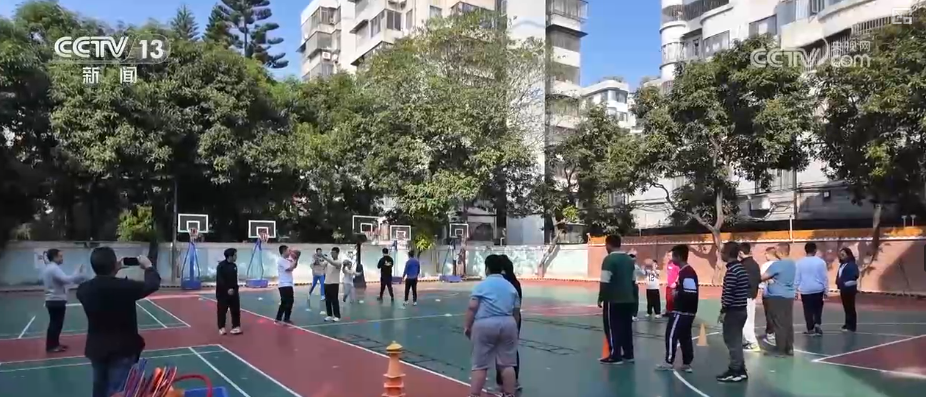
Group 1: Rehabilitation and Support Systems - Guangzhou is establishing a comprehensive support system for disabled individuals, including rehabilitation institutions and a service system that serves over 649,000 people annually [1][5]. - The Guangzhou Heart Friends Service Association has expanded its sports rehabilitation training from once a week to five times a week, helping disabled individuals improve their physical fitness and social integration [4]. - The Guangdong Provincial Rehabilitation Center provides tailored teaching and rehabilitation training for different types of disabled children, focusing on enhancing their life adaptation skills [5]. Group 2: Employment and Social Integration - After undergoing social adaptation training, individuals like Yongxin are finding employment opportunities, contributing to their income and social integration [3]. - The integration of sports and rehabilitation has become a common pathway for disabled individuals to build social and physical foundations for employment [3][4]. Group 3: Accessibility and Urban Development - Guangzhou has been actively promoting an all-encompassing barrier-free environment, with facilities like the Tianhe Sports Center receiving the highest level of accessibility certification [7][9]. - The city’s efforts in creating a barrier-free environment reflect its commitment to enhancing the quality of life for disabled individuals [7]. Group 4: Rehabilitation Aids Industry - The rehabilitation aids industry is rapidly developing, with Guangdong's wheelchair and walking aid products holding a domestic market share of 50% to 60% and accounting for 70% of exports [17]. - Innovations such as brain-controlled wheelchairs and all-terrain wheelchairs are emerging, showcasing the shift towards intelligent and personalized mobility solutions [17][18]. - The perception of wheelchairs is evolving, with recognition that they are not only for disabled individuals but also for the elderly and able-bodied people, facilitating the growth of the rehabilitation aids industry [17].

前瞻拿下地平线、率先出手宇树科技!祥峰投资VC版图曝光
Zheng Quan Shi Bao Wang· 2025-12-04 12:33
Core Insights - Yushu Technology has gained global attention in 2025 for its advanced humanoid robots, marking a significant event in the tech industry. The company was initially questioned for its potential but received early investment from Xiangfeng Investment during its Pre-A round [1] - Xiangfeng Investment, a member of Singapore's Temasek Group, has strategically invested in various hard-tech sectors in China, including artificial intelligence, biotechnology, and smart hardware, focusing on long-term value in hard technology [1][2] Investment Strategy - Xiangfeng Investment has been active in China since 2009, initially focusing on semiconductor investments, which have resulted in the cultivation of 10 unicorn-level companies in the sector [2][3] - The firm has recently increased its focus on robotics, with Yushu Technology being its first investment in this area. The decision was based on the belief that China would develop similar high-tech companies as seen with Boston Dynamics [3] Market Trends - The investment logic of Xiangfeng Investment emphasizes long-term technological innovation over short-term trends, believing that true value lies in core technology rather than merely following market fads [9] - The current environment for exits in the Chinese capital market is improving, with more active IPOs and mergers, which is crucial for attracting foreign investment [7][8] Future Outlook - The firm believes that the potential of AI and robotics is still underestimated, and the market is entering a new phase where AI will create significant value beyond current applications [10][12] - Xiangfeng Investment aims to continue supporting innovative companies that possess technological barriers and real application value, focusing on the long-term vision of technological advancement [12]
银发经济活力涌动 “科技+服务”催生多样“智”享养老消费新场景
Yang Shi Wang· 2025-12-01 03:47
Core Insights - The recent implementation plan aims to enhance the adaptability of supply and demand in consumer goods, targeting the formation of three trillion-level consumption sectors and ten hundred-billion-level consumption hotspots by 2027, with the elderly products market being one of the trillion-level sectors [1] - The elderly products market in China has grown from 2.6 trillion yuan in 2014 to 5.4 trillion yuan in 2024, reflecting a compound annual growth rate of 7.3%, indicating a shift in consumption demand from basic needs to quality upgrades among the elderly [1] Group 1: Technological Innovations for the Elderly - The introduction of exoskeleton robots in parks allows elderly individuals to save approximately 30% of their physical energy while hiking, with over 30 units deployed for rental [3] - New AI products, such as intelligent wheelchairs and smart bathing machines, are being developed to meet the specific needs of the elderly, enhancing their quality of life and convenience [4][8] - The acceptance of technology among the elderly is rising, with 68.2% of individuals aged 60-75 using smart devices, indicating a transition from "aging with care" to "aging with enjoyment" [8] Group 2: Elderly Tourism Trends - The elderly tourism market has evolved from traditional sightseeing to a more personalized and quality-focused experience, with over 280 million elderly tourists expected in 2024 [8] - Customized travel products are increasingly being offered to meet the specific preferences of elderly travelers, with a 42% year-on-year growth in cross-province travel orders for the 55-70 age group [16] - Train services for elderly tourists are implementing personalized management and catering to dietary needs, enhancing the overall travel experience [14][16] Group 3: High-Quality Elderly Care Services - High-quality elderly care services are becoming a core support for the silver economy, driven by policy guidance and market demand, focusing on integrated medical and elderly care [17] - The integration of medical insurance across regions is facilitating easier access to healthcare for elderly individuals, with significant reductions in out-of-pocket expenses [20] - The development of elderly care centers is supported by government funding, with a notable increase in the number of facilities and beds available, promoting a higher quality of life for the elderly [24]