Autonomous driving

Search documents
Can Lucid, Nuro and Uber Hit a 2026 Robotaxi Launch Target?
ZACKS· 2026-01-08 14:11
Core Insights - Lucid Group (LCID) is forming a partnership with Nuro and Uber Technologies to develop a premium autonomous ride service, with a focus on disciplined execution and policy clearance as pilots progress through 2026 [1] Group 1: Partnership and Product Development - The collaboration aims to leverage Lucid's electric vehicle engineering, Nuro's automation expertise, and Uber's marketplace scale to create a premium robotaxi service [3][5] - At CES 2026, a production-intent global robotaxi was showcased, featuring a luxury interior, seating for up to six, and advanced NVIDIA-powered sensors for autonomy [2][10] Group 2: Testing and Launch Timeline - Autonomous testing commenced in December in the San Francisco Bay Area, led by Nuro, with a targeted commercial launch planned for late 2026 [4][10] - The partnership is positioned as both premium and scalable, with the Gravity platform's fast-charging capabilities complementing the service design [5] Group 3: Strategic Development and Funding - Lucid's autonomy strategy includes co-developing Level 4 capabilities with NVIDIA and plans for significant driver-assist upgrades by late 2026 [6] - The company has approximately $5.5 billion in liquidity, supported by a $2 billion loan from the Public Investment Fund and a $300 million investment from Uber, ensuring funding for pilots and platform upgrades through 2027 [9][11] Group 4: Execution Challenges - The commercialization timeline is influenced by safety validation, local licensing, and fleet readiness, which could affect market timing and revenue realization [7][8] - The company is scaling manufacturing and refining costs, with the Gravity platform becoming a larger share of production, setting a foundation for fleet builds once policy hurdles are cleared [8]


Automakers Replace Drivers With Software at CES
PYMNTS.com· 2026-01-07 22:16
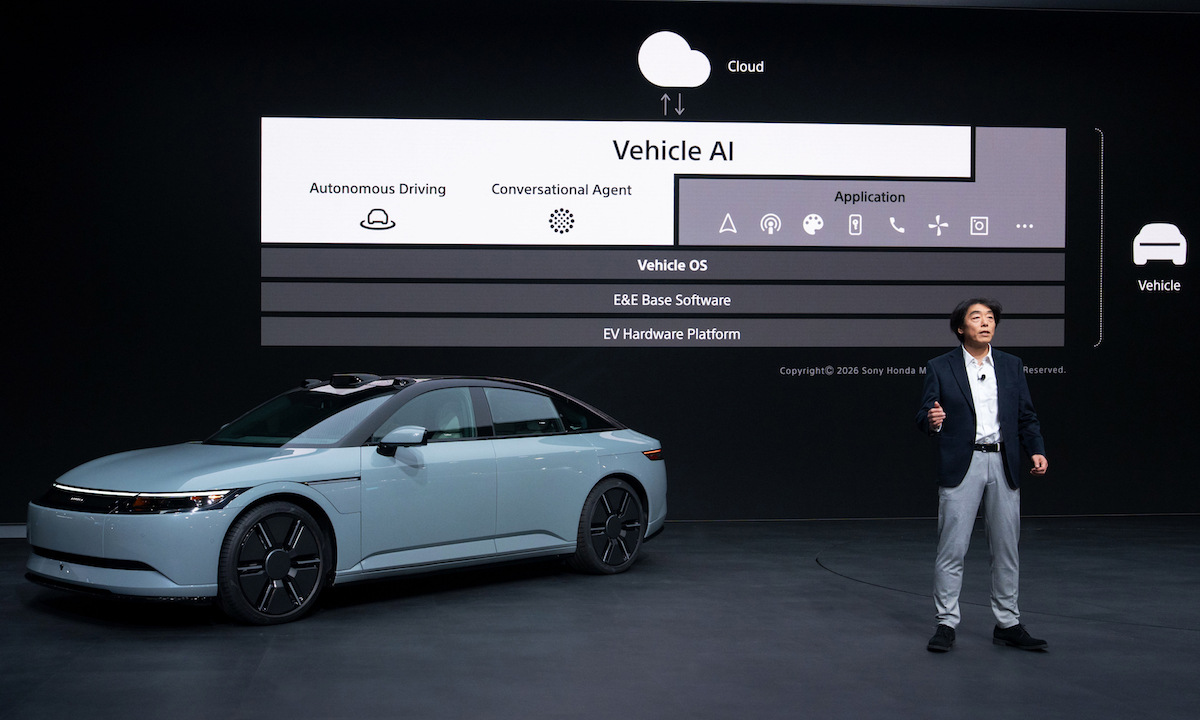
Core Insights - The automotive industry is shifting focus from driver-assist features to software that manages vehicle control, anticipating a future where humans may not always drive [1][5]. Group 1: Software and Control Systems - Nvidia introduced Alpamayo, a system designed to handle ambiguous driving situations by evaluating context and making decisions autonomously, moving beyond traditional driver-assistance systems [3][4]. - Alpamayo will be implemented in production vehicles, with Mercedes-Benz as an early adopter, indicating a shift towards software that resolves edge cases independently [5]. - Mercedes-Benz showcased its MBUX platform, which integrates navigation, driver assistance, and vehicle controls into a single system, reducing the need for manual driver input [6][7]. Group 2: Voice Interaction and User Experience - BMW presented its iX3 with an expanded conversational interface integrated with Amazon Alexa+, allowing drivers to use natural language commands for various functions [8][9]. - BMW's approach emphasizes voice interaction as the primary control method, reflecting a design that accommodates fluctuating driver attention [9]. Group 3: New Vehicle Designs - Sony Honda Mobility unveiled a new electric SUV prototype, the Afeela 1, which features a full-width digital display and is designed as a mobility and entertainment space [11][12]. - The Afeela 1 is expected to have a range of approximately 300 miles and aims to create an environment where occupants interact with screens rather than actively driving [12][13]. - Sony Honda's design integrates the assumption of reduced driver engagement directly into the vehicle's architecture, contrasting with other companies that layer software onto existing designs [14].


UBER Stock Surges 6% After Nvidia's Alpamayo Reveal: Gary Black Says It Eases Obsolescence Fears As Tesla, Waymo Robotaxis Loom - Uber Technologies (NYSE:UBER)
Benzinga· 2026-01-07 07:05
Core Viewpoint - The announcement of Nvidia's Alpamayo AI platform is seen as a significant development that mitigates risks for Uber Technologies Inc., leading to a nearly 6% surge in its shares [1][2]. Group 1: Nvidia's Alpamayo AI Platform - Nvidia introduced the Alpamayo family of open-source Vision Language Action (VLA) models, which is compared to a "ChatGPT moment" for physical AI, promising human-like reasoning in vehicles [2]. - The platform aims to democratize autonomy by allowing traditional automakers to implement self-driving capabilities without needing proprietary ride-hailing networks [3]. Group 2: Impact on Uber's Business Model - The fear of "walled gardens" from competitors like Tesla and Waymo has been a concern for Uber, but the Alpamayo platform neutralizes this threat by providing a scalable solution for all automakers [4][5]. - Uber's asset-light model is extended as Nvidia's technology enables the aggregation of self-driving cars from various brands, enhancing Uber's position in the market [5]. Group 3: Cost Reduction and Market Dynamics - Black estimates that the removal of drivers could potentially reduce Uber ride costs by 50% compared to traditional chauffeured trips [6]. - The unveiling of the platform supports the argument that the market for unsupervised autonomy will not be dominated by a single player like Tesla, as it allows for customization of autonomy levels by OEMs [7]. Group 4: Market Performance - Over the last six months, Uber's shares have declined by 11.52%, but they have increased by 29.31% over the past year, with a recent share price of $85.54 [9].
Mobileye buys Shashua’s Mentee Robotics for $900m
En.Globes.Co.Il· 2026-01-07 04:12
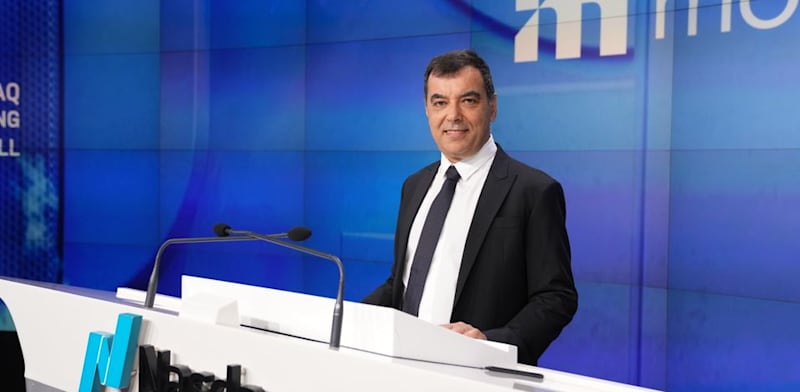
Acquisition Details - Mobileye Global Inc is acquiring Mentee Robotics for $900 million, which includes $612 million in cash and the remainder in Mobileye shares [2] - Mentee Robotics has raised over $40 million and was valued at $162 million in its latest financing round in March 2025 [2] - The acquisition has been approved by Intel, Mobileye's controlling shareholder, and was recommended by the Strategic Transactions Committee of independent directors [3][5] Financial Implications - Prof. Amnon Shashua will receive $341 million from the deal, while co-founder Prof. Shai Shalev-Shwartz will receive $118 million, both split between cash and shares [4] - Mobileye will maintain over $1 billion in cash after the transaction, despite a slight expected increase in operating expenses in 2026 by a low single-digit percentage [6] Strategic Importance - The acquisition positions Mobileye to lead in both autonomous driving and humanoid robotics, aligning with industry trends that emphasize the integration of physical AI models [9][10] - Mentee will operate as an independent unit within Mobileye, leveraging Mobileye's infrastructure to enhance software and AI hardware capabilities [6] Market Context - The deal is noted as the largest merger between an automotive company and a humanoid robotics firm, surpassing Hyundai's acquisition of Boston Dynamics in 2021 for $880 million [12] - The humanoid robotics market is gaining traction, with companies like Figure AI and Neura Robotics achieving high valuations, indicating a growing investor interest in this sector [11]

8 Best American Stocks to Buy and Hold in 2026
Insider Monkey· 2026-01-06 14:12
Group 1: AI and Technology Sector - AI stocks are expected to perform strongly in 2026, with companies like Micron and Nvidia leading the way due to increased demand for memory and storage solutions [1][2] - The demand for higher-bandwidth memory in data centers is anticipated to drive spending and further increase demand for memory components [2] Group 2: Banking Sector - The banking sector, particularly regional banks, is identified as a promising investment opportunity for 2026, despite the lingering effects of the 2023 regional banking crisis [3] - Analysts suggest that deregulation could enhance banks' ability to utilize capital and generate better returns [3] Group 3: Investment Methodology - The selection of the 8 best American stocks to buy and hold in 2026 is based on hedge fund popularity, focusing on stocks with at least 10% expected revenue growth [6][7] - The strategy of imitating top hedge fund picks has historically outperformed the market, with a reported return of 275% since May 2014 [7] Group 4: Company Highlights - **Tesla Inc. (NASDAQ:TSLA)**: Expected revenue growth of 14.4% in 2026, with a potential upside of 4.2%. Despite underwhelming delivery numbers, analysts remain optimistic about Tesla's future, particularly in robotics and autonomous driving [8][9] - **Capital One Financial Corp (NYSE:COF)**: Expected revenue growth of 18.2% in 2026, with a potential upside of 8.18%. Recent target price increases from analysts reflect bullish sentiment, and the company is expected to benefit from synergies following the acquisition of Discover [11][12]


Wall Street Breakfast Podcast: DHS Calls Out Hilton Over ICE
Seeking Alpha· 2026-01-06 11:45
Group 1: Hilton Hotels (HLT) - The Department of Homeland Security (DHS) criticized Hilton Hotels for allegedly canceling reservations for Immigration and Customs Enforcement (ICE) officers at a Minneapolis hotel, claiming it was a coordinated campaign to refuse service to DHS law enforcement [3][4] - Following the incident, shares of Hilton (HLT) fell nearly 2.5% [4] - A spokesperson for Hilton stated that the hotel involved is independently owned and operated, and the actions taken were not reflective of Hilton's values, emphasizing that the company does not tolerate discrimination [5] Group 2: Hawaiian Electric Industries (HE) - Hawaiian Electric reached a $47.75 million settlement with shareholders who accused the company of misleading them about wildfire prevention and safety protocols prior to the 2023 Maui wildfires [6][7] - Shareholders alleged that Hawaiian Electric falsely claimed it was taking appropriate actions to mitigate wildfire risks associated with its utility poles; the company denied wrongdoing but agreed to the settlement [7] - The settlement is pending approval from a U.S. District Court in San Francisco [8] Group 3: Clarivate (CLVT) - Clarivate released its 2026 Drugs to Watch report, highlighting 11 therapies expected to provide significant clinical benefits and strong commercial potential [8] - The report focuses on therapies that may transform treatment for various diseases, including metabolic, cancer, immune, rare, and neurological conditions, with potential major impacts within five years [9]


Tesla Just Delivered Very Bad News for Investors
The Motley Fool· 2026-01-06 10:06
Core Viewpoint - Tesla stock is currently overvalued as investors speculate on future products like the Cybercab and Optimus, despite significant short-term challenges in its EV business [1][3]. Group 1: Current Financial Performance - Tesla's EV business accounts for 75% of its total revenue, but it experienced the largest sales decline in company history in 2025, with total deliveries dropping by 8.5% to 1.63 million vehicles [2][6]. - The company delivered 418,227 EVs in Q4 2025, falling short of Wall Street's expectations, marking a significant downturn in performance [6][17]. - Tesla's market share in Europe decreased from 2.4% to 1.7% in 2025 as consumers opted for lower-cost alternatives, such as BYD's Dolphin Surf EV priced at $26,900 [7]. Group 2: Future Product Prospects - The Cybercab and Optimus are projected to be several years away from mass commercialization, with the Cybercab expected to enter production by the end of 2026 [10][11]. - The Cybercab could generate a new revenue stream estimated at $756 billion annually by 2029, contingent on the approval of Tesla's full self-driving software [11][12]. - Optimus is anticipated to become Tesla's most successful product, with a potential revenue of $10 trillion by 2040, although mass production is not expected until late 2026 [13][14]. Group 3: Valuation Concerns - Tesla's price-to-earnings (P/E) ratio stands at 292, significantly higher than other tech companies valued over $1 trillion, indicating a potential overvaluation [15]. - The upcoming fourth-quarter results are expected to reflect a sharp decline in profits due to weak EV sales, which may further inflate the P/E ratio [17][18].
Mercedes to offer autonomous driving tech for US city streets
Reuters· 2026-01-05 23:04
Core Insights - Mercedes-Benz announced the launch of a new advanced driver-assistance system in the United States later this year, enabling vehicles to operate autonomously on city streets under driver supervision [1] Company Developments - The new system represents a significant advancement in Mercedes-Benz's technology offerings, aiming to enhance the driving experience and safety for consumers [1] - This initiative aligns with the growing trend in the automotive industry towards autonomous driving technologies, reflecting the company's commitment to innovation and leadership in this space [1] Industry Trends - The introduction of advanced driver-assistance systems is part of a broader movement within the automotive sector to integrate more autonomous features, which is expected to reshape urban mobility [1] - As competition intensifies among automakers to develop and deploy autonomous technologies, companies like Mercedes-Benz are positioning themselves to capture market share in this emerging segment [1]
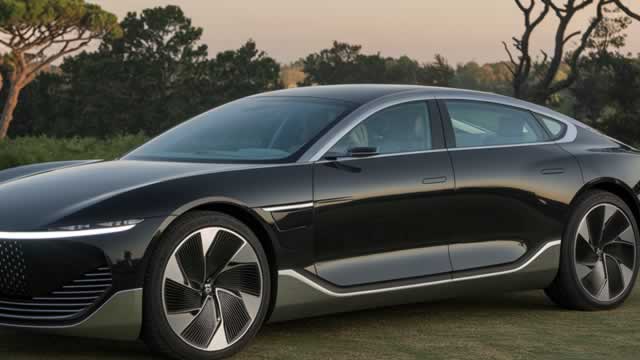
Lucid, Nuro, and Uber Unveil Global Robotaxi at CES, Announce Autonomous On-Road Testing
Prnewswire· 2026-01-05 23:00
Core Insights - The companies have initiated autonomous on-road testing for their robotaxi service, marking a significant step towards its launch in the San Francisco Bay Area later this year [1][2] Group 1: Robotaxi Development - Nuro is leading the testing of robotaxi engineering prototypes, which are supervised by autonomous vehicle operators [1] - The production intent robotaxi is expected to begin production at Lucid's Arizona factory later this year [3] - The robotaxi will be showcased at CES 2026, providing attendees with a first look at its features and in-cabin rider experience [3] Group 2: Partnerships and Technology - Nuro, Lucid, and Uber are collaborating to create a robotaxi service that combines Nuro's level 4 autonomy, Lucid's vehicle architecture, and Uber's global reach [2] - The robotaxi features a next-gen sensor array with high-resolution cameras, solid-state lidar sensors, and radars for 360-degree perception [5] - The in-ride experience includes interactive screens for personalization, real-time visualization of the robotaxi's path, and configurations for up to six passengers [5] Group 3: Company Profiles - Uber aims to create opportunities through movement, having facilitated over 681 billion trips since its inception in 2010 [4] - Lucid Group focuses on advanced electric vehicles, with a commitment to performance, design, and energy efficiency [6] - Nuro is developing a universal autonomy platform for various vehicle types and applications, emphasizing responsible scaling of autonomous technology [7]

Here's Why Tesla Will Win the EV Market
The Motley Fool· 2026-01-01 11:00
Core Viewpoint - The future of the electric vehicle (EV) industry is being debated, with Elon Musk advocating for robotaxis and autonomous driving, while competitors like Ford and General Motors focus on developing low-cost models [2][11][12]. Group 1: Tesla's Position - Tesla's management emphasizes that the future lies in autonomous electric vehicles, arguing that a regular $25,000 model is "pointless" compared to the cost efficiency of robotaxis [4][10]. - Musk claims that the cost per mile for a Cybercab robotaxi could be as low as $0.30, significantly cheaper than the average cost of over $2 for an internal combustion engine (ICE) taxi [8][9]. - Tesla is strategically positioned to benefit from both the robotaxi development and the production of lower-cost models, making it well-prepared for various market conditions [16][17]. Group 2: Competitors' Strategies - Ford is investing $5 billion in a universal EV platform to produce a $30,000 electric pickup truck by 2027, reflecting a focus on affordability in the EV market [11]. - General Motors has scaled back its EV plans due to disappointing sales and losses, indicating a shift towards more affordable EV options that Musk considers "pointless" [12]. - The sales performance of Tesla's Model 3 has grown nearly 18% through 2025, while competitors like Ford's F-150 Lightning have underperformed, highlighting differing market strategies [13]. Group 3: Market Dynamics - The debate on the future of EVs suggests that both low-cost models and robotaxis may coexist, with the timing of robotaxi rollouts and regulatory approvals being uncertain [14][13]. - Tesla's profitability in its EV business allows it to adapt to market conditions more effectively than its competitors, which may give it an edge in the evolving landscape of the EV industry [16][17].