
快递行业反内卷

Search documents
单月暴涨50%!这个板块翻身了
格隆汇APP· 2025-08-16 07:49
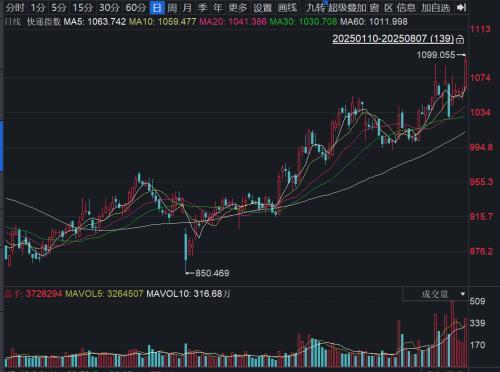
Core Viewpoint - The express delivery industry is experiencing a significant rebound due to government policies aimed at curbing excessive competition, leading to a notable increase in stock prices within the sector [3][25]. Group 1: Market Performance - Since early July, the express delivery index has surged by 17.10%, with companies like Shentong Express seeing over 50% increase in stock prices [3][4]. - Major express companies, including YTO Express and Yunda, have also reported substantial stock price increases of over 20% [3][4]. Group 2: Price Adjustments - Starting August 5, express delivery prices in Guangdong were raised by 0.4 yuan per ticket, with average prices exceeding 1.4 yuan [5]. - Other regions, such as Yiwu in Zhejiang, have also initiated price hikes, indicating a potential trend of rising prices across the industry [7][8]. Group 3: Industry Challenges - Despite the increase in delivery volume, the average price per ticket has been declining, with a drop from 8.14 yuan to 7.52 yuan year-on-year, a decrease of 7.7% [15][18]. - The net profit per ticket for major companies like Zhongtong and Yunda has also been decreasing, indicating a challenging profit environment [19][21]. Group 4: Future Outlook - If the average ticket price increases by 0.1 yuan, major companies could see significant revenue boosts, with Zhongtong potentially gaining 3.4 billion yuan [24][26]. - The express delivery industry is expected to continue growing, with projections indicating a record high of 1,750.8 billion packages in 2024, a year-on-year increase of 21.5% [54][55]. Group 5: Structural Changes - The industry is shifting towards managing light and reverse packages due to the rise of e-commerce, which is fragmenting consumption patterns [33][34]. - Recent acquisitions, such as Shentong's purchase of Daniao Logistics, are seen as strategic moves to enhance competitiveness and address market challenges [36][58]. Group 6: Long-term Considerations - The express delivery sector has not yet achieved true capacity clearing despite years of competition, leading to ongoing price wars [51][52]. - Future stability in the market may depend on mergers and acquisitions, as well as the ability of leading companies to maintain pricing power and profitability [56][59].



申通快递20250812
2025-08-12 15:05
Summary of Shentong Express Conference Call Company Overview - **Company**: Shentong Express - **Industry**: Express Delivery Key Points and Arguments 1. **Direct Operation Rate**: Shentong Express has increased its direct operation rate to 94%, significantly enhancing operational efficiency and processing capacity, effectively reducing unit costs [2][3][4] 2. **Capacity Expansion**: The company plans to increase its capacity by nearly 80% over three years with a capital expenditure of 10 billion, raising daily capacity from 42 million items in 2021 to approximately 75 million by 2024 [2][3] 3. **Business Volume Growth**: In 2023, Shentong Express achieved a business volume growth rate of 35.2%, significantly surpassing the industry average, narrowing the market share gap with Yunda [2][6] 4. **Profitability Improvement**: Cost control and revenue optimization measures have improved the net profit per ticket, with expectations for net profit to double due to price increases in the South China region [2][12] 5. **Free Cash Flow**: The company is expected to achieve positive free cash flow in 2024, driven by operational model changes and capacity enhancements [2][7] 6. **Industry Policy Support**: National postal policies are aimed at preventing vicious competition in the express delivery industry, promoting high-quality development and protecting frontline employees' rights [2][8] 7. **Acquisition of Daniao Logistics**: The acquisition of Daniao Logistics for 360 million yuan is expected to help Shentong become the third-largest player in the industry and open up new cooperation opportunities [4][17] 8. **Future Profit Projections**: For 2025, Shentong Express anticipates a net profit of over 300 million yuan, with a net profit per ticket of 0.05 yuan, which could double if it reaches 0.10 yuan [4][13] 9. **Market Valuation**: The current P/E ratio is below 9, indicating that the company is undervalued compared to the industry average [4][13] 10. **Regional Price Increases**: A price increase of 0.4 yuan in the South China region is expected to significantly boost profits for Shentong and its competitors [12][14] Additional Important Content 1. **Operational Efficiency**: The company has optimized franchise management and product offerings, particularly in heavy cargo, which has contributed to its growth since 2018 [3][6] 2. **Response to Market Conditions**: Shentong Express has adapted to market changes, including the impact of the pandemic and competition from Jitu Express, which led to losses in 2020-2021 [3][6] 3. **Long-term Development Potential**: The company is well-positioned for long-term growth due to its strategic initiatives and partnerships, particularly with Alibaba [16][19] 4. **Risks**: Potential risks include a return to aggressive price competition or slower-than-expected growth in business volume, which could impact performance [20]
如何看待快递行业的“反内卷”?
2025-08-11 01:21
Summary of Conference Call on the Express Delivery Industry Industry Overview - The express delivery industry is experiencing significant growth despite intense competition, becoming a crucial driver for "anti-involution" in society, supported by top-down policy initiatives [1][3] - The industry's focus on "anti-involution" aims to protect the rights of consumers and couriers, addressing issues like illegal charges in rural areas, and ensuring sustainable development through reasonable profitability and income levels [1][4] Key Points and Arguments - The express delivery sector has shown a year-on-year growth of nearly 20% in the first half of the year, maintaining a strong growth rate compared to other saturated industries [3] - The implementation of "anti-involution" is intended to safeguard the legitimate rights of consumers and couriers, with a focus on ensuring reasonable income for couriers [4] - In regions with fierce price competition, such as Yiwu and Jieyang, prices have dropped to pre-2021 levels, creating pressure on franchisees to stabilize operations [5] - Successful price increases in competitive areas depend on consensus among brands and broader regional agreement [5] Long-term Development Factors - Key factors for the long-term development of the e-commerce express delivery industry include market dynamics, platform strategies, and regulatory frameworks [6] - Scale effects are crucial for reducing costs and achieving profitability; however, diminishing scale effects may necessitate the development of new business lines to sustain growth [6] - The impact of e-commerce platforms on logistics is significant, with companies pursuing differentiated supply chain strategies through self-built logistics or investments [6] - High-quality development is essential from a regulatory perspective, as it relates to social welfare and employment [6] Investment Opportunities - The current e-commerce express delivery market is in a rapid growth phase, presenting a favorable investment opportunity despite some market consolidation [7] - The "anti-involution" trend is expected to drive a recovery in the market, making it a good time for investment [7] - Investors are advised to focus on leading companies and their operational capabilities, financial strength, and stability of franchise networks when assessing investment opportunities [2][8]
快递反内卷之潮汕快递加盟商交流
2025-08-11 01:21
Summary of the Conference Call on the Express Delivery Industry in Chaoshan Region Industry Overview - The express delivery industry in the Chaoshan region is under the supervision of the Postal Administration, which implemented a price increase in early August to address losses caused by previous price wars [1][8] - Major companies such as Zhongtong, Yuantong, Yunda, Shentong, and Jitu are required to adhere to the market's minimum price [1][2] Key Points and Arguments - **Price Increase Implementation**: - The minimum price for 0.1 kg packages was set at 1.54 RMB for Zhongtong, 1.5 RMB for Yuantong, and 1.45 RMB for Yunda, Shentong, and Jitu [2][3] - After the price increase, Zhongtong's price rose from approximately 1.05-1.10 RMB to around 1.65 RMB, reflecting an increase of about 0.5 RMB [1][5] - **Reasons for Price Increase**: - Declining delivery fees for couriers, homogenized competition, and low pricing strategies have limited profit margins [1][8] - Companies have faced losses over the past two years due to aggressive price competition, with expectations of returning to profitability by Q4 2025 [3][8] - **Market Reactions and Future Expectations**: - Other regions, including Fujian and Yiwu, are monitoring the price increase's impact and may implement similar measures [1][9] - The overall price increase in the Chaoshan market is expected to lead to a significant recovery in profitability for franchisees [3][16] - **Customer Acceptance**: - Customer acceptance of the price increase varies based on product margins; for instance, a small kitchenware seller with low margins struggled with the price hike, while clothing retailers were less affected [7][20] - **Impact on Business Volume**: - Following the price increase on August 5, daily package volume dropped from 140-145 thousand to approximately 105 thousand due to some business shifting to the postal system [23][24] Additional Important Insights - **Revenue Distribution**: - The overall price increase of about 0.5 RMB will primarily benefit franchisees, as headquarters have canceled certain subsidies [11] - **Regulatory Measures**: - The Postal Administration will continue to monitor compliance with minimum pricing and may not intervene in customer competition post-August 20 [3][14][27] - **Market Share Dynamics**: - Zhongtong holds approximately 27% market share in the Chaoshan region, with other companies also adhering to the new pricing standards [15][17] - **Future Price Adjustments**: - Further price increases during peak seasons will depend on decisions made by headquarters and the Postal Administration [22][28] - **Sustainability of Cross-Regional Operations**: - Cross-regional collection practices are deemed unsustainable due to potential penalties and the impact on delivery timelines [25][26] This summary encapsulates the critical developments and insights from the conference call regarding the express delivery industry in the Chaoshan region, highlighting the implications of recent price adjustments and regulatory measures.
快递专家系列电话会议
2025-08-11 01:21
Summary of Conference Call on Express Delivery Industry Industry Overview - The express delivery industry has maintained relatively stable prices since 2025, with the price for 500 grams in North China at approximately 1.25 yuan, a year-on-year decrease of 0.05 yuan due to reduced income for front-end franchisees [1][3][5] - The cost structure in North China limits further price declines, particularly in Hebei, a late grain-producing area [1][3] Key Points and Arguments - **Price Stability and Adjustments**: - The express delivery prices have remained stable in 2025, with minor fluctuations. The average price for 500 grams is around 1.25 yuan, down 0.05 yuan from the previous year [1][3][11] - Price increases in North China typically occur in mid-September, with actual increases implemented in October, averaging around 0.20 yuan [1][5][6] - Companies must be cautious in price adjustments to avoid customer loss, balancing between competitive pricing and maintaining market share [1][7] - **Impact of Headquarters Costs on Pricing**: - Headquarters' cost increases do not always translate directly to end-user prices. For instance, a 0.10 yuan increase in headquarters' costs may result in only a 0.02 to 0.03 yuan increase for customers [4][6] - Franchisees often absorb part of the cost increases to remain competitive, typically taking on 0.06 to 0.07 yuan of the loss [4][6] - **Franchisee Income and Market Dynamics**: - The decline in income for front-end franchisees has contributed to the overall price decrease in the industry. Franchisees are pressured to lower prices to maintain market share [5][12] - Franchisees require a profit margin of approximately 0.20 to 0.30 yuan per order to cover losses and achieve profitability [13][14] - **Seasonal and Structural Challenges**: - Franchisees in North China face significant operational pressures, with many reporting losses in the range of 2 to 4 million yuan due to seasonal demand fluctuations and high fixed costs [12][22] - The complexity of product structures and reliance on manual operations hinder cost reduction efforts during off-peak seasons [22][23] Additional Important Insights - **Role of "Yellow Cattle" (Resellers)**: - Resellers play a significant role in the express delivery market by offering lower prices to attract business, with some companies relying heavily on them while others focus on direct customer service [15][16] - The price offered to resellers is typically lower than that for direct customers, impacting overall profitability [16][17] - **Regulatory Environment and Coordination**: - Price adjustments in regions like Guangdong are coordinated under the guidance of regulatory bodies, which may influence similar actions in North China [10][20] - The potential for price increases in North China is contingent on the success of price adjustments in Guangdong and the establishment of a nationwide regulatory framework [20] - **Profit Distribution and Cost Management**: - In North China, well-managed franchisees may retain around 0.10 yuan per package after costs, while poorly managed ones face penalties that erode profit margins [21] - The need for fixed costs during off-peak seasons, such as labor and facility expenses, exacerbates financial challenges for franchisees [24]
申通领涨43%、韵达圆通涨幅超20%!快递特价件提价究竟成效几何?
Jin Rong Jie· 2025-08-08 06:05
Core Viewpoint - The recent significant increase in the China Express Index (CI005537) by 3.37% indicates a potential turning point for the express delivery industry, driven by collective price hikes across multiple regions [1][3]. Industry Summary - Starting from August 4, Guangdong Province has raised the minimum express delivery price by 0.4 yuan per ticket, mandating that companies cannot charge less than 1.4 yuan per ticket, with severe penalties for non-compliance [3]. - The price adjustments have been observed in major cities such as Guangzhou, Shenzhen, and others, with similar actions taken in the Chaozhou-Shantou region [3]. - Earlier, Yiwu had already increased its minimum price to 1.2 yuan per ticket on July 17, signaling the beginning of this industry-wide adjustment [3]. - The National Postal Administration has expressed strong opposition to "involutionary" competition, indicating a push for industry restructuring [3][7]. - The recent price adjustments are expected to be implemented in more regions, suggesting a broader trend towards stabilizing prices in the express delivery sector [3][12]. Company Performance - Following the announcement of price hikes, several express delivery companies have seen their stock prices rise significantly, with Shentong Express experiencing a 43% increase, Yunda and YTO Express both exceeding 20%, and Jitu Express rising by 16% [4][5]. - The stock performance reflects market optimism regarding the industry's potential to escape the low-price competition dilemma [4]. - Shentong's stock surge is partly attributed to its acquisition of Daniao Logistics for 362 million yuan, despite Daniao's current financial struggles [5][6]. Financial Insights - The express delivery industry has faced severe profit margin pressures, with companies like Yunda and YTO maintaining low gross margins around 10% and net margins around 5% [7]. - In Q2, the industry experienced intensified competition, with Yunda's average revenue per ticket at a historical low of 1.9 yuan and Shentong struggling to exceed 2 yuan [8]. - The recent price adjustments, particularly in Guangdong, could lead to significant earnings elasticity for major companies, with estimates suggesting potential increases of 33% for Shentong, 18% for Yunda, and 14% for YTO [11]. Future Outlook - The effectiveness of the "anti-involution" measures will depend on regulatory enforcement against potential disguised price reductions and the ability to extend these policies nationwide [12]. - The industry is at a critical juncture, with the need to establish a healthy pricing system and service differentiation mechanisms as a long-term goal [12].


从出清走向成熟,从成长进阶价值 - 四问四答快递行业
2025-08-07 15:03
Summary of the Express Delivery Industry Conference Call Industry Overview - The express delivery industry has experienced significant growth, with package volume growth outpacing e-commerce GMV and social retail sales, indicating a close relationship with the average order value (AOV) of e-commerce platforms [1][2] - The industry has transitioned through various stages: from the embryonic phase before 2011, explosive growth from 2011 to 2016, a clearing phase from 2017 to 2021, and currently in the late clearing phase since 2021, characterized by reduced competition intensity and a shift from price competition to value competition [1][4] Key Insights - The express delivery sector is projected to maintain a growth rate of around 10% in 2024, with actual growth potentially reaching close to 20%, driven by the rise of low-ticket e-commerce platforms and live-streaming e-commerce [2] - Major players like Pinduoduo, Douyin, and Kuaishou have significantly contributed to package volume, with Pinduoduo accounting for approximately 35% to 40% and Douyin and Kuaishou contributing nearly 30% [2] - The average order value (LOV) is declining due to the increasing share of low-ticket e-commerce platforms, which has profound implications for sellers' logistics cost sensitivity [2] Regulatory Impact - Regulatory interventions in 2021, such as the increase in delivery fees, have improved the profitability of the franchise ecosystem, although challenges remain for franchisees facing intense competition [6][9] - Measures like price floor restrictions in regions such as Guangdong are expected to stabilize operations at grassroots levels and support value recovery for brands and franchisees [3][9] Challenges Faced - The industry is currently facing fierce competition, with many secondary franchise outlets experiencing losses and cash flow issues, leading to salary payment delays for delivery personnel [7] - The distribution of profits between headquarters and channels is critical for the overall competitive capability of express delivery brands [7] Future Outlook - In the short term, companies with weak single-package profitability, such as Shentong, Yunda, and Jitu, are expected to recover profitability more quickly [10] - In the medium to long term, leading companies like Zhongtong and Yuantong are anticipated to gain market share due to their network capabilities and smaller price differentials [10] - The industry is expected to evolve towards brand and value competition, with regulatory measures playing a significant role in curbing malicious price competition [8][9]
中通快递-W涨超4% 广东快递底价整体上调 机构看好行业竞争生态优化
Zhi Tong Cai Jing· 2025-08-07 03:34
Group 1 - Zhongtong Express-W (02057) has seen a rise of over 4%, currently up 4.28% at HKD 163.3, with a trading volume of HKD 542 million [1] - Starting from August 4, the minimum express delivery price in Guangdong Province has been increased by HKD 0.4 per ticket, raising the average price to above HKD 1.4 [1] - The National Postal Administration held a meeting on July 29 to address issues such as "involution" competition and illegal charges in rural areas, emphasizing the need for a healthy development of the industry [1] Group 2 - Zheshang Securities predicts that with the end of the off-peak season and the arrival of the peak season in September, there is potential for broader price stabilization and recovery, which may alleviate pressure on franchise operations [1] - Recently, Shentong Express's acquisition of Daniao marks the beginning of resource consolidation in the express delivery industry under the national anti-involution policy [1] - The National Postal Administration encourages mergers and restructuring among express delivery companies, leading to a healthier industry structure and optimized competitive ecology, which may present sector-wide investment opportunities [1]
确认!广东快递底价,上涨!
Nan Fang Du Shi Bao· 2025-08-06 15:32
Core Viewpoint - The express delivery industry is experiencing a new round of price increases amid efforts to combat "involution" and low-price competition, with Guangdong province raising the base price to 1.4 yuan per ticket starting August 4 [1][2]. Group 1: Price Adjustments - Starting August 4, the base price for express delivery in Guangdong province has been raised by 0.4 yuan per ticket, bringing the average price to over 1.4 yuan [1]. - Major express companies, including the "Tongda system," have begun implementing price increases, particularly for 0.1 kg special items, with increases ranging from 0.4 to 0.5 yuan [1][3]. - The price adjustments are a response to the ongoing decline in single-ticket prices, which had fallen below 2 yuan for some companies in the second quarter of this year [1][8]. Group 2: Industry Context - The express delivery industry has been trapped in a cycle of "low-price for volume" competition, leading to reduced profit margins for delivery personnel and poor service quality [3][4]. - The central government has emphasized the need to regulate low-price competition and improve product quality, with recent meetings highlighting the importance of maintaining a healthy market order [2][6]. - The express delivery sector has seen significant price drops, with some areas reporting ticket prices as low as 0.8 yuan, prompting calls for a shift from price wars to quality-focused competition [4][8]. Group 3: Regulatory Environment - Regulatory bodies have previously intervened to address low-price competition, with measures introduced in 2021 aimed at protecting the rights of delivery personnel and stabilizing prices [6][7]. - The National Postal Administration has reiterated its commitment to combating "involution" and ensuring fair competition within the industry [8]. - The recent price increases may signal a shift towards more stable pricing, as regulatory efforts continue to discourage unsustainable pricing practices [8].
快递反内卷:监管与落地持续发力
2025-08-05 03:20
Summary of Conference Call on the Express Delivery Industry Industry Overview - The conference call focused on the express delivery industry in China, particularly the recent regulatory measures aimed at reducing vicious price competition and promoting healthy competition [1][3][19]. Key Points and Arguments - **Regulatory Measures**: The State Post Bureau held a high-level meeting to address the issue of excessive competition in the express delivery sector, emphasizing the need for companies to commit to anti-involution measures and ensure network stability [2][3]. - **Price Increases in Guangdong**: Express delivery prices in Guangdong have increased by 0.4 to 0.5 yuan, based on reasonable cost assessments, aimed at ensuring fair compensation for delivery personnel and improving profit margins for franchisees [1][5][8]. - **Rural Issues**: The meeting highlighted the need to resolve illegal charges for package collection in rural areas, which stem from low delivery fees. The solution involves raising collection prices to ensure reasonable compensation and prevent franchisee defaults [6][19]. - **Future Development**: The express delivery industry is expected to continue implementing anti-involution measures through enhanced regulation and self-discipline among companies, leading to high-quality development [7][19]. - **Impact of Price Adjustments**: The price adjustments in Guangdong are primarily focused on small and electronic items, with base prices now ranging from 0.95 to 1 yuan. This adjustment is seen as necessary to restore delivery fees and profits for franchisees [8][9]. - **Comparison with Yiwu**: Unlike Yiwu's gradual price increases, Guangdong's approach is characterized by strong local regulatory determination to implement price hikes in a more immediate manner [10]. - **Regional Price Effects**: The price increase in Guangdong is likely to influence surrounding regions, such as Fujian, with potential for broader price adjustments across the industry [11][15]. - **Current Industry Challenges**: The express delivery sector has faced intense competition leading to deteriorating conditions for franchisees, with reports of major brands experiencing defaults. Single-package profits are at historical lows, and cash flow is weaker than in 2021 [4][12]. - **Future Price Trends**: The industry is expected to see further price increases during the peak season in 2025, with optimistic projections for profitability based on historical data [13][14]. - **Investment Recommendations**: Investors are advised to focus on companies with lower single-package profits and greater elasticity, such as Shentong, while also considering leading companies like YTO and ZTO for balanced risk and return [18]. - **Long-term Industry Impact**: The anti-involution measures are anticipated to have a profound impact on the express delivery sector, improving profitability and reducing social risks associated with over-competition [19]. Additional Important Insights - **Market Sentiment**: The current market conditions reflect only partial expectations of price increases, suggesting potential for further upward adjustments in the future [17]. - **Regulatory Environment**: The express delivery industry is entering a new regulatory phase aimed at improving pricing structures and overall market health, which is crucial for long-term sustainability [17][19].