Virtual Reality

Search documents
Meta Platforms (NasdaqGS:META) 2025 Conference Transcript
2025-09-18 01:02
Summary of Key Points from the Conference Call Company and Industry Overview - The conference focuses on Meta's advancements in AI glasses and virtual reality technology, particularly the new Ray-Ban Meta Smart Glasses and Oakley Meta Vanguard, as well as the integration of AI in these products [1][4][19][77]. Core Insights and Arguments 1. **AI Glasses Development**: Meta aims to create AI glasses that enhance personal intelligence and presence through realistic holograms, marking a significant step towards the metaverse [1]. 2. **Design Philosophy**: The glasses prioritize aesthetics and comfort, ensuring they are lightweight and stylish while integrating advanced technology seamlessly [2][3]. 3. **Technological Features**: New features include improved battery life, 3K video recording, and the ability to amplify voices in noisy environments through the Conversation Focus feature [4][5][19]. 4. **Live AI Integration**: Meta is working on making live AI a constant presence, assisting users throughout the day, although full all-day functionality is still under development [10][17]. 5. **Neural Interface**: The introduction of the Meta Neural Band allows users to control the glasses through subtle muscle movements, representing a breakthrough in user interaction [30][77]. 6. **High-Resolution Display**: The new Ray-Ban Meta Display features a high-resolution display capable of showing videos and messages, enhancing user experience [29][77]. 7. **Content Creation Tools**: Meta Horizon Studio and the new Meta Horizon engine will facilitate the creation of immersive content, making it easier for creators to develop high-quality virtual environments [78][80]. Additional Important Content 1. **Market Positioning**: The glasses are positioned as premium products, with prices starting at $379 for Ray-Ban Meta and $499 for Oakley Meta Vanguard, indicating a focus on high-end consumer electronics [18][28]. 2. **Partnerships**: Collaborations with brands like EssilorLuxottica and Garmin enhance the functionality and appeal of the glasses, integrating features like auto-capture for sports activities [21][22]. 3. **Fashion Integration**: The glasses are designed to appeal to fashion-conscious consumers, with new colorways and limited edition releases to attract interest [17][18]. 4. **Future of Content**: The integration of AI in content creation is expected to revolutionize how immersive and interactive experiences are developed, potentially transforming social media and entertainment [79][86]. 5. **Immersive Storytelling**: The partnership with filmmaker James Cameron highlights the potential for enhanced storytelling through 3D and immersive content, which is expected to drive adoption of VR and AR technologies [87][90]. This summary encapsulates the key points discussed during the conference, focusing on Meta's innovative approach to AI glasses and the broader implications for the virtual reality industry.

Meta Connect 2025: AI-powered smart glasses take center stage
CNBC· 2025-09-16 11:00
Core Insights - Meta is shifting its focus from virtual reality (VR) to smart glasses, with significant investments in the development of consumer hardware products [4][5][6] - The company is set to unveil its advanced smart glasses, codenamed Hypernova, which will feature a small display and be controlled via hand gestures [2][3] - Investors are closely monitoring Meta's spending in its Reality Labs division, which has incurred substantial losses but is expected to yield potential returns in the future [4][5] Group 1: Product Development - Meta's upcoming smart glasses, Hypernova, will be priced at $800 and represent the first consumer product with a display [3][7] - The glasses are developed in partnership with EssilorLuxottica, building on previous models like the Ray-Ban Meta smart glasses [3] - Hypernova aims to bridge the gap between existing smart glasses and more experimental augmented reality devices [7] Group 2: Financial Performance - Meta's Reality Labs division reported an operating loss of $4.53 billion in Q2, contributing to nearly $70 billion in total losses since late 2020 [4] - Despite the losses, analysts believe that smart glasses may offer a more viable investment opportunity compared to VR headsets, which remain niche products [5][6] - Investors are looking for signs of progress in Meta's hardware development to justify ongoing expenditures [5]


Recent Market Trends and Company Price Changes
Financial Modeling Prep· 2025-09-10 22:00
Company Developments - Cuprina Holdings (CUPR) has seen its price rise to $1.50, marking a 114.39% increase, attributed to the appointment of Dr. Ronald A. Sherman and FDA approval for its medical maggot license [1][6] - Everbright Digital Holding Limited (EDHL) has experienced a price increase to $1.26, reflecting a 191.60% change, linked to its focus on metaverse stimulation and virtual reality design [2][6] - Wearable Devices Ltd. (WLDS) has experienced a price rise to $6.83, a 573.01% increase, driven by the development of a non-invasive neural input interface [4] Market Trends - Recent market trends indicate that product innovation and strategic corporate actions are driving notable price changes across various companies [1][5] - The significant price movements in these companies highlight the impact of innovation and strategic developments on company valuations [5]


上海波士特科技有限公司成立 注册资本500万人民币
Sou Hu Cai Jing· 2025-08-15 21:16
Core Viewpoint - Shanghai Bost Technology Co., Ltd. has been established with a registered capital of 5 million RMB, focusing on various technology and artificial intelligence services [1] Group 1: Company Overview - The legal representative of Shanghai Bost Technology Co., Ltd. is Zhao Wenyu [1] - The company has a registered capital of 5 million RMB [1] Group 2: Business Scope - The business scope includes technology services, development, consulting, and promotion [1] - The company is involved in internet sales (excluding licensed goods) and various artificial intelligence applications [1] - Services offered include AI public data platforms, AI hardware sales, and AI application software development [1] - The company also engages in advertising design, game development, and electronic product sales [1] - It is authorized to provide internet live streaming technology services, subject to approval [1]
虚拟空间服务赛道初现集中化趋势,头部厂商市占率47%
QYResearch· 2025-08-12 09:39
Core Viewpoint - The virtual space service market is expected to grow significantly, with a projected increase from $97.55 million in 2024 to $1.81 billion by 2031, reflecting a compound annual growth rate (CAGR) of 8.64% [1][8]. Market Overview - The global virtual space service market is primarily driven by the increasing demand for remote work solutions and the popularity of immersive gaming experiences [8]. - Major players in the market include Spatial Systems, Arthur, Gather, oVice, and Ikarus 3D, with the top four companies holding approximately 47% of the market share in 2024 [5]. Product Segmentation - Cloud-based services dominate the market, accounting for about 75% of the total share [6]. - Small and medium-sized enterprises (SMEs) represent the largest demand source, making up around 80% of the market [11]. Industry Trends - The market is witnessing significant growth in virtual office services, driven by the rise of remote work and the need for flexible, cost-effective office solutions [8]. - The integration of artificial intelligence and machine learning is becoming a key trend, enabling personalized user experiences through data analysis of user behavior in virtual spaces [12]. - Companies are developing virtual reality-based educational solutions to gain competitive advantages, enhancing understanding and retention of educational content [12]. Future Outlook - The virtual space service market is expected to continue evolving, with advancements in hardware and software blurring the lines between the physical and virtual worlds [12].
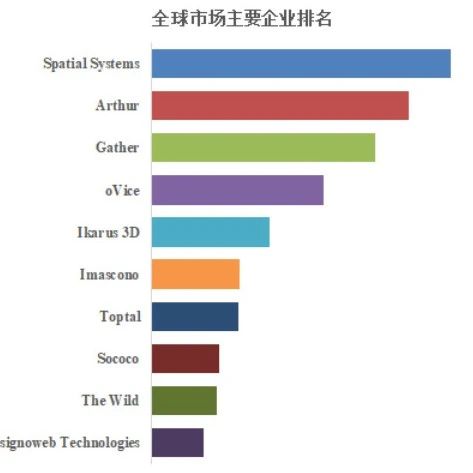
全球虚拟空间服务市场复合年增长率为8.64%
Sou Hu Cai Jing· 2025-08-12 09:27
Core Insights - The global virtual space service market is projected to grow from $97.55 million in 2024 to $1.81 billion by 2031, with a compound annual growth rate (CAGR) of 8.64% from 2024 to 2031 [2] - The market is experiencing significant growth due to the increasing prevalence of remote work and the demand for flexible and cost-effective office space solutions [2] - The gaming and entertainment sectors are early adopters of virtual space services, with a surge in popularity for immersive VR gaming experiences and new entertainment formats like virtual concerts [2] - Major companies in the virtual space service market are developing VR-based educational solutions to gain competitive advantages [2][3] - The integration of artificial intelligence and machine learning in virtual space services is a key trend, enabling personalized user experiences through data analysis [3] Market Overview - The leading product type in the virtual space service market is cloud-based solutions, which account for approximately 75% of the market share [12] - Small and medium-sized enterprises (SMEs) represent the primary source of demand, holding about 80% of the market share [15] - The top four manufacturers in the global virtual space service market hold around 47% of the market share [9] Industry Trends - The trend is towards creating more social and interactive gaming experiences, allowing players from around the world to connect and play together in shared virtual spaces [2] - Advancements in hardware and software are expected to blur the lines between the physical and virtual worlds, enhancing user experiences [3]
Take-Two Q1 Net Bookings Up 17%
The Motley Fool· 2025-08-08 18:29
Core Insights - Take-Two Interactive Software reported strong Q1 FY2026 results, with Net Bookings of $1.42 billion, exceeding both company guidance and analyst expectations [1][2] - Non-GAAP earnings per share reached $0.61, significantly higher than the estimated $0.29, while GAAP net loss narrowed to $11.9 million from $262 million year-over-year [1][7] - The company raised its full-year Net Bookings guidance to $6.05–$6.15 billion, reflecting optimism for upcoming game launches, particularly Grand Theft Auto VI [1][14] Financial Performance - Net Bookings increased by 17% year-over-year, driven by strong recurring consumer spending, which accounted for 83% of total Net Bookings [2][5] - GAAP revenue rose by 11.9% compared to the same quarter last year, supported by established franchises like NBA 2K25 and Grand Theft Auto V [6] - Operating expenses remained high at $923.4 million, with R&D spending at $261.4 million, contributing to a GAAP net loss of $11.9 million [7] Business Overview - Take-Two develops and publishes interactive entertainment across various platforms, with notable franchises including Grand Theft Auto, NBA 2K, and Red Dead Redemption [3] - The company focuses on expanding its multi-platform reach and enhancing player engagement through investments in talent and technology [4] Strategic Focus - Key strategies include driving recurring spending within games, maintaining cost control, and innovating on new platforms like virtual reality [4][12] - The company is preparing for significant launches, including Mafia: The Old Country and NBA 2K26, alongside the anticipated Grand Theft Auto VI [10] Market Trends - Mobile gaming remains a critical area, with the Zynga division releasing profitable titles and leveraging direct-to-consumer sales [11] - Take-Two is exploring new trends such as virtual reality and global expansion, particularly in Asian markets [13] Future Guidance - For Q2 FY2026, Net Bookings are projected between $1.70 and $1.75 billion, with GAAP revenue expected at $1.65–$1.70 billion [14] - The company anticipates a full-year GAAP net loss of $442 to $377 million, despite raising its adjusted EBITDA guidance [14][15]


游戏产业正在成为数字技术、文化传播、产业协同融合发展的重要引擎
Mei Ri Jing Ji Xin Wen· 2025-08-08 02:58
Group 1 - The Chinese gaming industry achieved a sales revenue of 168 billion yuan in the first half of 2025, marking a year-on-year growth of 14.08%, with a user base reaching 679 million, both setting historical highs [1] - Chinese gaming companies generated actual sales revenue of 9.501 billion USD in overseas markets during the first half of 2025, reflecting a year-on-year increase of 11.07%, driven by long-term product revenue and new releases in 2024 [1] - The gaming industry is evolving from entertainment consumption to becoming a strategic high ground for technological innovation and cultural dissemination, supported by emerging technologies like AI and virtual reality [1] Group 2 - The media and gaming sectors are showing signs of fundamental improvement, with a focus on product cycles and performance in the gaming segment, while the media side is observing growth in advertising spending due to economic recovery [2] - The recent ChinaJoy exhibition attracted 743 participating companies, with foreign investment accounting for 31.8%, indicating a high level of industry interest [2] - Significant advancements in AI technology are being noted, with products like Grok's video generation feature and Kimi K2's enhanced output speed contributing to industry innovation [2]
2026年印度国际消费电子家用电器及电子元器件展CEI
Sou Hu Cai Jing· 2025-08-05 08:55
Group 1: Exhibition Overview - The CEI is a B2B exhibition aimed at connecting international and Indian manufacturers in the consumer electronics and home appliances industry with professional bulk buyers such as distributors, wholesalers, and retailers [1] - The exhibition focuses on showcasing cutting-edge technology and modern consumer electronics products to the Indian market, creating opportunities for long-term business relationships through collaboration and trade [1] - CEI serves as an ideal platform for global manufacturers to present their products to top distributors, retail chains, and electronic retailers in India, expanding their business networks in one of the fastest-growing consumer markets [1] Group 2: Market Opportunities in India - Strong growth in demand for electronic products in India is driven by factors such as rising disposable income, a young and ambitious population, internet penetration, rapid urbanization, changing consumer preferences, and technological advancements [2] - The "Make in India" initiative aims to upgrade the domestic electronics assembly industry, providing opportunities for collaboration and import of electronic components and equipment [2] - The rise of e-commerce in India offers significant local consumption opportunities, similar to the early stages in China, providing a convenient distribution channel for electronic products [2] Group 3: Electronics Components Manufacturing - India's electronics components manufacturing sector is making significant progress, supported by strong government initiatives aimed at transforming the country into a global electronics hub [3] - Production-linked incentive schemes have played a crucial role in boosting production and attracting substantial investments from major global players [3] - A comprehensive approach combining policy support, infrastructure development, and strategic initiatives is helping decision-makers achieve India's long-term economic and technological goals [3]

Wearable Devices Awarded Continuation Patent Covering Neural Gesture Interface Advancements
GlobeNewswire News Room· 2025-08-04 13:00
Core Viewpoint - Wearable Devices Ltd. has been granted a continuation patent that enhances its gesture recognition technology, allowing for more intuitive and touchless control in various digital ecosystems, including AR and smart devices [1][4][5]. Group 1: Patent and Technology - The newly granted patent expands the protection around the company's neural interface technologies, reinforcing its leadership in user interactions [1][4]. - The patent introduces a method to accurately extract start and end points from continuous gestures, enabling seamless control gestures without physical contact or voice triggers [3][4]. - This innovation aims to improve user experience by eliminating the need for clunky workarounds often found in traditional gesture-based systems [2][3]. Group 2: Company Vision and Market Position - The continuation patent supports the company's vision of creating a world where natural human intent seamlessly integrates with digital systems, enhancing user experiences [5]. - Wearable Devices is positioned as a pioneering growth company in human-computer interaction, leveraging AI-powered neural input technology for both consumer and business markets [6]. - The company offers products like the Mudra Band and Mudra Link, which enable touch-free interaction and are designed for the expanding AR/VR/XR markets [6].