家族信托

Search documents
宗馥莉110万美金击穿娃哈哈18亿美元信托之谜?
虎嗅APP· 2025-07-17 10:48
Core Viewpoint - The article discusses a family inheritance dispute involving the successor of Wahaha Group, Zong Fuli, who is being sued by her half-siblings over a family trust worth $18 billion, raising questions about the legitimacy and management of the trust [1][2][3]. Group 1: Family Trust Controversy - The lawsuit centers around a claim that the late founder Zong Qinghou promised to establish a family trust worth $21 billion, with $18 billion currently in an HSBC account, leaving a $3 billion shortfall [1][2]. - Zong Fuli's transfer of $110,000 from the trust account has raised suspicions among her siblings, who view it as a potential asset transfer [2][3]. - The existence and validity of the family trust are under scrutiny, with arguments about whether it meets legal requirements for a trust, including written agreements and proper asset management [9][10][11]. Group 2: Legal and Inheritance Issues - The plaintiffs are attempting to establish their inheritance rights as non-marital children, which could grant them equal rights under the law if paternity is proven [7][8]. - The legal framework surrounding the trust is complicated by the lack of formal documentation and the potential for conflicting claims regarding the trust's establishment and management [10][12]. - The case highlights the importance of clear legal arrangements in wealth transfer to prevent disputes, emphasizing that family trusts should be established through professional channels to ensure compliance with legal standards [20][21]. Group 3: Implications for Wahaha Group - The ongoing legal battle over the $300 billion inheritance could significantly impact Wahaha Group's operations and market position, raising concerns about the effects on employees and the company's reputation [21]. - The article suggests that the outcome of this dispute may serve as a cautionary tale for other high-net-worth individuals regarding the necessity of structured wealth management and inheritance planning [20].


知情人士:宗庆后,不止这四个孩子
创业家· 2025-07-17 10:10
Group 1 - The article discusses the complex family dynamics and inheritance disputes surrounding the late Zong Qinghou, founder of Wahaha Group, revealing that he has six children in addition to his daughter Zong Fuli [5][7][11] - Zong Fuli is currently embroiled in legal battles with her half-siblings over the inheritance of a 29.4% stake in Wahaha Group, which has led to significant public interest and speculation about the company's future [7][24] - The article highlights the historical context of Zong Qinghou's relationships, including his marriages and the implications these have on the inheritance claims of his children [6][18] Group 2 - The article outlines the financial aspects of the inheritance dispute, mentioning a family trust set up with a balance of approximately $1.8 billion, and the ongoing legal actions regarding the distribution of these assets [21][24] - It notes that Zong Fuli's management of the company has faced challenges, including internal disputes and potential changes in ownership dynamics, particularly concerning a 46% stake that may be acquired by her stepmother, Du Jianying [24][25] - The article emphasizes the significance of employee stock ownership within Wahaha Group, which could influence the control of the company depending on the outcomes of ongoing legal disputes [24][25]
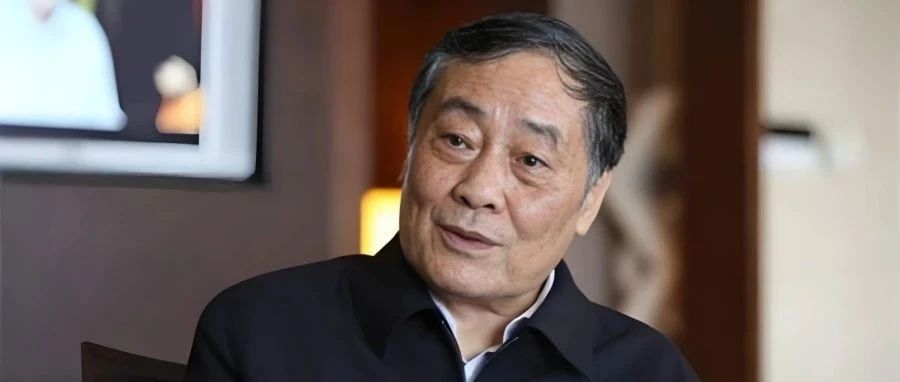
宗庆后遗产纠纷升级,当“家文化”遭遇“法时代”
和讯· 2025-07-17 09:50
Core Viewpoint - The article discusses the ongoing legal battle over the inheritance of the late Zong Qinghou's wealth, highlighting the complexities of family dynamics and legal frameworks involved in the dispute over a $21 billion trust and a 29.4% stake in Wahaha Group [1][10]. Group 1: Legal Focus on Parent-Child Relationship and Inheritance - The three plaintiffs are seeking to establish their inheritance rights by proving their parent-child relationship with Zong Qinghou, which is essential for their claims under Chinese law [3][4]. - The plaintiffs have submitted birth certificates and requested DNA testing to confirm their relationship, facing challenges regarding the legality of evidence collection and potential counter-evidence from the defendant [3][4]. Group 2: Validity of the Will - Zong Qinghou's will from 2020 states that his overseas assets are to be inherited solely by his daughter, Zong Fuli, which could be contested due to the lack of independent witnesses [5][6]. - Legal experts indicate that the will may face challenges due to formal defects, as it lacks the required number of impartial witnesses and specific asset listings [5][6]. Group 3: Trust Commitment Evidence - The plaintiffs claim that Zong Qinghou promised to establish a $21 billion trust fund for them, but evidence suggests that only $18 billion is available, raising questions about the existence of the trust [6][7]. - The absence of formal documentation for the trust commitment may hinder the plaintiffs' case, as oral promises are generally not recognized under Hong Kong trust law [8][9]. Group 4: Family Legacy and Corporate Governance - The case reflects broader issues in family business succession and the need for effective wealth management systems, emphasizing that family trusts must be dynamically assessed to remain compliant and effective [9][10]. - The article suggests that the lack of institutional design in wealth transfer can lead to conflicts, highlighting the importance of balancing emotional ties and financial interests in family businesses [10].
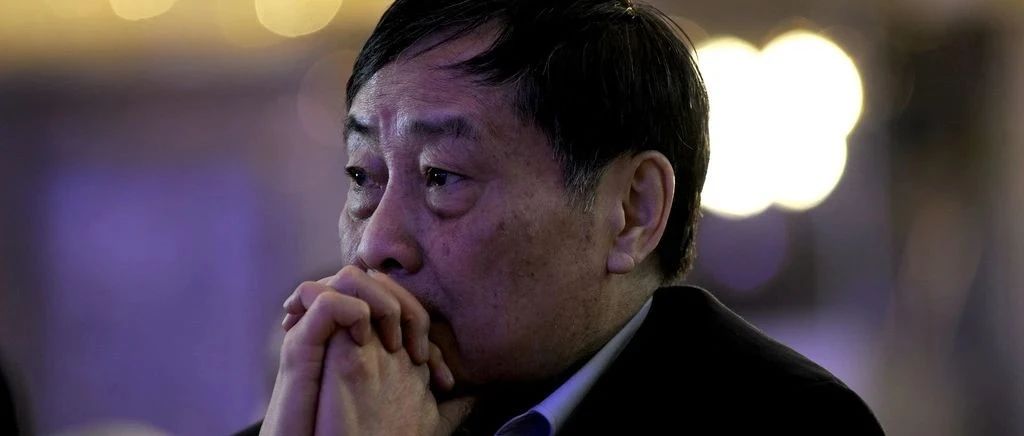
宗氏三兄妹在港起诉宗馥莉文书曝光 法院指令:被告需说明转出的108.5万美元下落
Mei Ri Jing Ji Xin Wen· 2025-07-17 00:18
Group 1 - The core issue revolves around a legal dispute among the heirs of the late Zong Qinghou, founder of Wahaha, with three individuals claiming to be his children suing his daughter, Zong Fuli, for control over family assets [2][9][26] - The lawsuit was filed in December 2024, just months after Zong Qinghou's death, indicating that family conflicts had already begun to surface [11][26] - A temporary injunction has been issued by the Hong Kong High Court, preventing Zong Fuli and Jian Hao Ventures Limited from disposing of or reducing the assets in a bank account held in the name of Jian Hao Ventures Limited [11][28] Group 2 - The plaintiffs are seeking information regarding the current balance of the HSBC account, the status of approximately $1.085 million that was transferred out, and detailed accounts of asset movements since February 2024 [27][28] - Jian Hao Ventures Limited is identified as a key offshore trust entity, with reports suggesting that Zong Qinghou established a family trust worth $2.1 billion for his descendants [34] - The legal dispute raises questions about the validity of the will that allegedly names Zong Fuli as the sole heir, as well as the biological relationship of the plaintiffs to Zong Qinghou [39]
娃哈哈遗产大战,谁是正“宗”?
和讯· 2025-07-16 09:32
Core Viewpoint - The article discusses the ongoing inheritance dispute within Wahaha Group following the death of its founder, Zong Qinghou, highlighting the complexities of family dynamics, legal battles, and corporate restructuring that may impact the company's future [3][15]. Group 1: Inheritance Dispute - Three individuals claiming to be Zong Qinghou's illegitimate children have filed lawsuits in Hong Kong and Hangzhou courts to claim a share of a $2.1 billion trust and 29.4% equity in Wahaha Group, valued at over 20 billion yuan [3][12]. - The legal proceedings hinge on establishing paternity, as non-marital children have equal inheritance rights under Chinese law, but must prove their relationship through DNA testing [4][12]. - The key figure in the inheritance dispute is Du Jianying, a former high-ranking executive at Wahaha, who is alleged to be the mother of the claimants and has significant control over various subsidiaries [5][10]. Group 2: Corporate Restructuring - Following Zong Qinghou's death, Zong Fuli has taken over as chairman and initiated significant reforms, including the closure of 18 production facilities, which has caused internal unrest among employees [6][7]. - The closures primarily affected factories not under the control of Zong Fuli's enterprise system, while new production lines were established in other regions, indicating a strategic shift in operations [8][10]. - The restructuring efforts have raised concerns among distributors, with reports of three provincial distributors halting orders due to fears over supply stability amid ownership changes [15]. Group 3: Broader Implications for Family Businesses - The inheritance battle at Wahaha reflects a larger trend in China's private sector, where over 80% of private enterprises are family-owned and are facing succession challenges as the first generation of entrepreneurs ages [11][15]. - Family trusts are increasingly favored as a wealth management tool to protect family assets from business risks, but they require careful planning and integration with other financial strategies to be effective [14]. - The outcome of the Wahaha inheritance case may set important precedents for wealth transfer and family business governance in China, particularly regarding the rights of non-marital children and the validity of cross-border trusts [15].

4143万家族信托被法院击穿,富人最后的避风港塌了?
阿尔法工场研究院· 2025-07-14 17:35
Core Viewpoint - The recent court ruling declaring a domestic family trust "invalid" has sparked significant discussion in the wealth management sector regarding the asset protection capabilities of family trusts, highlighting that the safety of trusts is not determined by their geographical location but by the legality of the assets and the professionalism of their structure [1][2][4]. Group 1: Domestic Family Trusts - The case involving the family trust of an individual named Cui, which was ruled invalid by the court, was primarily due to the illegal source of the assets involved, as Cui was convicted of bribery and fraud [7][12]. - The trust in question was likely not a standard family trust managed by a domestic trust company but rather a private fund lacking risk isolation capabilities [10][11]. - The ruling emphasizes that the effectiveness of a trust relies on the legality of the asset sources and compliance with trust laws, rather than inherent flaws in the domestic trust system [14][15][19]. Group 2: Growth and Safety of Domestic Trusts - The scale of domestic family trusts has rapidly increased, surpassing 5 trillion yuan by the end of 2023, demonstrating their potential for reliable risk isolation when established in compliance with legal standards [17]. - Key safety features of compliant domestic trusts include asset independence from the grantor's liabilities and protection of marital property through pre-marital trust establishment [17][18]. - The security of domestic trusts fundamentally depends on adherence to legal regulations and the separation of ownership, management, and beneficiary rights [19]. Group 3: International Trusts and Risks - High-profile cases, such as that of Zhang Lan's offshore trust, illustrate that international trusts are not inherently safer than domestic ones, as they can also be subject to legal challenges and asset claims [20][23][40]. - Zhang Lan's case revealed that retaining control over trust assets can lead to the trust being deemed ineffective, emphasizing the importance of proper trust structure and compliance with legal requirements [35][39]. - The complexities of international trusts can lead to hidden risks, including tax compliance issues and legal conflicts across jurisdictions, which can complicate asset management and increase costs [48][49]. Group 4: Trust Structure and Design - The safety of both domestic and international trusts hinges on three core principles: the legality of the assets, the professionalism of the trust structure, and the alignment with family needs [50][72]. - Trusts must ensure complete transfer of ownership to the trustee, clear beneficiary rights, and the selection of qualified trustees to mitigate risks [53][66]. - Trust structures should be adaptable to changing family circumstances and legal environments, allowing for necessary adjustments to maintain effectiveness [55][67]. Group 5: Common Misconceptions - There is a prevalent misconception that offshore trusts serve solely as tax evasion tools; however, recent regulations have significantly reduced their effectiveness in this regard [60][61]. - Trusts require ongoing management and oversight, contrary to the belief that they can be set up and forgotten [62][63]. - The size of the trust does not correlate with its safety; rather, the design and compliance of the trust structure are critical [65].

娃哈哈百亿“遗产案”,谁拿到了真遗嘱?
阿尔法工场研究院· 2025-07-14 17:35
Core Viewpoint - The internal family conflict within the Zong family, particularly regarding the inheritance of Wahaha Group, has escalated into a legal battle, potentially impacting the company's future and governance structure [1][2][17]. Group 1: Family Conflict and Legal Proceedings - Zong Fuli, seen as the sole successor of Wahaha Group, is facing a lawsuit from three half-siblings who claim to be the illegitimate children of the late Zong Qinghou, seeking to reclaim $1.8 billion in trust benefits and a 29.4% equity stake in the company, valued at over 20 billion RMB [1][2][7]. - The three plaintiffs, Zong Jichang, Zong Jieli, and Zong Jisheng, allege that Zong Qinghou established an offshore trust for them, which has not been fully funded, leading to disputes over asset management and potential asset transfer by Zong Fuli [3][5][9]. - The legal battle includes a request for a restraining order against Zong Fuli to prevent her from handling the trust assets, alongside claims for interest and damages due to alleged asset transfers [5][9]. Group 2: Implications for Wahaha Group - The outcome of the lawsuit could significantly affect Zong Fuli's position and the overall ownership structure of Wahaha Group, as the plaintiffs could gain legal recognition as heirs if they successfully establish paternity and challenge the validity of Zong Qinghou's will [17][18]. - The complexity of the case involves cross-border inheritance laws and trust regulations, which may prolong the legal proceedings for 3 to 5 years, creating uncertainty for the company's governance [9][19]. - Wahaha Group has stated that the family dispute is an internal matter and does not impact the company's operations, but legal experts suggest that a successful claim by the plaintiffs could disrupt the current control and management of the company [17][18]. Group 3: Background and Future Considerations - The conflict stems from a lack of clear inheritance distribution by Zong Qinghou, who had previously presented Zong Fuli as his only child, leading to public perception issues and potential brand trust erosion for Wahaha [18][19]. - Experts recommend that family businesses implement transparent and legally compliant wealth transfer strategies to avoid such disputes, emphasizing the importance of clearly defined beneficiary roles and trust structures [19].

宗馥莉遭三名“同父异母”弟妹起诉,“娃哈哈公主”卷入21亿美元家族信托争夺战
Sou Hu Cai Jing· 2025-07-14 16:01
Core Viewpoint - The lawsuit against Wahaha Group's chairwoman, Zong Fuli, by her half-siblings over a $2.1 billion trust inheritance has unveiled family secrets and raised concerns about the company's future and asset management [1][2][3]. Group 1: Lawsuit Details - Zong Fuli is accused of misappropriating $2.1 billion from a family trust established by her father, Zong Qinghou, and the plaintiffs are seeking to freeze related assets [1][2]. - The total assets involved in the lawsuit amount to approximately 34 billion RMB, including an 18 billion RMB trust and over 20 billion RMB in equity [2][3]. - The plaintiffs have initiated simultaneous lawsuits in both Hong Kong and Hangzhou, demanding Zong Fuli fulfill her father's wishes regarding the trust and compensate for any losses incurred due to asset transfers [2][3]. Group 2: Family Background and Relationships - Zong Qinghou had a long-term, undisclosed relationship with Du Jianying, resulting in three children, which challenges the perception of Zong Fuli as the sole heir [6][8][9]. - The three plaintiffs, Jacky Zong, Jessie Zong, and Jerry Zong, have provided DNA evidence confirming their relationship with Zong Qinghou [8][9]. - Du Jianying, previously a key figure in Wahaha's management, has been referred to as the "shadow wife" of Zong Qinghou, indicating a complex family dynamic [9][11]. Group 3: Company Management and Strategy - Following Zong Qinghou's death, Zong Fuli has faced significant challenges in managing Wahaha, including internal disputes and public scrutiny regarding her leadership [15][20]. - Zong Fuli has initiated a strategy termed "Hongsheng Transformation," which involves decentralizing the company's factory system and outsourcing production, leading to the closure of 18 factories [18][19]. - The company's shift to outsourcing has sparked controversy, with some stakeholders perceiving it as a betrayal of Zong Qinghou's legacy of self-production and quality control [19][20].
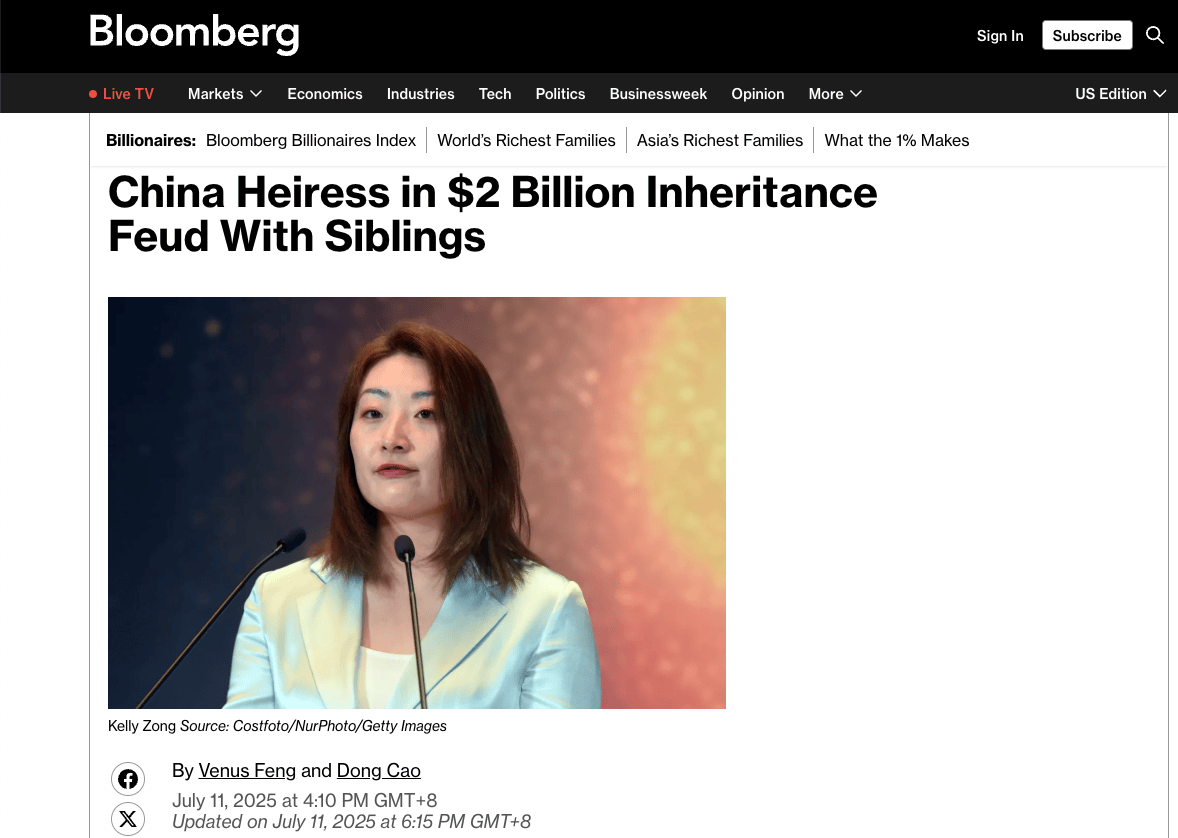
宗馥莉因遗产被起诉?娃哈哈:家族内部事务与公司业务无关联
YOUNG财经 漾财经· 2025-07-14 01:24
Core Viewpoint - The article discusses a legal dispute involving Zong Fuli, the daughter of Wahaha's founder Zong Qinghou, who is being sued by her half-siblings over inheritance rights related to a family trust worth approximately $1.8 billion [2][4]. Group 1: Legal Dispute Overview - Zong Fuli is being sued by her half-siblings, Zong Jichang, Zong Jieli, and Zong Jisheng, who claim equal inheritance rights as children of Zong Qinghou [2][4]. - The lawsuit centers around a family trust established by Zong Qinghou, which is believed to be a significant part of his estate planning [4][5]. - The plaintiffs are seeking to freeze a HSBC account associated with the trust, which reportedly had a balance of about $1.8 billion as of early 2024 [4]. Group 2: Inheritance Rights and Legal Considerations - A key focus of the dispute is whether non-marital children have equal inheritance rights compared to marital children, as per Chinese law [5][6]. - Legal experts note that while the law provides for equal rights, practical challenges may arise, including the need for DNA testing to establish paternity [5][7]. - The validity of the trust and its terms will also be scrutinized, including whether all legal heirs' rights were adequately considered during its establishment [6][7].
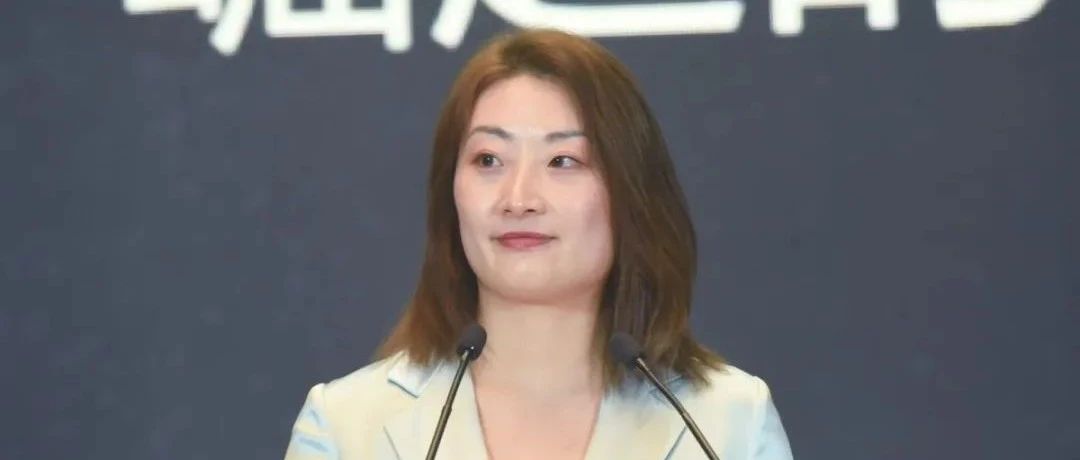
宗馥莉因遗产被起诉?娃哈哈:家族内部事务与公司业务无关联
Nan Fang Du Shi Bao· 2025-07-13 15:36
据观察者网、环球时报等媒体报道,娃哈哈董事长宗馥莉因资产纠纷在香港被起诉,三名原告是宗继昌 (Jacky Zong)、宗婕莉(Jessie Zong)和宗继盛(Jerry Zong)。原告律师确认,这三人是宗馥莉 的"同父异母弟妹"。三名原告主张他们作为宗庆后的子女,应享有平等的继承权或信托受益权,要 求"拿回信托资金"。 娃哈哈创始人宗庆后与原配施幼珍育有一女宗馥莉,长期被视为娃哈哈帝国唯一接班人。如今另外三名 子女的"横空出现",围绕高达18亿美元的信托资金向宗馥莉发起诉讼,也让娃哈哈再度陷入舆论漩涡。 上述舆论持续发酵,娃哈哈及宗馥莉方面目前仍未公开回应。娃哈哈相关工作人员则回复称,家族内部 事务,与公司的运营及业务并无关联。 对此,南都湾财社记者联系娃哈哈相关工作人员进行求证,娃哈哈方面表示;"家族内部事务,与公司 的运营及业务并无关联。公司不会提供任何答复口径或相关回应。" 纠纷爆发: 原告自称宗庆后非婚生子女 三人起诉要求拿回信托资金 娃哈哈集团创始人宗庆后去世,其"独女"宗馥莉成为接班人。然而近期香港法庭的一则遗产官司则透 露,宗馥莉实际上有三名同父异母的弟妹。三名原告首次公开主张其为宗庆后非婚 ...