Physical AI

Search documents
Kodiak AI Scales Autonomous Driving with NVIDIA DRIVE Hyperion
Globenewswire· 2026-03-16 20:30
Core Insights - Kodiak AI, Inc. is collaborating with NVIDIA to enhance its next-generation autonomous driving solutions using the NVIDIA DRIVE Hyperion architecture, which is designed for scalability and safety in autonomous vehicle deployment [1][2][5] Group 1: Technology and Innovation - The NVIDIA DRIVE Hyperion architecture will support Kodiak's driverless vehicles, featuring two NVIDIA DRIVE AGX Thor centralized computers that provide up to 1,000 INT8 TOPS and 2,000 FP4 TFLOPS of AI compute power, optimized for real-time interpretation of complex driving conditions [2][3] - Kodiak's virtual driver, the Kodiak Driver, integrates advanced AI software with modular, vehicle-agnostic hardware, ensuring adaptability and performance across various platforms [4] Group 2: Market Position and Achievements - Kodiak is recognized as a leader in autonomous trucking, having deployed the Kodiak Driver in 20 trucks by the end of 2025, marking it as the only company providing driverless service on customer-owned Class 8 trucks without human operators [3][4] - The company aims to address supply chain challenges through its driverless solutions, positioning itself as a trusted leader in autonomous ground transportation [5]


NXP Delivers New Innovations for Advanced Physical AI with NVIDIA
Globenewswire· 2026-03-16 20:30
Core Insights - NXP Semiconductors has announced innovative robotics solutions aimed at reliable, secure, real-time data processing and transport, enabling advanced functionalities such as sensor fusion and machine vision [2][4] - The collaboration with NVIDIA integrates the NVIDIA Holoscan Sensor Bridge with NXP's SoCs, significantly reducing component count, footprint, power consumption, and costs while simplifying software complexity [2][4] Group 1: Product Development - NXP's new integrated robotics solutions provide powerful edge intelligence and low-latency networking, facilitating safe and secure real-time communication [4][6] - The first solutions in NXP's robotics portfolio include a machine vision solution based on the i.MX 95 applications processor and a motor control solution utilizing i.MX RT1180 crossover MCUs, designed to support industrial protocols like EtherCAT® and TSN [7] Group 2: Industry Impact - The advancements in physical AI, particularly through humanoid robots, require high-performance computing architectures for synchronized motor controls and real-time perception [3][5] - NXP's collaboration with NVIDIA aims to create a unified architecture for full-body humanoid robotics, combining NXP's expertise in edge processing and functional safety with NVIDIA's AI infrastructure [5][6] Group 3: Availability and Market Position - The new robotics solutions are expected to be available in the first half of 2026, marking a significant step in accelerating the development and deployment of physical AI [8] - NXP Semiconductors reported a revenue of $12.27 billion in 2025, positioning itself as a trusted partner in innovative solutions across various markets including automotive and industrial [9]


SoftAcuity and Atomic Gravity Partner to Advance Physical AI in Mission-Critical Environments — Showcasing Surgical Innovation at NVIDIA GTC
Businesswire· 2026-03-16 18:56
Core Insights - SoftAcuity has announced new AI capabilities for its Brilliant Assistant platform, developed in partnership with Atomic Gravity, aimed at enhancing surgical technologies in critical healthcare environments [1] Group 1: Company Developments - The collaboration combines SoftAcuity's advanced surgical display system with Atomic Gravity's technology to improve the digital operating room experience [1]


Webus International Officially rebrands as Wetour Robotics, Establishes Austin, Texas Headquarters for Physical AI and Wearable Robotics
Globenewswire· 2026-03-16 13:00
Core Viewpoint - Wetour Robotics Limited has officially changed its name from Webus International Limited and is transitioning from a travel technology provider to a Physical AI infrastructure company focused on wearable robotics [1][2]. Company Name Change - The name change to Wetour Robotics reflects the company's strategic evolution and was approved by shareholders on February 27, 2026 [2]. - The new name will be effective on the Nasdaq Capital Market starting March 17, 2026, with shares continuing to trade under the ticker symbol "WETO" [2]. Headquarters and Research Center - The company has established its U.S. headquarters and principal research center in Austin, Texas, chosen for its concentration of robotics and AI talent, proximity to the University of Texas at Austin, and established infrastructure for advanced technology [3][4]. Technology Strategy - The core of Wetour Robotics' technology strategy is the Orchestra platform, a next-generation operating system designed for Physical AI and wearable robotics [5]. - Orchestra externalizes computing power from wearable devices into a high-performance AI hub, allowing for lightweight and energy-efficient wearable hardware [6]. Open Architecture Approach - The Orchestra platform will feature an open architecture, enabling third-party hardware manufacturers to integrate with it while retaining proprietary capabilities in its core intelligence engine [7]. - The company aims to empower non-technical builders to create innovative applications, emphasizing that the future of computing will involve dedicated hubs for processing while wearables handle specific tasks [7]. Future Developments - Further details regarding the company's technology roadmap, research partnerships, and product development timeline will be provided in future communications [8].

Nvidia Stock Investors Just Got Great News From CEO Jensen Huang. It's Time to Buy.
Yahoo Finance· 2026-03-16 11:08
Core Insights - Nvidia has been a significant player in the AI sector, with its stock increasing by 1,100% since January 2023, although it has only risen 1% in the past six months [1] - CEO Jensen Huang reassured investors about the sustainability of AI spending, projecting that data center spending will reach $3 trillion to $4 trillion annually by 2030 [2][6] Group 1: AI Market Dynamics - Companies are developing more complex AI models, with advancements from GPT-3 to GPT-5 showcasing a shift from basic text arrangement to solving multistep problems through reasoning [3] - Reasoning models require more computational power, leading to increased demand for Nvidia GPUs for both training and inference, which broadens AI use cases [4] Group 2: Future Opportunities - Huang highlighted the evolution of AI towards "physical AI," which focuses on autonomous machines, presenting a significant opportunity for growth in the sector [5] - The top five hyperscalers are expected to spend $700 billion on capital expenditures in 2026, indicating a potential tripling or quadrupling of the market by the end of the decade, with annual growth rates projected between 32% and 41% [6]
8 Best Drone Stocks to Buy for the Next 3 Years
Insider Monkey· 2026-03-16 04:03
Industry Overview - The demand for drones has surged in recent years as militaries adopt this technology for its affordability and precision in striking enemy targets, reducing reliance on ground forces [2] - The addressable market for drones is projected to reach approximately $400 billion over the next decade, making it one of the fastest-growing investment opportunities in physical artificial intelligence [3] - Analysts note that the growth in global defense markets is driven by an increase in geopolitical conflicts, with drones being a significant contributor to this growth [4] Future Trends - The market is expected to evolve around unmanned drones, autonomous systems, and robots, which will transform the operations of various institutions [5] - The integration of AI is anticipated to drive a manufacturing boom and create numerous use cases for physical AI, with drones leading this growth [5] Company Spotlight: AeroVironment, Inc. - AeroVironment, Inc. (NASDAQ:AVAV) is identified as one of the top drone stocks to buy for the next three years, with 40 hedge fund holders [10] - The company reported diluted earnings per share of $0.64 from a quarterly revenue of $408 million, missing Wall Street expectations of $0.68 and $476 million respectively [11] - AeroVironment's unfunded backlog at the end of the quarter totaled $3 billion, including $1.4 billion related to the U.S. Space Force's SCAR program, which is no longer expected to be awarded [12] - Analysts have adjusted price targets for AeroVironment, with BTIG lowering it to $330 from $415 while maintaining a Buy rating, and Canaccord Genuity reducing it to $300 from $330, also keeping a Buy rating [10][14] - The company designs and manufactures unmanned aerial vehicles, ground robot systems, and loitering munition systems [14]

Physical AI 系列活动硅谷站!
Founder Park· 2026-03-13 13:04
Core Insights - The article discusses the upcoming Physical AI Meetup focused on multi-modal and edge computing advancements in AI, emphasizing the extension of AI capabilities into the physical world [2][3]. Event Overview - The event will take place on March 19 in Sunnyvale, Silicon Valley, featuring discussions on Conversational AI, Visual Agents, and Edge AI [2][9]. - It includes a morning session with keynote speeches and a roundtable discussion, followed by an afternoon workshop on voice AI using the TEN + Agora R1 suite [4][10]. Morning Session Details - The morning session will run from 9:30 AM to 12:30 PM, featuring a roundtable discussion on opportunities in multi-modal AI hardware [10]. - Key speakers include Morgan Suo from MiniMax, Diana Zhu from RiseLink, and Feng Xiaodong from Agora, among others [10][11]. Afternoon Workshop Details - The afternoon workshop will focus on hands-on experience with the Agora R1 voice AI hardware suite, running from 1:30 PM to 4:30 PM [17]. - Participants will have the opportunity to work in teams, with 40 R1 devices available for practical use, and successful teams can take their devices home [17][21]. Technical Highlights - The TEN Framework is designed for building conversational voice AI, supporting low-latency and multi-modal voice interactions [17][21]. - The workshop will provide comprehensive development materials and support for participants to create custom voice agents [22].

Reply at NVIDIA GTC: Digital Twins and Physical AI Driving the Next Stage of Industrial Value Creation
Businesswire· 2026-03-13 10:24
Group 1: Digital Twins and Physical AI - Reply is showcasing the integration of digital simulation and physical automation at NVIDIA GTC, highlighting projects for the Otto Group and the industrial edge domain [1] - The focus is on two use cases: self-learning edge AI in manufacturing and logistics, and an intelligent robot coordination system for the Otto Group [1] - The application "The AI Fast Lane for the Industrial Edge powered by NVIDIA on AWS" optimizes AI models on autonomous edge devices, processing sensor data in real time [1] Group 2: Collaboration and Technology - Reply and Google are jointly presenting a solution for intelligent robot coordination using cloud-based robot simulation, enabling the creation of precise digital twins without local workstations [1] - The Otto Group will demonstrate intelligent robot coordination using a digital twin that replicates the warehouse and robotic systems, leading to centralized fleet coordination and optimized processes [1] - The integration of NVIDIA Omniverse with Isaac Sim allows continuous improvements and efficiency gains to be validated using synthetic data [1] Group 3: Financial Performance - Reply Group reported a consolidated turnover of €2,483.6 million for 2025, an increase of 8.0% from €2,300.5 million in 2024 [2] - Consolidated EBITDA for the same period was €467.6 million, indicating positive financial indicators [2]

NVIDIA GTC Keynote 2026
NVIDIA· 2026-03-12 22:17
Watch NVIDIA Founder and CEO Jensen Huang’s GTC keynote as he unveils the latest breakthroughs in AI and accelerated computing. See how agentic AI, AI factories, and physical AI are powering the next generation of intelligent systems. ...
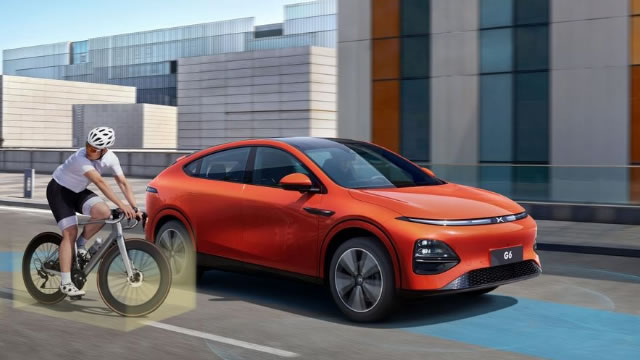
XPeng to Launch VLA 2.0 Autonomous Driving Platform in 2027
ZACKS· 2026-03-12 15:16
Core Insights - XPeng Inc. is set to globally launch its second-generation Vision-Language-Action autonomous driving system, VLA 2.0, in 2027, with Volkswagen as the first partner for deployment in China [1][10] - VLA 2.0 represents a significant advancement in AI-driven driving technology, utilizing an end-to-end vision-to-action architecture that enhances responsiveness in complex driving environments [2][3] Technology Development - The VLA 2.0 system improves driving efficiency by 23% in initial testing, demonstrating strong performance in dense urban and mixed-traffic scenarios [3] - The system is capable of handling complicated road conditions, including erratic vehicles and accident zones, and supports operation in diverse environments [3] Future Prospects - XPeng's CEO, He Xiaopeng, anticipates that full autonomy could be achieved within one to three years, with robotaxis already undergoing supervised public-road testing in China [4] - The AI foundation model of VLA 2.0 is designed for broader applications beyond passenger vehicles, including robotaxi fleets and humanoid robots, as part of XPeng's Physical AI strategy [5] Software Updates - XPeng plans to release an over-the-air update, XOS 5.8.7, for European customers, enhancing adaptive cruise control and lane-centering functions, along with other system improvements [6] Strategic Focus - The development of VLA 2.0 underscores XPeng's commitment to advancing autonomous driving technology and integrating intelligent systems across various mobility platforms [7]