eSIM技术

Search documents
苹果华为OPPO将推出eSIM手机 没有SIM卡 手机要变薄了
Xin Lang Cai Jing· 2025-10-15 04:19
Core Viewpoint - The recent approval for eSIM technology marks a significant advancement in mobile communication, transitioning from physical SIM cards to virtual electronic SIM cards, enhancing device design and functionality [1] Group 1: eSIM Technology Overview - eSIM technology replaces physical SIM cards with electronic data files, allowing users to activate mobile services without inserting a physical card [1] - The absence of a physical card slot enables thinner devices and provides more internal space for expansion [1] Group 2: Commercial Launch and Support - China Unicom, China Mobile, and China Telecom received approval on October 13 to conduct commercial trials for eSIM mobile services [1] - During the trial phase, online activation will not be available; users must visit physical stores to activate their eSIM services [1] Group 3: Supported Devices - Current eSIM-compatible devices include models from Apple, Huawei, and OPPO, which will be available for sale soon [1]
以后手机不用插卡了?三大运营商获eSIM手机商用试验批复许可
Qi Lu Wan Bao· 2025-10-15 03:09
Core Insights - eSIM technology has gained significant attention recently, with major Chinese telecom operators receiving approval for commercial trials of eSIM mobile services [1][9]. Group 1: eSIM Technology Overview - eSIM, or embedded SIM, is a virtual SIM card embedded directly into device chips, eliminating the need for physical SIM cards [2]. - eSIM functions similarly to traditional SIM cards, allowing devices to connect to networks for calls, texts, and data [2]. Group 2: Advantages of eSIM - eSIM is significantly smaller than traditional SIM cards, occupying only 10% of the space, which allows for better design and waterproofing of devices [5]. - The integration of eSIM can reduce hardware costs, especially for wearable devices, making them more compact and efficient [5]. - Users can easily switch numbers online without visiting physical stores, streamlining the process of changing carriers or plans [5]. Group 3: Current Status and Support - China Unicom, China Mobile, and China Telecom have all received approval to begin eSIM mobile service trials, with millions of users already served [9]. - Currently, users must visit physical stores to activate eSIM services, as online processing is not yet available [6][7]. - Supported devices include eSIM phones from brands like Apple, Huawei, and OPPO, which will be available for sale soon [11].




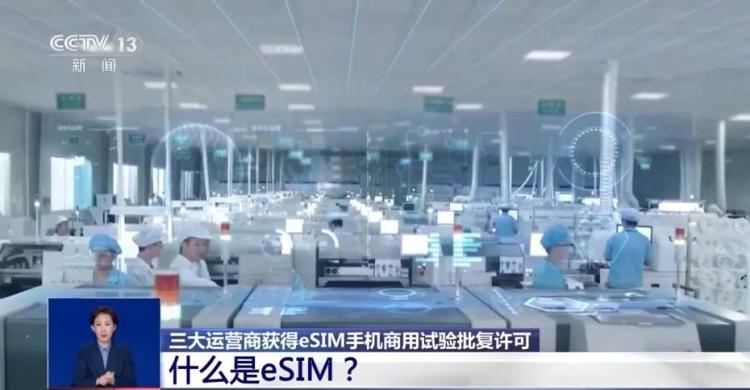
eSIM商用落地,手机进入“无卡时代”?
Ke Ji Ri Bao· 2025-10-15 01:32
Core Viewpoint - The announcement by China Unicom, China Mobile, and China Telecom regarding the approval for eSIM mobile service trials marks a significant step in the commercial deployment of eSIM technology in China, transitioning from IoT and wearable devices to mobile phones [1] Group 1: eSIM Technology Overview - eSIM, or embedded SIM, integrates the SIM card directly into the device's chip, eliminating the need for a physical SIM card [2] - eSIM technology allows for multiple SIM profiles, providing greater internal space for other components and enhancing waterproof and dustproof capabilities due to the absence of a SIM card slot [2] Group 2: Security Aspects of eSIM - eSIM reduces the risks of loss, theft, or tampering compared to traditional SIM cards, as it is embedded in the device and requires physical damage to remove [3] - The security of eSIM is enhanced through encryption protocols and requires user authorization for activation, making it more difficult to clone or hack compared to traditional SIM cards [3] Group 3: User Experience and Business Operations - Users must visit physical stores to activate eSIM services, as online activation is not yet available [4] - Users can convert existing physical SIM cards to eSIM and manage their eSIM profiles through service providers, with specific procedures for deactivating or transferring eSIM numbers [4]
移动通信向“多模态”eSIM模式演进
Zheng Quan Ri Bao· 2025-10-15 01:28
Core Points - The introduction of eSIM technology in China marks a significant shift in mobile communication, allowing users to download their phone numbers directly onto their devices without the need for a physical SIM card [2][3][5] - Major telecom operators in China, including China Mobile, China Telecom, and China Unicom, have launched eSIM services, indicating a collaborative effort to enhance user experience and expand service offerings [3][4][6] - The eSIM technology is expected to drive innovation in the mobile device industry, creating new opportunities for manufacturers and software developers within the supply chain [7][9] Telecom Operators - China Mobile has launched a comprehensive eSIM product line that includes not only smartphones but also smartwatches, tablets, and automotive devices, emphasizing seamless connectivity across various devices [3] - China Telecom has expanded its eSIM services to include smartphones, building on its previous offerings for wearables and automotive devices, thus promoting a transition from traditional SIM cards to eSIM technology [3][5] - China Unicom has received approval to operate eSIM services for smartphones, marking a significant milestone in its efforts to create a full-spectrum eSIM ecosystem [3][6] User Engagement - There is a high level of interest among users for eSIM services, with over 170,000 reservations reported for eSIM mobile services as of the latest updates [4] - The eSIM functionality provides users with the same communication services as traditional SIM cards, including voice calls, data usage, and SMS [4][5] Industry Opportunities - The launch of eSIM services is seen as a catalyst for growth in the mobile device supply chain, with companies like Unisoc and others actively developing eSIM products and technologies [8][9] - The eSIM technology is anticipated to become a standard feature in domestic smartphones and IoT devices within the next 3 to 5 years, potentially unlocking a multi-billion yuan market opportunity [9]


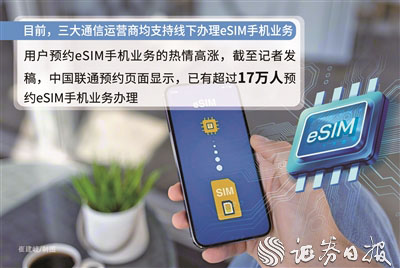
eSIM手机,来了!
新华网财经· 2025-10-15 01:25
Group 1 - The three major telecom operators in China, China Unicom, China Mobile, and China Telecom, have officially received approval to conduct commercial trials for eSIM mobile services [4][5]. - eSIM, or embedded SIM, is integrated directly into the device's chip, eliminating the need for a physical SIM card [6][7]. - eSIM technology reduces the size of the SIM card to only 10% of the traditional SIM card, allowing for better waterproofing and reliability in devices [9]. Group 2 - eSIM offers convenience for users, allowing them to switch numbers online without visiting physical stores, which is referred to as "over-the-air provisioning" [9]. - The integration of eSIM can lower hardware costs, especially for wearable devices, making them more compact and efficient [9]. - Users can easily switch to local carriers while traveling, avoiding the hassle of roaming charges or purchasing local SIM cards [9].

eSIM手机,来了!
券商中国· 2025-10-14 23:48
Core Viewpoint - The introduction of eSIM technology by major Chinese telecom operators marks a significant advancement in mobile connectivity, promising enhanced user experiences and potential for widespread adoption in the future [2][4]. Group 1: eSIM Launch and Adoption - China Unicom, China Mobile, and China Telecom have all received approval to conduct commercial trials for eSIM mobile services, indicating a collective move towards this new technology [2]. - As of the latest updates, nearly 70,000 users have registered for eSIM through China Unicom, while China Mobile's appointment system saw over 150,000 users in just four hours [2]. Group 2: Understanding eSIM - eSIM, or embedded SIM, is a digital SIM that is integrated directly into devices, eliminating the need for physical SIM cards [4][5]. - This technology allows devices to connect to networks without the traditional SIM card, functioning similarly to conventional SIM cards in terms of capabilities [4]. Group 3: Advantages of eSIM - eSIM technology reduces the physical space required for SIM cards to just 10% of traditional SIM cards, enhancing device design and potentially improving waterproofing [7]. - The integration of eSIM can lower costs for manufacturers, especially for wearable devices, and simplifies the process of changing service providers or plans through online applications [6][7]. - Users can easily switch to local carriers while traveling without the hassle of obtaining a physical SIM card, thus enhancing convenience [7].
实探三大通信运营商营业厅:移动通信向“多模态”eSIM模式演进
Zheng Quan Ri Bao· 2025-10-14 15:48
Core Insights - The launch of eSIM services by major telecom operators in China marks a significant shift towards integrated SIM technology, enhancing user experience and device capabilities [1][2][3] Group 1: eSIM Technology Overview - eSIM technology integrates SIM card functionality into a device's internal chip, allowing users to download their phone number without a physical SIM card [1] - The introduction of eSIM is expected to reduce the physical space required for SIM cards, leading to thinner devices with improved durability against dust, water, and shocks [1] Group 2: Telecom Operators' Initiatives - All three major telecom operators in China have launched eSIM services, with China Mobile offering a comprehensive range of eSIM products across various devices, including smartwatches and tablets [2] - China Telecom has already supported eSIM for wearables and vehicles, and the new mobile eSIM service will transition traditional SIM card services to a more lightweight and versatile model [2] - China Unicom has received approval to operate eSIM services for mobile phones, marking a significant step in their eSIM ecosystem development [2] Group 3: User Engagement and Market Response - There is a high demand for eSIM services, with over 170,000 users already having made reservations for eSIM mobile services [3] - eSIM-enabled devices will provide users with the same functionalities as traditional SIM cards, including voice calls, data services, and SMS [3] Group 4: Future Developments and Industry Opportunities - More eSIM-compatible devices are expected to be launched soon, with plans for devices that support both traditional SIM and eSIM functionalities [5] - The opening of eSIM services is anticipated to create new growth opportunities for terminal manufacturers and software developers within the supply chain [6] - Companies like Unisoc and Cheng Tian Wei Ye are actively developing eSIM products and exploring partnerships to capitalize on the emerging market [7][8] - The eSIM technology is projected to become a standard feature in domestic smartphones and IoT devices within the next 3 to 5 years, potentially unlocking a trillion-yuan industry opportunity [8]
中国联通、中国移动、中国电信集体官宣
Xin Lang Cai Jing· 2025-10-14 15:08
Core Insights - The three major telecom operators in China, China Unicom, China Mobile, and China Telecom, have officially received approval to conduct commercial trials for eSIM mobile services [1][2]. Group 1: eSIM Overview - eSIM, or embedded SIM, is integrated directly into the device's chip, eliminating the need for a physical SIM card [3][4]. - eSIM functions similarly to traditional SIM cards, allowing devices to connect to the internet, make calls, and send messages [3]. Group 2: Advantages of eSIM - eSIM is significantly smaller than traditional SIM cards, occupying only 10% of the space, which allows for better design and increased waterproofing of devices [5]. - The integration of eSIM can reduce costs, especially for wearable devices, as it allows for more compact designs [5]. - Users can easily switch numbers online without visiting physical stores, streamlining the process of changing carriers or plans, referred to as "over-the-air provisioning" [5]. - eSIM eliminates the risk of physical damage to SIM cards and facilitates easier switching to local carriers while traveling, avoiding roaming charges [5].
eSIM手机,来了!
中国基金报· 2025-10-14 13:57
Core Viewpoint - The introduction of eSIM technology by China's three major telecom operators marks a significant advancement in mobile connectivity, offering enhanced user experiences and operational efficiencies [1][3]. Group 1: eSIM Launch and Adoption - China Unicom, China Mobile, and China Telecom have all received approval to conduct commercial trials for eSIM services, with users able to register for eSIM through respective apps and physical stores [3]. - The eSIM technology is now available for sale across 31 provinces and regions in China, indicating a nationwide rollout [3]. Group 2: eSIM Technology Overview - eSIM, or embedded SIM, is integrated directly into the device's chip, eliminating the need for a physical SIM card while maintaining the same functionalities as traditional SIM cards [5][6]. - The size of eSIM is only 10% of that of traditional SIM cards, which helps save space in devices and improves waterproof capabilities by removing the need for a SIM card slot [7]. Group 3: User Benefits and Convenience - eSIM allows for easier number changes and service provider switching through online applications, reducing the need for physical visits to stores and the hassle of SIM card delivery [7]. - Users can conveniently switch to local carriers while traveling, avoiding roaming charges and the need to purchase local SIM cards [7].

三大运营商“开路”eSIM,库克直播间带货,iPhone Air将正式发售
Guo Ji Jin Rong Bao· 2025-10-14 13:50
Core Insights - Apple's CEO Tim Cook visited China, announcing the launch of the iPhone Air, which will be available for pre-order on October 17 and officially released on October 22 [2][11] - The iPhone Air is described as the "thinnest iPhone ever," featuring a thickness of only 5.6 mm and utilizing eSIM technology exclusively, eliminating the need for a physical SIM card [4][5] - The launch of eSIM services by China's three major telecom operators coincides with the iPhone Air's release, allowing for broader adoption of this technology in the region [7] Product Launch - The iPhone Air will be available for pre-order starting at 9 AM on October 17, with sales commencing on October 22 [2] - The device's design focuses on extreme thinness, achieved through the use of eSIM technology, which allows for more internal space [4][5] - Apple's decision to eliminate the physical SIM card slot aligns with a global trend towards eSIM adoption, with predictions of approximately 1 billion eSIM-enabled smartphones by the end of 2025 [4] Market Strategy - Tim Cook's appearance in a Douyin (TikTok) live stream marks a strategic shift for Apple in engaging with Chinese consumers through e-commerce and live streaming [11][19] - This live stream is part of a broader strategy to enhance Apple's presence in the Chinese market, especially during major shopping events like "Double 11" [19] - Apple's revenue from the Greater China region showed a year-on-year increase of 4% in Q3 2025, indicating a positive trend in sales performance [19][22] eSIM Technology - eSIM technology is gaining traction, with over 500 global operators supporting it, including major Chinese telecom companies [7] - The introduction of eSIM services by Chinese telecom operators allows for the sale of the iPhone Air without restrictions, facilitating its market entry [7] - Apple's historical role in the development of eSIM technology dates back to 2011, with commercial implementation starting in 2014 [5]