
AI

Search documents
Fiverr Stock Before Q4 Earnings: Buy Now or Wait for Results?
ZACKS· 2026-02-13 17:40
Core Insights - Fiverr International (FVRR) is set to report its fourth-quarter 2025 results on February 18, 2026, with projected net sales between $104.3 million and $112.3 million, indicating a growth of 1% to 8% compared to the fourth quarter of 2024, reflecting macroeconomic uncertainty [1][8] - The Zacks Consensus Estimate for net sales stands at $108.71 million, suggesting a growth of 4.86% from the previous year's quarter [1] - The estimated earnings for the fourth quarter are 76 cents per share, showing an 18.75% increase from the year-ago quarter [2] Financial Performance - FVRR's adjusted EBITDA for the fourth quarter is projected to be between $23.9 million and $27.9 million, with a margin of 24% at the midpoint [7] - The company has a history of earnings surprises, with a 10% surprise in the last reported quarter, having beaten the Zacks Consensus Estimate once in the last four quarters [5] Market Trends - The U.S. independent professional workforce grew by 4.3% to an estimated 6.9 million, indicating a positive trend in freelance work [9] - Demand for AI-related services has surged, with AI video creator demand increasing by 66%, searches for AI automation rising by 136%, and prompt engineering growing by 76% [9] Stock Performance - Fiverr shares have declined by 36% over the past six months, underperforming both the Zacks Retail-Wholesale sector and the Zacks Internet – Commerce industry [10] - The stock is currently trading at a forward price-to-sales multiple of 1.08x, which is below the industry average of 1.86x, indicating a potentially undervalued position [13] Strategic Initiatives - The company underwent an AI-focused restructuring in September 2025, resulting in a 30% reduction in workforce, which is expected to enhance profitability and margin expansion [7][8] - Management is targeting a 25% adjusted EBITDA margin by 2026, reflecting a strategic shift towards higher-value projects and AI-powered marketplace capabilities [14]



The market is 'too sanguine' about inflation, says Lazard's Eric Van Nostrand
Youtube· 2026-02-13 17:34
Joining us here at Post9 this morning with his take is Lazard Asset Management CIO Eric Vonstren. Eric also served as assistant Treasury Secretary for economic policy under the Biden White House. Welcome, Eric.It's good to see you. >> Good to be with you, Carl. >> Um, so David's been and remains pretty constructive on this notion of a reaceleration.Are you with him. Well, I think we're seeing a lot of upside in the aggregate numbers, but I think the important thing to recognize is that the US economy, its g ...


HUA HONG SEMICONDUCTOR LTD(1347.HK)4Q25 RESULTS:RE-RATING UNDERWAY ON ADVANCED NODE POTENTIAL
Ge Long Hui· 2026-02-13 17:17
Core Viewpoint - Hua Hong reported mixed results for 4Q25, with revenue slightly exceeding guidance but net income falling short due to increased R&D labor costs. Management provided a cautious outlook for 1Q26, expecting revenue to decline slightly while gross profit margin (GPM) improves due to demand in AI and localization [1][2][3]. Group 1: 4Q25 Results - Revenue grew 22% year-over-year and 4% quarter-over-quarter to a historical high, driven by a 3% increase in wafer shipments, particularly in MCU and PMIC segments [2]. - GPM narrowed by 0.6 percentage points quarter-over-quarter to 13%, aligning with prior guidance [2]. - Net income was recorded at US$17 million, missing estimates by 53-54%, primarily due to elevated R&D labor costs, although partially offset by foreign exchange gains and government subsidies [2]. Group 2: 1Q26 Guidance - Management guided for 1Q26 revenue of US$650-660 million, representing a 1% decline quarter-over-quarter at the midpoint and 6% below consensus [3]. - GPM is expected to be between 13% and 15%, reflecting a 1 percentage point improvement quarter-over-quarter and above consensus expectations [3]. - Factors contributing to revenue include price increases in PMIC, MCU, and discrete devices for AI applications, alongside strong domestic demand in China, though offset by depreciation in new fabs and weak consumer electronics demand [3]. Group 3: 2026 Outlook - The company is expected to benefit from increased exposure to auto, industrial, communication, and computing sectors, projected to account for approximately 36% of revenue in 2025 [4]. - Initiatives focused on China-for-China and demand for AI-related products are anticipated to mitigate the impact of declining consumer electronics demand [4]. - Potential catalysts for stock performance include the completion of the HLMC (Fab5) injection in 2H26 and ongoing developments in domestic GPUs at HLIC (Fab6) [4]. Group 4: Valuation - Revenue and margin estimates have been slightly revised downward due to moderate near-term demand, leading to EPS cuts of 7% for 2026 and 5% for 2027 [5]. - Despite this, the market is expected to re-rate Hua Hong based on advanced node potential, prompting an increase in target price to HK$116.5, based on a 4.0x price-to-book ratio [5].
Colliers International(CIGI) - 2025 Q4 - Earnings Call Transcript
2026-02-13 17:02
Financial Data and Key Metrics Changes - For Q4 2025, the company generated revenues of $1.6 billion, up 5% year-over-year, with adjusted EBITDA of $245 million, reflecting a 6% increase [10][11] - Full-year internal revenue growth was solid at 5%, with commercial real estate segment net revenue up 7% [10][11] - Investment management ended the year with over $108 billion in assets under management, flat relative to September 30 [6][14] Business Line Data and Key Metrics Changes - Capital Markets revenues increased by 13%, driven by strong activity in the U.S., while leasing revenues rose by 3% [11][12] - Outsourcing solutions grew by 8%, with valuation practices contributing significantly [11] - Engineering segment net revenue was up 8%, supported by recent acquisitions, with a strong revenue backlog providing visibility for future growth [12][16] Market Data and Key Metrics Changes - The U.S. market showed strong performance, particularly in Capital Markets and leasing activities, while EMEA and Asia Pacific experienced modest growth [11][35] - The company expects low teens top-line growth in commercial real estate for 2026, with Capital Markets projected to grow in the high teens [16][63] Company Strategy and Development Direction - The company is focused on expanding its diversified platform and pursuing further acquisitions, with the recent acquisition of Ayesa Engineering expected to enhance growth opportunities [4][5] - AI is viewed as a productivity and growth enabler, helping to automate routine tasks and improve efficiency across all segments [8][9] - The company aims to maintain a strong partnership model, emphasizing inside ownership to align leaders with clients and shareholders [7] Management's Comments on Operating Environment and Future Outlook - Management expressed optimism about entering 2026 with strong momentum and a healthy pipeline, expecting solid internal growth and contributions from recent acquisitions [7][16] - The company anticipates mid-teens growth across key operating metrics, driven by favorable trends in infrastructure and urbanization [16][63] Other Important Information - The company plans to maintain leverage at around 2x, with the recent acquisition expected to add approximately 0.7 turns of leverage on a pro forma basis [15][70] - Fundraising targets for 2026 are set between $6 billion and $9 billion, with several funds currently in the market [13][66] Q&A Session Summary Question: Organic growth in engineering - Management noted strong demand for services, with opportunities to increase pricing and a growing workforce to meet demand [19][20] Question: Capital allocation and share buybacks - Management indicated a preference for careful capital management, with no immediate plans for stock buybacks due to ongoing acquisitions [28] Question: Macro perspective on Capital Markets - Management does not expect rate cuts to impact their outlook, citing pent-up demand for transactions as a key driver for growth [35][36] Question: AI's impact on business - Management sees AI as a margin enhancer rather than a disruptor, emphasizing its role in improving efficiency and decision-making [72] Question: Ayesa acquisition and growth expectations - Management expects high single-digit organic growth for Ayesa, leveraging its expertise in high-demand markets [80][81] Question: Fund performance and fundraising - Fund performance has been strong, with the flagship fund exceeding benchmarks, aiding in fundraising efforts [67][68]

Colliers International(CIGI) - 2025 Q4 - Earnings Call Transcript
2026-02-13 17:02
Financial Data and Key Metrics Changes - For Q4 2025, the company generated revenues of $1.6 billion, up 5% year-over-year, with overall internal growth for the quarter being essentially flat due to strong prior comparisons [10] - Adjusted EBITDA for the quarter was $245 million, reflecting a 6% increase over the previous year, in line with revenue growth [10] - The company's leverage declined to 2x as of December 31, benefiting from strong seasonal cash flows [15] Business Line Data and Key Metrics Changes - The commercial real estate segment net revenue increased by 7% in Q4, with Capital Markets revenues rising by 13%, primarily driven by strong activity in the U.S. [11] - Leasing revenues grew by 3%, led by the U.S. in office and industrial asset classes [11] - The engineering segment net revenue was up 8%, supported by recent acquisitions, while investment management net revenues increased by 6% [12] Market Data and Key Metrics Changes - The U.S. market continued to show strength, particularly in Capital Markets, which is expected to maintain high teens growth in 2026 [64] - EMEA and Asia Pacific markets experienced modest growth, with expectations for improvement in 2026 [36] Company Strategy and Development Direction - The company is focused on expanding its diversified platform and has recently agreed to acquire Ayesa Engineering, which will enhance growth avenues and strengthen its global presence [5] - The strategy emphasizes leveraging AI as a productivity and growth enabler, improving efficiency and margins while allowing professionals to focus on higher-value advisory services [8][9] Management's Comments on Operating Environment and Future Outlook - Management expressed optimism about entering 2026 with strong momentum and a healthy pipeline, expecting solid internal growth and contributions from recent acquisitions [7] - The company anticipates mid-teens growth across its key operating metrics for 2026, driven by a recovery in Capital Markets and strong demand in engineering and investment management [16] Other Important Information - The company raised $2.1 billion in new capital commitments during Q4 and $5.3 billion for the full year, with a fundraising target of $6 billion to $9 billion for 2026 [13][66] - The integration costs in the investment management segment are expected to continue impacting margins through the first half of 2026 [12][32] Q&A Session Summary Question: Organic growth in engineering - Management noted strong demand for services and opportunities to increase pricing, with hiring ongoing to meet demand [19][20] Question: Capital allocation and share buybacks - Management indicated a preference for careful capital management and highlighted the focus on acquisitions rather than share buybacks at this time [29] Question: Macro perspective on Capital Markets - Management does not expect rate cuts to influence their outlook, citing pent-up demand for transactions as a key driver for growth [36] Question: AI's impact on business - Management views AI as a margin enhancer rather than a disruptor, emphasizing its role in improving efficiency and enabling professionals to focus on complex transactions [71][72] Question: Ayesa acquisition and future growth - Management highlighted the strategic importance of the Ayesa acquisition for expanding into new markets and leveraging existing capabilities [56][87]
Colliers International(CIGI) - 2025 Q4 - Earnings Call Transcript
2026-02-13 17:00
Colliers International Group (NasdaqGS:CIGI) Q4 2025 Earnings call February 13, 2026 11:00 AM ET Speaker11Welcome to the Colliers International Fourth Quarter Year-End Investors Conference Call. Today's call is being recorded. Legal counsel requires us to advise that the discussion scheduled to take place today may contain forward-looking statements that involve known and unknown risks and uncertainties. Actual results may be materially different from any future results. Performance or achievements contempl ...
ANET Earnings Surge: AI Infrastructure Adds Muscle to Growth
Youtube· 2026-02-13 16:50
Back on Morning Trade Live, let's focus on networking stocks. Arista Networks is rallying this morning after a strong earnings report. More on that in a moment with Marley.But here is where some of the other networking stocks are trading this morning. We have Arista Networks up 6%. Motorola up 610.F5 is up 3.2%, but Cisco sitting out the rally today off the back of some of those margin and memory concerns earlier this week off the back of its report down 1.2% right now. So, a bit mixed, but Arista Networks ...


Where is Denison Mines Corp. (DNN) Headed According to the Street?
Yahoo Finance· 2026-02-13 16:44
Denison Mines Corp. (NYSE:DNN) is one of the best strong buy penny stocks to invest in. On February 4, CIBC reiterated a Buy rating on Denison Mines Corp. (NYSE:DNN) with a price target of C$6.50. Denison Mines Corp. (NYSE:DNN) also received a rating update from Raymond James on January 14, with the price lifting the price target on the stock to C$5.05 from C$4.30 while maintaining an Outperform rating on the shares. The firm told investors that the price target update was a part of its mining update, addi ...

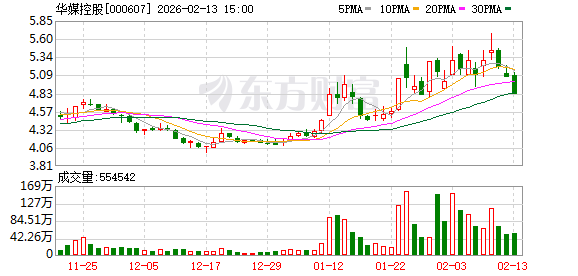
华媒控股:公司旗下杭州华媒文化发展与国内AI漫剧企业杭州水母智能科技联合开发精品AI漫剧
Mei Ri Jing Ji Xin Wen· 2026-02-13 16:33
Group 1 - The core viewpoint of the article is that Huamei Holdings is exploring opportunities in the AI comic drama sector through a partnership with Hangzhou Water Mother Intelligent Technology Co., Ltd. [2] - Huamei Holdings' subsidiary, Hangzhou Huamei Cultural Development Co., Ltd., is involved in the joint development of high-quality AI comic dramas, focusing on the integration of culture and technology [2] - The investment amount from the company in this initiative is relatively small and is not expected to have a significant impact on the company's overall performance [2]

戴尔科技股价反弹,AI服务器业务受关注
Jing Ji Guan Cha Wang· 2026-02-13 16:33
经济观察网美股市场因"AI恐慌"情绪蔓延出现大幅下跌,科技股成为重灾区。戴尔科技股价次日显著反 弹,表现优于板块及大盘指数。 股票近期走势2月13日,戴尔科技股价显著反弹。截至收盘,股价报118.35美元,单日上涨4.90%。当日 振幅达5.85%,成交金额约5.75亿美元,换手率为0.73%。这一表现优于所属的电脑硬件板块(当日下跌 0.52%)及纳斯达克指数(当日下跌0.15%)。 机构观点近期机构观点显示,市场对戴尔科技的估值分歧明显(目标价区间111-200美元),反映其AI业务 增长与传统PC业务压力的平衡博弈。部分分析认为,若AI服务器需求持续兑现,可能缓解PC板块的利 润担忧。 以上内容基于公开资料整理,不构成投资建议。 股价异动原因技术性修复与市场情绪缓和:前一日大幅下跌后,部分投资者逢低买入,推动股价技术性 反弹。市场对AI相关股票的抛压暂缓,恐慌情绪有所收敛。AI服务器业务基本面支撑:戴尔AI服务器 订单强劲(如2025年11月披露的订单达123亿美元),部分投资者仍看好其长期业务转型潜力。机构数据 显示,2026年2月约78%的机构给予"买入或增持"评级,目标均价为162.17美元,高于 ...