一体化循环经济产业链

Search documents
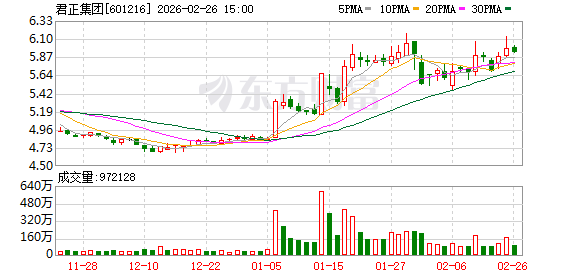
君正集团:公司将充分利用一体化循环经济产业链优势,持续发挥产业链各环节的联动作用
Zheng Quan Ri Bao· 2026-02-26 09:40
Core Viewpoint - Junzheng Group is leveraging its integrated circular economy industrial chain to enhance product competitiveness and promote sustainable development [2] Group 1: Company Strategy - The company has established a complete vertical integration of circular economy industrial chains, including "coal-electricity-chlor-alkali chemical," "coal-electricity-special metallurgy," and "limestone-electrolytic calcium-coal coking-methanol-BDO-PTMEG" [2] - Junzheng Group aims to continuously improve operational management capabilities and explore advancements in production automation and intelligence [2] Group 2: Industry Position - As a pilot demonstration enterprise for circular economy in Inner Mongolia, the company is committed to efficient resource utilization [2] - The company plans to leverage the interconnectedness of various segments within its industrial chain to enhance competitiveness, particularly in caustic soda products [2]


天原股份前三季度净利润同比增长132.63% 磷矿项目稳步推进
Zheng Quan Shi Bao Wang· 2025-11-03 00:06
Core Viewpoint - Tianyuan Co., Ltd. reported a revenue of 8.49 billion yuan for the first three quarters of 2025, a year-on-year decrease of 14.89%, while net profit reached 31.69 million yuan, an increase of 132.63% [1] Financial Performance - The company's net profit for the third quarter was 15.05 million yuan, showing a year-on-year growth of 113.90% and a quarter-on-quarter increase of 185.66% [1] - The overall performance in terms of revenue and net profit has been relatively stable this year [1] Shareholder Activity - As of the end of September, Hong Kong Central Clearing Limited increased its holdings by 564,900 shares, while Jinan Hanxiang Investment Management Partnership (Limited Partnership) became the company's tenth largest shareholder [1] Business Strategy - The company focuses on chemical and supply chain businesses, implementing refined management and "extreme manufacturing" projects to adapt to market changes [1] - Tianyuan Co. is advancing its "Double 1000" plan for titanium dioxide products, emphasizing differentiation and high added value [2] - The company is establishing an integrated circular economy industrial chain based on "chlorine-titanium-phosphorus-iron-lithium" and is actively sourcing or outsourcing in regions rich in lithium and titanium resources [2] Industry Trends - The domestic phosphate rock market is experiencing tight supply, with prices for 30% grade phosphate rock remaining above 900 yuan per ton for over two years [3] - The demand for lithium iron phosphate, which requires approximately 2 tons of phosphate rock to produce 1 ton, is driving growth in the phosphate chemical industry [4] - The domestic lithium iron phosphate supply chain is undergoing a chain reaction of "demand explosion - inventory reduction - accelerated expansion," with a projected industry capacity exceeding 3 million tons by 2026, a 50% increase from current levels [4]

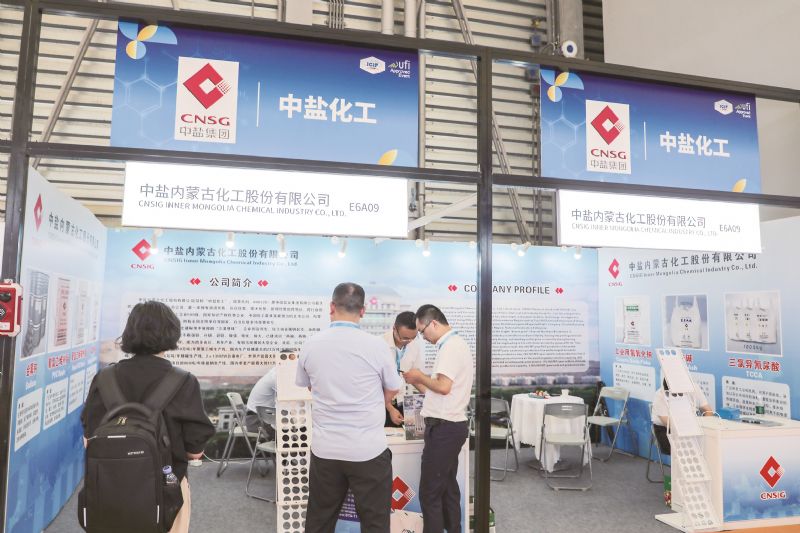
中盐化工子公司拟增资80亿引战投 加快国内最大天然碱矿开发提升优势
Chang Jiang Shang Bao· 2025-08-07 00:00
Core Viewpoint - The company, Zhongyan Chemical, is making significant moves to expand its alkali industry by increasing the registered capital of its wholly-owned subsidiary, Zhongyan Alkali Industry, to 8 billion yuan and introducing strategic investors [2][5]. Group 1: Investment and Capital Increase - Zhongyan Chemical plans to invest in Zhongyan Alkali Industry, raising its registered capital to 8 billion yuan, with a maximum funding scale of 3.92 billion yuan from strategic investors [2][5]. - The company successfully acquired the largest natural soda ash mining rights in China for 6.809 billion yuan, which will enhance its production capacity [4][5]. - Strategic investors, including Shandong Haihua Co., Ltd. and Inner Mongolia Mengyan Salt Industry Group, have agreed to invest a total of 3.12 billion yuan in Zhongyan Alkali Industry [5]. Group 2: Company Background and Market Position - Zhongyan Chemical has grown to become the third-largest alkali industry giant in China, with a current soda ash production capacity of 3.9 million tons [2][9]. - The company has a history of acquisitions, including a significant purchase of assets worth 4.148 billion yuan in 2019, which led to its rebranding [7][8]. - Despite recent challenges in the chemical industry, the company has maintained a cumulative net profit of approximately 7.7 billion yuan since its listing [9]. Group 3: Financial Health - As of June 30, 2025, the company's debt-to-asset ratio stands at 35.23%, indicating a healthy financial position with sufficient liquidity to cover its liabilities [9]. - The company reported a revenue of 5.998 billion yuan in the first half of 2025, reflecting a year-on-year decline of 5.76% due to increased market competition [9].