上市公司控制权转让

Search documents
买方锁定期5年、高自有资金门槛,上市公司控制权转让现新变化
第一财经· 2026-01-22 15:37
Core Viewpoint - Recent changes in the transfer of control rights in listed companies indicate a shift towards more structured and regulated transactions, aiming to prevent speculative behaviors and ensure that only capable buyers engage in acquisitions [4][11][12]. Group 1: Changes in Control Rights Transfer - The transfer of control rights in listed companies has seen a significant increase, with new practices emerging, such as shareholders relinquishing voting rights and committing to long lock-up periods [3][7]. - For instance, Huashi Technology (301218.SZ) reported a transfer of 11.32% of its shares while the original shareholders gave up 33.97% of their voting rights, indicating a trend away from voting rights delegation [3][9]. - New shareholders in companies like ST Keli Da (603828.SH) and Tian Chuang Fashion (603608.SH) are committing to a 60-month lock-up period, while original shareholders are agreeing to a 36-month lock-up [3][9]. Group 2: Regulatory and Market Implications - The recent changes are seen as a response to the explosive growth in control rights transactions, which have led to excessive stock price increases and potential market manipulation [4][11]. - Analysts suggest that these commitments will lead to a restructuring of evaluation standards and a more complex design of transaction schemes, promoting a competitive environment where only strong, demand-driven buyers prevail [5][12]. - The introduction of regulations by the China Securities Regulatory Commission (CSRC) prohibiting the delegation of voting rights further emphasizes the move towards stricter control in these transactions [10]. Group 3: Long-term Commitments and Financial Integrity - The new requirements, such as a 60-month non-transfer period and a minimum of 50% self-funding for acquisitions, aim to create a "risk firewall" and prevent the transfer of risks to the listed companies [13][14]. - These measures are intended to protect the integrity of listed companies and ensure that funds are used to enhance core business operations rather than for personal asset support [14]. - The shift signifies a transition from valuing control rights as mere power to recognizing the long-term responsibilities associated with governance and shareholder value creation [14].





买方锁定期5年、高自有资金门槛,上市公司控制权转让现新变化
Di Yi Cai Jing· 2026-01-22 12:00
Core Viewpoint - Recent changes in control rights transfer of listed companies aim to address past issues such as short-term speculation, leverage risks, and interest encroachment, promoting a more structured and responsible acquisition environment [1][7][8] Group 1: Changes in Control Rights Transfer - The transfer of control rights has seen a significant increase, with new practices emerging, such as the relinquishment of voting rights by original shareholders and extended lock-up periods for both old and new shareholders [1][3] - Companies like ST Keli Da and Tian Chuang Fashion have implemented commitments for a 60-month lock-up period and a 36-month prohibition on share pledging, with a requirement that at least 50% of the acquisition funds come from the acquirer's own capital [4][5] Group 2: Market Implications - Analysts suggest that these changes are designed to prevent market chaos and ensure that only capable and genuine buyers acquire control of listed companies, thereby restructuring the evaluation standards and transaction designs in the control rights market [2][6] - The new regulations are expected to lead to a more competitive environment where long-term capital with industrial backgrounds, state-owned platforms, and private equity funds will dominate the acquisition landscape [2][7] Group 3: Regulatory and Governance Aspects - The recent regulatory proposals indicate a shift away from allowing voting rights to be delegated, which could eliminate the practice of control rights transfer through voting rights delegation [5][8] - The emphasis on governance responsibility over mere control rights signifies a transition towards valuing long-term shareholder interests and corporate governance, moving away from speculative trading practices [7][8]
上市公司控制权转让新动向:部分公司大股东锁定期延长至5年
Jing Ji Guan Cha Bao· 2026-01-03 04:21
Core Viewpoint - The extended lock-up period for Tianchuang Fashion's share transfer is notable, as it exceeds the standard 18 months mandated by the China Securities Regulatory Commission, indicating the acquirer's confidence in the company's long-term prospects [2][3][10]. Group 1: Tianchuang Fashion - Tianchuang Fashion announced a control change plan on December 27, with the acquirer committing to a 5-year lock-up period for the shares acquired [2][3]. - The company's main business focuses on mid-to-high-end women's footwear, with financial data showing revenues of 1.274 billion yuan, 1.099 billion yuan, and 744 million yuan for the years 2023 to the first three quarters of 2025, respectively, alongside continuous net losses [4][5]. - The share transfer agreement involves the major shareholders, with Quanzhou Hetian and Hong Kong Gaochuang transferring a total of 459.59 million shares (10.95% of total shares) and 377.74 million shares (9.00% of total shares) for 345 million yuan and 283 million yuan, respectively, at a price of 7.50 yuan per share, reflecting a 10% discount to the pre-suspension price of 8.33 yuan [5][6]. Group 2: Shareholder Commitments - The new major shareholder, Anhui Xianrui, has committed to a 60-month lock-up and a 36-month pledge restriction on the shares acquired, while the existing shareholders have also made similar commitments regarding their remaining shares [7][10]. - The commitments from the shareholders aim to ensure stability and avoid risks associated with potential restructuring failures, as noted by investment banking professionals [10]. Group 3: Industry Context - The trend of extended lock-up periods is not unique to Tianchuang Fashion, as similar arrangements were observed in the share transfer of Aolian Electronics, where the acquirer also committed to a 5-year lock-up [8][9]. - The background of the new shareholders in both companies is linked to industries that are currently considered hot, which may influence the perceived risks and market reactions associated with these transactions [10][12].

上市公司控制权转让新动向:部分公司大股东锁定期延长至5年
经济观察报· 2026-01-03 04:20
Core Viewpoint - The article discusses the recent control changes in Tianchuang Fashion and Aolian Electronics, highlighting the extended lock-up periods for shares as a sign of confidence from new shareholders in the companies' long-term prospects [2][10]. Group 1: Tianchuang Fashion - Tianchuang Fashion announced a control change plan on December 27, with the new shareholders committing to a five-year lock-up period for their shares, significantly exceeding the 18-month requirement set by the China Securities Regulatory Commission [2][3]. - The company reported revenues of 1.274 billion yuan, 1.099 billion yuan, and 744 million yuan for the first three quarters of 2023 to 2025, with continuous net losses [5]. - The share transfer agreement involves the transfer of 45.959 million shares from the controlling shareholder, Quanzhou Hetian Investment Partnership, and 37.7745 million shares from the second-largest shareholder, Hong Kong Gaochuang, at a price of 7.50 yuan per share, representing a 10% discount to the pre-suspension price of 8.33 yuan [5][6]. Group 2: Aolian Electronics - Aolian Electronics also announced a control change on December 27, with the new major shareholder, Chaocheng Innovation, committing to a five-year lock-up period for the shares acquired through a transfer agreement [7][8]. - The share transfer involves 32.6667 million shares, accounting for 19.09% of the total share capital of Aolian Electronics [7]. - Similar to Tianchuang Fashion, the extended lock-up period is seen as a strategy to stabilize the company and mitigate risks associated with potential restructuring failures [10]. Group 3: Market Implications - The extended lock-up periods for both companies signal a trend where new shareholders are willing to commit to longer-term investments, possibly due to the attractiveness of the industries involved and the associated risks [10][12]. - The article notes that the different lock-up periods among companies, such as the 18-month commitment from Youbang Diding, may reflect the varying levels of confidence in the respective industries and the potential for market speculation [12].

明起复牌!中环环保控股股东将变更为北京鼎垣
Xin Lang Cai Jing· 2025-10-09 12:53
Core Viewpoint - The control of Anhui Zhonghuan Environmental Protection Technology Co., Ltd. is set to change as the current controlling shareholder Zhang Bozhong and his associates plan to transfer 16.6171% of the company's shares to Beijing Dingyuan and Jiaxing Dingkang for a total consideration of 598 million yuan, marking a significant shift in the company's governance structure [1][2]. Group 1: Share Transfer Details - The share transfer involves 70.5414 million shares at a price of approximately 8.48 yuan per share, totaling 598 million yuan [1]. - After the transfer, the controlling shareholder will be Beijing Dingyuan, and the actual controller will be Liu Yang [1]. Group 2: Strategic Implications - The company aims to leverage this control change for industrial transformation and upgrading, which is expected to inject new vitality and create significant growth opportunities [2]. - The transaction aligns with ongoing policies encouraging mergers and acquisitions among listed companies, aiming to enhance asset quality and operational efficiency [2]. Group 3: Future Considerations - Investors should monitor the new controlling shareholder's resource injection plans, strategic adjustments, and performance commitments, as these factors will influence the potential for a revaluation of the company's worth [3].

实控人夫妇正在卖上市公司控制权,女方被立案、留置
Sou Hu Cai Jing· 2025-08-20 06:06
Core Viewpoint - The announcement regarding the investigation and detention of the company's controlling shareholder and general manager, Yue Yamei, raises uncertainties about the ongoing transfer of control of Xinjiang Xiling Information Technology Co., Ltd. to Shanghai Shengxun and the impact on the company's governance structure [1][4]. Group 1: Company Background - Xinjiang Xiling Information Technology Co., Ltd. was listed on the Growth Enterprise Market on January 5, 2017, focusing on smart city and safe city industry application software product development and digital, intelligent information system solutions [2]. - Yue Yamei, born in 1962, has held various positions in the industry, including assistant engineer and deputy director in government roles, and has been the company's general manager since 2011 [2]. Group 2: Share Transfer Details - On August 15, the company announced the planned transfer of 47,979,000 shares (25.06% of total shares) held by controlling shareholders He Kaiwen and Yue Yamei to Shanghai Shengxun and Zunhong Zirui Growth Fund [1][3]. - The share transfer includes 19% of the shares at a price of 15.02 CNY per share, totaling approximately 546.43 million CNY, and an additional 6.06% at 15.16 CNY per share, totaling approximately 175.84 million CNY, bringing the total transaction value to approximately 722.27 million CNY [4][5]. Group 3: Impact of Investigation - The investigation and detention of Yue Yamei by the Alashankou Municipal Supervisory Committee introduces potential risks to the completion of the share transfer and the change in control of the company [1][5].

实控人夫妇正在卖上市公司控制权,女方被立案、留置
梧桐树下V· 2025-08-20 05:50
Core Viewpoint - The announcement regarding the investigation and detention of the company's controlling shareholder and general manager, Yue Yamei, raises uncertainties about the ongoing transfer of control of Xinjiang Xiling Information Technology Co., Ltd. [2][4] Group 1: Company Background - Xinjiang Xiling Information Technology Co., Ltd. was listed on the Growth Enterprise Market on January 5, 2017, focusing on smart city and safe city industry application software development and digital, intelligent information system solutions [3]. - Yue Yamei, born in 1962, has held various positions in the company since its inception, including general manager since 2011 [3]. Group 2: Share Transfer Details - On August 15, the company announced the planned transfer of 47,979,000 shares (25.06% of total shares) held by controlling shareholders Yue Yamei and He Kaiwen to Shanghai Shengxun and Zunhong Zirui Growth No. 1 Private Securities Investment Fund [2][4]. - The total transaction value for the share transfer is approximately 722.268 million yuan, with shares sold at prices of 15.02 yuan and 15.16 yuan per share [5]. Group 3: Changes in Shareholding Structure - Post-transfer, He Kaiwen will no longer hold any shares, while Yue Yamei will retain 7,640,000 shares (7.64% of total shares) [5][6]. - The new controlling shareholder will be Shanghai Shengxun, with a shareholding of 19.00%, while Zunhong Zirui Growth will hold 6.06% [6]. Group 4: Investigation Impact - The timing of the investigation and detention of Yue Yamei coincides with the critical phase of the control transfer, potentially complicating the process [6].
*ST华嵘控制权收购方资金尚未到位 上交所对潜在“新主”予以监管警示
Zheng Quan Shi Bao Wang· 2025-08-20 03:43
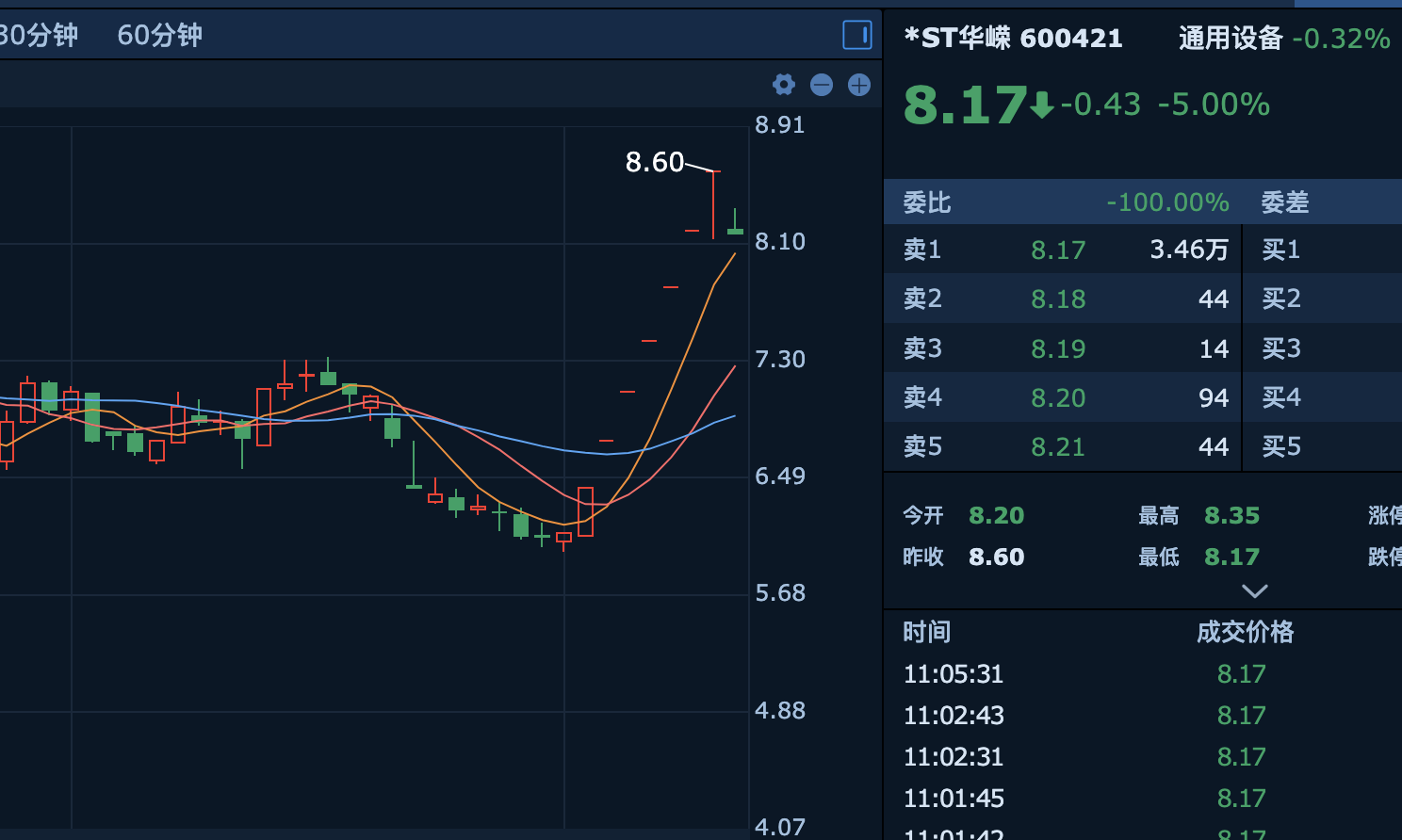
Core Viewpoint - *ST Huaron (600421) is experiencing a potential "rebirth" as its controlling shareholder plans to transfer the actual control of the listed company to Hainan Bocheng Huineng Technology Center (Limited Partnership) [1] Group 1: Share Transfer Details - The controlling shareholder, Zhejiang Hengshun Investment Co., Ltd., and its concerted party, Shanghai Tianji Investment Co., Ltd., signed a share transfer agreement with Bocheng Huineng on August 11, 2023 [3] - According to the agreement, Hengshun Investment will transfer 38.1368 million shares (19.50% of total shares) to Bocheng Huineng, while Shanghai Tianji will transfer 10.768 million shares (5.51% of total shares) [3] - After the transfer, Hengshun Investment and Shanghai Tianji will hold a combined 6.95% of the shares, while Bocheng Huineng will hold 25.01% [3] Group 2: Financial Aspects of the Acquisition - Bocheng Huineng is required to pay a cash consideration of 450 million yuan for the 25.01% stake, needing to raise an additional 210 million yuan [4] - Bocheng Huineng has committed to not using borrowed funds secured by the shares acquired in this transaction to pay for the share transfer price [4] - The company was established specifically for this acquisition, with a registered capital of 240 million yuan [4] Group 3: Regulatory and Market Reactions - The stock price of *ST Huaron has surged, achieving six consecutive trading limit-ups since its resumption on August 12, with a short-term increase of 33.96% [5] - The Shanghai Stock Exchange has issued a regulatory warning to Bocheng Huineng and Lin Mushun for failing to prepare the required detailed equity change report and appoint a financial advisor [6][7] - The company has highlighted the significant uncertainty regarding the completion of the acquisition, urging investors to be cautious [5]

三超新材: 简式权益变动报告书(刘建勋)
Zheng Quan Zhi Xing· 2025-08-04 16:35
Core Viewpoint - The report outlines the equity change of Nanjing Sanchao New Materials Co., Ltd, detailing the transfer of shares and the relinquishment of voting rights by key stakeholders, Liu Jianxun and Zou Yuyiao, to Wuxi Boda He Yi Technology Co., Ltd, indicating a strategic shift in control and governance of the company [1][5][8]. Summary by Sections Section 1: Basic Information - The report is prepared in accordance with relevant Chinese laws and regulations, including the Company Law and Securities Law, ensuring compliance with disclosure requirements [1][2]. Section 2: Equity Change Details - As of the report date, Liu Jianxun holds 9,951,420 shares, representing 8.71% of the total shares. The equity change involves a total transfer of 18,985,384 shares to Boda He Yi, with the first phase involving 10,250,000 shares at a price of 24.52 CNY per share [6][8]. Section 3: Purpose of Equity Change - The purpose of the equity change is for Boda He Yi to gain control over the company, reflecting confidence in the company's core business and future prospects. This move is expected to enhance the company's competitiveness and support its long-term development [5][6]. Section 4: Voting Rights Arrangement - Following the first phase of the share transfer, Liu Jianxun will relinquish all voting rights permanently, while Zou Yuyiao will forfeit voting rights for 60 months, after which 50% of his voting rights will be restored [7][19]. Section 5: Future Plans - There are no plans for further share increases or decreases by Liu Jianxun in the next 12 months, aside from the agreed transactions. The second phase of the share transfer is expected to be completed by June 30, 2026 [6][8]. Section 6: Financial Terms - The financial terms of the first phase include a total payment of 251,330,000 CNY, with specific amounts allocated to each seller. The second phase will have a price not lower than the market price at the time of transfer [12][14]. Section 7: Governance Changes - Post-transfer, Boda He Yi will have the right to appoint new board members and management, ensuring a shift in governance aligned with its strategic objectives [22][23]. Section 8: Compliance and Legal Obligations - Both parties are required to comply with legal obligations for information disclosure and share transfer procedures, ensuring transparency and adherence to regulatory standards [27][30].

北大医药新主面临待解后遗症
经济观察报· 2025-07-11 12:17
Core Viewpoint - The new controlling shareholder Xu Xiren has completed a management reshuffle at Peking University Pharmaceutical, but the company faces significant operational challenges and potential revenue loss due to the termination of key contracts with its largest client, Peking University International Hospital [2][5][6]. Group 1: Management Changes - After taking control, Xu Xiren appointed himself as CEO and made significant changes to the management team, including the resignation of long-standing executives [3][12]. - The previous management team, which had successfully turned around the company's performance, has largely departed, raising concerns about continuity and stability [12][14]. Group 2: Operational Challenges - Peking University Pharmaceutical is experiencing disruptions due to historical issues related to employee benefits, leading to protests from retired staff that have affected administrative operations [5]. - The company has relied heavily on its relationship with Peking University International Hospital, which accounted for approximately 78% of its drug distribution revenue in 2024 [15][16]. Group 3: Financial Implications - The termination of the contract with Peking University International Hospital, which was valued at 12 billion yuan over three years, poses a risk of losing approximately 910 million yuan in annual sales and 36.66 million yuan in net profit starting in 2025 [19][22]. - Despite the termination, the company had previously indicated a potential future collaboration worth 40.5 million yuan, but this has been contradicted by recent statements confirming the end of all cooperation [20][22].