
专利质量提升

Search documents
我国专利含金量不断提升
Xin Hua Wang· 2026-01-26 02:58
Core Insights - The core focus of the news is on the progress of intellectual property work in China by 2025, highlighting significant increases in patent grants, trademark registrations, and the overall quality of patents [1][2]. Group 1: Patent and Trademark Statistics - By 2025, China authorized 972,000 invention patents, received 78,000 PCT international patent applications, and registered 4.206 million trademarks [1]. - By the end of 2025, the effective number of domestic invention patents in China (excluding Hong Kong, Macau, and Taiwan) is expected to reach 5.32 million, with a high-value invention patent ownership rate of 16 per 10,000 people [1]. Group 2: Quality Improvement Measures - The National Intellectual Property Administration (NIPA) has implemented various measures to enhance patent quality, including adjusting indicators to focus on high-value patents and eliminating financial subsidies for patent applications [2]. - NIPA has emphasized the importance of practical value and technological content in patents, discouraging the "quantity over quality" approach [2]. Group 3: Industry Contributions - Enterprises have become the main contributors to high-value invention patents, with 280,000 companies holding 1.764 million high-value invention patents, accounting for over 75% of the total [4]. - The value added by patent-intensive industries has increased from 12 trillion yuan in 2020 to over 18 trillion yuan in 2024, contributing significantly to GDP growth [4]. Group 4: Employment and Economic Impact - The employment in patent-intensive industries reached 52.67 million in 2024, an increase of approximately 1.9 million from the previous year, demonstrating a positive impact on economic stability and job creation [4]. - The digital economy-related industries within patent-intensive sectors have seen a continuous increase, with the combined value added of information and communication technology manufacturing and services exceeding 8 trillion yuan, accounting for over 40% of the total [5].
截至2025年底 国内(不含港澳台)发明专利有效量达532万件 人工智能专利有效量居全球前列
Zhong Guo Zheng Quan Bao· 2026-01-23 23:19
Core Viewpoint - The State Council's press conference highlighted significant progress in China's intellectual property (IP) work, with a focus on the increase in the number of valid invention patents and the enhancement of innovation quality by 2025 [1][2]. Group 1: Patent Statistics and Quality Improvement - By the end of 2025, the number of valid invention patents in China (excluding Hong Kong, Macau, and Taiwan) is expected to reach 5.32 million, with a per capita high-value invention patent ownership of 16 [2][3]. - In 2025, a total of 972,000 invention patents, 1.461 million utility model patents, and 666,000 design patents were authorized, with a reduction in the examination cycle for invention patents to 15 months and an accuracy rate of 95.6% [2]. - The value-added of patent-intensive industries is projected to account for 13.38% of GDP, exceeding the targets set in the 14th Five-Year Plan [2]. Group 2: Focus on High-Value Patents - The number of high-value invention patents reached 2.292 million, with a year-on-year growth rate 2.2 percentage points higher than the overall level [2]. - Key areas of growth in valid invention patents include information technology management methods, computer technology, and medical technology, with AI patents ranking among the highest globally [2][3]. Group 3: International IP Protection Efforts - The National Intellectual Property Administration (NIPA) is enhancing foreign-related IP protection, addressing issues faced by domestic companies in global trade, and has established 99 overseas IP dispute response guidance platforms across 30 provinces [4]. - In 2025, NIPA provided over 4,800 guidance and consulting services related to cross-border e-commerce IP disputes, recovering losses amounting to 2.75 billion yuan [4]. - The agency aims to strengthen its efforts in foreign-related IP protection, improve coordination mechanisms, and enhance the capabilities of experts in handling complex disputes [5].
国家知识产权局回应商标法新一轮修改:加大“心机商标”整治力度
Xin Lang Cai Jing· 2026-01-23 13:44
Core Viewpoint - The recent amendment to the Trademark Law in China aims to enhance trademark management and protection, promoting economic and social development through a comprehensive and systematic approach [1][3]. Group 1: Key Focus Areas of the Amendment - The amendment addresses three main areas: 1. Problem-oriented solutions to prominent issues in the trademark field, including stricter regulations against malicious trademark registration and hoarding, and the potential cancellation of trademarks that have not been used for three consecutive years [3][4]. 2. Optimization of business processing to facilitate convenience for enterprises, such as reducing the trademark registration opposition period from three months to two months and allowing applicants to withdraw their applications [3][4]. 3. Alignment with high-standard international trade rules to support high-level openness, including the protection of unregistered well-known trademarks and the introduction of dynamic marks as registrable trademarks [4]. Group 2: Impact on Patent Quality - The effective number of invention patents in China has surpassed 5 million, indicating a significant improvement in patent quality, which reflects the country's innovation level [5]. - The National Intellectual Property Administration has implemented a combination of policies to enhance patent quality through coordinated efforts across application, agency, and examination stages [5].

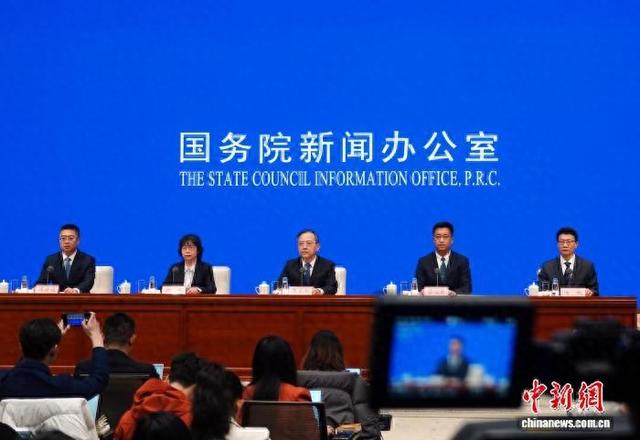
国家知识产权局:加大对违反诚实信用原则专利申请行为的打击力度
Xin Lang Cai Jing· 2026-01-23 04:26
Group 1 - The core viewpoint of the news is that the National Intellectual Property Administration emphasizes the importance of patent quality as a key indicator of innovation and aims to enhance patent quality through various measures [1][2] - The "14th Five-Year Plan" has adjusted the indicator from "the number of invention patents per 10,000 people" to "the number of high-value invention patents per 10,000 people," highlighting the practical value and technical content of patents [1] - A joint document from nine departments has been issued to prohibit the use of patent application and authorization numbers as primary criteria for talent evaluation and project assessment, focusing instead on the transformation value and industrialization prospects [1] Group 2 - The administration is intensifying efforts to combat dishonest patent application behaviors, with a focus on improving the quality of patent examination and achieving an examination conclusion accuracy rate of over 95% for invention patents [2] - The "Blue Sky" action has been continuously carried out to strengthen the comprehensive governance of the intellectual property agency industry, targeting serious violations and enhancing self-regulation within the industry [2] - Special actions for patent transformation and utilization are being implemented to promote the transfer and transformation of patents with industrialization prospects, supporting collaboration between key enterprises and research institutions [2]
多维施策提升专利质量 知识产权护航创新发展(人民网)
Ren Min Wang· 2025-07-10 03:33
Core Viewpoint - The article highlights the significant advancements in China's patent system over the past 40 years, emphasizing the need for continuous improvement in patent quality and the optimization of patent-related mechanisms to support innovation and economic development [1][2]. Group 1: Patent Quality Improvement Measures - The National Intellectual Property Administration (NIPA) is implementing various measures to enhance patent quality, including adjusting evaluation indicators and promoting a focus on industrialization prospects rather than just quantity [2]. - From January to May this year, NIPA conducted 84,000 priority examinations, 116,000 expedited examinations, and 9,300 delayed examinations, showcasing a commitment to improving examination efficiency [2]. - A total of 109,000 patent applications entered examination through pre-examination channels, marking a 37.5% year-on-year increase [2]. Group 2: Role of Intellectual Property Protection Centers - The 77 national intellectual property protection centers cover 80% of national high-tech industrial development zones, providing "one-stop" protection for 171,000 registered entities [3]. - These centers authorized 75,000 invention patents after pre-examination from January to May this year, demonstrating their effectiveness in supporting high-value patent development [3]. - The centers handled 38,000 rights protection cases with an average resolution time of under two weeks, indicating their efficiency in dispute resolution [3]. Group 3: Regulation and Development of Patent Agency Industry - NIPA is promoting the healthy development of the patent agency industry through policy guidance, market environment optimization, and talent foundation strengthening [4]. - A "14th Five-Year" special plan for high-quality development of the patent agency industry has been initiated to guide the sector towards professionalization and internationalization [4]. - Measures include the issuance of procurement demand standards and the establishment of a multi-level training system to enhance service quality in the patent agency sector [4][5].
