丝绸之路外交

Search documents
廉德瑰:没有美国的实力却总想模仿美国,这是当前日本外交最大的毛病
Xin Lang Cai Jing· 2025-12-21 07:18
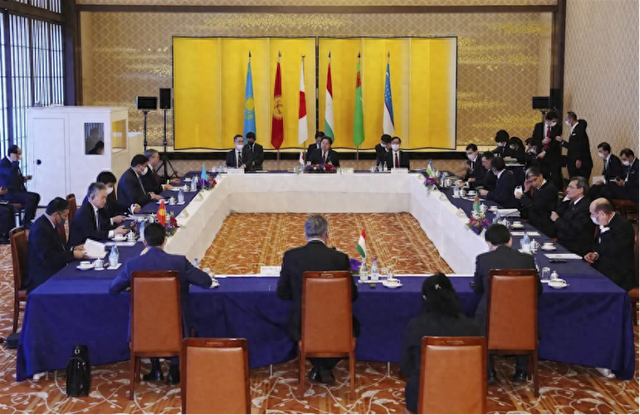
Core Viewpoint - The Japan-Central Asia summit held on December 19-20 aims to strengthen Japan's diplomatic ties with Central Asian countries amidst geopolitical challenges, particularly in light of the ongoing Russia-Ukraine conflict and China's influence in the region [2][11]. Group 1: Timing and Purpose of the Summit - The timing of the summit is significant as Japan's Foreign Minister is facing various diplomatic challenges, raising questions about whether the summit is intended to align with U.S. strategies or to break diplomatic deadlocks [2][3]. - Japan's primary goal in hosting the summit is to attract investment and enhance trade cooperation with Central Asian countries, which are seeking to diversify their foreign partnerships [2][4]. Group 2: Japan's Strategic Interests in Central Asia - Central Asia holds strategic value for Japan due to its rich resources, including oil and rare earth minerals, which Japan aims to secure through economic cooperation [3][4]. - Japan's long-term objective is to gradually integrate Central Asia into its geopolitical strategy, potentially using the region to counterbalance the influence of China and Russia [3][4]. Group 3: Challenges and Limitations - Japan's influence in Central Asia remains limited compared to Russia and China, which continue to dominate the region's political and economic landscape [4][5]. - The trade relationship between Japan and Central Asian countries is still in its early stages, with Japan's exports to Kazakhstan being around $5-6 billion, while imports from Kazakhstan total approximately $13 billion [6][7]. Group 4: Political Dynamics - The political landscape in Central Asia is sensitive, with countries maintaining strong ties to Russia, making it difficult for Japan to deepen political relations without provoking Russian backlash [8][9]. - Japan's attempts to assert its influence through political signals may not align with the realities of Central Asian countries' diplomatic strategies, which prioritize economic benefits over political alignment [13][14]. Group 5: Japan's Diplomatic Strategy - Japan's approach to Central Asia is characterized by a tendency to follow U.S. strategies, which may not always align with Japan's unique conditions and objectives [19][20]. - The current Japanese administration, under Foreign Minister Hayashi, seeks to achieve visible diplomatic successes, particularly in light of recent challenges in Japan's relations with China and Russia [15][18].

最近,日本又把手伸向了中亚……
Xin Lang Cai Jing· 2025-12-21 00:07
Core Viewpoint - The first "C5+1" summit between Japan and the five Central Asian countries was held in Tokyo on December 19-20, amidst increasing tensions in Japan-China relations, highlighting Japan's strategic interest in strengthening ties with Central Asia [1][2][4]. Group 1: Japan's Strategic Interests - Japan is actively seeking to enhance its presence in Central Asia, a region of growing strategic importance amid the reconfiguration of the Eurasian geopolitical landscape [5][6]. - The Japanese government has a historical interest in Central Asia, dating back to the "Silk Road diplomacy" proposed by the Hashimoto cabinet in 1997 [7]. - Japan aims to establish a complete industrial chain with Central Asia, focusing on resource exploration, processing, and logistics, particularly in critical minerals and energy sectors [11]. Group 2: Economic and Energy Cooperation - The summit emphasized practical cooperation, particularly in key minerals and supply chain collaboration, with Japan seeking to integrate Central Asia into its economic security strategy [11][19]. - Japan plans to assist Central Asian countries in energy transition and green development, leveraging its energy efficiency technologies [13]. - Japan's investment in Kazakhstan's energy and metallurgy sectors amounts to $3.7 billion, indicating a significant commitment to resource collaboration [11]. Group 3: Political Context and Implications - The summit reflects Japan's need to break its diplomatic isolation and reshape its international image following tensions with neighboring countries [17][22]. - Japan's approach may be perceived as an attempt to "de-China" and "de-Russia" the region, which could conflict with Central Asian countries' preference for a balanced foreign policy [14][30]. - The geopolitical dynamics in Central Asia, influenced by China and Russia, present challenges for Japan's ambitions, as these countries remain key partners for the region [20][30]. Group 4: Challenges Ahead - Japan faces significant logistical challenges due to the geographical distance from Central Asia, which may hinder the efficiency of trade and investment [28]. - The differing investment environments and legal frameworks among Central Asian countries could lead to cautious attitudes from Japanese businesses, raising doubts about the feasibility of proposed projects [28]. - The political undertones of Japan's economic initiatives may not align with the diplomatic aspirations of Central Asian nations, complicating trust and cooperation [30][31].