
中医药振兴发展

Search documents
住苏州省政协委员热议省政府工作报告
Su Zhou Ri Bao· 2026-02-04 00:59
Group 1 - The provincial political advisory committee members unanimously recognized the government work report as a comprehensive summary of the achievements during the "14th Five-Year Plan" and a well-structured blueprint for the "15th Five-Year Plan," emphasizing its role in promoting Jiangsu's modernization and demonstrating leadership [1] - The report highlights the importance of accelerating the development of new productive forces and maintaining economic stability, which received strong endorsement from committee members who provided constructive suggestions on fostering new growth drivers and enhancing development quality [1] - The report emphasizes the need for regional collaboration and proposes the promotion of integrated development between Suzhou and Shanghai, urging Suzhou to seize opportunities for innovation and industrial cooperation while optimizing the business environment [1] Group 2 - The provincial government work report outlines the continuous implementation of the Traditional Chinese Medicine (TCM) revitalization project, addressing challenges such as insufficient insurance support and the burden on chronic disease patients, with suggestions to expand TCM treatment coverage [2] - The report calls for a focus on chronic diseases like hypertension and diabetes, recommending the establishment of clinical pathways for TCM and the inclusion of traditional remedies in insurance support, alongside a dynamic pricing mechanism for TCM services [2] Group 3 - The report's emphasis on promoting urban-rural integration has sparked discussions on leveraging urban development to drive economic growth, with suggestions for enhancing "human urbanization" to unlock new potential and reshape economic advantages [3] - Recommendations include systematic promotion of quality housing construction using smart technologies and green materials, as well as ongoing renovation of old neighborhoods to stimulate economic growth through a virtuous cycle of investment and consumption [3] - The ultimate goal is to invest in people by improving public services in healthcare, education, and elderly care, thereby fostering high-end industry development and enhancing urban living quality to stimulate effective demand [3]
我国建成世界最大的传统医药服务体系
Ren Min Ri Bao· 2026-02-02 22:26
Core Viewpoint - China is significantly advancing its traditional Chinese medicine (TCM) service system, establishing the world's largest traditional medicine service framework, with substantial growth in healthcare institutions and patient visits by the end of 2024 [1]. Group 1: Growth Metrics - By the end of 2024, the number of TCM healthcare institutions, hospitals, and total patient visits will have increased by 43.3%, 16.7%, and 58.9% respectively compared to the end of the 13th Five-Year Plan [1]. - The TCM service system is expanding in both capacity and quality, enhancing the supply of high-quality TCM services [1]. Group 2: Project Initiatives - In 2025, China will support 450 county-level TCM hospitals to develop the "two specialties and one center" project, further solidifying and expanding grassroots TCM services [1]. - An additional 90 national TCM specialty areas will be established, including mental health, pediatrics, and gynecology, along with the launch of 57 suitable TCM disease categories for payment by disease type [1]. Group 3: Collaborative Development - The establishment of flagship hospitals and departments for collaborative TCM and Western medicine will focus on major difficult diseases, with 212 clinical collaboration projects planned [1]. - In 2025, the first national artificial intelligence application pilot base for TCM diagnosis and treatment services will be built, alongside 12 pilot projects for "smart TCM" [1].
中国建成全球最大传统医药服务体系
Ren Min Ri Bao· 2026-01-29 22:56
Core Insights - The Chinese traditional medicine service system has significantly expanded and improved in quality over the past year, with a focus on enhancing high-quality service supply [1][2] - The 2026 National Traditional Chinese Medicine (TCM) Bureau Directors' Conference highlighted various initiatives aimed at promoting TCM, including the establishment of specialized departments and pilot projects [1][2] Group 1: Expansion and Quality Improvement - 90 new specialized departments in areas such as mental health, pediatrics, and gynecology have been added to the national TCM advantage specialties [1] - The number of TCM medical institutions, hospitals, and total patient visits increased by 43.3%, 16.7%, and 58.9% respectively compared to the end of the 13th Five-Year Plan [2] Group 2: Future Plans and Initiatives - In 2026, China will issue the "15th Five-Year Plan" for TCM revitalization and development, along with several specialized plans [2] - The country will implement a medical and health foundation project focusing on TCM, promoting the establishment of tightly-knit county-level medical communities led by county TCM hospitals [2] Group 3: Talent Development - The TCM talent pool is expanding, with 73 TCM training and assessment bases established and over 22,000 individuals passing the TCM training graduation exam [1] - 54 candidates for the Qihuang Scholar training program and 500 candidates for the national TCM clinical excellence training program have been selected [1]
“十四五”期间青海累计建设中(藏)医馆439个
Xin Lang Cai Jing· 2026-01-02 19:32
Core Insights - The Qinghai Province has made significant advancements in the development of traditional Chinese (Tibetan) medicine since the start of the 14th Five-Year Plan, focusing on enhancing service capabilities, talent development, cultural promotion, and research innovation [1][2] Group 1: Policy and Infrastructure Development - The province has implemented major projects such as national traditional medicine regional medical centers and flagship hospitals, with steady progress in the construction of smart traditional medicine hospitals [1] - A total of 60 comprehensive hospitals and 29 maternal and child health institutions are now providing traditional (Tibetan) medicine services, representing 95% and 55.8% of these institutions respectively [1] - The construction of 439 traditional (Tibetan) medicine clinics has been completed, achieving full coverage in grassroots medical and health institutions [1] Group 2: Cultural Promotion and Education - The province has established 17 provincial-level cultural education and publicity bases for traditional (Tibetan) medicine and has launched a series of activities to promote traditional medicine culture [1] - Collaborative activities with Mongolia and participation in international expos have been conducted to promote traditional (Tibetan) medicine culture and its unique advantages [1] Group 3: Research and Development - The provincial hospitals and research institutes are actively involved in the construction of a high-altitude medical research center, forming a collaborative research system [2] - A national project has been initiated to classify and code Tibetan medicine diseases, with 3,036 disease names included, currently awaiting approval from the National Administration of Traditional Chinese Medicine [2] - Over 3,000 ancient Tibetan medicine texts have been collected, with more than 1,700 published, including the "Tibetan Medicine Encyclopedia," which is the largest collection of Tibetan medicine literature in China [2]
诊疗人次增超1倍,山东“十四五”让中医药便民可及
Qi Lu Wan Bao· 2025-11-26 22:51
Group 1 - The core focus of Shandong's "14th Five-Year Plan" is to enhance the service capacity and quality of traditional Chinese medicine (TCM), aiming for high-quality development and establishing a national TCM comprehensive reform demonstration zone [1] - By the end of 2024, Shandong aims to achieve 0.78 public TCM hospital beds per thousand people, 0.8 TCM practitioners per thousand people, and a total of 127 million TCM consultations, representing growth rates of 25.81%, 53.85%, and 103.49% respectively compared to the end of the "13th Five-Year Plan" [1] Group 2 - The optimization of TCM medical resource allocation includes the establishment of one national TCM epidemic prevention base, one national TCM rehabilitation center, and three regional medical center projects, along with nine provincial-level regional TCM medical centers [2] - The creation of 48 national TCM specialty advantages and the establishment of 28 Qilu TCM specialty clusters have accelerated the development of 465 county-level specialties, enhancing the overall TCM service capabilities [2] Group 3 - The cultural dissemination of TCM has deepened, with 16 national and 38 provincial TCM cultural education bases established, making Shandong a leader in the number of national bases [3] - By 2024, the health literacy level of the public regarding TCM in Shandong is expected to reach 36.94%, which is 10 percentage points higher than the national average [3]
李强在北京调研生物医药产业发展时强调:加大高质量科技供给和政策支持着力推动生物医药产业提质升级
Xin Hua She· 2025-08-21 00:54
Core Viewpoint - The Chinese government emphasizes the need to enhance high-quality technological supply and policy support to promote the upgrading of the biopharmaceutical industry, focusing on the development of innovative and effective new drugs to improve public health and well-being [2][4]. Group 1: Industry Development - The biopharmaceutical industry is identified as a strategic emerging industry that is crucial for public health and well-being [7]. - There is a significant market potential in the health industry, with a broad outlook for the development of innovative drugs [4]. - The government aims to strengthen original innovation and tackle key core technologies, leveraging both government and market resources to foster innovation [7]. Group 2: Innovation and Research - The focus is on increasing technological innovation efforts, particularly in new targets, new compounds, and new mechanisms of action [4]. - The government encourages the establishment of collaborative research efforts and the cultivation of high-end talent in the life sciences field [4]. - There is a push for the integration of artificial intelligence to enhance various stages of drug development, clinical trials, diagnosis, treatment, and production [7]. Group 3: Policy Support and Collaboration - The government plans to provide policy support in areas such as talent development and financing to nurture high-quality enterprises [4]. - There is an emphasis on optimizing the operational models of innovation platforms to create replicable and scalable experiences [5]. - The government seeks to enhance the synergy between product research, regulatory approval, and management to improve the application of high-level innovative drugs [7].


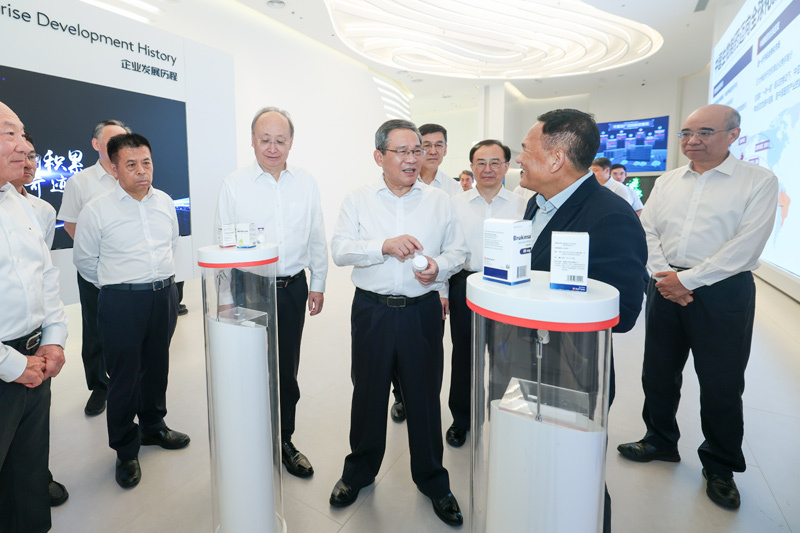
加大高质量科技供给和政策支持 着力推动生物医药产业提质升级
Bei Jing Ri Bao Ke Hu Duan· 2025-08-20 23:43
Core Insights - The Chinese government emphasizes the importance of the biopharmaceutical industry for enhancing public health and aims to accelerate innovation and development in this sector [2][4]. Group 1: Government Initiatives - The government plans to increase high-quality technological supply and policy support to promote the biopharmaceutical industry's upgrade and innovation [2][4]. - There is a focus on strengthening original innovation and tackling key core technologies, leveraging both government and market resources to achieve breakthroughs [4]. Group 2: Industry Development - The biopharmaceutical market in China is seen as having significant growth potential, with a strong emphasis on developing innovative drugs with high clinical value and transformation potential [3]. - Companies are encouraged to deepen international cooperation and enhance their innovation and competitiveness through policy support in talent and financing [3]. Group 3: Research and Collaboration - The government advocates for collaborative research efforts targeting new drug targets, compounds, and mechanisms, aiming to produce significant original results and cultivate high-end talent in life sciences [2][3]. - There is a push for the establishment of shared research platforms and one-stop R&D solutions to facilitate the integration of medical and engineering fields, as well as industry-academia collaboration [3]. Group 4: Technology Integration - The integration of artificial intelligence in various stages of drug development, clinical trials, and production is highlighted as a means to enhance the industry's development [4]. - The government aims to optimize policies related to drug procurement and negotiation mechanisms to support the application of high-level innovative drugs [4].
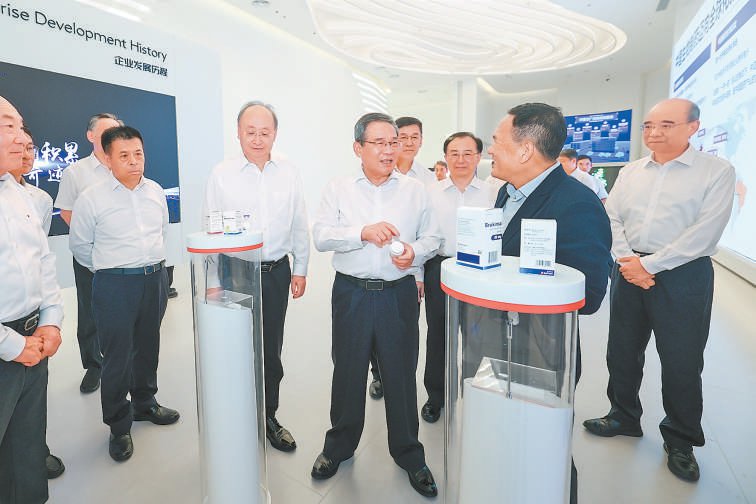
加大高质量科技供给和政策支持着力推动生物医药产业提质升级
Zhong Guo Zheng Quan Bao· 2025-08-20 20:17
Group 1 - The Chinese government emphasizes the importance of accelerating the development of the biopharmaceutical industry, focusing on high-quality technological supply and policy support to enhance innovation and produce more effective drugs [1][2] - The government aims to strengthen original innovation and tackle key core technologies, leveraging both government and market resources to foster a collaborative innovation environment [2] - There is a significant market potential for the health industry in China, with a strong emphasis on the development of innovative drugs and the need for timely identification of high clinical value projects [1][2] Group 2 - The government encourages the establishment of comprehensive support systems for biopharmaceutical innovation, including one-stop R&D solutions and collaboration between industry, academia, and research [2] - The integration of artificial intelligence in various stages of drug development, clinical trials, and production is highlighted as a means to enhance industry development [2] - The government also aims to promote the modernization and industrialization of traditional Chinese medicine by applying modern scientific theories and technologies [2]
李强最新发声
证券时报· 2025-08-20 15:01
Core Viewpoint - The article emphasizes the need for high-quality technological supply and policy support to enhance the development of the biopharmaceutical industry in China, focusing on innovation and the production of effective new drugs to improve public health [1][2][3]. Group 1: Government Initiatives - The Chinese government aims to accelerate the biopharmaceutical sector by increasing technological innovation and focusing on new targets, compounds, and mechanisms [1]. - There is a significant market potential for innovative drugs in China's health industry, and the government encourages the identification of high clinical value projects and their integration into medical institutions [2]. - The government plans to enhance original innovation and tackle key technologies by mobilizing resources from both the government and the market [3]. Group 2: Industry Development - The article highlights the importance of creating a supportive environment for biopharmaceutical companies, including talent cultivation and financial support [2]. - It stresses the need for a comprehensive service model that integrates research and development, production, and application to facilitate the commercialization of scientific achievements [2]. - The integration of artificial intelligence in various stages of drug development and production is emphasized to improve efficiency and effectiveness [3]. Group 3: Traditional Medicine - The article calls for the revitalization of traditional Chinese medicine through modern scientific methods, enhancing its theoretical and practical frameworks [3].

李强在北京调研生物医药产业发展时强调 加大高质量科技供给和政策支持 着力推动生物医药产业提质升级
Xin Hua She· 2025-08-20 14:32
Core Viewpoint - The Chinese government emphasizes the importance of accelerating the development of the biopharmaceutical industry through enhanced technological innovation and policy support, aiming to improve public health and foster high-quality drug development [1][2]. Group 1: Industry Development - The biopharmaceutical industry is identified as a strategic emerging industry that significantly impacts public health and well-being [2]. - There is a call for increased investment in original innovation and key core technology breakthroughs, leveraging both government and market resources to foster innovation [2]. - The market potential for the health industry is highlighted, with a focus on the promising future of innovative drug development [1]. Group 2: Innovation and Collaboration - The government encourages the establishment of shared research and development platforms to accelerate the transformation of biopharmaceutical innovations into practical applications [2]. - There is an emphasis on the integration of artificial intelligence to enhance various stages of drug development, clinical trials, and production processes [2]. - The importance of fostering high-quality enterprises through policy support in talent and financing is stressed, alongside promoting international collaboration [1]. Group 3: Policy and Regulatory Framework - The need for improved coordination in product research, evaluation, and management policies is highlighted to optimize drug procurement and negotiation mechanisms [2]. - The government aims to enhance guidance on the application of high-level innovative drugs, ensuring a supportive regulatory environment for the biopharmaceutical sector [2]. - There is a focus on modernizing and industrializing traditional Chinese medicine by applying modern scientific theories and technologies [2].