
人工智能赋能产业

Search documents
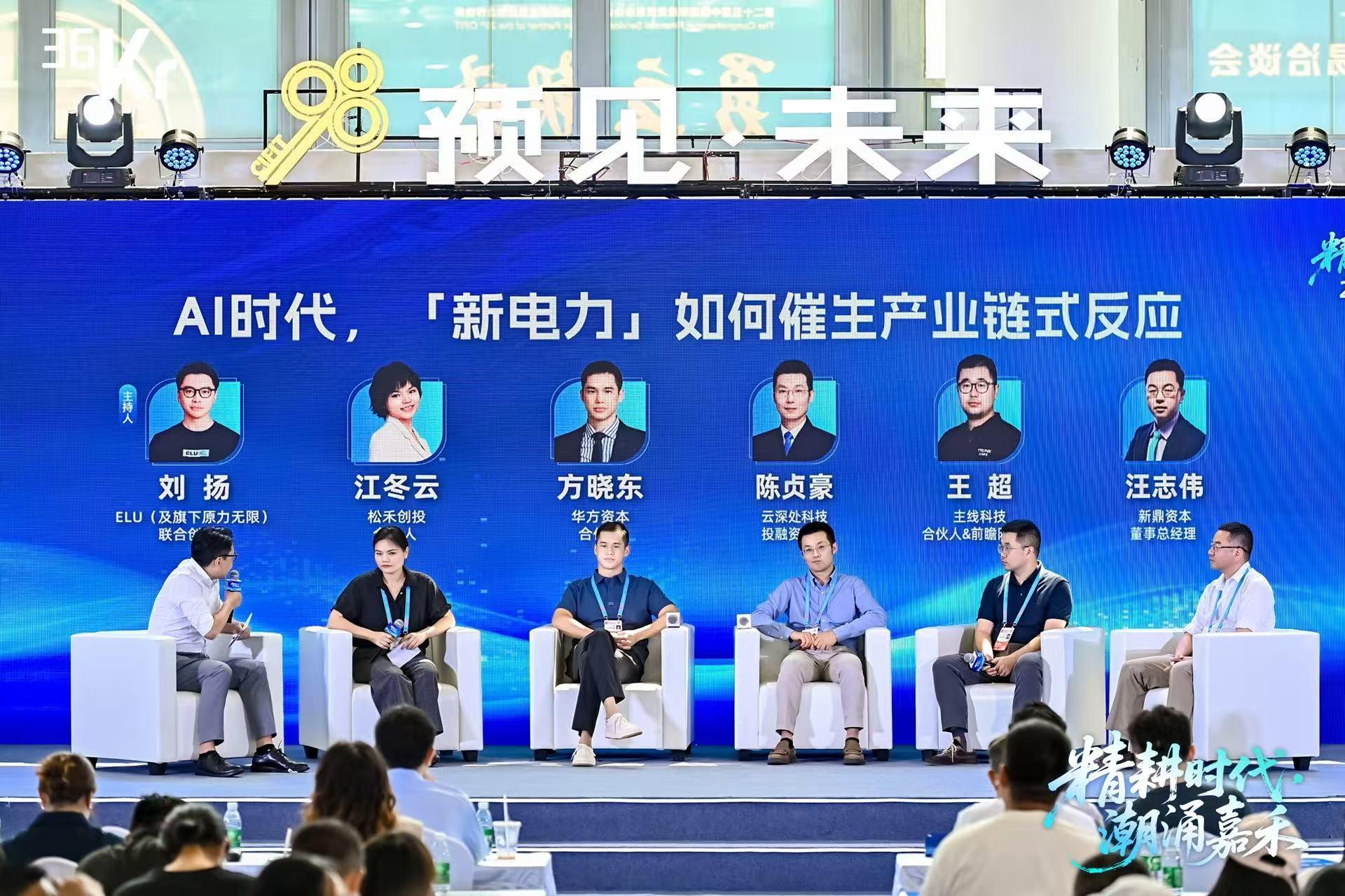
圆桌对话:AI时代,新电力如何催生产业链式反应|2025年36氪产业未来大会
3 6 Ke· 2025-09-26 03:33
Core Insights - The conference focused on the integration of AI in various industries, emphasizing the need for collaboration among government, capital, and industry to overcome barriers and enhance resource integration [1] - Key discussions revolved around the transformative potential of AI in manufacturing, highlighting its role in cost reduction, efficiency improvement, and innovation [7][10][12] Group 1: AI's Impact on Manufacturing - AI is seen as a driving force that not only enhances efficiency but also fundamentally transforms production relationships and capabilities [8][9] - The shift from "experience-based manufacturing" to "data-driven manufacturing" is highlighted, with AI enabling automated production and quality control [8] - The potential for AI to improve product quality and innovation in manufacturing processes is emphasized, with a call for deeper integration of AI in R&D [10][11] Group 2: Industry Perspectives - Various industry leaders shared insights on the current state and future of AI in manufacturing, with a consensus on the importance of innovation and quality improvement [10][12] - The discussion included the challenges faced by robotics in industrial applications, emphasizing the need for continuous learning and adaptation in complex environments [11][28] - The importance of a holistic approach to automation and AI integration in traditional manufacturing settings was underscored, with examples from successful projects in ports and logistics [33][34] Group 3: Investment and Market Trends - The need for a leading AI company to create a standardized industrial AI platform was discussed, highlighting the importance of integrating various industry data resources [20][21] - Investment trends indicate a shift towards models that combine software and hardware, focusing on deep integration with manufacturing processes [21][22] - The potential for AI to enable small and medium-sized enterprises to undergo intelligent transformation was noted, suggesting a significant opportunity for growth in the sector [14][15] Group 4: Future Workforce and Skills - The future workforce in manufacturing is expected to require skills that blend AI understanding with industrial knowledge, moving away from traditional roles [36][37] - Emphasis was placed on the need for training in vertical application scenarios of AI, ensuring that talent is equipped to leverage AI effectively in manufacturing [38]

加大高质量科技供给和政策支持着力推动生物医药产业提质升级
Zhong Guo Zheng Quan Bao· 2025-08-20 20:17
Group 1 - The Chinese government emphasizes the importance of accelerating the development of the biopharmaceutical industry, focusing on high-quality technological supply and policy support to enhance innovation and produce more effective drugs [1][2] - The government aims to strengthen original innovation and tackle key core technologies, leveraging both government and market resources to foster a collaborative innovation environment [2] - There is a significant market potential for the health industry in China, with a strong emphasis on the development of innovative drugs and the need for timely identification of high clinical value projects [1][2] Group 2 - The government encourages the establishment of comprehensive support systems for biopharmaceutical innovation, including one-stop R&D solutions and collaboration between industry, academia, and research [2] - The integration of artificial intelligence in various stages of drug development, clinical trials, and production is highlighted as a means to enhance industry development [2] - The government also aims to promote the modernization and industrialization of traditional Chinese medicine by applying modern scientific theories and technologies [2]