中国减贫经验

Search documents
彰显中国减贫理论和实践的世界意义
Ren Min Ri Bao· 2026-01-05 02:02
Core Insights - China has achieved historic success in poverty alleviation, lifting 800 million people out of poverty and meeting the UN's 2030 sustainable development goal a decade early [12][17][23] - The Chinese poverty alleviation model emphasizes precision and sustainability, focusing on tailored solutions for individual households rather than broad, generic assistance [24][25] Group 1: China's Poverty Alleviation Achievements - China has contributed over 70% to global poverty reduction, showcasing a significant structural change in global development patterns [15] - The publication of "Getting Rid of Poverty" in various languages has allowed other countries to learn from China's poverty alleviation strategies [12][17] - Uzbekistan has adopted a unique "Uzbekistan model" for poverty alleviation, integrating Chinese experiences into its governance [17][18] Group 2: Key Features of China's Poverty Alleviation Strategy - The strategy is characterized by a systematic approach that combines local resource advantages with public investment to create sustainable development [14][15] - The focus on "precision" and "long-term" solutions has been highlighted as essential for effective poverty alleviation, ensuring that resources are allocated based on specific needs [14][24] - The Chinese model includes a strong emphasis on community involvement and the establishment of local governance structures to support poverty alleviation efforts [19][25] Group 3: International Influence and Adaptation - Countries like Uzbekistan and Ghana are adapting China's poverty alleviation strategies to their local contexts, demonstrating the model's flexibility and applicability [17][25] - The collaboration between China and other developing countries in poverty alleviation showcases the potential for mutual learning and shared development goals [19][23] - The emphasis on integrating poverty alleviation with broader development policies has been recognized as a critical factor for success in various countries [22][24]

从中国实践到惠及全球 多国人士认可中国减贫经验
Zhong Guo Xin Wen Wang· 2025-11-22 03:14
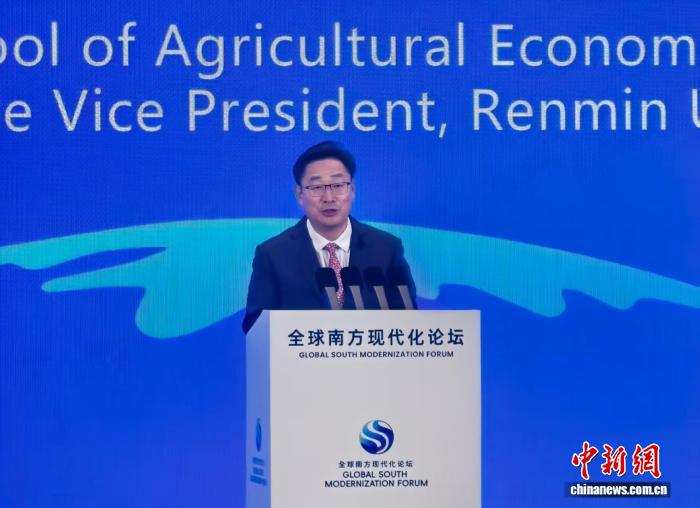
Core Viewpoint - China's poverty alleviation achievements are recognized as a milestone, providing valuable lessons for global South countries [1][3][4]. Group 1: China's Poverty Alleviation Experience - China announced the complete victory in its poverty alleviation campaign in 2021, attracting attention from various countries, especially in the global South [1]. - The experience of poverty alleviation in China has been shared internationally, offering practical benefits and a template for other countries [1]. - The Vice President of Renmin University of China emphasized the importance of agricultural development in addressing poverty and expressed China's willingness to deepen cooperation with global South countries [1]. Group 2: Practical Examples and International Recognition - A case from Tanzania highlighted how Chinese support helped local farmers grow soybeans and introduced them to making soy milk, which was well-received and encouraged continued soybean cultivation [3]. - International representatives praised China's poverty alleviation efforts, with the UN Coordinator in China noting the support provided to over 100 projects in more than 50 countries through initiatives like the China-UN Peace and Development Fund [3]. - The founder of India's "New South Asia Forum" acknowledged China's achievement in eradicating absolute poverty, emphasizing the significance of targeted poverty alleviation strategies [4][6]. Group 3: Global Impact and Lessons - The success of China in lifting 800 million people out of poverty is considered unprecedented in human history, demonstrating that poverty is not predetermined [6]. - The collective efforts and vision of Chinese society are highlighted as key factors in overcoming historical poverty challenges [6].
特稿|中国减贫经验描绘亚太国家农村新希望
Xin Hua Wang· 2025-10-29 09:00
Core Insights - China's poverty alleviation experience is being promoted as a model for rural development in the Asia-Pacific region, aiming for more inclusive and equitable globalization [1] Group 1: Poverty Alleviation Techniques - The "Happy Grass" initiative in Papua New Guinea illustrates the successful application of mushroom cultivation technology, which has transformed local agricultural practices and contributed to poverty alleviation [2][3] - The introduction of mushroom cultivation using grass has led to significant agricultural outputs, including 853 tons per hectare of giant grass and 11.3 tons per hectare of drought-resistant rice [2] Group 2: Capacity Building and Governance - The "Village Head Class" program in Indonesia aims to enhance local governance by training village leaders in rural development practices, with over 100 village heads participating since its inception [4][5] - The program emphasizes sharing knowledge and successful practices in areas such as rural governance, industry development, and environmental protection, tailored to local conditions [5] Group 3: Regional Economic Integration - China's support for regional economic integration includes infrastructure projects that reduce logistics costs for rural areas, facilitating access to larger markets for agricultural products [6] - Trade initiatives, such as reducing tariffs on agricultural imports from Asia-Pacific countries, have directly benefited local farmers, as seen in the case of Vietnamese durian exports to China [6] Group 4: Sustainable Development Model - The essence of China's poverty alleviation strategy lies in a "people-centered" approach, focusing on sustainable development through infrastructure and industry development tailored to local needs [7] - The collaborative efforts in the Asia-Pacific region are creating a new landscape for rural development, contributing to a shared prosperity framework [7]

津彩纷呈,实力圈粉!非洲10国媒体人“解锁”天津文旅新玩法
Huan Qiu Wang· 2025-10-27 03:12
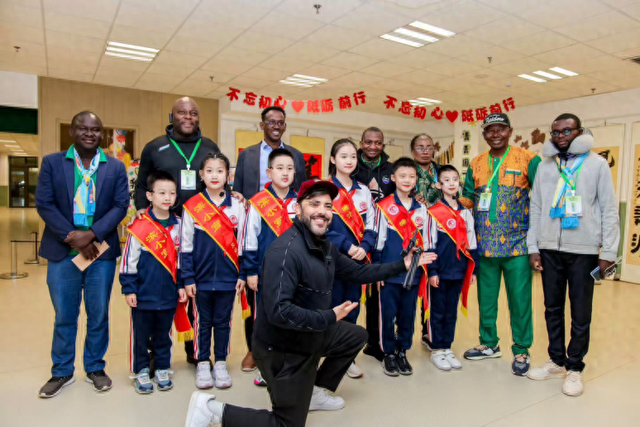
Core Insights - The event "African Media Delegation's Visit to China" organized by Global Network showcased the cultural and technological advancements in Tianjin, highlighting the city's transformation and development potential [1][4][14] Group 1: Urban Transformation and Cultural Exchange - The African media delegation explored the transformation of Tianjin from an industrial area to a modern coastal city, emphasizing the importance of urban renewal as a redefinition of lifestyle rather than mere architectural renovation [1] - At Nankai University, discussions focused on China's poverty alleviation experiences and their implications for African development, with participants sharing rural development case studies and the role of youth and innovation [4] - The media representatives experienced Tianjin's historical architecture and modern technology, appreciating the city's blend of cultural heritage and contemporary urban development [4] Group 2: Technological and Cultural Experiences - The delegation enjoyed a 5D movie experience at the China National Geographic Exploration Center, which highlighted the technological advancements in China, receiving positive feedback from participants [6] - In Tianjin's Ancient Culture Street, the media group engaged in traditional Chinese medicine practices, such as making herbal pills and sachets, showcasing the depth of Chinese cultural heritage [8] - The media representatives participated in local culinary experiences, such as making traditional Tianjin pancakes, which fostered a connection with the local community and culture [10][12] Group 3: Community and Daily Life - Tianjin is characterized by its unique lifestyle and vibrant street culture, where traditional and modern elements coexist, providing insights into the city's daily life [8] - The media delegation's interactions with local residents and their participation in traditional crafts highlighted the warmth and hospitality of Tianjin's community [10][12] - The visit concluded with a panoramic view of Tianjin's skyline, symbolizing the city's blend of modernity and tradition, leaving a lasting impression on the media representatives [14]