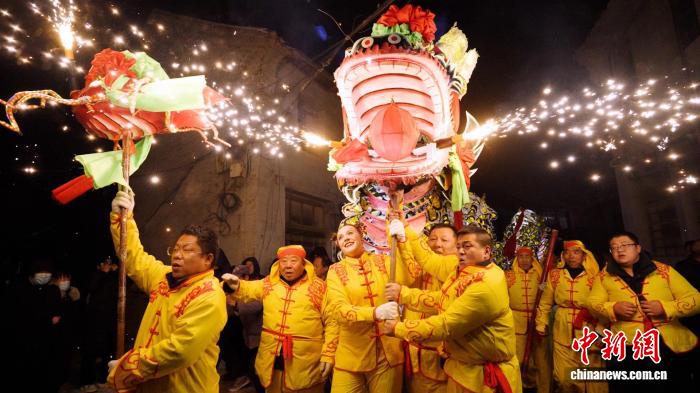
中国年俗

Search documents
外国游客坐高铁体验春运
Xin Lang Cai Jing· 2026-02-21 07:58
Core Viewpoint - The article highlights the significant increase in foreign tourists experiencing Chinese New Year celebrations, showcasing the cultural appeal and unique charm of traditional customs in China [1] Group 1: Increase in Foreign Tourist Engagement - There is a notable rise in the concentration of foreign tourists in major cities during the Spring Festival, indicating a growing interest in Chinese cultural experiences [1] - Tourists are moving beyond typical attractions and are engaging in more immersive experiences, such as participating in the Spring Festival travel rush [1] Group 2: Cultural Appreciation and Unique Experiences - Foreign visitors are seeking authentic cultural experiences, demonstrating a deeper understanding of Chinese traditions, as evidenced by their specific inquiries about local customs and landmarks [1] - The article emphasizes that the Spring Festival serves as a powerful cultural brand, attracting tourists from various backgrounds and transcending language barriers [1]
为什么中国人过年总爱“嗑”瓜子?
Xin Lang Cai Jing· 2026-02-19 01:27
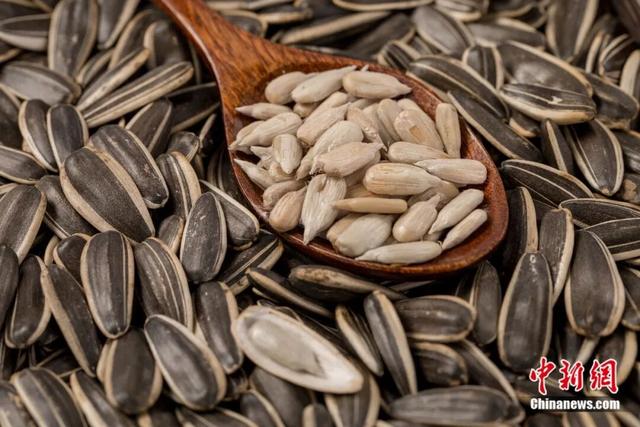
Core Viewpoint - The article highlights the cultural significance of sunflower seeds in Chinese society, particularly during the Spring Festival, emphasizing their role as a traditional snack that fosters social interaction and embodies the spirit of reunion [1][10][17]. Historical Context - The habit of eating sunflower seeds in China dates back to ancient times, with evidence found in the Han Dynasty, indicating a long-standing appreciation for this snack [3][5]. - By the Northern Song Dynasty, the practice of eating sunflower seeds became associated with New Year celebrations, showing its integration into cultural rituals [5][10]. - The introduction of new varieties of seeds, such as pumpkin and sunflower seeds from the Americas during the late Ming Dynasty, marked an evolution in the types of seeds consumed [5][10]. Cultural Significance - Sunflower seeds serve as a symbol of equality among people, as they are enjoyed by all social classes [3]. - The act of eating sunflower seeds is described as a "slow art" that aligns with the leisurely pace of family gatherings during the New Year, enhancing the festive atmosphere [12][14]. - The communal aspect of eating sunflower seeds fosters social bonds, with the sound of cracking seeds acting as a backdrop for conversation [14][19]. Modern Relevance - Despite the availability of various modern snacks, sunflower seeds remain a staple on Chinese New Year tables, signifying their enduring popularity and cultural relevance [15][19]. - The article suggests that sunflower seeds are not just snacks but also carry a ceremonial significance, contributing to the warmth and familiarity of family gatherings during the festive season [17][19].

喜迎开门红!春节假期第一天,东湖各景区人气爆棚
Chang Jiang Ri Bao· 2026-02-16 00:44
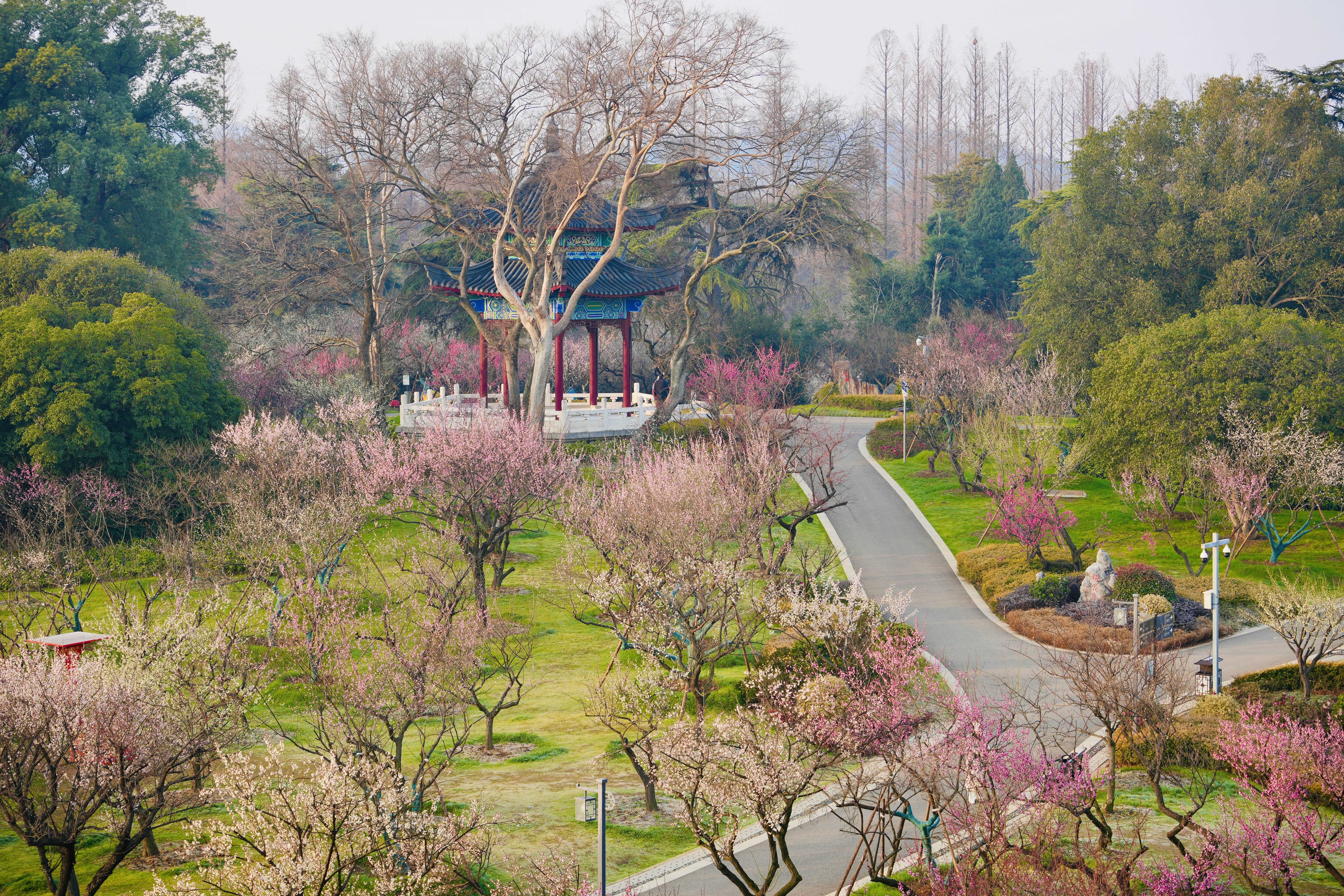
Core Viewpoint - The first day of the extended Spring Festival holiday saw a significant influx of tourists to the East Lake Scenic Area, highlighting a vibrant blend of cultural and recreational activities that showcase the local heritage and natural beauty [1][5][12]. Group 1: Scenic Activities - The East Lake Greenway was bustling with family cycling, couple strolls, and various activities, creating a festive atmosphere enhanced by decorations and natural scenery [5][11]. - Tourists engaged in boat rides and enjoyed picturesque views, emphasizing the appeal of East Lake as a prime destination for family vacations [12][30]. Group 2: Cultural Events - The East Lake area featured a lively Spring Festival market showcasing traditional crafts such as sugar painting and paper cutting, alongside local delicacies, creating a rich cultural experience [16][23]. - The "Thousand Lantern Feast" attracted many visitors, combining traditional lantern displays with interactive cultural experiences, enhancing the festive spirit [19][22]. Group 3: Natural Attractions - The Meihua Garden at the Mo Mountain Scenic Area showcased over 20,000 plum blossoms, providing a stunning visual and aromatic experience for visitors [23][30]. - The combination of traditional music performances and the natural beauty of the plum blossoms added depth to the cultural experience during the Spring Festival [30].
2026大市场看中国年|非遗焕彩“活”起来 古街欢腾中国年
Xin Lang Cai Jing· 2026-02-15 02:09
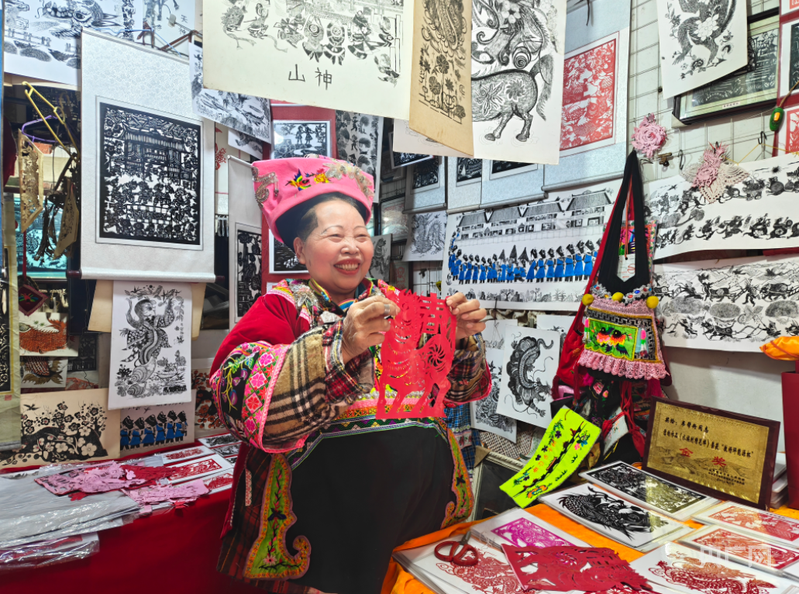
Core Insights - The article highlights the vibrant atmosphere of traditional markets in China during the Spring Festival, showcasing the resilience and potential of the Chinese economy through consumer activity [1] Group 1: Market Dynamics - The New Year market in Guizhou's Duyun Stone Street features a blend of intangible cultural heritage and festive spirit, attracting both locals and tourists [1][10] - The market includes various stalls selling traditional crafts such as paper-cutting and silver jewelry, creating a lively shopping experience [1][10] Group 2: Cultural Heritage - Wei Bangfen, a 72-year-old master of water tribe paper-cutting, has been practicing this art for over 65 years, producing popular New Year decorations that resonate with both domestic and international customers [3][7] - Meng Meixiang, a state-level inheritor of water tribe silver jewelry, emphasizes the precision required in her craft, which has gained significant attention during the festive season [4][6] Group 3: Consumer Engagement - The tea shop run by Xu Mingli, a representative inheritor of Duyun Maojian tea, has seen over 100 sales transactions and generated more than 50,000 yuan in revenue since the beginning of the year, appealing to both young and older consumers [9] - The immersive experience of the market includes not only shopping but also cultural performances, enhancing the overall appeal and engagement of visitors [10][11]
(新春走基层)外国“体验官”探寻非遗中的春节温度
Zhong Guo Xin Wen Wang· 2026-02-11 06:14
Core Viewpoint - The article highlights the increasing interest of foreign visitors in experiencing traditional Chinese New Year customs, particularly after the inclusion of the Spring Festival in UNESCO's list of intangible cultural heritage [2]. Group 1: Foreign Experience - Foreign participants from countries such as the United States, the United Kingdom, Egypt, and Pakistan engaged in local customs and traditions during the Spring Festival in Shanxi [1]. - The experience included learning traditional skills such as lion dancing, dragon dancing, and other folk performances, showcasing the vibrant atmosphere of the festival [2]. Group 2: Cultural Exchange - The foreign experience officers participated in various activities, including crafting paper dragons, which require over 30 processes and collaboration among 10 people, taking about 15 days to complete [2]. - Participants expressed their emotional connection to the festival, with one stating that the warmth of family gatherings is embedded in these traditional practices [4].