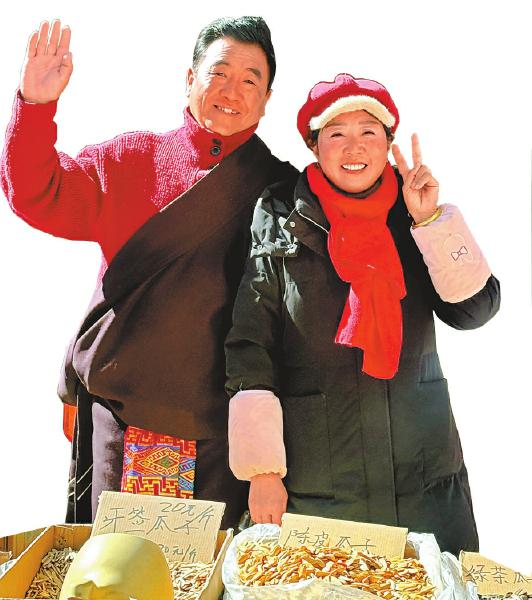
瓜子

Search documents
连发多起 坚果呛入幼儿气管紧急手术 医生:这些东西千万别喂娃
Xin Lang Cai Jing· 2026-02-26 04:14
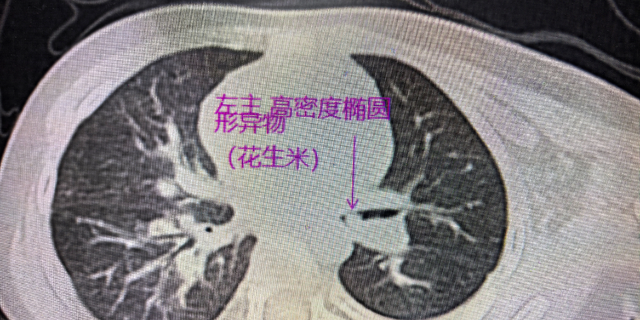
Core Viewpoint - The article highlights the serious risks associated with young children consuming whole nuts during the Spring Festival, emphasizing the urgent medical cases that arose from this practice [1][2][4]. Group 1: Medical Cases - Three young children under the age of three were admitted to the hospital due to airway obstruction caused by nuts, leading to severe coughing and breathing difficulties [1][2]. - A 1-year and 7-month-old boy experienced severe coughing for 30 minutes after eating sunflower seeds, resulting in a diagnosis of left main bronchus obstruction [2]. - Another case involved a 1-year and 3-month-old girl who choked on peanuts for 50 minutes, leading to right lung collapse due to airway blockage [2]. - A 1-year and 1-month-old boy also faced similar symptoms after consuming walnuts, requiring urgent medical intervention [2]. Group 2: Medical Intervention - The hospital's pediatric team, in collaboration with the anesthesia team, performed emergency bronchoscopic surgery to remove the obstructing nut fragments from the children's airways [4]. - All three children were successfully treated and discharged after their conditions stabilized post-surgery [4]. Group 3: Safety Recommendations - It is strongly advised that children under three years old should not be given whole nuts, including peanuts, sunflower seeds, walnuts, almonds, and pecans [6][18]. - Parents are warned against feeding nuts to children during active play or when they are upset, as this increases the risk of choking [9][10]. - Nuts and similar choking hazards should not be left within easy reach of young children [11]. Group 4: Emergency Response - In case of choking, parents should stop feeding immediately and keep the child calm [12]. - Signs of severe choking include intense coughing, difficulty breathing, cyanosis, and hoarseness, which require immediate emergency assistance [13]. - Specific first aid techniques, such as the Heimlich maneuver for infants and children, should be employed, and emergency services should be contacted without delay [14][16].

浙江“年味好物”漂洋过海
Mei Ri Shang Bao· 2026-02-25 22:25
Group 1 - Zhejiang's production facilities are busy fulfilling orders for traditional Chinese New Year products, including specialty foods and cultural items, which are being exported to countries like Singapore, Malaysia, and Norway [1][2] - Companies such as Hangzhou Zhiwei Guan Food Co., Ltd. and Zhejiang Da Haoda Food Co., Ltd. are ramping up production to meet the demand from overseas Chinese communities, with Zhiwei Guan expecting to export products worth 200,000 yuan this month [2] - The customs department is providing support by enhancing source management and implementing measures like appointment customs clearance and online communication to ensure efficient export processes [3] Group 2 - Cultural products, such as wooden refrigerator magnets featuring horse designs, are also being exported, showcasing the integration of traditional craftsmanship with zodiac culture, appealing to young consumers abroad [4] - The customs department has introduced measures to expedite the inspection process, reducing the time for cargo inspection to under 30 minutes, thereby improving overall efficiency in customs clearance [4] - The successful export of these products reflects the upgrade in Chinese manufacturing quality and the enhancement of China's cultural soft power, as customs continue to optimize regulatory services to facilitate the export of culturally significant goods [4]
产品订单旺 企业生产忙
Xin Lang Cai Jing· 2026-02-24 18:20
Core Insights - The company Xinjiang Chengqi Agricultural Development Co., Ltd. is experiencing a busy production period, with its production lines operating at full capacity and orders filled until March [1][2] - In January, the company achieved a sales total of 17 million yuan and an export value of approximately 1 million USD, marking a strong start to the year [1] - The company aims to reach a production value of 100 million yuan and sales exceeding 110 million yuan by 2025, with products being exported to international markets [2] Production and Operations - The company operates five imported color selection production lines, ensuring a seamless and efficient processing workflow from shelling to packaging [1] - To meet pre-holiday logistics demands, the company has implemented a "rush work mode," with production lines running around the clock and a daily output of 35 tons, maintaining a monthly production of around 800 tons [1] Employee Commitment - The dedication of frontline workers is highlighted, with employees like Zhou Guofu and Song Yushuang exemplifying the commitment to quality and production efficiency [2] - The company fosters a collaborative environment where employees feel a sense of shared growth and responsibility, contributing to the overall success of the business [2] Economic Impact - The company's efforts contribute to the economic development of the Ten Corps Beitun City, with many enterprises striving for high-quality growth and strengthening the industrial foundation [2]
一斤松子抵20斤猪肉?实探新春“炒货市场”
Hua Xia Shi Bao· 2026-02-22 02:03
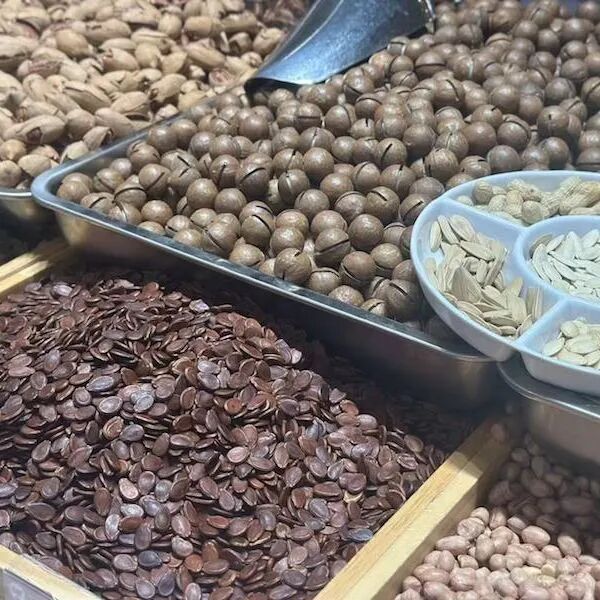
Core Viewpoint - The rising prices of nuts and seeds during the Spring Festival have led to consumer hesitation, with some products priced significantly higher than traditional food items, prompting discussions about the pricing logic in the snack industry [4][9][19] Pricing Trends - Prices for nuts have surged, with sunflower seeds reaching 23.8 yuan per jin and hand-shelled pine nuts as high as 218 yuan per jin, leading to comparisons where one jin of nuts can buy 20 jin of pork [4][9][11] - The pricing strategy has shifted from a focus on raw material costs to include factors like rental costs, emotional premiums, and storytelling, reflecting a fundamental change in the industry’s pricing paradigm [13][14] Consumer Behavior - Consumers are increasingly opting for bulk purchases to manage costs, with many expressing discomfort over high prices and the shift from traditional pricing methods to per-piece pricing [6][9] - The perception of high-end brands like Xueji has changed, with consumers now viewing them as benchmarks for value rather than luxury [9][14] Market Dynamics - The contrast between bustling retail stores and quieter wholesale markets indicates a significant transformation in the distribution channels and value structures within the nut industry [11][13] - The growth of gift box products during the festive season highlights a shift in consumer preferences, where the social currency of gifting is becoming more important than the actual food value [16][18] Future Outlook - Analysts predict a dual strategy for brands, focusing on both premium gift boxes and affordable bulk options to cater to diverse consumer needs [18][19] - The industry is expected to return to a focus on value, with a potential shift towards transparency in pricing and product quality to regain consumer trust [19]
一斤松子抵20斤猪肉?实探新春“炒货市场”|新春走基层
Sou Hu Cai Jing· 2026-02-21 09:22
Core Viewpoint - The rising prices of snack foods during the Spring Festival have led to consumer hesitation, with some products priced significantly higher than traditional food items, prompting discussions about the pricing logic behind these snacks [4][6][12]. Group 1: Price Trends and Consumer Behavior - Snack prices have surged, with sunflower seeds exceeding 23 yuan per jin and hand-shelled pine nuts reaching 218 yuan per jin, leading to comparisons with luxury brands [4][6]. - Consumers are increasingly opting for bulk purchases to manage costs, reflecting a shift in purchasing behavior from traditional fixed weights to more flexible options [5][8]. - The psychological impact of high prices has altered consumer perceptions, with traditional snacks now viewed as premium products rather than everyday items [8][11]. Group 2: Market Dynamics and Pricing Logic - The pricing strategy in the snack industry has shifted from a focus on raw material costs to include factors like rental costs and emotional value, resulting in higher consumer prices [11][12]. - The disparity between wholesale market conditions and retail store dynamics highlights a transformation in the snack industry, with retail locations experiencing high foot traffic but also incurring significant operational costs [9][11]. - The emergence of gift boxes as a significant product category reflects a change in consumer expectations, where the social value of snacks is becoming more important than their nutritional value [12][15]. Group 3: Future Trends and Industry Insights - Analysts predict a dual strategy for brands, focusing on both premium gift packaging and affordable bulk options to cater to diverse consumer needs [16][17]. - The snack industry is expected to face challenges in balancing quality, innovation, and pricing, as consumer expectations evolve alongside market dynamics [17][18]. - Transparency in pricing and product quality will be crucial for brands to build consumer trust and maintain competitiveness in a rapidly changing market [16][17].
怎样吃瓜子更健康?吃到这种瓜子立马吐出来
Xin Lang Cai Jing· 2026-02-21 07:58
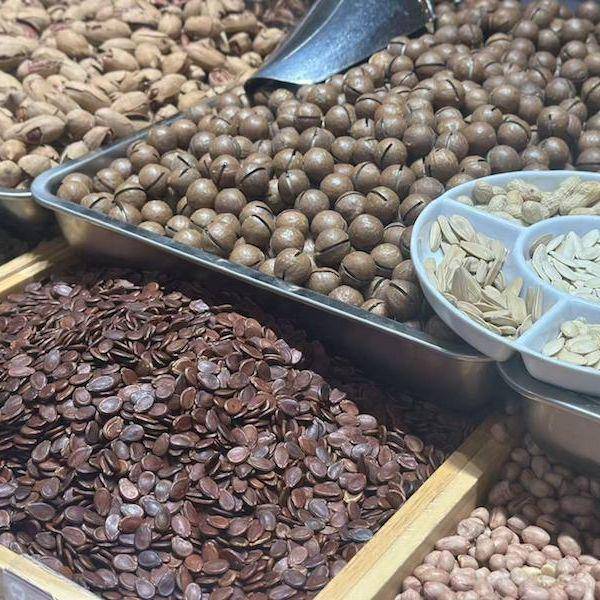
Core Insights - The article discusses the cultural significance and nutritional benefits of various types of seeds, particularly sunflower seeds, watermelon seeds, and pumpkin seeds, which are popular snacks during the New Year celebrations in China. Nutritional Comparison - Watermelon seeds contain 8.2mg of iron per 100g, which is 1.3 times that of sunflower seeds, and have a potassium content of 612mg per 100g, placing them in the upper-middle range among nuts [3] - Pumpkin seeds have the highest protein content at 36g per 100g, which is 1.6 times that of sunflower seeds and 1.1 times that of watermelon seeds. They also boast the highest potassium content at 672mg per 100g, nearly 1.4 times that of sunflower seeds [3] - Sunflower seeds are rich in vitamin E, with a content of 26.46mg per 100g, which is 21.5 times that of watermelon seeds. They also have a notable vitamin B1 content of 0.43mg per 100g, significantly higher than that of the other two types [4] Nutritional Data Summary - The energy content for watermelon seeds is 582 kcal/100g, while pumpkin seeds have 582 kcal/100g and sunflower seeds have 625 kcal/100g. Protein content is highest in pumpkin seeds (36g), followed by watermelon seeds (32.7g) and sunflower seeds (22.6g) [5] - The fat content is highest in sunflower seeds at 52.8g, followed by pumpkin seeds at 46.1g and watermelon seeds at 44.8g. Dietary fiber is relatively similar across the three types, with sunflower seeds at 4.8g, watermelon seeds at 4.5g, and pumpkin seeds at 4.1g [5] Consumption Guidelines - The recommended intake of nuts, including seeds, is 50-70 grams per week, averaging about 10 grams per day, which is equivalent to 1.5-2 handfuls of seeds in their shells [8] - It is advised to choose original flavor seeds over flavored varieties, as the latter may mask any off-flavors that indicate spoilage, and they often contain high levels of sugar and salt, which are not heart-healthy [10] - Consumers should immediately discard any seeds that taste bitter or rancid, as these may indicate spoilage and potential health risks [10]
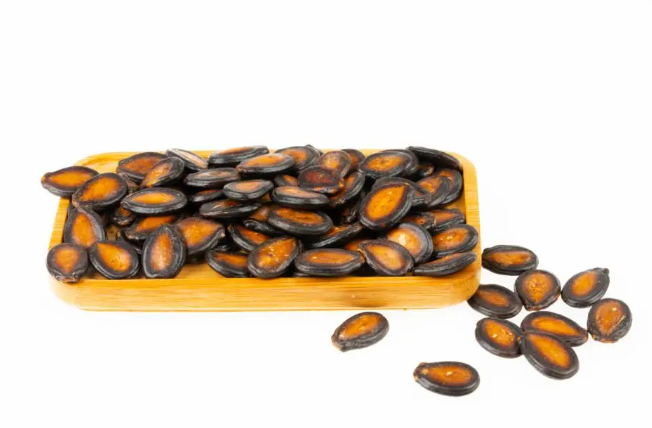
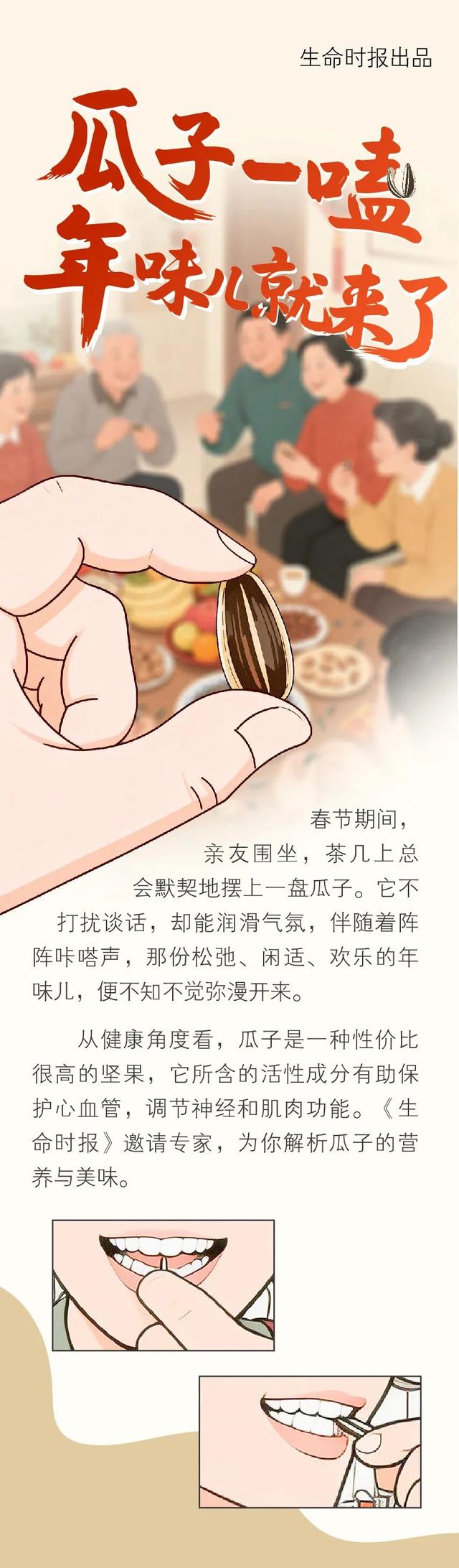
瓜子一嗑,年味儿就来了
Xin Lang Cai Jing· 2026-02-20 01:07
Core Viewpoint - The article discusses the cultural significance and health benefits of sunflower seeds, particularly in the context of Chinese traditions during the Spring Festival, highlighting their historical evolution and nutritional value [2][4][13]. Group 1: Historical Context - The consumption of sunflower seeds in China dates back to the Western Han Dynasty, where they were initially used for medicinal purposes rather than as snacks [4]. - By the Ming and Qing Dynasties, sunflower seeds became popular snacks, with references found in classic literature such as "Dream of the Red Chamber" [6]. - The late Qing Dynasty saw the introduction of pumpkin seeds, but sunflower seeds gained prominence by the Republic of China era, establishing a three-way competition among watermelon seeds, pumpkin seeds, and sunflower seeds [8]. Group 2: Nutritional Benefits - Sunflower seeds, especially watermelon and sunflower varieties, are rich in unsaturated fatty acids, particularly linoleic acid, which helps regulate cholesterol levels [14]. - They are an excellent source of Vitamin E, which provides antioxidant benefits and protects cells from free radical damage, aiding in anti-aging [15]. - The seeds contain essential minerals such as magnesium, phosphorus, potassium, zinc, and selenium, with magnesium supporting nerve and muscle function [16]. Group 3: Consumption Recommendations - The article suggests a recommended intake of 50-70 grams of nuts and seeds per week, averaging about 10 grams daily, to avoid excessive calorie intake [30]. - It advises choosing original flavor seeds over heavily salted or flavored varieties to reduce sodium intake [31]. - The article encourages using hands to shell the seeds to protect teeth and slow down eating, thus controlling portion sizes [31].
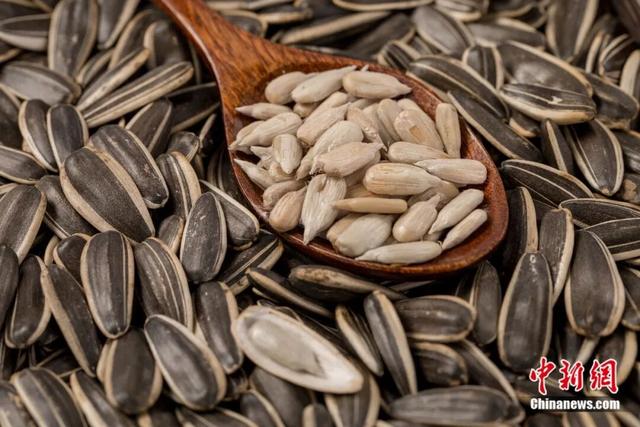
为什么中国人过年总爱“嗑”瓜子?
Xin Lang Cai Jing· 2026-02-19 01:27
Core Viewpoint - The article highlights the cultural significance of sunflower seeds in Chinese society, particularly during the Spring Festival, emphasizing their role as a traditional snack that fosters social interaction and embodies the spirit of reunion [1][10][17]. Historical Context - The habit of eating sunflower seeds in China dates back to ancient times, with evidence found in the Han Dynasty, indicating a long-standing appreciation for this snack [3][5]. - By the Northern Song Dynasty, the practice of eating sunflower seeds became associated with New Year celebrations, showing its integration into cultural rituals [5][10]. - The introduction of new varieties of seeds, such as pumpkin and sunflower seeds from the Americas during the late Ming Dynasty, marked an evolution in the types of seeds consumed [5][10]. Cultural Significance - Sunflower seeds serve as a symbol of equality among people, as they are enjoyed by all social classes [3]. - The act of eating sunflower seeds is described as a "slow art" that aligns with the leisurely pace of family gatherings during the New Year, enhancing the festive atmosphere [12][14]. - The communal aspect of eating sunflower seeds fosters social bonds, with the sound of cracking seeds acting as a backdrop for conversation [14][19]. Modern Relevance - Despite the availability of various modern snacks, sunflower seeds remain a staple on Chinese New Year tables, signifying their enduring popularity and cultural relevance [15][19]. - The article suggests that sunflower seeds are not just snacks but also carry a ceremonial significance, contributing to the warmth and familiarity of family gatherings during the festive season [17][19].
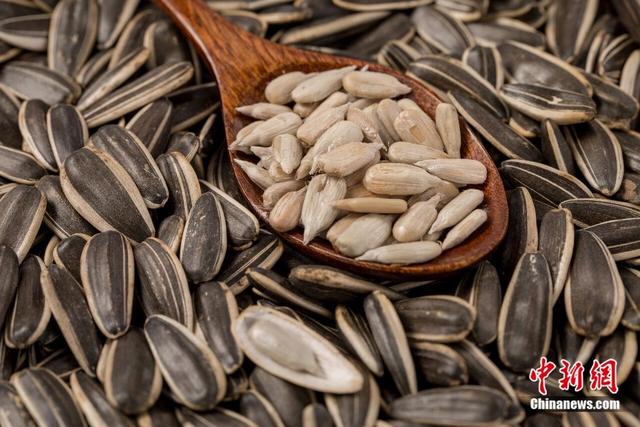
为什么中国人过年总爱“嗑”瓜子?
Xin Lang Cai Jing· 2026-02-18 23:26
Core Viewpoint - The article highlights the cultural significance of sunflower seeds (瓜子) in Chinese society, particularly during the Spring Festival, emphasizing their role as a traditional snack that fosters social interaction and embodies the spirit of reunion [1][10][17]. Historical Context - The habit of eating sunflower seeds in China dates back to ancient times, with evidence found in the Han Dynasty, indicating a long-standing appreciation for this snack [3][5]. - References in historical texts, such as the "Qimin Yaoshu" from the Northern Wei period, show the early processing and cultivation of sunflower seeds, reflecting their importance in Chinese culinary practices [3][5]. - By the Song Dynasty, the custom of eating sunflower seeds became associated with the New Year celebrations, indicating its integration into cultural rituals [5][10]. Cultural Significance - Sunflower seeds have evolved from being a simple snack to a staple during festive occasions, particularly during the Spring Festival, where they symbolize togetherness and joy [10][12]. - The act of eating sunflower seeds is described as a slow art that complements the festive atmosphere, allowing for social interaction and conversation among family and friends [12][14]. - The snack's accessibility and ease of consumption make it a preferred choice over more elaborate foods, reinforcing its role in family gatherings during the New Year [10][12]. Regional Variations - Different regions in China have their unique preferences for sunflower seeds, showcasing the diversity of culinary practices. For instance, Northeast China favors hazelnuts, while Jiangsu and Zhejiang prefer smaller, fragrant pumpkin seeds [14]. - The article notes that the preparation and flavoring of sunflower seeds can vary significantly, reflecting local tastes and traditions [14]. Modern Relevance - Despite the availability of a wide range of modern snacks, sunflower seeds continue to hold a prominent place in the traditional New Year celebrations, symbolizing a connection to cultural heritage [15][19]. - The article concludes that sunflower seeds are not just a snack but a small ritual that enhances the festive experience, linking past and present traditions in Chinese New Year celebrations [17][19].
一桌团圆饭 两份故乡情
Xin Lang Cai Jing· 2026-02-18 21:21
Core Insights - The article highlights the entrepreneurial journey of a woman, Fan Xiufang, who has established a successful business in Daofu County, Ganzi Prefecture, over the past 30 years, transitioning from a market vendor to a prominent wholesale and retail operator [2][3] Business Operations - Fan Xiufang operates two stores in Daofu, one focused on wholesale and the other as a supermarket, providing essential goods for the local community during the festive season [2] - The product offerings have evolved from traditional Tibetan items to include a variety of goods such as Sichuan-style sausages and canned beverages, reflecting changing consumer preferences [3] - The business maintains a policy of not raising prices during the New Year, adhering to a principle of "thin profit and high sales" to foster long-term customer relationships [3] Cultural Integration - Fan Xiufang has integrated into the local culture, adopting local customs such as drinking butter tea and celebrating both Han and Tibetan New Year traditions with her family [4][5] - The family dynamic showcases a blend of languages and customs, with members communicating in both Mandarin and Tibetan, highlighting the cultural harmony in the region [5] Community Impact - The business plays a significant role in the local economy by providing essential goods and fostering community ties, especially during the festive season [2][3] - The article illustrates the importance of family and cultural traditions in the business operations, as the family prepares for celebrations that honor both Han and Tibetan customs [5]