中国芯片产业

Search documents
就要闪耀(9131)!港股芯片投资首选:国内首只港股信息技术ETF(159131)全网发售中
Xin Lang Ji Jin· 2025-10-30 02:57
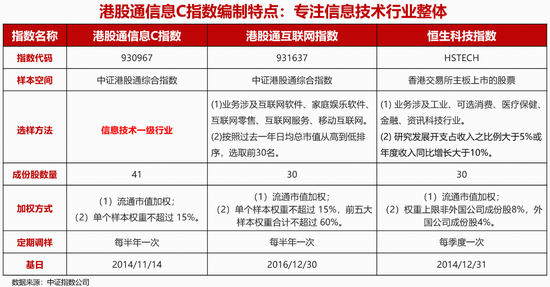
Core Viewpoint - The launch of the first Hong Kong stock information technology ETF (159131) is gaining market attention, particularly as it tracks the CSI Hong Kong Stock Connect Information Technology Composite Index, which emphasizes the growth potential of China's semiconductor and hard technology sectors [1][2]. Group 1: ETF and Index Overview - The Hong Kong Stock Information Technology ETF (159131) tracks the CSI Hong Kong Stock Connect Information Technology Composite Index (930967.CSI), which consists of 41 hard technology companies in the information technology sector [2][4]. - The index is composed of 70% hardware and 30% software, with significant weightings in consumer electronics (41.53%), semiconductors (29.79%), and computer software (27.79%) [2]. - The index's top five weighted stocks account for 51% of the total, indicating a high concentration in leading technology firms [4]. Group 2: Market Performance and Growth - From December 30, 2022, to September 30, 2025, the CSI Hong Kong Stock Connect Information Technology Composite Index has seen a cumulative increase of 110.93%, outperforming other Hong Kong technology indices [5]. - As of October 16, 2025, the index's price-to-earnings ratio stands at 42.68, significantly lower than major global technology indices, suggesting potential growth opportunities for investors [5]. Group 3: Industry Developments - The "14th Five-Year Plan" emphasizes breakthroughs in key technology areas, including integrated circuits and artificial intelligence, which are expected to drive growth in the semiconductor industry [1][2]. - Major companies like Alibaba are investing heavily in cloud and AI infrastructure, with a projected investment of 380 billion yuan over the next three years, further supporting the demand for semiconductor products [3].

从湾芯展看“中国芯”,日行跬步终至千里
Mei Ri Jing Ji Xin Wen· 2025-10-16 03:50
Core Viewpoint - The 2025 Bay Area Semiconductor Industry Ecosystem Expo (Bay Chip Expo) held in Shenzhen showcased significant advancements in China's semiconductor industry, highlighting breakthroughs in high-end electronic measurement instruments and EDA software, which are crucial for the development of advanced chips and autonomous capabilities in the sector [1][2][4]. Group 1: Event Highlights - The Bay Chip Expo attracted over 600 companies and thousands of visitors, emphasizing the growing interest and investment in China's semiconductor market [1][4]. - New Kai Lai's subsidiary, Wanliyan Technology, unveiled a 90GHz ultra-high-speed real-time oscilloscope, marking a 500% performance improvement over previous domestic models and positioning it as the second globally [1][2]. - Another subsidiary, Qiyunfang, launched two EDA design software products with complete independent intellectual property rights, filling a critical gap in the market [2]. Group 2: Market Dynamics - China is the world's largest semiconductor consumer, with an integrated circuit import scale of approximately 2.8 trillion yuan in 2024, and the Bay Area is the largest semiconductor growth market in China [4]. - The expo facilitated connections between major semiconductor projects and industry funds, with Shenzhen establishing a 5 billion yuan industry investment fund to support the sector [4][5]. - The number of mergers and acquisitions in China's chip industry reached 93 by the end of Q3 2025, a 33% increase year-on-year, with a total transaction value of 54.9 billion yuan, reflecting a nearly 50% growth [5]. Group 3: International Collaboration - The expo featured numerous foreign companies, including ASML, Applied Materials, and Nikon, indicating a growing international interest in China's semiconductor market [5][6]. - Foreign chip companies are increasing investments in China, with NXP establishing a new business line and Micron expanding its operations in Xi'an, showcasing the global supply chain's responsiveness to China's semiconductor growth [6]. - The event represents a shift towards a more collaborative and innovative approach in the semiconductor industry, with a focus on system coordination and overcoming existing technological gaps [6].