90GHz超高速实时示波器

Search documents
国产高端仪器再攀高峰,万里眼发新品
仪器信息网· 2026-03-28 09:01
Core Viewpoint - The article highlights the significant advancements made by Wanliyan Technology Co., Ltd. with the launch of its 110GHz spectrum analyzer, marking a pivotal moment for domestic high-end testing instruments and addressing critical industry challenges [2][4]. Group 1: Product Features - The 110GHz spectrum analyzer achieves continuous coverage from 2Hz to 110GHz, with an impressive 8.4GHz analysis bandwidth and a real-time analysis bandwidth of 2GHz, which is nearly 400% higher than the Wassenaar export control level [5]. - The product overcomes the traditional technical bottleneck of "higher frequency, poorer performance," demonstrating positive gains in measurement dynamic performance [5]. Group 2: Industry Impact - The spectrum analyzer provides essential support for semiconductor research and development, addressing issues related to measurement accuracy, stray signal detection, and testing efficiency in high-frequency, low-noise chip designs [6]. - In the communication industry, the analyzer integrates three core functions—spectrum scanning, vector signal analysis, and real-time spectrum analysis—enhancing research and development efficiency for emerging technologies like 5G-A, 6G, and WiFi 7/8 [6]. Group 3: Strategic Importance - The analyzer's capabilities are crucial for national strategic emerging industries, facilitating advancements in aerospace information and providing reliable quantitative support for integrated networking and intelligent perception systems [7]. - Wanliyan's product matrix is expanding, with the 110GHz spectrum analyzer complementing its previously launched 90GHz real-time oscilloscope, indicating a systematic leap in high-end instrument capabilities [8]. Group 4: Future Directions - The company aims to continue focusing on foundational technologies such as materials, processes, chips, systems, algorithms, protocols, and software, contributing to the sustained progress of China's technology and industry [8].


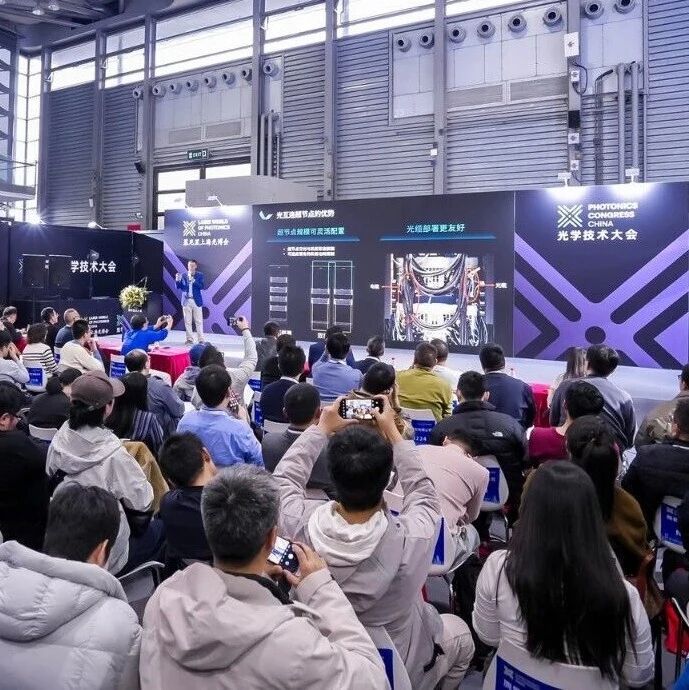
直击2026上海光博会,解锁后摩尔时代创新密码
半导体行业观察· 2026-03-22 02:42
Core Viewpoint - The integration of semiconductor and optoelectronic technologies is becoming a central theme in industry development, driven by the post-Moore era and the explosive demand for AI computing power, emphasizing the importance of collaboration across the entire industry chain [1][3]. Group 1: Forum Insights - The "Industry Collaboration and Communication Upgrade" forum gathered top experts and industry leaders to discuss core topics across the semiconductor and optoelectronic fields, sharing cutting-edge technological achievements and insights into industry development opportunities [3]. - The forum highlighted the need for collaborative innovation across materials, devices, packaging, testing, and system applications to inject new ideas and directions for high-quality industry development [3]. Group 2: Two-Dimensional Semiconductors - Two-dimensional semiconductors are identified as a key technology in the post-Moore era, offering significant advantages over silicon-based semiconductors, including reduced difficulty and cost in advanced processes [6][7]. - Major companies like TSMC, Intel, and Samsung are actively investing in two-dimensional semiconductor technology, which is expected to be integrated into heterogeneous systems after the 1nm node, with potential low-power applications by 2029 [6][7]. - Original Microelectronics has launched China's first engineering demonstration line for two-dimensional semiconductors, with plans for small-batch production of 90nm CMOS processes by September this year [7]. Group 3: Silicon Photonics - Silicon photonics technology is poised for explosive growth, driven by the demand for high-speed AI interconnects, with the market for 1.6T products expected to reach $4.5 billion by 2028 [10]. - The establishment of an 8-inch low-loss silicon nitride production platform has enabled the mass production of silicon photonic chips, addressing key challenges in traditional silicon photonics [10][11]. Group 4: Capacitor Innovations - Silicon capacitors are emerging as a solution to energy integrity challenges in AI applications, with a projected market size of $11.7 billion by 2027 [14]. - Their superior temperature stability and long lifespan make them ideal for high-density power delivery networks in AI chips and optical modules [14]. Group 5: Optical Interconnects - Optical interconnects are seen as a solution to the bandwidth, power, and topology challenges faced by traditional electrical interconnects, with the optical interconnect market expected to exceed $23 billion by 2025 [21]. - Companies are developing integrated optical solutions to enhance bandwidth and reduce power consumption, with significant advancements in optical computing technologies [21][22]. Group 6: Advanced Packaging - The "EDA+" paradigm is proposed to address the limitations of traditional EDA tools in advanced packaging, enabling collaborative design across multiple chiplets and layers [24][25]. - This new approach supports various packaging forms and integrates multiple physical field analyses, enhancing the efficiency of heterogeneous integration in chip design [24][25]. Group 7: Photonic Chips for AI and Quantum Computing - Photonic chips are positioned as a core hardware support for AI and quantum computing, with significant advantages in bandwidth and energy efficiency [36][37]. - The development of a fully controllable technology system based on lithium niobate thin films aims to facilitate the mass production of photonic chips for various applications [36][37]. Group 8: Testing Innovations - The transition from hardware to software-defined testing solutions is reshaping the testing and measurement industry, with platforms like Moku enabling customizable instrument solutions [28][29]. - High-speed oscilloscopes are being developed to meet the rigorous testing demands of optical communication technologies, ensuring reliable performance in high-speed applications [40][41]. Conclusion - The forum underscored the importance of collaborative innovation across the semiconductor and optoelectronic industries, addressing the core demands of computing power and communication upgrades in the post-Moore era, while outlining a clear blueprint for future industry development [42].
装备工业高质量发展迈入新阶段
中汽协会数据· 2026-01-07 10:22
Core Viewpoint - The article highlights the significant achievements and advancements in China's equipment manufacturing industry during the "14th Five-Year Plan" period, emphasizing the industry's role in supporting economic growth and innovation across various sectors. Group 1: Equipment Industry Growth - The equipment industry has shown a notable increase in value-added output, with an 8.4% year-on-year growth from January to November, surpassing the overall industrial growth rate by 2.4 percentage points [5] - The industry is focusing on enhancing the supply capacity of quality equipment and stimulating internal industry dynamics through coordinated efforts on both supply and demand sides [5] Group 2: Innovations in Core Areas - Significant breakthroughs have been made in industrial mother machines, including the engineering application of large gantry five-axis machining centers and advancements in high-precision gear grinding machines [6][7] - The establishment of a high-quality standard system for industrial mother machines aims to guide the industry's development [9] - The "Industrial Mother Machine+" initiative has facilitated nearly a hundred cooperative projects between various industries and enterprises [10] Group 3: High-End Instruments and Smart Detection Equipment - The development of high-end products such as a 90GHz ultra-fast real-time oscilloscope and a high-power wavelength-dispersive X-ray fluorescence spectrometer has reached international advanced levels [12] - Intelligent ultrasonic detection equipment for rail transit axles has achieved smart detection capabilities, marking a significant advancement in the field [14] Group 4: Agricultural Machinery and Engineering Equipment - Key agricultural products, including a 350-horsepower hybrid tractor, have achieved mass application, showcasing the industry's innovation [16] - The world's largest 24-meter diameter vertical shaft tunneling machine has been successfully launched and applied in major railway projects [16][17] Group 5: Emerging Industries and New Energy Vehicles - The production and sales of smart connected new energy vehicles reached new highs, with production increasing by 11.9% and sales by 11.4% in the first eleven months of 2025 [24] - The industry is actively promoting the construction of a strong automotive nation, with initiatives to standardize competition and enhance product consistency [25][28] Group 6: Medical Equipment Innovations - The first multifunctional heart-brain magnetic synchronous imaging equipment has received national medical device registration and is now in clinical use [30] - The promotion of high-end medical equipment has significantly improved patient care, with innovations leading to reduced costs and enhanced treatment outcomes [32] Group 7: Robotics and Intelligent Manufacturing - The production of industrial robots has seen substantial growth, with 67.4 million units produced and exports exceeding $15 billion [33] - The establishment of over 7,000 advanced smart factories and the development of a comprehensive standard system for intelligent manufacturing are key highlights [37][40] Group 8: Overall Industry Performance - The equipment industry's revenue reached 30.4 trillion yuan in 2024, with a year-on-year increase of 6% [43] - The industry has contributed significantly to overall industrial growth, accounting for 20% of the total industrial growth [43]

深圳经济生机勃勃 向“新”向“高”发展活力奔涌
Zhong Guo Fa Zhan Wang· 2025-12-11 09:28
Economic Performance - In 2024, Shenzhen's R&D investment reached 245.307 billion yuan, ranking second among major cities in China [1] - Shenzhen's total foreign trade import and export volume ranked first in the country, achieving 32 consecutive months of export growth [1] - By the end of 2024, Shenzhen's industrial output value and industrial added value ranked first in the country for three consecutive years [1] - The GDP of Shenzhen for the first three quarters was 27,896.44 billion yuan, with a year-on-year growth of 5.5% [1] Innovation and R&D - Shenzhen's R&D investment intensity reached 6.67%, the highest among major cities in China [2] - Basic research funding in Shenzhen grew by 21.2% in 2024, with a total of 11.591 billion yuan, outpacing overall R&D funding growth by 11.5 percentage points [3] - The city has established a scientific alliance with Dongguan to promote collaborative innovation in the Guangdong-Hong Kong-Macao Greater Bay Area [3] Industrial Development - Shenzhen has over 74,000 companies related to robotics, leading the nation, with 34 listed companies in this sector [5] - The city is recognized as a global leader in the low-altitude economy, having implemented the first national legislation on low-altitude economic development [4] - Shenzhen's policies have fostered a complete ecosystem for robotics, from core components to application scenarios [5] Foreign Investment - Since the 14th Five-Year Plan, Shenzhen has seen the establishment of 34,600 foreign-invested enterprises, accounting for 14.7% of the national total [7] - The actual utilization of foreign capital reached approximately 274.23 billion yuan, 1.2 times that of the previous five-year period [7] - Shenzhen has become a strategic hub for foreign investment, with over 200 active foreign R&D centers and more than 30,000 R&D personnel [7]


“自主化”成共识!深圳电子元器件展开幕,供应链如何创新
Nan Fang Du Shi Bao· 2025-10-29 04:17
Core Insights - The 2025 Shenzhen International Electronic Components and Materials Procurement Exhibition (ES SHOW 2025) emphasizes "high-end and self-sufficiency" and "supply chain innovation" amid increasing external uncertainties in the Chinese electronics industry [1][2] - The industry is experiencing a collective anxiety regarding "self-sufficiency," with a focus on ensuring supply chain security becoming a top priority [2] - Emerging applications such as AI and renewable energy are driving significant changes in the upstream electronics industry [3] Industry Trends - The exhibition gathered hundreds of domestic and international companies, showcasing cutting-edge products in key areas like semiconductors and precision manufacturing [2] - The demand for fully domestically produced chips and controllable supply chains has become a primary concern for clients [2] - The recent Bay Area Semiconductor Industry Ecosystem Expo highlighted breakthroughs in domestic electronic design automation (EDA) software and high-speed oscilloscopes, marking significant advancements in China's self-sufficiency efforts [2] Demand Drivers - AI and renewable energy are identified as strong engines for demand, with the exhibition featuring dedicated areas for these sectors [3] - The explosion of AI large models is creating exponential demand for upstream components such as computing power, storage, and sensing devices [3] - Capital markets are shifting focus from chip design performance to foundational aspects of the industry, indicating a maturation of the sector [3] Market Performance - Data indicates that Shenzhen's semiconductor and integrated circuit industry reached a scale of 256.4 billion yuan in 2024, with a year-on-year growth of 26.8%, and continued to grow at a rate of 16.9% in the first half of 2025 [4] - The trends observed at ES SHOW 2025 and the Bay Area Expo suggest that Shenzhen is advancing from merely supplementing the supply chain to achieving breakthroughs in the electronics information industry through ecosystem collaboration [4]
超常规全链条推动决定性突破!港股芯片投资首选:首只港股信息科技ETF(159131)全网发售中
Xin Lang Cai Jing· 2025-10-29 03:10
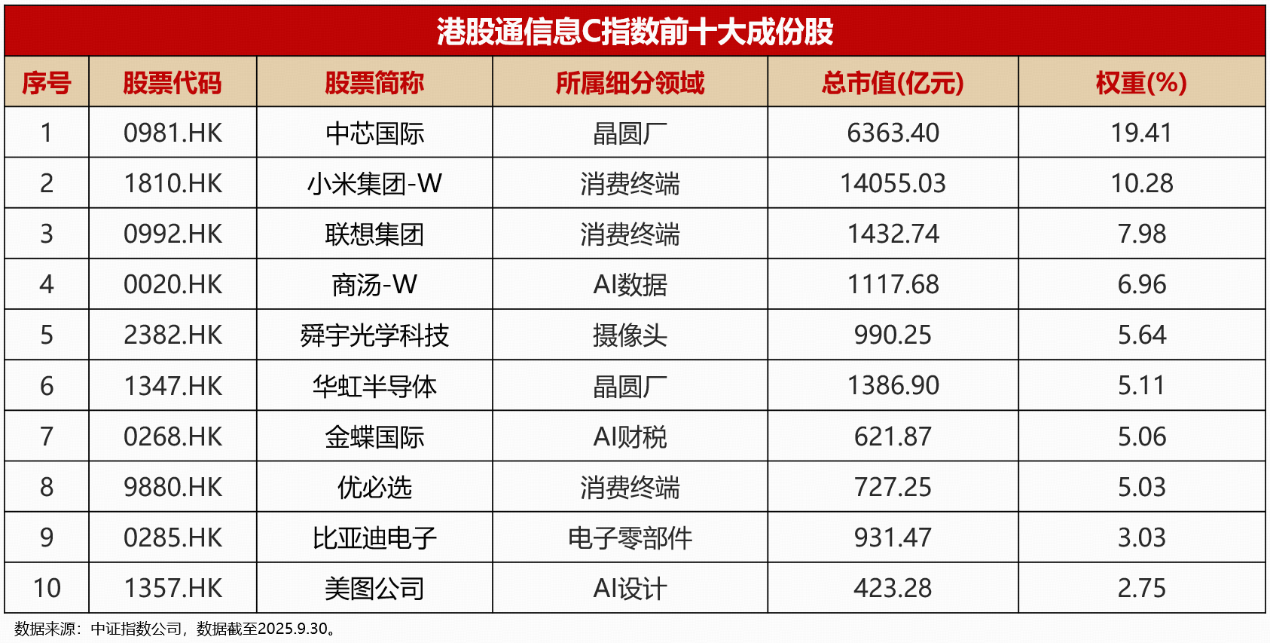
Core Insights - The "15th Five-Year Plan" emphasizes extraordinary measures to drive breakthroughs in key technologies across various sectors, including integrated circuits, advanced manufacturing, and artificial intelligence [1] - The launch of the first Hong Kong stock information technology ETF (159131) is gaining market attention due to its focus on semiconductor, electronics, and software sectors, capitalizing on the valuation advantages of Hong Kong stocks compared to A-shares [1][2] Industry Overview - The semiconductor industry is at the forefront of technological competition among major nations, with the Hong Kong stock information technology ETF tracking the CSI Hong Kong Stock Connect Information Technology Composite Index, which consists of 70% hardware and 30% software [2] - The index includes significant weights in consumer electronics (41.53%), semiconductors (29.79%), and computer software (27.79%), indicating a strong focus on hardware [2] ETF Composition - The Hong Kong Stock Connect Information Technology Composite Index comprises 41 Hong Kong hard technology companies, with major holdings including SMIC (19.41%), Xiaomi (10.28%), and Huahong Semiconductor (5.11%) [4] - The top five stocks account for 51% of the index, while the top ten stocks represent 72%, highlighting a concentrated investment in leading technology firms [4] Market Performance - From December 30, 2022, to September 30, 2025, the index has seen a cumulative increase of 110.93%, outperforming other Hong Kong technology indices [4] - As of October 16, 2025, the index's price-to-earnings ratio stands at 42.68, significantly lower than that of major global technology indices, indicating potential growth opportunities for investors [4][10]
“十五五”规划建议全文划重点!千亿ETF大厂力推首只港股信息科技ETF(159131)首发
Xin Lang Ji Jin· 2025-10-29 02:41
Core Insights - The "15th Five-Year Plan" emphasizes extraordinary measures to achieve breakthroughs in key core technologies across various sectors, including integrated circuits, high-end machinery, and advanced materials [1] - The launch of the first Hong Kong stock information technology ETF (159131) is gaining market attention due to its focus on semiconductor, electronics, and software sectors, capitalizing on the valuation advantages of Hong Kong stocks compared to A-shares [1][2] Group 1: ETF Overview - The Hong Kong stock information technology ETF (159131) tracks the CSI Hong Kong Stock Connect Information Technology Composite Index, which consists of 41 hard technology companies [2][4] - The index is composed of 70% hardware and 30% software, with significant weights in consumer electronics (41.53%), semiconductors (29.79%), and computer software (27.79%) [2][3] - The ETF provides investors with a tool to capture investment opportunities in Hong Kong's hard technology assets [1][2] Group 2: Market Performance - From December 30, 2022, to September 30, 2025, the Hong Kong Stock Connect Information Technology Index has seen a cumulative increase of 110.93%, outperforming other technology indices [5] - As of October 16, 2025, the index's price-to-earnings ratio stands at 42.68, significantly lower than major global technology indices, indicating potential growth opportunities [5][7] Group 3: Key Constituents - The top five constituents of the index include SMIC (19.41%), Xiaomi Group (10.28%), and Hua Hong Semiconductor (5.11%), with the top ten stocks accounting for 72% of the index [3][4] - The index's design limits individual stock weight to a maximum of 15%, ensuring a balanced representation of leading companies in the technology sector [4][7] Group 4: Industry Developments - Recent exhibitions showcased advancements in high-end electronic measurement instruments and domestic EDA design software, highlighting China's progress in the semiconductor industry [3] - Alibaba announced a significant investment of 380 billion yuan in cloud and AI hardware infrastructure, further supporting the demand for China's semiconductor industry [3]
电子行业周报:台积电三季度营收超预期,Q3全球智能手机市场持续复苏-20251020
Donghai Securities· 2025-10-20 15:39
Investment Rating - The report indicates a cautious investment outlook for the electronics sector, suggesting a gradual recovery in industry demand and advising against chasing high prices while recommending slow accumulation during dips [5]. Core Insights - TSMC's Q3 2025 revenue reached $33.1 billion, exceeding guidance and reflecting a 40.8% year-on-year growth, with net profit increasing by 39.1%. The revenue from 7nm and below process nodes accounted for 74% of total revenue [4][10]. - Global smartphone shipments in Q3 2025 reached 323 million units, a 2.6% year-on-year increase, driven by high-end models, although shipments in China declined by 0.6% [4][10]. - The electronics industry is experiencing a mild recovery, with structural opportunities in AI computing, AIOT, semiconductor equipment, key components, and rising storage prices [4][5]. Summary by Sections Industry Overview - TSMC's Q3 2025 revenue was $33.1 billion, a 40.8% increase year-on-year, with a net profit of NT$452.3 billion, up 39.1% year-on-year. The company expects Q4 revenue between $32.2 billion and $33.4 billion [4]. - The global smartphone market is recovering, with high-end models driving demand, while the Chinese market faces challenges with a 0.6% decline in shipments [4][10]. Market Performance - The electronics sector underperformed the market, with the Shanghai-Shenzhen 300 index down 2.22% and the Shenwan Electronics Index down 7.14% [19][21]. - As of October 17, 2025, the semiconductor sub-sector saw a decline of 6.53%, while consumer electronics dropped by 9.10% [21][22]. Investment Recommendations - Focus on companies benefiting from strong domestic and international demand in the AIOT sector, such as Lexin Technology and Rockchip Technology [5]. - Monitor AI innovation-driven sectors, particularly computing chips and optical devices, with companies like Cambricon and Source Photonics highlighted [5]. - Consider leading stocks in the storage sector, such as Zhaoyi Innovation and Jiangbo Technology, as prices are expected to recover [5].
稀土卡脖子!中国一纸审批,ASML光刻机50公斤稀土断供?
Sou Hu Cai Jing· 2025-10-19 13:46
Core Insights - The Chinese semiconductor industry is strengthening its foundation by focusing on the basic "nutrient" aspects of the supply chain rather than relying solely on a single technological breakthrough [2] - A recent announcement from the Ministry of Commerce requires approval for the export of products containing 0.1% or more of Chinese rare earth elements, directly impacting semiconductor equipment giants like ASML and Applied Materials [2] - The domestic production of key materials, such as EUV photoresists, is increasing, with the localization rate surpassing 30% for critical photoresists [4] Resource Management - The new policy on rare earth exports is a strategic move to control resources essential for semiconductor manufacturing, particularly for equipment that relies heavily on rare earth elements [2] - The establishment of a domestic EUV photoresist R&D platform in Wuxi aims to break the monopoly of foreign companies in the high-end photoresist market [4] Technological Breakthroughs - The industry is not only focusing on acquiring EUV lithography machines but is also exploring differentiated process paths, such as New Kylin's "non-lithographic compensation" strategy, which maximizes the performance of existing DUV lithography machines [7] - New Kylin's approach involves a complex process cycle to compensate for precision gaps, demonstrating a significant shift in manufacturing strategy [7] Process Integration - New Kylin has standardized high-difficulty operations, resulting in a series of equipment that supports the entire manufacturing process, achieving an 85% yield rate for 5nm logic chips in collaboration with SMIC [9] - This breakthrough indicates that the Chinese semiconductor industry can develop new pathways for advanced processes without relying on external equipment [9] Design Tools Development - The launch of EDA software by New Kylin's subsidiary, Qiyunfang, marks a significant step in breaking international monopolies in design tools, enhancing operational efficiency by 30% and reducing hardware development cycles by 40% [11] - The integration of this EDA software with domestic operating systems and databases facilitates a seamless design-manufacturing connection [13] Ecosystem Resilience - The Chinese semiconductor ecosystem is evolving into a robust structure, with rare earths and materials forming the soil, non-lithographic processes as the main trunk, and design tools as the branches [15] - This interconnected ecosystem allows for sustained vitality even in the face of localized disruptions, positioning China to redefine the competitive landscape in the global semiconductor industry [15]
计算机行业周报:大湾区引领、全链条发力:国产化创新生态构建新范式-20251019
HUAXI Securities· 2025-10-19 08:29
Investment Rating - The industry rating is "Recommended" [4] Core Insights - The 2025 Bay Area Semiconductor Expo marks a critical transition from "single-point breakthroughs" to "ecological collaboration" in China's semiconductor localization efforts, leveraging the advantages of the Guangdong-Hong Kong-Macao Greater Bay Area to create an ecological closed loop [1][14] - Shenzhen is driving semiconductor localization through a "finance + ecology" dual engine, focusing on capital empowerment, ecological collaboration, and policy support to strengthen the semiconductor industry [2][15] - Domestic software breakthroughs in databases and operating systems are addressing critical bottlenecks, with products like SUNDB and the n-TOS+CTOS system achieving significant milestones in localization [3][6][52][53] Summary by Sections 1. Bay Area Leadership and Full-Chain Efforts - The Bay Area Semiconductor Expo 2025 showcases over 600 semiconductor companies and emphasizes core technology breakthroughs, including the introduction of a 90GHz oscilloscope and EDA software that fills high-end gaps [1][19][20] - The expo facilitates supply-demand connections across the "R&D - mass production" chain, enhancing China's global influence in semiconductor standards [1][27] 2. Shenzhen's Dual-Engine Approach - Shenzhen's semiconductor industry is evolving through a multi-dimensional collaboration model, with a focus on a 5 billion yuan fund targeting weak links in the industry chain [2][15][28] - The "six ones" mechanism integrates resources and forms an industry alliance of over a thousand companies, enhancing collaboration and reducing R&D costs for SMEs [2][15][32] 3. Software Autonomy - The tightening of U.S. software controls has inadvertently created opportunities for domestic software companies, with SUNDB achieving a 98.31% self-research rate and the n-TOS+CTOS system achieving full localization [6][52][53] - These developments signify a shift from pilot replacements to substantial performance improvements in domestic software, ensuring safety and controllability [6][52] 4. Investment Recommendations - Beneficial stocks in the semiconductor sector include Northern Huachuang, Zhongwei Company, SMIC, and Huahong Semiconductor [7][17] - In the chip sector, recommended companies include Cambricon, Haiguang Information, and Longxin Zhongke [7][17] - Storage companies such as Demingli and Kaipu Cloud are also highlighted as potential investment opportunities [7][17]