中国芯片崛起

Search documents
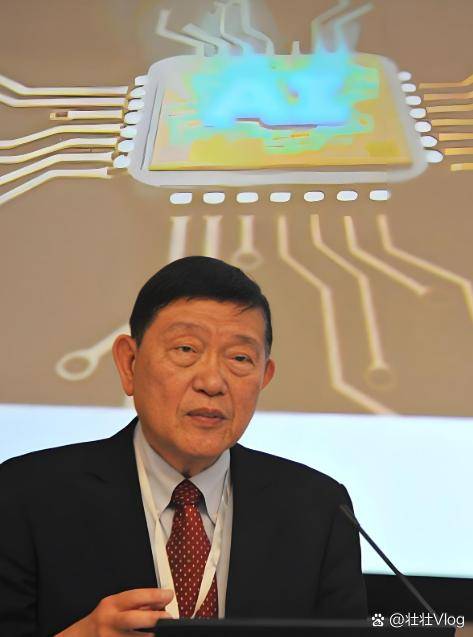
中芯国际创始人张汝京曾说,他在自己离开台积电时,台积电董事长告诉他,你敢去大陆,那在台积电的这么多股票就不能拿了!2025 年,满头华发的张汝京现身讲台,面对台下朝气蓬勃的年轻面庞,他身形瘦削却身姿挺拔,尽显风骨。外界给这位半导体老兵算过一笔账,怎么算,他这辈子都是在做“亏本买卖”...
Sou Hu Cai Jing· 2026-01-12 09:11
Core Viewpoint - The article highlights the life and contributions of Zhang Rujing, the founder of SMIC, emphasizing his sacrifices and relentless pursuit of advancing China's semiconductor industry despite facing numerous challenges and setbacks throughout his career [1][16]. Group 1: Early Career and Sacrifices - Zhang Rujing faced a difficult choice when leaving TSMC, where he had significant stock options, which he forfeited to pursue his dream of establishing a semiconductor company in mainland China [2][3]. - His decision was driven by personal motivations, including his father's wish to return to the homeland and his mother's desire to spend her later years in China, which he valued more than financial wealth [3]. Group 2: Challenges in Establishing SMIC - Upon arriving in Shanghai, Zhang encountered significant obstacles, including a lack of advanced equipment due to international embargoes, forcing him to source second-hand parts and assemble them into functional production lines [4][5]. - Despite the challenging environment, he and his team successfully established an 8-inch wafer production line within thirteen months, achieving technology nodes from 0.25 microns down to 90 nanometers [5]. Group 3: Legal and Competitive Struggles - As SMIC began to gain traction, it faced aggressive legal challenges from competitors, which were perceived as targeted attacks against China's semiconductor ambitions [6][8]. - In 2009, SMIC was forced to pay $200 million in damages and relinquish 10% of its shares, along with a non-compete clause that required Zhang to leave the company he founded [9]. Group 4: Resilience and Continued Contributions - After a three-year non-compete period, Zhang returned to the semiconductor industry, focusing on upstream materials, particularly domestic production of 300mm silicon wafers, which had been heavily reliant on imports [12]. - He successfully led a new venture, achieving breakthroughs in technology that addressed long-standing gaps in the domestic semiconductor supply chain [13]. Group 5: Ongoing Impact and Legacy - Zhang continued to innovate and support the semiconductor industry by founding multiple companies aimed at reducing costs for small design firms and addressing challenges in automotive chips [15]. - His philanthropic efforts included establishing numerous schools and promoting semiconductor education, reflecting his commitment to nurturing talent in the industry [15][16].



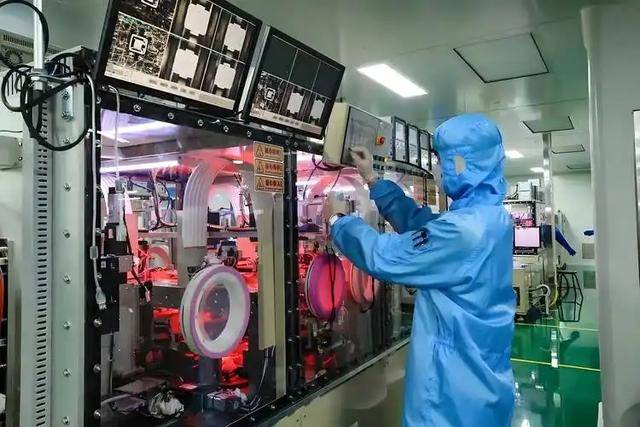
欧美芯片企业严重警告!若中国再敢降价,世界芯片产业或将被毁灭
Sou Hu Cai Jing· 2025-12-31 04:56
Core Viewpoint - The article discusses the changing dynamics in the semiconductor industry, highlighting the rise of Chinese chip manufacturers and their impact on Western companies, particularly in terms of pricing and market competition. Group 1: Market Dynamics - Western companies have historically dominated the semiconductor industry, controlling pricing and market share due to their technological and capital advantages [1][3] - The emergence of Chinese chip manufacturers has begun to disrupt this dominance, with reports indicating that Chinese firms plan to reduce the price of 28nm chips from $2,500 to $1,500 by 2024 [3][19] Group 2: Competitive Strategies - Chinese companies are not only lowering prices but have also achieved significant advancements in chip manufacturing technology, allowing them to compete effectively with Western firms [12][29] - In response to the competitive threat, Western companies have attempted to implement price controls and technology restrictions to stifle the growth of Chinese firms [10][12] Group 3: Production and Technology - Chinese firms have made strides in achieving self-sufficiency in chip production, moving towards complete domestic control over design, manufacturing, and materials [17][19] - The development of domestic lithography machines has allowed Chinese companies to reduce reliance on foreign suppliers, impacting orders for companies like ASML [23][27] Group 4: Financial Implications - China's semiconductor exports reached $159.5 billion in 2024, marking a significant milestone as it surpassed the trillion yuan mark for the first time [29] - The price reductions by Chinese firms are seen as a strategic move to stimulate market demand while maintaining profitability, albeit at lower margins compared to previous years [31]
中国芯片崛起,全球芯片产业大重组正在来临?
Xin Lang Cai Jing· 2025-08-23 07:26
Core Insights - The rise of China's semiconductor industry is prompting a significant restructuring of the global chip industry [2] Group 1 - China's chip industry is experiencing rapid growth, which may lead to a shift in the global semiconductor landscape [2] - NVIDIA is set to resume sales of its H20 products in China, indicating a potential thaw in relations and market opportunities [2]
反噬来了!北美芯片价格暴跌66%,外媒:简直是“灭顶之灾”!
Sou Hu Cai Jing· 2025-08-08 05:20
Core Viewpoint - The rapid development of China's chip industry has led to a significant drop in North American chip prices by 66%, creating a challenging situation for Western chip manufacturers [1][3][9] Group 1: Market Dynamics - China has become a global leader in the production of mid-to-low-end chips, surpassing the U.S. in chip output in 2024 [1][3] - The strong supply capacity of Chinese mid-to-low-end chips and their competitive pricing have contributed to the price decline in North America [3][5] - Chinese companies, such as Yangtze Memory Technologies, have successfully captured market share from American firms like Micron and Samsung through aggressive pricing strategies [3][5] Group 2: Impact on Western Companies - The influx of low-priced Chinese chips has pressured U.S. chip manufacturers, leading to significant revenue declines, such as a 96% drop in Wolfspeed's performance over three years and a 41.9% revenue decrease for Microchip Technology in Q4 2024 [5][7] - Many U.S. companies are facing survival challenges, resulting in layoffs and factory closures to cope with the market downturn [5][7] Group 3: Future Outlook - China's dominance in mid-to-low-end chips is expected to continue, as these chips are crucial for various consumer products, including air conditioners and electric vehicles [7][9] - Despite existing gaps in high-end chip technology, China is making strides, with companies like SMIC achieving mass production of 7nm chips [7][9] - The ongoing technological advancements suggest that China may soon break through existing barriers in the high-end chip market, further solidifying its global position [9][11] Group 4: Geopolitical Implications - The U.S. has attempted to counter China's chip rise through tariffs and sanctions, but these measures have not effectively curbed China's growth and have instead led to price drops in the U.S. market [9][11] - The potential for increased tariffs could backfire, leading to higher costs for American companies and further reliance on Chinese chips [7][9]