中国资本市场发展

Search documents
第三十届(2026年度)中国资本市场论坛1月11日议程发布
Xin Lang Cai Jing· 2026-01-11 01:18
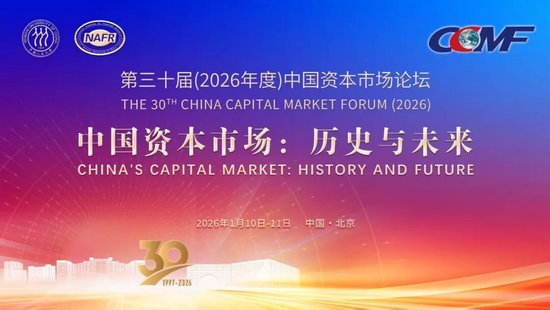
Core Insights - The China Capital Market Forum is celebrating its 30th anniversary, marking its evolution alongside China's financial reforms and capital market development since its inception in 1997 [3][14] - The theme for this year's forum is "China's Capital Market: History and Future," emphasizing the need to reflect on past experiences while looking forward to future responsibilities and missions [4][15] Historical Context - Over the past 30 years, the development of the capital market has encapsulated unique Chinese experiences and reform logic, highlighting the importance of understanding underlying market dynamics for future progress [3][14] - The forum serves as a platform for academic exploration and a witness to the transformation of China's capital market from its nascent stages to maturity [3][14] Future Outlook - The capital market is tasked with supporting economic structural transformation, industrial upgrades, and participating in international governance, necessitating enhanced competitiveness through openness and technological innovation [4][15] - The forum aims to foster consensus, inspire thought, and gather strength to promote innovation and resilience in the capital market, paving the way for a financially strong nation [4][15] Event Details - The forum will take place from January 10 to January 11, 2026, in Beijing, organized by several institutions including the National Financial Research Institute of Renmin University of China [16][17] - The agenda includes a review of the past 30 years of the capital market, keynote speeches, and discussions on the future development of the capital market [18][22]

黄奇帆建议由银行、社保、保险、外汇资金参与设立股权引导基金
Xin Lang Cai Jing· 2026-01-10 15:25
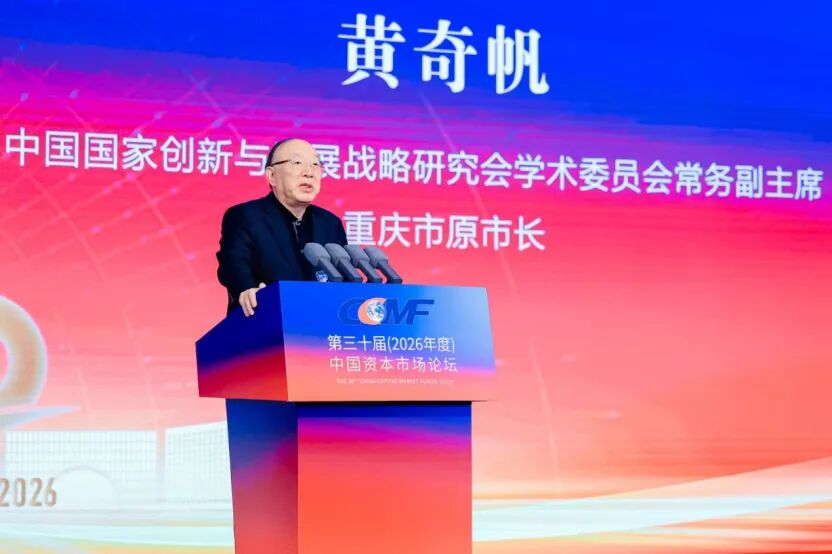
Group 1: Core Perspectives - The forum emphasized the need for a multi-channel approach to increase direct financing, suggesting the establishment of an equity guidance fund involving banks, social security, insurance, and foreign exchange funds [2][3] - The importance of improving expectation management mechanisms was highlighted as a key aspect of enhancing the governance system of the capital market [4] - Future reforms in the capital market should focus on asset, investment, and institutional aspects to meet diverse financing needs and enhance wealth management [5][6] Group 2: Key Recommendations - Huang Qifan proposed that banks could allocate 3% of their capital for equity investments, potentially generating around 1 trillion yuan for equity investment funds [2] - Social security funds could contribute approximately 2 trillion yuan if 30% were allocated to equity investments [3] - Insurance funds could generate between 3 trillion to 4 trillion yuan for equity investment funds based on a similar allocation [3] Group 3: Structural Improvements - The need to adjust the structure of listed companies to prioritize high-tech and innovative firms was emphasized as essential for capital market development [5] - The introduction of large institutional funds, such as social security and insurance funds, is crucial for enhancing market liquidity and pricing capabilities [5][6] - The transition of long-term capital from the banking system to the capital market is seen as a significant opportunity for optimizing financial structure and increasing direct financing [7]
建言资本市场发展,黄奇帆、高培勇、吴晓求、丁志杰最新发声!
证券时报· 2026-01-10 12:43
Group 1: Core Views - The forum highlighted the need for a multi-channel approach to increase direct financing, emphasizing the development of both the stock market and equity investment funds [2][4]. - Huang Qifan proposed the establishment of an equity guidance fund involving banks, social security, insurance, and foreign exchange funds, which could potentially create a scale of 40 to 50 trillion yuan for equity investment [5]. - Gao Peiyong stressed that improving expectation management mechanisms will be crucial for enhancing the governance system of the capital market [6][9]. Group 2: Key Discussions - Huang Qifan indicated that if 3% of the capital from banks were allocated to equity investments, it could yield approximately 1 trillion yuan for equity investment funds [4]. - He also noted that if 30% of social security funds were used for equity investments, it could generate around 2 trillion yuan, while insurance funds could contribute an estimated 3 to 4 trillion yuan [5]. - Gao Peiyong outlined a framework for expectation management, which includes integrating expectation factors into macroeconomic analysis, guiding expectations in policy goals, and reform actions in macroeconomic regulation [9][10]. Group 3: Future Directions - Wu Xiaoqiu emphasized the need for reforms in the asset, investment, and institutional aspects of the capital market to meet diverse financing needs and enhance wealth management for residents [11][12]. - He highlighted the importance of adjusting the structure of listed companies to prioritize high-tech and innovative firms, as the capital market fundamentally relies on the performance of these companies [14]. - Ding Zhijie pointed out that optimizing the financial structure and increasing direct financing is essential, suggesting that long-term capital currently trapped in the banking system should be redirected to the capital market [15][18].

发展聚力
Shang Hai Zheng Quan Bao· 2025-12-08 18:19
Group 1: High-Quality Development - The core points for achieving significant results in high-quality development during the 14th Five-Year Plan period are to boost consumption and expand effective investment [8][9][10] - The goal is to double the per capita GDP from approximately $13,500 in 2024 to between $25,000 and $26,000 by 2035, indicating a countdown to meet this target [10][11] - The expected economic growth rate for the next five years is projected to be between 4.5% and 5.5%, with a target of around 5% for the 14th Five-Year Plan [9][10] Group 2: Consumption and Investment Strategies - To boost consumption, policies should focus on releasing current consumption potential through fiscal subsidies and loan interest discounts, while reforms should enhance long-term consumption capacity [11][12] - Effective investment should not merely focus on increasing investment but should strategically develop new productive forces and improve the business environment [12][13] Group 3: International Expansion of Enterprises - The necessity for Chinese enterprises to expand internationally is driven by competition, changes in the global economic landscape, and the need to overcome domestic economic challenges [12][14][15] - Risks associated with international expansion include geopolitical risks and currency management, which are often overlooked by domestic companies [15][16] - Successful international expansion requires thorough market research, local talent training, and adaptation to different social responsibility expectations abroad [16] Group 4: Capital Market Innovation - The Chinese capital market is undergoing a transformation influenced by macroeconomic policies aimed at stabilizing growth and boosting investor confidence [17][18] - Key strategies include balancing support for emerging industries while stabilizing traditional sectors, ensuring that macroeconomic policies are precise and responsive to new trends [19][20] - The capital market's long-term prospects are supported by various factors, including increased insurance investments in A-shares and a shift of household savings towards equity markets [22][23]

“证券教父”管金生去世!享年78岁,曾创办万国证券,死因太惋惜
Sou Hu Cai Jing· 2025-10-13 01:20
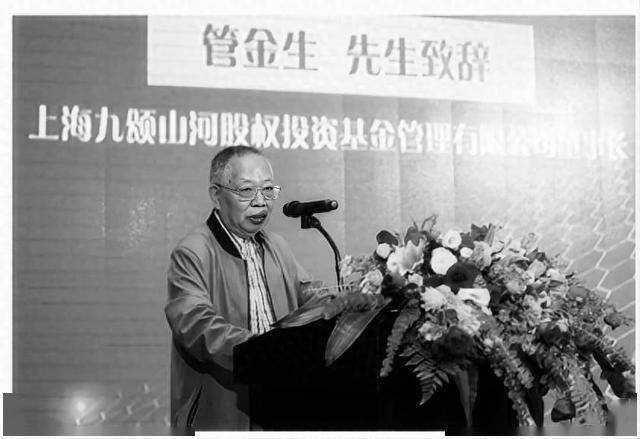
Core Insights - The article discusses the life and legacy of Guan Jingsheng, a prominent figure in China's financial industry, who passed away at the age of 78, reflecting on his rise and fall in the securities market [1][4]. Early Life and Career - Guan Jingsheng was not formally trained in finance; he was a French major from a rural background in Jiangxi, who began his career at Shanghai International Trust Company [6]. - In the 1980s, he identified opportunities in the black market for treasury bonds and sought to bring these transactions into the formal market, leading to the establishment of Wanguo Securities in 1988 with just four employees [6][8]. Growth of Wanguo Securities - By 1989, Wanguo Securities had grown to become the largest brokerage in China, achieving an annual revenue of over 300 million yuan [10]. - Guan's strategic vision included shifting focus from short-term gains to core business in securities issuance, making Wanguo the top firm in primary market issuance by 1993 [11]. - He was also a pioneer in transforming the issuance department into an investment banking division, positioning Wanguo as one of China's earliest investment banks [11]. Major Achievements - Guan supported the opening of cross-market trading for Shenzhen stocks, leading to significant business volume and profits, with Wanguo capturing 80% of the trading volume in Shenzhen during a market rebound in 1991 [13]. - At its peak, Wanguo Securities accounted for 69% of A-share underwriting in the Shanghai market, showcasing its dominance [13]. Downfall - The downfall of Wanguo Securities occurred during the "327" treasury bond futures incident in 1995, where Guan's aggressive short-selling strategy led to massive losses when the market turned against him [15][19]. - On February 23, 1995, a last-minute sell-off attempt resulted in a loss of 5.6 billion yuan, equivalent to ten times the firm's net profit for the entire previous year [17][19]. Later Years - Following the collapse, Wanguo Securities was merged with another firm, and Guan faced legal repercussions, serving time in prison before re-emerging in 2015 [21]. - In 2016, he attempted to re-enter the financial sector by founding the Jiuzong Fund, focusing on healthcare and intelligent manufacturing sectors [23]. - Guan continued to engage in the investment landscape until his passing in 2022, having registered another venture in venture capital [24].
《激荡三十年》里的“股市教父”,走了
吴晓波频道· 2025-10-11 00:29
Core Viewpoint - The article reflects on the life and legacy of Guan Jingsheng, known as the "father of Chinese securities," highlighting his significant contributions to the development of China's capital markets and the eventual downfall of his firm, Wangguo Securities, due to the infamous "327 incident" [9][28]. Group 1: Background and Achievements - Wangguo Securities was established in July 1988, becoming China's first joint-stock securities company, initially starting with just four employees and a small office [16][18]. - By 1989, Wangguo Securities became the largest brokerage in China, achieving an annual revenue of over 300 million yuan [18]. - Guan Jingsheng recognized the importance of securities issuance as a core competitive advantage and successfully led Wangguo to become the top firm in primary market issuance by 1993 [19][23]. - The firm expanded internationally, establishing a presence in Hong Kong and later in North America and Europe, making it a truly international securities company [24]. Group 2: The "327 Incident" - The "327 incident" was a significant event in 1995 when Guan Jingsheng made a risky bet against the 327 government bond futures, leading to massive losses for Wangguo Securities [31][33]. - On February 23, 1995, the bond futures prices rose unexpectedly, resulting in a catastrophic loss of 5.6 billion yuan for Wangguo after the Shanghai Stock Exchange invalidated trades made in the last minutes of trading [38]. - The aftermath of the incident led to a crackdown on market manipulation and significant regulatory changes in China's capital markets [42]. Group 3: Legacy and Impact - Guan Jingsheng's life story is intertwined with the evolution of China's financial markets, representing both the potential for growth and the risks of unregulated expansion [44]. - His contributions to the establishment of trading rules and the development of the Shanghai Stock Exchange were pivotal in shaping the modern Chinese capital market [24][26]. - Despite his later downfall and imprisonment, Guan's influence on the market and the lessons learned from his experiences continue to resonate in discussions about China's financial landscape [49][50].
未来5年,哪些赛道将一飞冲天?
Zhong Guo Ji Jin Bao· 2025-09-12 14:34
Group 1 - The "2025 China Capital Market Development Forum" will be held in Shanghai on September 16-17, focusing on the future of China's economy and potential leading sectors [2] - The forum aims to gather industry leaders and top experts to discuss insights and future innovations under the theme "Discovering Value, Creating the Future" [2] - Participants are encouraged to vote in the "Super Prophet" poll to express their views on which sectors will thrive in the next five years, with a chance to win limited edition merchandise [3][5] Group 2 - Voting for the "Super Prophet" poll is open from September 12 to September 15, with results to be announced on September 18 [7]
未来5年,哪些赛道将一飞冲天?
中国基金报· 2025-09-12 07:35
Group 1 - The "2025 China Capital Market Development Forum" will be held in Shanghai on September 16-17, gathering industry leaders and top experts to discuss the theme "Insight into Value, Intelligent Creation of the Future" [1] - The forum invites participants to share their predictions on which sectors will thrive in the next five years and who will lead the Chinese economy [1] - Participants in the "Super Prophet" voting will have the opportunity to win limited edition merchandise from China Fund News [4] Group 2 - All users participating in the voting will have a chance to win a set of limited edition customized merchandise from China Fund News, with a total of 10 sets available [4] - The voting process involves clicking a card to access the voting page and submitting a questionnaire, which counts as a successful participation [6] - Results of the voting will be announced on September 18 [8]