直接融资比重

Search documents
黄奇帆建议由银行、社保、保险、外汇资金参与设立股权引导基金
Xin Lang Cai Jing· 2026-01-10 15:25
Group 1: Core Perspectives - The forum emphasized the need for a multi-channel approach to increase direct financing, suggesting the establishment of an equity guidance fund involving banks, social security, insurance, and foreign exchange funds [2][3] - The importance of improving expectation management mechanisms was highlighted as a key aspect of enhancing the governance system of the capital market [4] - Future reforms in the capital market should focus on asset, investment, and institutional aspects to meet diverse financing needs and enhance wealth management [5][6] Group 2: Key Recommendations - Huang Qifan proposed that banks could allocate 3% of their capital for equity investments, potentially generating around 1 trillion yuan for equity investment funds [2] - Social security funds could contribute approximately 2 trillion yuan if 30% were allocated to equity investments [3] - Insurance funds could generate between 3 trillion to 4 trillion yuan for equity investment funds based on a similar allocation [3] Group 3: Structural Improvements - The need to adjust the structure of listed companies to prioritize high-tech and innovative firms was emphasized as essential for capital market development [5] - The introduction of large institutional funds, such as social security and insurance funds, is crucial for enhancing market liquidity and pricing capabilities [5][6] - The transition of long-term capital from the banking system to the capital market is seen as a significant opportunity for optimizing financial structure and increasing direct financing [7]

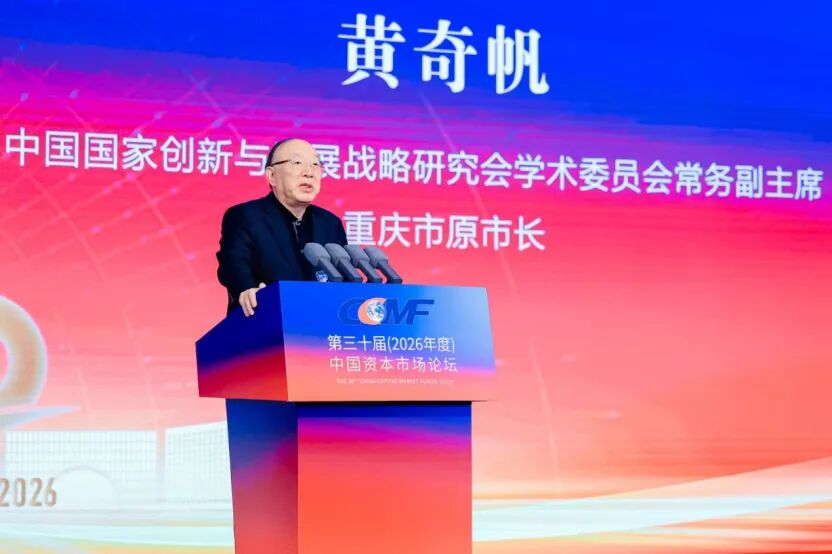
建言资本市场发展,黄奇帆、高培勇、吴晓求、丁志杰最新发声!
Zheng Quan Shi Bao· 2026-01-10 12:51
Group 1: Core Insights - The forum highlighted the importance of improving the capital market in China through various mechanisms, including enhancing direct financing and optimizing financial structures [1][2][5][8] Group 2: Huang Qifan's Suggestions - Huang Qifan proposed the establishment of an equity guidance fund involving banks, social security, insurance, and foreign exchange funds to increase direct financing [2][4] - He estimated that if 3% of bank capital, 30% of social security funds, and 30% of insurance funds were allocated to equity investments, it could generate approximately 40 to 50 trillion yuan for equity investment funds [4] Group 3: Gao Peiyong's Views - Gao Peiyong emphasized that establishing a sound expectation management mechanism is crucial for improving the governance of the capital market and the macroeconomic governance system [5][7] - He outlined a framework for expectation management that includes integrating expectation factors into macroeconomic analysis, guiding expectations in policy objectives, and reform actions in macroeconomic regulation [7] Group 4: Wu Xiaoqiu's Reform Focus - Wu Xiaoqiu identified three key areas for reform in the capital market: asset side, investment side, and institutional side, to meet diverse financing needs and wealth management demands [8][10] - He stressed the need to adjust the structure of listed companies to prioritize high-tech and innovative enterprises, which are essential for capital market growth [10] Group 5: Ding Zhijie's Insights - Ding Zhijie pointed out that there is significant room for optimizing China's financial structure, particularly by converting long-term household savings in banks into patient capital for direct financing [11][13] - He noted that the annualized return on pension funds in the capital market exceeds 5%, indicating the potential benefits of channeling more funds into the capital market [13]

债券进入“高波时代”?央行副行长发声
21世纪经济报道· 2025-02-27 07:54
Core Viewpoint - The article discusses the ongoing reforms in China's financial institutions, emphasizing the need for enhanced risk resilience and support for the real economy through measures such as issuing special government bonds and optimizing the financial layout of state-owned enterprises [1]. Group 1: Financial Institution Reforms - The People's Bank of China is actively promoting reforms to enhance the risk resilience of large state-owned banks by supporting core tier one capital through special government bonds [1]. - There is a focus on improving the bond market's institutional framework to increase market pricing capabilities and resilience, thereby raising the proportion of direct financing [1]. Group 2: Market Conditions - Following the Spring Festival, major banks have seen net lending remain below 2 trillion yuan, reaching historical lows, which has put pressure on liquidity and led to declines in bond prices [2]. - The yield on 10-year government bonds has increased significantly, rising from 1.5925% on February 6 to 1.7650% by February 25, indicating a volatile market environment [2]. Group 3: Market Volatility - The volatility of 10-year government bonds has reached its highest level in nearly five years, with a daily yield fluctuation of up to 5 basis points, complicating trading conditions [4]. - Market participants are increasingly sensitive to news and rumors, leading to rapid reactions to unverified information, which has contributed to heightened market uncertainty [4][5]. Group 4: Investment Strategies - Investment managers emphasize the importance of developing independent judgment and a robust investment framework to navigate the current market volatility, rather than following the crowd [6]. - There is a call for enhancing the capabilities of trading teams in bond research, pricing analysis, and trend forecasting to mitigate the risks associated with market fluctuations [6].