企业出海

Search documents
如何穿越市场波动?徐志敏王康宁李岳最新交流,直面当前市场最热议五大话题……
聪明投资者· 2026-03-30 03:33
Group 1 - The core theme of re-industrialization is a long-term trend, with AI accelerating this process [22] - The domestic internet giants are viewed positively in terms of AI applications, as they have accumulated vast amounts of data and customer bases [35] - The investment strategy should focus on avoiding FOMO (Fear of Missing Out) and instead look for solid companies that can withstand market volatility [40][82] Group 2 - The real estate market is expected to stabilize or see a reduced decline, which will likely lead to a recovery in consumer spending [90] - The consumption sector is undergoing a transformation, with new consumer demands emerging, such as spiritual and self-care consumption [97] - Companies with strong business models in the consumer sector are becoming increasingly attractive, especially as valuations have returned to reasonable levels [84][90] Group 3 - The concept of "HALO assets" is discussed, indicating that not all assets will benefit from the AI revolution, and a focus on intangible assets like R&D and brand value is essential [49][120] - The investment landscape is shifting, with a focus on upstream sectors benefiting from re-industrialization and technological infrastructure investments [20][44] - The impact of geopolitical tensions, such as the US-Iran conflict, is creating uncertainty, but companies with strong fundamentals are expected to navigate these challenges effectively [60][75] Group 4 - The trend of Chinese companies going global is seen as a natural progression, with a focus on manufacturing capabilities and brand strength [100][106] - The investment strategy should prioritize companies that have a competitive edge in international markets, particularly in manufacturing and technology [107][110] - Caution is advised regarding companies heavily reliant on the domestic market, as their growth potential may be limited [107]


锻造高能“出海服务站”:浦东出海综合服务体系如何炼成?
21世纪经济报道· 2026-03-23 14:54
Core Viewpoint - The article emphasizes that the globalization process of Chinese enterprises is entering a critical phase, with the government of Pudong actively supporting local companies in their international expansion efforts, thereby transforming them into multinational corporations [1][4]. Group 1: Export Growth and Government Support - In 2022, Shanghai led the nation with an export growth rate of 10.8%, with Pudong contributing over half of the city's total exports and achieving a growth rate of 11.9% [1]. - The Pudong government has prioritized services for enterprises going abroad, establishing a comprehensive service system to support their internationalization [1][4]. Group 2: Establishment of Service Systems - By the end of 2025, Pudong had recognized 500 regional headquarters of multinational companies, accounting for 46.5% of the total in Shanghai, and 294 foreign-funded R&D centers, also 46.23% of the total [4]. - The establishment of the "Going Global" comprehensive service center in March 2025 aims to provide a one-stop service network for enterprises, integrating various professional services [6][9]. Group 3: Comprehensive Service Capabilities - The "Going Global" center integrates government services, comprehensive services, and professional services, offering support in areas such as foreign investment, tax issues, and intellectual property [9][10]. - Pudong aims to create a "headquarters gathering area" for enterprises, with 19 recognized headquarters and 31 pioneer enterprises by 2025, attracting over 500 companies with clear international intentions [7][8]. Group 4: Focus on Industry-Specific Services - Pudong is developing a service matrix that includes five regional service stations and various industry-specific platforms to address the unique needs of different sectors [12][13]. - The government is focusing on digital enterprises and industries like biomedicine and artificial intelligence, providing targeted support to facilitate their international expansion [13][14]. Group 5: Long-term Ecosystem Development - To ensure the effectiveness of the service system, Pudong is promoting multi-dimensional collaborative development, encouraging cooperation between upstream and downstream enterprises in the supply chain [16][17]. - The region is also working on institutional innovations to facilitate cross-border trade and investment, including the implementation of new financial products and services [18][19].

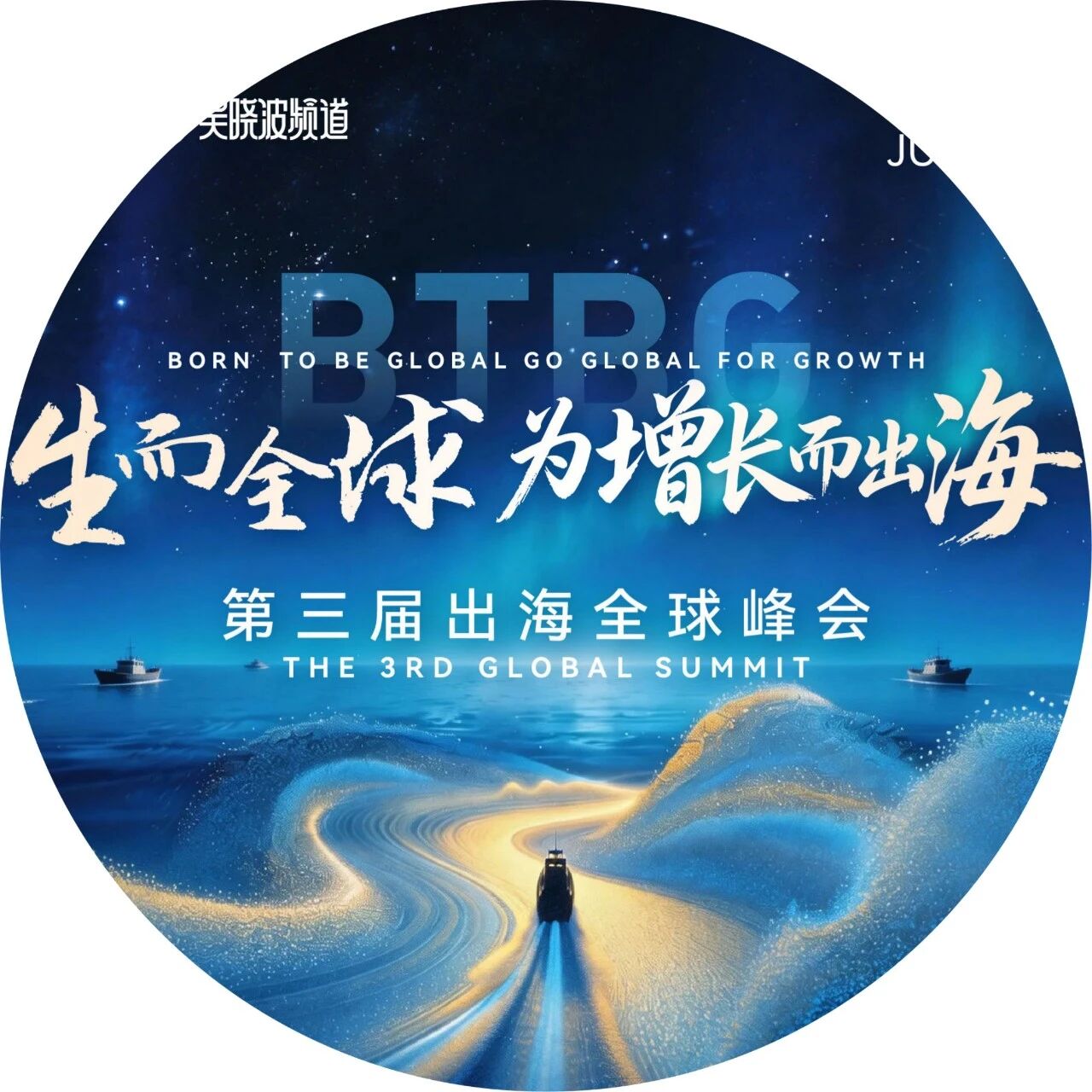
向全球要增长,第三届出海全球峰会6月开幕
吴晓波频道· 2026-03-23 00:21
Core Viewpoint - The article emphasizes the growing trend of Chinese companies going global, driven by the need for higher profits, larger markets, and more opportunities, marking a shift from being pushed to proactively seeking international expansion [3][10][11]. Group 1: Current Trends in Global Expansion - In 2024, China's foreign direct investment reached $192.2 billion, with 34,000 domestic investors establishing 52,000 overseas entities across 190 countries and regions [3]. - By 2025, the import and export volume of private enterprises reached 26.04 trillion yuan, a year-on-year increase of 7.1%, accounting for 57.3% of the total import and export volume [4]. - The article highlights the diverse products and services that Chinese private enterprises are exporting, including clothing, cosmetics, photovoltaic panels, and electric vehicles, contributing to significant growth figures [5]. Group 2: Shifts in Entrepreneurial Mindset - Three years ago, the sentiment among entrepreneurs was largely reactive, with many feeling compelled to go global due to external pressures such as trade wars and market demands [8][9]. - By 2025, the mindset shifted to a more proactive approach, with entrepreneurs actively seeking international opportunities for growth and profitability [10][11]. Group 3: Insights from Global Markets - The article discusses various international markets, such as Indonesia, where a young consumer base presents significant demand, and Ethiopia, where there are supply gaps in essential goods [11][12]. - In regions like the Middle East, ongoing infrastructure projects create a continuous demand for construction materials and home furnishings, indicating potential growth areas for Chinese companies [12]. Group 4: Technological Advancements and New Business Models - The narrative highlights a transformation in China's global economic role, moving from a "world factory" to a leader in technology and innovation, with companies now exporting technology, patents, and operational services [16]. - The article references a historical perspective on China's economic positioning, illustrating how the country has evolved from a low-margin manufacturing base to a more sophisticated global player [15]. Group 5: Upcoming Global Summit - The third "Born to be Global" summit will focus on the theme "Go Global for Growth," aiming to explore growth paths and strategies for Chinese companies in a multipolar world [20][21]. - The summit will feature discussions on various topics, including supply chain restructuring, AI empowerment, and brand globalization, providing a platform for sharing experiences and strategies [21][22].
屈田终于松口,和我们聊了那笔50亿的回报
投中网· 2026-03-18 07:11
Core Viewpoint - The article discusses the investment journey of Qutian, focusing on his significant investment in J&T Express, a logistics company in Southeast Asia, and how it has become a major player in the industry, highlighting the importance of early investment in emerging markets and the potential for Chinese companies to become global champions [3][4][5]. Group 1: Investment Philosophy - Qutian emphasizes the importance of early-stage investments in emerging markets, believing that there are greater opportunities outside of mature markets like Europe and the US [10][20]. - He prefers to invest in sectors that are often overlooked, such as logistics, which he views as a high-margin cash flow business that is essential for e-commerce growth [13][14]. - The investment in J&T Express was based on the belief that logistics would be a critical infrastructure for the booming e-commerce market in Southeast Asia [15][19]. Group 2: J&T Express's Growth - J&T Express has rapidly grown to become a major logistics player in Southeast Asia, with Qutian predicting it will become a "world champion" in the logistics sector within ten years [5][73]. - The company has successfully navigated the competitive landscape of logistics in Indonesia, leveraging its technology and operational efficiency to outperform traditional players [34][36]. - Qutian's deep involvement with J&T Express has allowed him to contribute to its strategic direction and capital operations, enhancing its growth trajectory [66][65]. Group 3: Market Insights - The logistics industry in China, represented by companies like SF Express and ZTO Express, has shown significant profitability, which Qutian believes can be replicated in Southeast Asia [13][14]. - The article highlights the importance of understanding local market dynamics, as Qutian's research indicated that J&T Express was well-positioned to capitalize on the growing e-commerce sector in Indonesia [34][36]. - Qutian's approach to investment is informed by his experiences at Alibaba and Tencent, where he learned the significance of strategic foresight and operational excellence [71][72]. Group 4: Future Aspirations - Qutian aims to cultivate more "world champions" from China, focusing on companies that can scale globally, similar to J&T Express [79][86]. - He believes that the future of Chinese companies lies in their ability to expand into emerging markets before challenging more mature markets [80][86]. - The goal is to create a network of successful Chinese companies that can thrive internationally, leveraging the lessons learned from J&T Express's growth [86].

亿纬/璞泰来先后落子马来西亚!
起点锂电· 2026-03-12 10:20
Group 1: Industry Overview - The battery industry in Malaysia is rapidly expanding, with numerous domestic battery companies establishing operations there, indicating a growing ecosystem by 2026 [2][10]. - Malaysia is becoming a key hub for global battery manufacturing, supported by favorable government policies aimed at energy transition and green electricity supply [11][12]. Group 2: Company Developments - PULY TAI has announced a $297 million (approximately 2.05 billion RMB) investment in a 50,000-ton lithium battery anode material project in Malaysia, marking a significant step in its overseas expansion [3]. - EVE Energy has made notable progress in Malaysia, including the completion of its second-phase factory focused on energy storage products, with a total investment exceeding 8.6 billion RMB planned for future expansions [5]. - Tianjin Electric Institute's subsidiary, Tian Chuan Intelligent, has secured a 15MWh electrochemical energy storage project in Malaysia, marking its first microgrid storage project in the region [4]. Group 3: Strategic Importance of Malaysia - Malaysia's geographical advantages, such as proximity to key markets and favorable labor costs, make it an attractive location for battery manufacturing compared to other Southeast Asian countries [11]. - The establishment of a robust battery ecosystem in Malaysia is anticipated to replicate the rapid growth seen in China's battery industry, driven by improved regulations and market dynamics [12]. Group 4: Challenges and Responses - PULY TAI's previous attempt to establish a project in Sweden faced regulatory challenges, highlighting the importance of aligning with local market needs and customer demands in overseas expansions [7][8]. - The competitive landscape in the lithium battery industry has intensified, prompting companies to seek new opportunities abroad, particularly in Malaysia [10].



中企出海,从单点收购到创新溢出
21世纪经济报道· 2026-03-12 00:14
Core Viewpoint - The article emphasizes the significant trend of Chinese enterprises expanding overseas, driven by government policies and the need for global market optimization, with projections indicating a direct investment of $174.4 billion by 2025, reflecting a 7.1% year-on-year growth [1]. Group 1: Historical Context of Chinese Enterprises Going Abroad - Before 2008, state-owned enterprises primarily led overseas expansion, focusing on acquiring resources to meet domestic demand [3]. - Post-2008 financial crisis, Chinese companies capitalized on depreciated overseas assets, initiating a wave of outbound investments, including resource acquisitions and manufacturing sector mergers [3]. - The launch of the Belt and Road Initiative in 2015 accelerated overseas investments, with a shift from single acquisitions to systematic layouts aligned with national strategies [3]. Group 2: Current Trends and Characteristics - In recent years, Chinese enterprises have actively sought global layouts, with a fundamental change in the structure and quality of outbound investments following the GDP per capita surpassing $10,000 in 2019 [4]. - The current phase is characterized by technology premium, brand output, and global resource allocation, positioning Chinese companies as emerging forces in promoting economic globalization [4]. Group 3: Competitive Advantages - The international competitiveness of Chinese enterprises has significantly improved due to "innovation premium," with China holding a complete range of industrial categories and excelling in traditional and high-tech sectors [6]. - Chinese companies have led the global green transition, with firms like BYD and CATL establishing "Chinese industrial clusters" in key regions [6]. - The rapid iteration and optimization capabilities within China's large domestic market create a unique "innovation ecosystem," enhancing competitiveness in international markets [7]. Group 4: Opportunities in Emerging Markets - The changing international landscape provides "era dividends" for Chinese enterprises, with emerging markets experiencing rapid economic growth and increasing demand for infrastructure and durable consumer goods [9]. - The Regional Comprehensive Economic Partnership (RCEP) has deepened the integration of Chinese enterprises with ASEAN, which has become a primary destination for outbound investments [9]. - Africa presents significant opportunities for investment in infrastructure and traditional manufacturing, alongside new energy and digital communication sectors [10]. Group 5: Systematic Support for Outbound Expansion - The large-scale overseas expansion of Chinese enterprises reflects a profound "capability spillover," necessitating government support to ensure stability and sustainability [12]. - The establishment of a national overseas comprehensive service platform aims to provide one-stop public services for thousands of overseas enterprises, marking a new phase in institutional support for outbound investments [12]. - The Chinese government is actively shaping a favorable institutional environment for global engagement, transitioning from a rule-taker to a rule-maker in global economic governance [12].

1-2月出口:季节性因素加持趋势高增长
HTSC· 2026-03-11 02:50
Export Performance - In January-February 2026, China's export value increased by 21.8% year-on-year, up from 6.6% in December 2025, exceeding Bloomberg's consensus forecast of 7.2%[1] - The export growth was significantly boosted by seasonal factors due to the later timing of the 2026 Spring Festival, contributing approximately 7.4 percentage points to the year-on-year growth[2] - Integrated circuit exports surged by 72.6%, contributing 3.4 percentage points to overall export growth, while automotive exports rose by 67.1%, contributing 2.0 percentage points[3] Import Performance - Imports in January-February 2026 rose by 19.8% year-on-year, up from 5.7% in December 2025, also surpassing Bloomberg's expectation of 7.0%[4] - Notably, imports from Hong Kong increased by 333%, contributing approximately 1.7 percentage points to total imports, while imports from South Korea contributed 2.5 percentage points, reflecting strong semiconductor demand driven by AI investments[5] - Industrial metal raw materials saw an 8.9% year-on-year increase, contributing 1.9 percentage points to import growth[6] Trade Surplus - The trade surplus for January-February 2026 reached $213.6 billion, an increase of $42.7 billion year-on-year[7] - The overall trade dynamics indicate a robust performance in both exports and imports, with expectations of maintaining double-digit growth in the first quarter despite potential drag from the Spring Festival timing on March exports[8] Risks and Outlook - Potential risks include a slowdown in global AI investments and fluctuations in U.S. tariff policies, which could impact future trade dynamics[9] - Despite the anticipated drag on March exports, the overall outlook for the first quarter remains positive, supported by global AI investment acceleration and fiscal expansion abroad[10]
五道口两会之声丨信息披露制度、耐心资本、民营经济、企业出海、算力布局、智能体、生育健康、童食健康
清华金融评论· 2026-03-06 02:16
Group 1 - The article emphasizes the importance of building a transparent and efficient information disclosure system to help private enterprises expand their financing channels [4][6] - It highlights the need for regulatory bodies to promote compliance and transparency in information disclosure, while companies should enhance their internal management mechanisms [6] - The article discusses the challenges faced by private enterprises in securing financing, suggesting the establishment of a long-term mechanism to encourage lending to these businesses [10][12] Group 2 - The article addresses the rising infertility rates among couples in China, proposing a multi-faceted approach to improve women's reproductive health and reduce the burden of childbirth [13][15] - It suggests the establishment of a comprehensive service system for Chinese enterprises going global, aiming to streamline processes and provide better support for international operations [22][24] - The article proposes innovative measures to stabilize the real estate market and stimulate domestic demand, including flexible purchasing policies and targeted financial support [25][27]

东吴证券晨会纪要2026-03-05-20260305
Soochow Securities· 2026-03-05 01:39
Macro Strategy - The pricing logic of gold remains influenced by inflation employment data verification, Federal Reserve policy calibration, and geopolitical tensions, particularly the potential escalation of the US-Iran conflict, which could drive up gold prices significantly [1][14] - The market is expected to exhibit high-frequency fluctuations in the short term, while maintaining an upward trend in the medium term, characterized by event-driven and expectation swings [1][14] Financial Products - The Nasdaq 100 index experienced a monthly decline of 2.32% in February 2026, with fluctuations driven by macroeconomic data and industry trends, including the impact of AI on market sentiment [2][15] - The Hang Seng Technology Index saw a decline of 10.15% in February 2026, with external hawkish pressures and geopolitical tensions contributing to valuation suppression [6][21] Industry Analysis - The current surge in commodity prices, driven by geopolitical events, is leading to a significant profit restructuring across industries, with upstream sectors like oil and metals benefiting, while downstream manufacturing faces cost pressures [3][17] - The automotive manufacturing, general equipment, and specialized equipment sectors are particularly vulnerable to profit pressures due to their high cost dependency and low cost transmission coefficients [3][18] Company Insights - Focusing on 佛塑科技 (Foshan Plastics Technology), the company is expected to see significant profit growth driven by the rising prices of its products, with projected net profits of 1.25 billion, 15.02 billion, and 25.05 billion yuan for 2025-2027 [12] - 荣亿精密 (Rongyi Precision) is expanding into high-growth areas such as liquid cooling, with expected net profits of -0.19 billion, 0.39 billion, and 0.88 billion yuan for 2025-2027, indicating a strong growth trajectory [13]
中国食饮企业出海提速,委员称中国产品海外竞争力强、更要融入当地
第一财经· 2026-03-04 12:07
Core Viewpoint - Since 2025, Chinese food and beverage companies are increasingly seeking growth opportunities in overseas markets, shifting from merely exporting products to establishing a local presence and integrating into foreign markets [3][4]. Group 1: Expansion of Chinese Food and Beverage Companies - Major Chinese food and beverage brands are accelerating their overseas expansion due to intensified domestic competition, with significant investments being made in foreign markets [5]. - Dongpeng Beverage announced a partnership with Indonesia's Sanlin Group to invest up to $300 million in the Indonesian market for functional beverages [5]. - Xiangpiaopiao plans to invest $38 million in Thailand to establish a ready-to-drink beverage production base, targeting not only Thailand but also neighboring countries like Cambodia, Laos, Myanmar, and Vietnam [5]. Group 2: Dairy Industry's Shift in Strategy - Dairy companies are moving away from merely acquiring resources abroad to actively developing overseas markets, with New Dairy aiming for growth in Southeast Asia's flavored milk market [6]. - China Feihe has successfully entered over 1,500 large supermarkets in North America with products from its Canadian factory, and plans to replicate its success in Southeast Asia [6]. - Aoyou's goat milk powder brand achieved a revenue of 480 million RMB overseas in the first half of 2025, marking a 65.7% year-on-year increase, with overseas revenue share rising from 16.1% to 25.9% [6]. Group 3: Opportunities in Overseas Markets - The overseas market presents significant growth opportunities for Chinese food and beverage companies, particularly in Thailand, where rising health awareness and demand for premium health drinks are driving market growth [7]. - Southeast Asia's per capita liquid milk consumption is below 20 kg/year, indicating substantial potential for growth [7]. Group 4: Integration and Localization Strategies - Liu Yonghao emphasizes the importance of not just exporting products but also integrating into local markets, suggesting that companies should employ local staff and respect local laws and cultures [9]. - Aoyou's strategy includes forming local operational teams and adapting to local market demands, with a focus on building relationships with consumers through local engagement [10]. - The need for localization is highlighted as a critical path for Chinese brands to succeed in foreign markets, with challenges in understanding local customs and managing supply chains [11].