
预期管理机制

Search documents
黄奇帆建议由银行、社保、保险、外汇资金参与设立股权引导基金
Xin Lang Cai Jing· 2026-01-10 15:25
Group 1: Core Perspectives - The forum emphasized the need for a multi-channel approach to increase direct financing, suggesting the establishment of an equity guidance fund involving banks, social security, insurance, and foreign exchange funds [2][3] - The importance of improving expectation management mechanisms was highlighted as a key aspect of enhancing the governance system of the capital market [4] - Future reforms in the capital market should focus on asset, investment, and institutional aspects to meet diverse financing needs and enhance wealth management [5][6] Group 2: Key Recommendations - Huang Qifan proposed that banks could allocate 3% of their capital for equity investments, potentially generating around 1 trillion yuan for equity investment funds [2] - Social security funds could contribute approximately 2 trillion yuan if 30% were allocated to equity investments [3] - Insurance funds could generate between 3 trillion to 4 trillion yuan for equity investment funds based on a similar allocation [3] Group 3: Structural Improvements - The need to adjust the structure of listed companies to prioritize high-tech and innovative firms was emphasized as essential for capital market development [5] - The introduction of large institutional funds, such as social security and insurance funds, is crucial for enhancing market liquidity and pricing capabilities [5][6] - The transition of long-term capital from the banking system to the capital market is seen as a significant opportunity for optimizing financial structure and increasing direct financing [7]

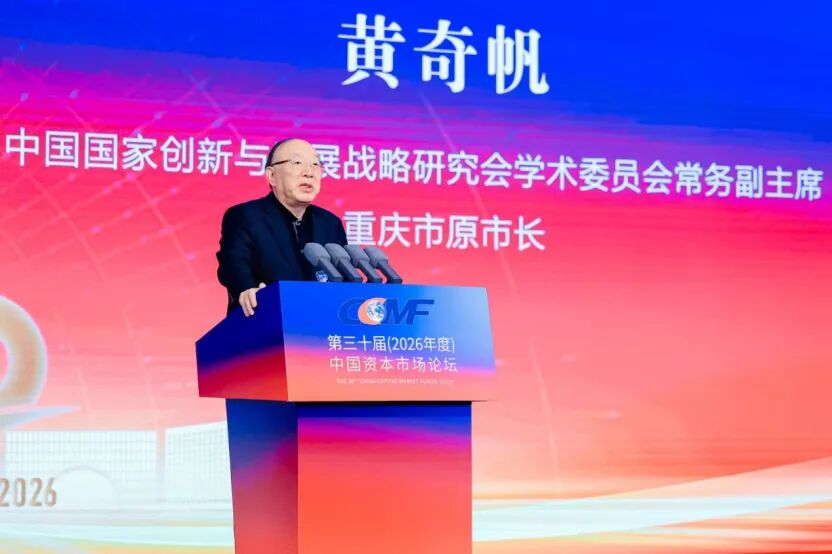
建言资本市场发展,黄奇帆、高培勇、吴晓求、丁志杰最新发声!
Zheng Quan Shi Bao· 2026-01-10 12:51
Group 1: Core Insights - The forum highlighted the importance of improving the capital market in China through various mechanisms, including enhancing direct financing and optimizing financial structures [1][2][5][8] Group 2: Huang Qifan's Suggestions - Huang Qifan proposed the establishment of an equity guidance fund involving banks, social security, insurance, and foreign exchange funds to increase direct financing [2][4] - He estimated that if 3% of bank capital, 30% of social security funds, and 30% of insurance funds were allocated to equity investments, it could generate approximately 40 to 50 trillion yuan for equity investment funds [4] Group 3: Gao Peiyong's Views - Gao Peiyong emphasized that establishing a sound expectation management mechanism is crucial for improving the governance of the capital market and the macroeconomic governance system [5][7] - He outlined a framework for expectation management that includes integrating expectation factors into macroeconomic analysis, guiding expectations in policy objectives, and reform actions in macroeconomic regulation [7] Group 4: Wu Xiaoqiu's Reform Focus - Wu Xiaoqiu identified three key areas for reform in the capital market: asset side, investment side, and institutional side, to meet diverse financing needs and wealth management demands [8][10] - He stressed the need to adjust the structure of listed companies to prioritize high-tech and innovative enterprises, which are essential for capital market growth [10] Group 5: Ding Zhijie's Insights - Ding Zhijie pointed out that there is significant room for optimizing China's financial structure, particularly by converting long-term household savings in banks into patient capital for direct financing [11][13] - He noted that the annualized return on pension funds in the capital market exceeds 5%, indicating the potential benefits of channeling more funds into the capital market [13]

建言资本市场发展,黄奇帆、高培勇、吴晓求、丁志杰最新发声!
证券时报· 2026-01-10 12:43
Group 1: Core Views - The forum highlighted the need for a multi-channel approach to increase direct financing, emphasizing the development of both the stock market and equity investment funds [2][4]. - Huang Qifan proposed the establishment of an equity guidance fund involving banks, social security, insurance, and foreign exchange funds, which could potentially create a scale of 40 to 50 trillion yuan for equity investment [5]. - Gao Peiyong stressed that improving expectation management mechanisms will be crucial for enhancing the governance system of the capital market [6][9]. Group 2: Key Discussions - Huang Qifan indicated that if 3% of the capital from banks were allocated to equity investments, it could yield approximately 1 trillion yuan for equity investment funds [4]. - He also noted that if 30% of social security funds were used for equity investments, it could generate around 2 trillion yuan, while insurance funds could contribute an estimated 3 to 4 trillion yuan [5]. - Gao Peiyong outlined a framework for expectation management, which includes integrating expectation factors into macroeconomic analysis, guiding expectations in policy goals, and reform actions in macroeconomic regulation [9][10]. Group 3: Future Directions - Wu Xiaoqiu emphasized the need for reforms in the asset, investment, and institutional aspects of the capital market to meet diverse financing needs and enhance wealth management for residents [11][12]. - He highlighted the importance of adjusting the structure of listed companies to prioritize high-tech and innovative firms, as the capital market fundamentally relies on the performance of these companies [14]. - Ding Zhijie pointed out that optimizing the financial structure and increasing direct financing is essential, suggesting that long-term capital currently trapped in the banking system should be redirected to the capital market [15][18].

建言资本市场发展!黄奇帆、高培勇、吴晓求、丁志杰最新发声
Xin Lang Cai Jing· 2026-01-10 12:17
Group 1 - The forum highlighted the importance of improving the direct financing ratio in China's capital market, suggesting a dual approach of developing both the stock market and equity investment funds [1][3] - Huang Qifan proposed the establishment of an equity guidance fund involving banks, social security, insurance, and foreign exchange funds, potentially creating a fund size of 40 to 50 trillion yuan to support corporate equity supplementation [3][4] - The discussion emphasized the need for a robust expectation management mechanism as a key aspect of enhancing the governance system of the capital market [4][6] Group 2 - Gao Peiyong stressed that managing expectations will be crucial for macroeconomic governance and the capital market's governance system, linking it to stabilizing market confidence [6][4] - Wu Xiaoqiu pointed out the necessity for reforms in the asset, investment, and institutional aspects of the capital market to meet diverse financing needs and enhance wealth management [8][10] - Ding Zhijie noted that a significant portion of long-term capital remains trapped in the banking system, and transforming household savings into patient capital could optimize the financial structure and increase direct financing [10][11]
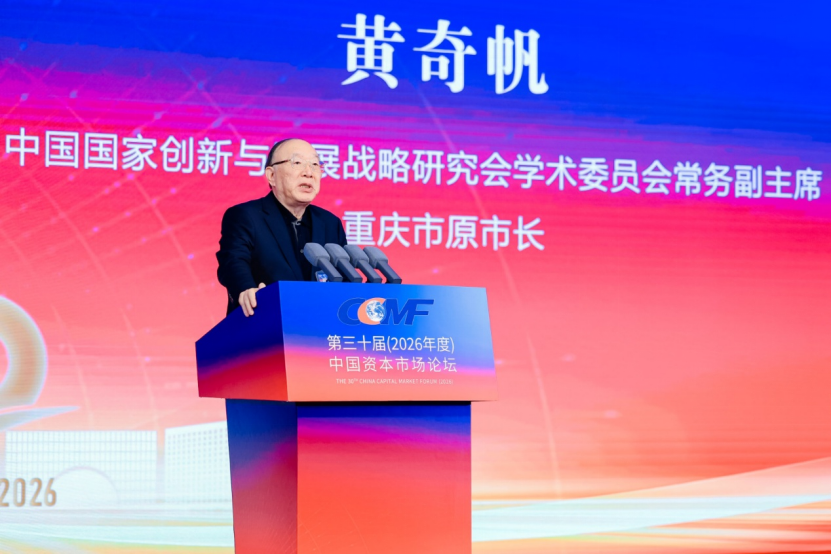
建言资本市场发展!黄奇帆、高培勇、吴晓求、丁志杰最新发声
券商中国· 2026-01-10 12:06
Group 1: Core Perspectives - The forum highlighted the importance of enhancing direct financing through a dual approach of developing both the stock market and equity investment funds [3][6] - The establishment of an equity guidance fund involving banks, social security, insurance, and foreign exchange funds was proposed to support corporate equity replenishment [3][6] Group 2: Key Discussions by Scholars - Huang Qifan emphasized the need for a multi-channel approach to increase direct financing, suggesting that approximately 1 trillion yuan could be sourced from bank capital for equity investment funds [5][6] - Gao Peiyong pointed out that improving expectation management mechanisms is crucial for the governance of the capital market and macroeconomic stability [7][9] - Wu Xiaoqiu discussed the necessity of reforms in asset, investment, and institutional aspects to meet diverse financing needs and enhance market confidence [10][12] - Ding Zhijie noted that optimizing the financial structure and converting long-term household savings from banks into patient capital is essential for increasing direct financing [13][15]

财经战略年会暨第二届财经智库论坛在京举办
Zhong Guo Jing Ji Wang· 2025-12-28 06:19
Core Viewpoint - The "15th Five-Year Plan" period is identified as a critical phase for China's economic development, emphasizing the need for comprehensive strategies to achieve modernization by 2035, with a focus on expectation management, income distribution reform, and the integration of investment in goods and people [3][4]. Group 1: Economic Development Strategies - The "15th Five-Year Plan" should reflect the transitional characteristics of the economy, aiming for a solid foundation and comprehensive efforts to meet the 2035 modernization goal [3]. - Emphasis on expectation management mechanisms, integrating them into macroeconomic analysis and policy frameworks [3]. - The need for reform in income distribution systems to establish a fair and just social security and transfer payment system [3]. Group 2: Macroeconomic Policies - The period will see peak levels in population, real estate demand, heavy industry scale, export volume, and carbon emissions, necessitating a combination of counter-cyclical and cross-cyclical macroeconomic policies for smooth transitions [4]. - High-quality development requires both qualitative improvements and reasonable quantitative growth, with a focus on maintaining economic growth while adjusting structures [4]. Group 3: Financial and Resource Management - The "debt-asset-resource" framework is proposed to revitalize existing economic structures, emphasizing the importance of resource liquidity and value creation [4]. - The need for financial theory innovation to support the development of a strong financial nation, addressing practical issues and enhancing core competitiveness [5]. Group 4: Fiscal Policy and Governance - Fiscal reforms are essential for national governance, requiring coordination between fiscal policies and other policy areas, while addressing structural issues in the medium to long term [5]. - The establishment of a budget system and tax system that aligns with responsibilities and powers is crucial for effective governance [5]. Group 5: Consumer-Focused Financial Systems - A consumer-friendly financial system is necessary to address the challenges in financial services and consumer behavior, promoting supply-side financial reforms and enhancing financial inclusivity [6]. - The significance of building a consumer-friendly financial system lies in guiding financial reforms and advancing inclusive finance [6]. Group 6: Forum Discussions - The conference featured six sub-forums discussing topics such as AI empowerment in think tank construction, economic growth and macroeconomic policies, fiscal policies and tax reforms, and the dual circulation development pattern [6].
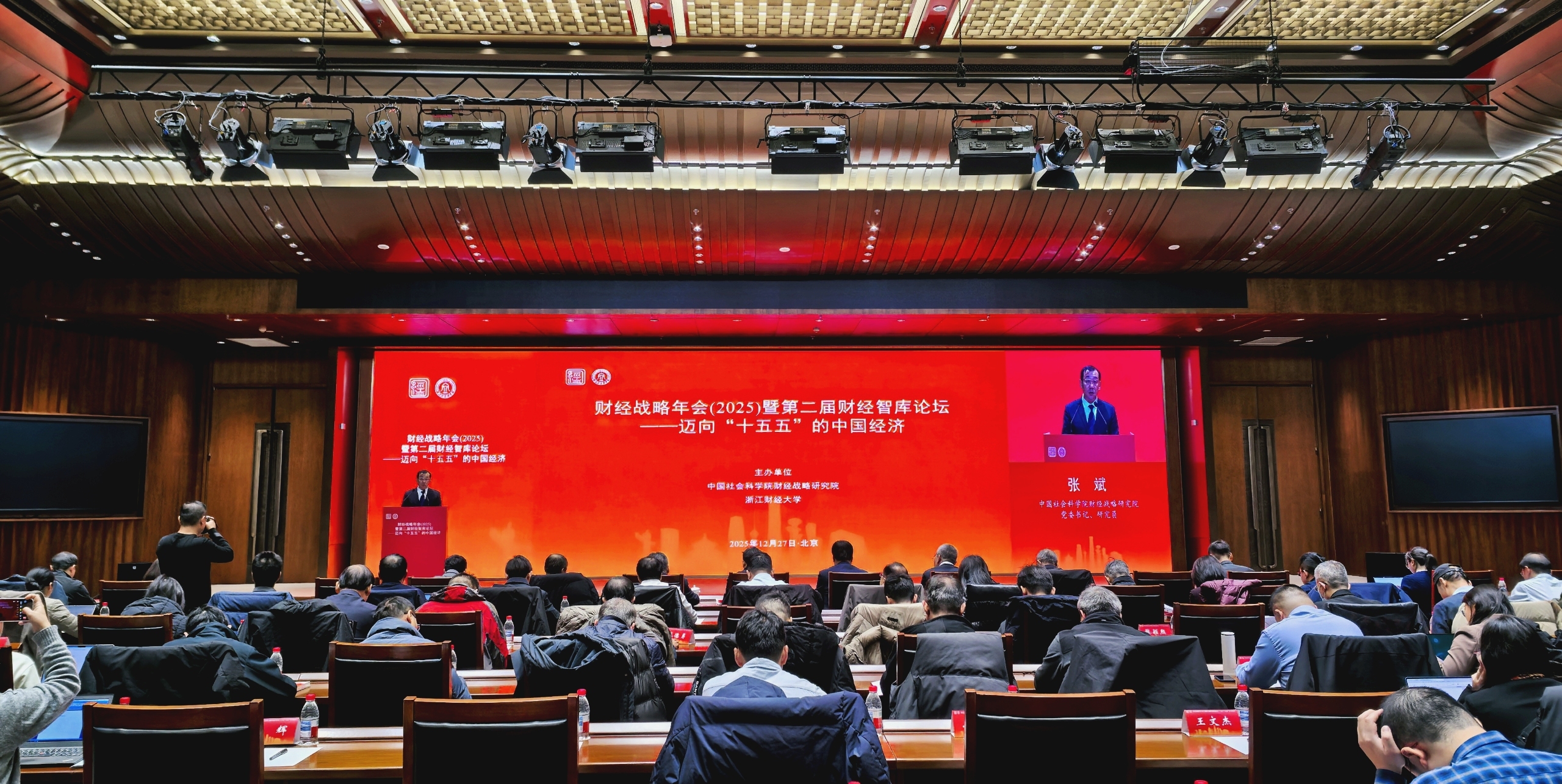
中国社会科学院学部委员、国家一级教授高培勇:政策支持与改革创新并举筑牢经济发展根基
Zheng Quan Ri Bao· 2025-12-26 16:44
Group 1 - The core argument presented by Gao Peiyong emphasizes the dual approach of policy support and reform innovation as essential for driving economic development in 2026 [1] - Current weak market expectations are identified as a significant factor hindering economic recovery, necessitating the establishment of a robust expectation management mechanism [1] - Gao proposes three key measures for improving expectation management: integrating expectation factors into macroeconomic analysis, explicitly including stable expectations in macroeconomic policy goals, and incorporating reform measures into macroeconomic regulation practices [1] Group 2 - Consumption is highlighted as a lasting driver of economic growth, with its effectiveness depending on both the release of current consumption potential and the cultivation of long-term consumption capacity [2] - The deep-rooted issue of insufficient consumer demand is attributed to changes in income and wealth accumulation patterns, leading to uncertainty in future expectations [2] - The Central Economic Work Conference's focus on implementing a plan for increasing urban and rural residents' income is seen as a crucial step in reforming the income distribution system [2] Group 3 - The fiscal and tax system is called to transition towards a public finance model, focusing on optimizing the government revenue and expenditure structure [3] - Adjustments in government spending are recommended, shifting funds from "investment in material" to "investment in people," particularly in social welfare and livelihood security [3] - This transformation is described as a profound change in the fiscal system's function, aimed at enhancing public service spending and increasing investments in livelihood, ultimately fostering a virtuous cycle of income growth and consumption increase [3]
中国经济“向新向优” 信心和底气不断增强
Zheng Quan Ri Bao· 2025-12-16 01:01
Group 1 - The core viewpoint of the article emphasizes the importance of confidence and expectations in China's economic development, highlighting a shift in focus towards quality and structural optimization in economic growth [2][3] - The meeting acknowledged the achievements of 2025 while also recognizing ongoing challenges, particularly the "prominent contradiction of strong supply and weak demand" [2][3] - The macroeconomic policy direction remains "more proactive," with continued implementation of "more active fiscal policies" and "moderately loose monetary policies" [2][3] Group 2 - The meeting introduced the concept of integrating stock and incremental policies, as well as enhancing counter-cyclical and cross-cyclical adjustments, indicating a balanced approach to future macroeconomic policies [3] - Emphasis was placed on managing expectations and boosting social confidence, with fiscal policies aimed at maintaining necessary fiscal deficits and addressing local fiscal difficulties [3][4] - The focus on long-term momentum cultivation includes expanding domestic demand and optimizing supply, with significant attention on investment recovery and support for private investment [4][5] Group 3 - The meeting outlined eight key tasks for 2026, emphasizing the need for innovation-driven growth and the establishment of a unified national market, which may indicate a stronger focus on these areas in the coming year [4][5] - In the realm of social welfare, the meeting addressed employment, education, healthcare, and safety, indicating a comprehensive approach to improving living standards [5][6] - The proposed differentiated assessment system for local governments suggests a tailored approach to economic work and sustainable development, reflecting the need for localized strategies [6]
中央财办韩文秀重磅发声!明年将根据形势变化出台实施增量政策
Zhong Guo Ji Jin Bao· 2025-12-13 23:51
Core Viewpoint - The Chinese economy is expected to perform better than anticipated in 2025, with a projected GDP of approximately 140 trillion yuan, and incremental policies will be implemented in 2026 based on evolving circumstances to promote stable economic growth [1][3]. Economic Performance - The year 2025 is highlighted as significant for China's modernization, with major economic indicators expected to meet targets, and a growth rate of around 5% is forecasted for the year [2]. - China's economy has shown resilience and vitality, with strong performance in employment, foreign trade, and advancements in modern industrial systems, particularly in AI, biomedicine, and robotics [2][3]. Policy Implementation - Incremental policies will be introduced in 2026 to enhance macroeconomic governance, focusing on both existing and new policies to foster economic stability [4]. - A proactive fiscal policy will be maintained, ensuring necessary fiscal deficits and expenditures while enhancing local financial autonomy and optimizing expenditure structures [4][5]. Monetary Policy - A moderately loose monetary policy will continue, with an emphasis on maintaining liquidity and supporting key sectors such as technology innovation and small to medium enterprises [5]. - The alignment of fiscal and monetary policies will be reinforced to ensure cohesive economic measures [5]. Economic Strategy - Five key principles for economic work have been outlined: maximizing economic potential, balancing policy support with reform, effective regulation, combining investments in physical and human capital, and strengthening internal capabilities to face external challenges [6][7]. - The focus will be on expanding both exports and imports to promote sustainable foreign trade development [8]. Income and Employment - Efforts will be made to synchronize income growth with economic growth, with initiatives to boost consumer spending and enhance employment quality, particularly for vulnerable groups [9][10]. - Green development will be prioritized, with plans for energy transition and carbon emission control to support high-quality growth [10].

韩文秀:明年还将根据形势变化出台实施增量政策 及时回应市场关切 有效提振社会信心
Ge Long Hui· 2025-12-13 07:35
Core Viewpoint - The 2025-2026 China Economic Annual Conference will be held on December 13, focusing on implementing the spirit of the Central Economic Work Conference and promoting high-quality development for the "14th Five-Year Plan" [1] Group 1: Economic Policy and Governance - The Deputy Director of the Central Financial Office, Han Wenxiu, emphasized the need for steady progress in economic work next year, aiming for quality improvement and efficiency enhancement [1] - There will be an increase in counter-cyclical and cross-cyclical adjustments to effectively enhance macroeconomic governance [1] - A series of policy measures have been implemented since the Politburo meeting on September 26 last year, with plans for additional incremental policies based on changing circumstances next year [1] Group 2: Market Expectations and Confidence - The integration of existing and new policies will be crucial to promote economic stability and improvement [1] - The market economy largely depends on economic expectations, necessitating the establishment of a sound expectation management mechanism [1] - Effective economic communication and public opinion guidance are essential to respond to market concerns and boost social confidence [1]