中巴文化交流

Search documents
通讯丨当巴西狂欢节邂逅中国年
Xin Hua She· 2026-02-25 00:41
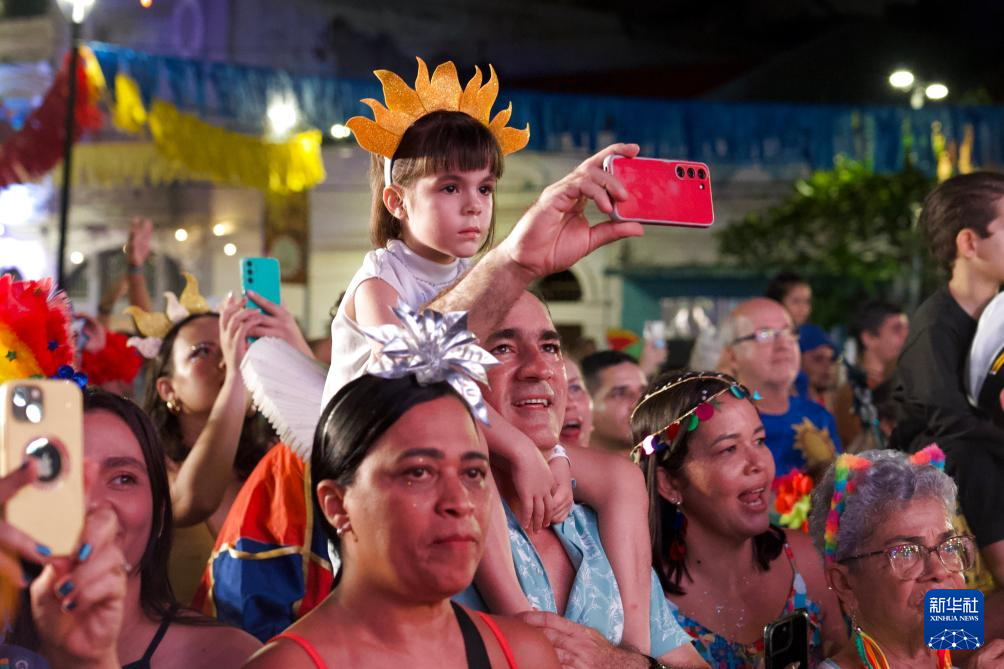
Core Viewpoint - The article highlights the unique cultural intersection of Brazil's Carnival and China's Lunar New Year, showcasing a vibrant celebration in Recife, Brazil, that integrates Chinese elements into the traditional festivities [2][5]. Group 1: Event Description - The Carnival in Recife coincided with the Chinese Lunar New Year, with the main parade taking place on February 16, which was also the eve of the Chinese New Year [4]. - The parade featured colorful costumes and performances, including a prominent "golden dragon" that symbolized Chinese culture, captivating the audience and encouraging participation [5][6]. Group 2: Cultural Exchange - The event aimed to promote mutual understanding between Brazilian and Chinese cultures, as expressed by the parade's organizer, Hugo Leonardo, who emphasized the importance of cultural integration [5][7]. - The city of Recife officially recognized the Chinese New Year as a public holiday in 2022, reflecting the long-standing cultural exchange between China and Brazil [7].

“为巴中关系提升更多情感温度”
Ren Min Ri Bao· 2026-02-10 23:13
Group 1 - The core theme of the events is the celebration of Chinese culture in Brazil, highlighted by a Chinese New Year reception featuring traditional music performances, marking the first cultural project of the 2026 "China-Brazil Cultural Year" [1][2] - The event included a cultural exhibition showcasing contemporary Chinese natural beauty and humanistic charm, attracting attendees and enhancing cultural exchange between China and Brazil [1] - Brazilian actor Lúcia Santos emphasized the timeless nature of classic cultural works, expressing optimism that the "China-Brazil Cultural Year" series will create new shared memories for the two nations [1] Group 2 - The "China-Brazil Cultural Year" is gaining momentum with various activities planned, including contemporary literary dialogues and film exhibitions, aimed at strengthening cultural ties and mutual understanding between the two countries [2] - Chinese Ambassador to Brazil, Zhu Qingqiao, highlighted the diverse range of activities covering arts, youth exchanges, technological innovation, and tourism promotion, aiming to deepen cooperation and friendship [2] - The Brazilian government places high importance on cultural exchanges with China, viewing them as a bridge to connect the hearts of the two peoples, with expectations for the cultural year to enhance emotional ties [1][2]
总台春晚宣传片亮相中国驻巴西大使馆春节招待会
Jing Ji Guan Cha Wang· 2026-02-06 07:30
Core Viewpoint - The Chinese New Year reception held by the Chinese Embassy in Brazil showcased the cultural significance of the Spring Festival and highlighted the importance of cultural exchange between China and Brazil through the broadcast of the Spring Festival Gala promotional video [1][2] Group 1: Event Overview - The reception took place on February 4 in Brasília, with over 300 attendees from various sectors including politics, business, and culture [1] - The event featured a large electronic screen displaying the Spring Festival Gala promotional video, creating a festive atmosphere [1] Group 2: Cultural Impact - Attendees expressed a deeper understanding of Chinese New Year culture and the significance of the Spring Festival Gala through the promotional video [2] - Notable Brazilian figures, including actress Lucélia Santos and martial arts association president Marcos Alves, emphasized the importance of the Spring Festival Gala as a cultural bridge between China and Brazil [2] Group 3: Future Cultural Initiatives - The year 2026 has been designated as the "China-Brazil Cultural Year," with plans for various cultural exchange activities aimed at enhancing mutual understanding and strengthening the comprehensive strategic partnership between the two countries [2]
不研读孔子,就无法理解中国文化(孔院之光)
Ren Min Ri Bao Hai Wai Ban· 2026-02-05 22:46
Core Viewpoint - The article highlights the significant contributions of Professor Luis Antonio Paulino in promoting Chinese language education and cultural exchange between Brazil and China through the establishment and development of the Confucius Institute at São Paulo State University. Group 1: Background and Achievements - Professor Paulino is the director of the Confucius Institute at São Paulo State University and has held various advisory roles in the Brazilian government, contributing to cultural and educational exchanges between Brazil and China [4]. - He founded Brazil's first Confucius Institute in 2008, which has since expanded to 19 teaching sites across three states, registering over 41,000 students [8]. Group 2: Educational Initiatives - The Confucius Institute offers a diverse curriculum, including basic Chinese language courses and cultural classes, utilizing a "face-to-face + online" teaching model [8]. - The institute has translated key educational materials into Brazilian Portuguese, addressing local language differences and enhancing the quality of Chinese language education in Brazil [8]. Group 3: Cultural Exchange and Community Engagement - The institute organizes various cultural events, such as film festivals and traditional celebrations, to immerse students in Chinese culture and foster a deeper understanding of contemporary Chinese society [9][10]. - It has facilitated over 1,000 job placements through recruitment fairs, connecting students with Chinese companies operating in Brazil, thereby enhancing career opportunities for graduates [10]. Group 4: Future Plans and Vision - In 2025, Paulino plans to establish the Brazilian Confucius Institute Alliance to enhance collaboration among the institutes and promote Chinese culture across Brazil [11]. - The institute aims to continue developing educational resources tailored for Brazilian students and strengthen the strategic partnership between Brazil and China in the next 50 years [11][12].
巴西海滨要塞唱响《我爱你,中国》
Huan Qiu Shi Bao· 2025-11-13 22:39
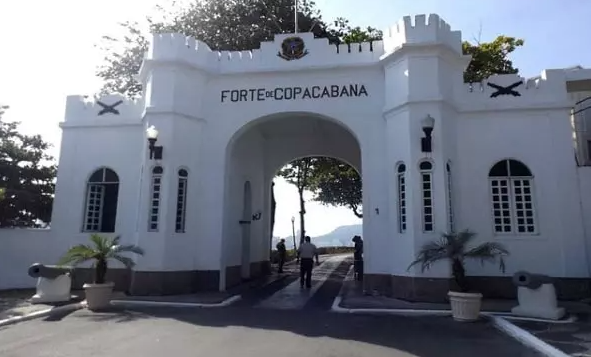
Core Viewpoint - The article highlights the transformation of the Copacabana Fort from a military stronghold to a cultural and tourist attraction, emphasizing its role in promoting Sino-Brazilian cultural exchanges through music and art [1][3][5]. Group 1: Historical Significance - The Copacabana Fort, built in 1914, served as a strategic military defense but has been inactive since 1987, now functioning as a military history museum [3]. - The fort's artillery, including the 305mm dual-mounted main guns, remains a focal point for visitors, symbolizing its historical military significance [3]. Group 2: Cultural Transformation - The fort has evolved into a vibrant venue for cultural events, including concerts by the Copacabana Fort Orchestra, which features musicians from local favelas, aiming to provide a platform for their musical talents [4]. - The orchestra's collaboration with China National Offshore Oil Corporation (CNOOC) Brazil has been pivotal in sustaining its activities, showcasing the impact of international support on local cultural initiatives [4][5]. Group 3: Sino-Brazilian Relations - The integration of Chinese cultural elements at the fort, such as exhibitions and performances, has fostered a deeper cultural connection between China and Brazil, making the fort a "romantic garden" for cultural exchange [5]. - Events like the "Chinese Stories" photography exhibition and traditional Chinese performances have attracted significant local interest, enhancing mutual understanding between the two nations [5].
闪耀圣保罗!“丝系山海——从中国到巴西”展举办
Hang Zhou Ri Bao· 2025-11-07 03:17
Group 1 - The exhibition "Silk from China to Brazil" is part of the 2025 "Silk Road Week" series of events held in São Paulo, Brazil, showcasing the historical evolution, craftsmanship, cultural dissemination, and contemporary expression of silk [1] - The exhibition is divided into three main sections: "Silk Originating from the East," "Silk Road," and "Silk Shining Worldwide," highlighting the significance of silk as a symbol of Chinese civilization in cultural exchanges [1] - Additional activities include performances on intangible cultural heritage related to silk, academic dialogues between China and Brazil, and innovative design releases, reflecting a multi-faceted cultural exchange between the two nations [1] Group 2 - Recent years have seen deep cooperation between China and Brazil across various fields, with cultural exchange being a key driver of their relationship [2] - The inclusion of the 2025 "Silk Road Week" in the action plan of the "Global Civilization Dialogue Ministerial Meeting" demonstrates the unique charm of Chinese traditional culture and serves as a platform for enhancing mutual understanding and friendship between the two peoples [2]
第五届巴西“中国影视作品展播季”在里约热内卢举行
人民网-国际频道 原创稿· 2025-10-05 05:20
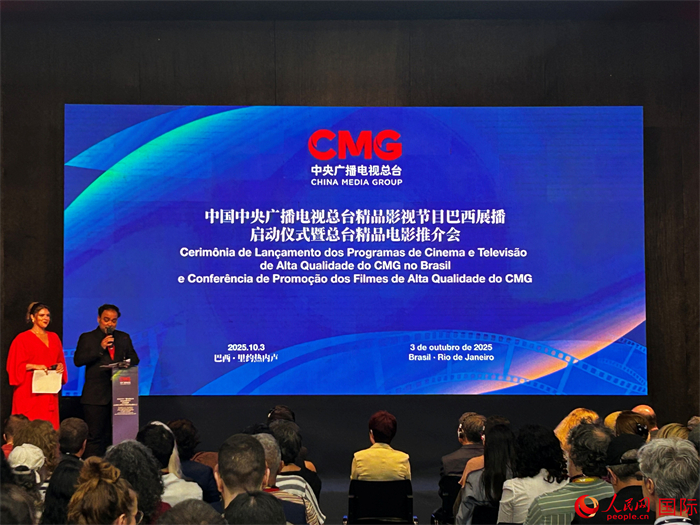
Core Viewpoint - The fifth "Chinese Film and Television Works Exhibition Season" in Brazil aims to enhance cultural exchange and mutual understanding between China and Brazil through the presentation of high-quality Chinese films and television programs [5][7]. Group 1: Event Overview - The event took place on October 3 in Rio de Janeiro during the International Film Festival, showcasing ten distinctive Chinese film and television programs, including "Cultural Affinity of Xi Jinping" and "The Road to Chinese Modernization" [3][5]. - Two new films, "The Blue Planet Outside" and "Your Voice," were premiered during the event [3]. Group 2: Cultural Significance - The Chinese Consul General in Rio de Janeiro emphasized that film and television serve as important "windows" for cultural exchange and as solid "bridges" for connecting people's hearts [5]. - The exhibition season has been held for five consecutive years, presenting over 40 quality works, which have become a vital link for emotional connection and mutual understanding between the two nations [5][11]. Group 3: Industry Collaboration - The event featured a cooperation agreement exchange between the China Central Television and Brazil's Box Media Group, indicating a commitment to further collaboration in film and television [9][11]. - Brazilian media representatives highlighted that the cultural resonance between China and Brazil is strong, and both countries should seize opportunities to deepen exchanges through film cooperation [11][12]. Group 4: Audience Engagement - The introduction of Chinese films is expected to enhance viewership ratings for Brazilian media companies and foster a better understanding of Chinese culture among Brazilian audiences, particularly the youth [12]. - The event is seen as a dual benefit, allowing Brazilian culture to be introduced to China while providing a platform for Chinese stories to reach Brazilian viewers [11][12].
《哪吒2》在巴拿马首映
Xin Lang Cai Jing· 2025-10-01 06:18
Core Viewpoint - The premiere of the Chinese animated film "Ne Zha" took place in Panama City, highlighting the growing influence of Chinese cinema and its role in cultural exchange between China and Panama [1] Group 1: Event Details - The premiere event attracted approximately 150 local viewers [1] - The event was organized by local film media "Youwei Movie" [1] - Chinese Ambassador to Panama, Xu Xueyuan, attended the premiere and delivered a speech [1] Group 2: Cultural Significance - Xu Xueyuan emphasized the importance of Ne Zha as a significant figure in Chinese mythology [1] - The ambassador noted advancements in Chinese cinema, particularly in animation and visual effects, showcasing the evolution of the industry [1] - The film is seen as a bridge for promoting cultural exchange between China and Panama [1]
第四届中国—巴西电影展在巴西里约举行
人民网-国际频道 原创稿· 2025-08-29 05:21
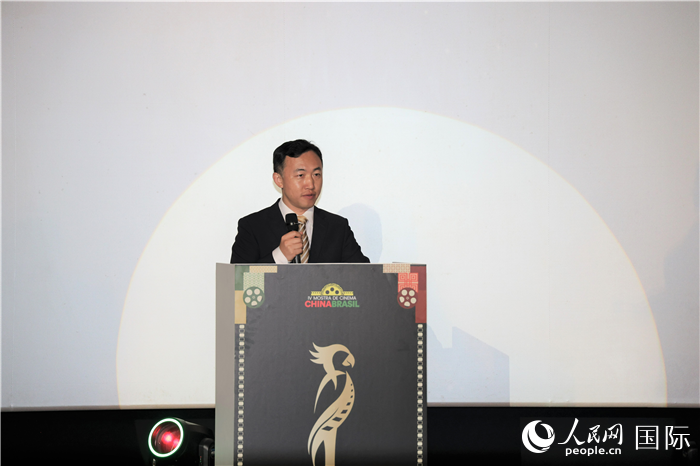
Group 1 - The fourth China-Brazil Film Festival successfully concluded in Rio de Janeiro, showcasing 12 films from both countries and awarding the "Blue Macaw" prize [1][3] - The festival was co-hosted by Brazilian Kangqiao Bozhi Cultural Media Company, Shanghai Vancouver Film Academy, and Shanghai Foreign Cultural Exchange Association, highlighting the deepening cultural exchange between China and Brazil [1][5] - The event featured a new segment focusing on "Chinese-Brazilian Youth Short Film Exchange," aiming to foster collaboration among young filmmakers and educators from both countries [3][5] Group 2 - Since its inception in 2019, the China-Brazil Film Festival has screened over 30 films, providing a platform for interaction between audiences from both nations [5][8] - The festival's growing scale and influence have established it as a significant platform for cultural and artistic exchange between China and Brazil [7][8] - Notable films awarded include "The Silent Love," "Detective Chinatown 1900," and "The Rights of Dreams," among others, with industry professionals expressing commitment to creating more outstanding works [8][9]
巴西华人文化交流协会与清华大学“唐仲英计划”巴西实践支队举行调研座谈会
人民网-国际频道 原创稿· 2025-08-07 03:00
Core Insights - The Tsinghua University "Tang Zhongying Program" delegation visited the Brazilian Chinese Cultural Exchange Association to enhance understanding of Chinese culture in Brazil and the experiences of the Chinese community [1][2][4] Group 1: Program Overview - The "Tang Zhongying Program," initiated by Tsinghua University and the Tang Zhongying Foundation in 2011, aims to cultivate politically committed and socially responsible youth [7] - The delegation consists of 13 students from various departments, including environmental science, architecture, and art, along with one faculty member, emphasizing the program's focus on international perspectives [2][5] Group 2: Cultural Exchange - The Brazilian Chinese Cultural Exchange Association, established in 2000, has evolved from hosting traditional events for expatriates to promoting Chinese culture within mainstream Brazilian society [1][4] - The discussions during the visit focused on themes such as "China-Brazil cultural exchange," "integration of the Chinese community," and "the portrayal of China in the Global South" [4]